
05 Feb 2026
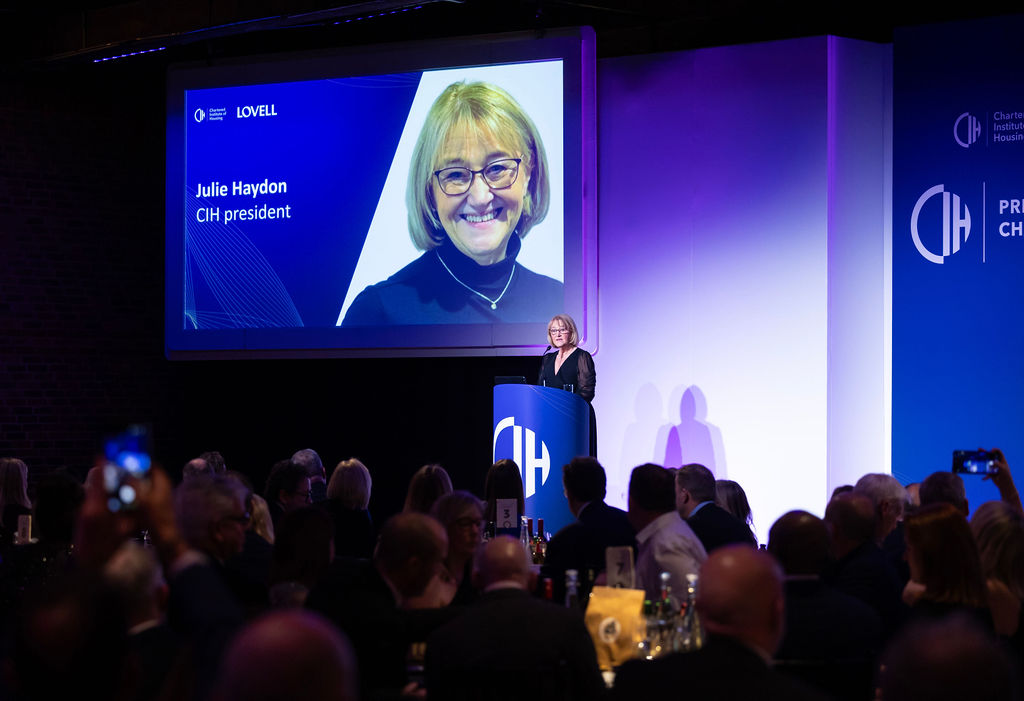
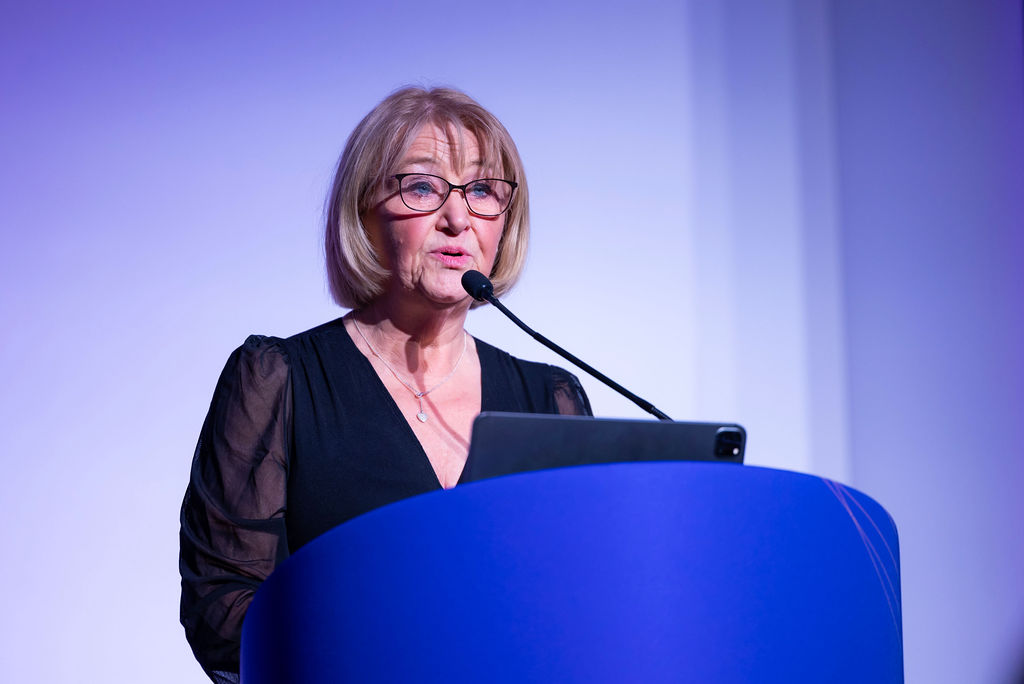
2026 CIH Presidential Address speech by Julie Haydon

Good evening, it is just wonderful to see so many of you here, thank you all for coming.
It’s a real honour for me to be here tonight as president of the Chartered Institute of Housing, but before I begin, my thanks go to our sponsors Lovell and South East Consortium, and the venue and events team for creating what is planned to be, a wonderful evening.
Housing is universal in its importance. Whatever the tenure, homes enable people to create lives, raise families and to build cohesive communities.
As a profession dedicated to providing homes and services – we know that housing’s strength does not come from bricks and mortar. It comes from people – our colleagues and our residents – and the resilience and professionalism that sustains them.
I am proud to be the next link in a chain of presidents who echo CIH’s purpose in inspiring, equipping and supporting housing professionals to create a future in which everyone has a place to call home.
As president, my focus this year, is on resilience – because alongside the CIH I firmly believe that it now belongs at the heart of housing strategy, housing leadership, culture and professional practice.
Social housing is operating in a period of profound change. The pressure on supply is intense. And the expectations on housing professionals have never been higher, with the pace and weight of regulation continuing to grow.
This, is the most scrutinised – and accountable, housing environment most of us have ever worked in. And rightly so!
As the professional body for housing, one of the core roles of CIH, is to support its members and the wider housing sector to navigate these challenges – ensuring we have the skills, confidence and leadership needed, not just to cope, but to thrive.
That means:
- Supporting those designing, building, managing, and maintaining homes
- Strengthening the culture within housing organisations
- And enabling leaders, such as yourselves, to take resilience into your boardrooms, to your teams and to your services.
Because housing is not just infrastructure. It is people. And resilience is what sustains them.
Resilience isn’t an abstract idea for me – it’s something I learned at home, long before I learned it in housing. And it’s been invaluable.

This is Sifta Sam – slightly wilder than you might expect at a presidential dinner… I want you to remember him as we move through my story…
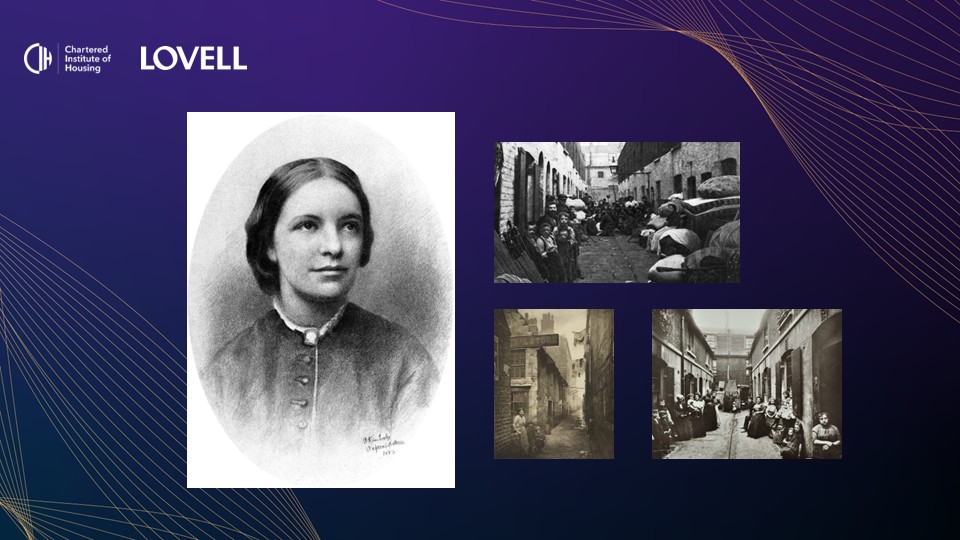
If we rewind back even before Sifta Sam’s time, we land in Victorian Britain – where slum housing was about survival, not standards. There was much overcrowding, no sanitation. No safety and certainly no regulation.
Into those slums stepped Octavia Hill – a social reformer who believed housing should provide dignity as well as shelter. She wasn’t just about managing homes. She invested in people, pioneered professional housing management, and inspired a generation to deliver housing with humanity.
She helped shape the professional housing sector and laid the foundations for the Chartered Institute of Housing – a body rooted in social purpose, professional standards, and sector transformation.
Today, we look to design and deliver cohesive and resilient communities – modernised estates, with homes that are safe and secure. A million miles from Octavia Hill’s Victorian Britain.
But despite the challenges that we rightly acknowledge, we should also say this, loud and clear:
The housing profession does extraordinarily well. Every day, we see housing professionals improve lives, protect communities, support wellbeing and create stability in what can be, an unstable world.
That matters and it takes skill, professionalism and resilience.
It deserves recognition, because when housing fails, people don’t just lose a service – they can lose their health, safety, security, sometimes life.
This was brought into focus with the tragic fire in Hong Kong at the end of last year. Our colleagues in CIH Asia Pacific were involved in the response to the emergency and afterwards. CIH remain in contact with our Hong Kong colleagues and tonight, I want to recognise their continued efforts.
And we cannot ignore where things have also gone wrong here in the UK – we are still living with the impact – we still see too many residents who are still living with damp, mould, disrepair and insecurity.
Policy is key here because despite a renewed political focus on housing, we are still delivering in a system where social housing output has stalled, grants remain constrained, planning delays persist, and temporary accommodation costs are crippling local authority budgets.
This housing crisis has been a long time in the making, and it will take a long time to fix.
Across the sector though, I see deep commitment – to safety, decency and professionalism, and that gives me confidence.
We are fixing, retrofitting and reforming and while we work hard to repair and future proof homes, we MUST be just as deliberate about investing in culture, capability and leadership.
We are asking our colleagues to decarbonise homes, engage residents meaningfully, respond to rising complaints and greater welfare needs, and to deliver under intense regulatory scrutiny and financial pressure.
At a time of political flux and global challenge, when certainty is in short supply and the path ahead is rarely clear, leadership is no longer about having all the answers – it’s about creating the conditions to navigate the unknown, together.
Compassionately.
That is why resilience cannot be treated as a ‘nice to have’.
It is operationally critical.
Because resilience is not just about recovering from crisis.
It is about preventing the next one.
We cannot afford to simply survive.
We need to thrive.
But there is a silent crisis inside our economy, one that matters to business, government and housing.
It was highlighted by the recent CIH Futures survey which found that more than a third of the under 35s surveyed reported feeling extremely tired, stressed or overwhelmed at work.
But this isn’t solely an early careers or housing issue.
Across the UK workforce, mental ill-health is now the leading cause of sickness absence – that’s the highest it’s been for 15 years.
The 2025 Burnout Report talks of 91 per cent of adults reporting high or extreme stress and, crucially, one in five workers took time off last year due to stress-driven mental ill-health.
These are the human fault lines beneath our services. And the question is not, should businesses care about resilience?
BUT, can businesses afford not to?
I ask each of you here – can housing afford not to?
As leaders in housing, we each, you each, have a responsibility to ensure that organisations are sustainable. If people aren’t great – the service isn’t great.
Government talks increasingly about economic inactivity, productivity gaps, and public service burnout.
Housing professionals sit right at the intersection of all three.
Resilience as we know, is grown through people, through practice and through culture – NOT through quick fixes. But we, the people present in the room, need to lead it.
And this is where CIH supports – through professional development, leadership capability, networks, standards and a strong professional identity that helps people grow, adapt and sustain themselves over long careers.
I’d like to rewind time again. To tell you about where I believe my resilience took root.
And again, quite frankly, I have to say, even though I have rehearsed this so many times, I have not got through this next bit without tears…. But isn’t that why we are here today – isn’t this what it's all about…
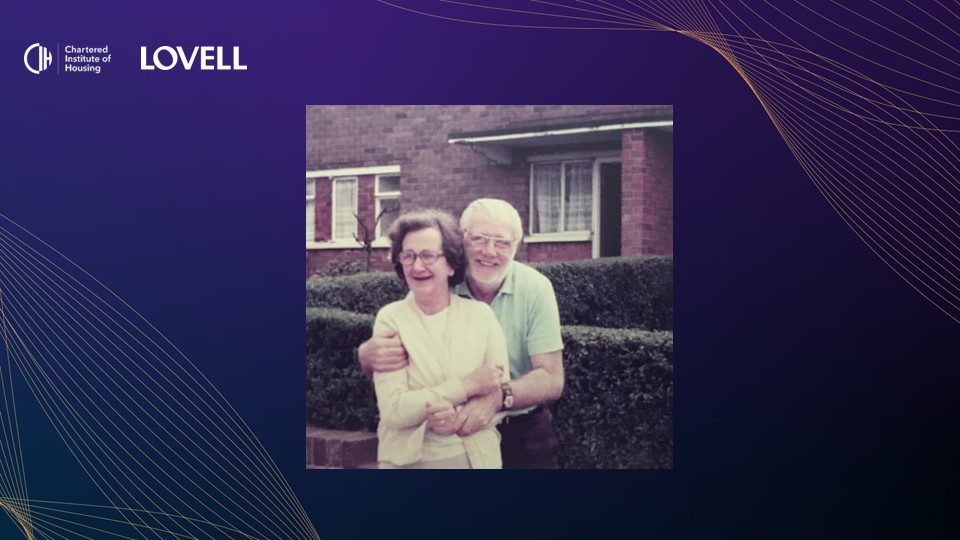
This is my mum and dad – proud tenants of a council house they moved into in the 50s. It was also home for me, for the first 18 years of my life.
I was the youngest of five girls. My mum was 47 when I arrived – and looking back now, that alone must have taken resilience.
But resilience isn’t always heroic in the moment.
Like many families, we carry childhood memories – some good, some painful.
For us, there was an unspoken chapter as we watched my dad experience a mental breakdown at a time when mental ill-health was taboo. Especially for men.
The message at the time was clear: stiff upper lip, go it alone, push through.
That was the medicine.
The impact though was unmistakable. My dad – the pillar of our family – became a shadow of himself. A man who loved his work, his books, the crosswords in the Mirror – can I say that… and took pride in himself could no longer manage the simplest things.
He stopped working. He stopped reading. Some days, he didn’t have the strength to wash or shave and as a result, his beard grew wild and white – to my young eyes, he slowly became unrecognisable – but that image – the wild white beard has never left my mind.
We knew everything had changed. Something precious had been lost.
There were no welfare checks. No housing officers. No one asking my mum: Are you okay? Are the children okay? How can we help?
She carried it alone – quietly, determinedly, exhaustingly.
Watching her rebuild dad, us, and our home, shaped my understanding of resilience – but not the kind we would now celebrate, or the kind we have rightly reshaped.
It taught me this:
- Mental health matters.
- Silence is not strength.
- Coping harder is not the answer.
- And asking for help is not weakness – it is a strategy.
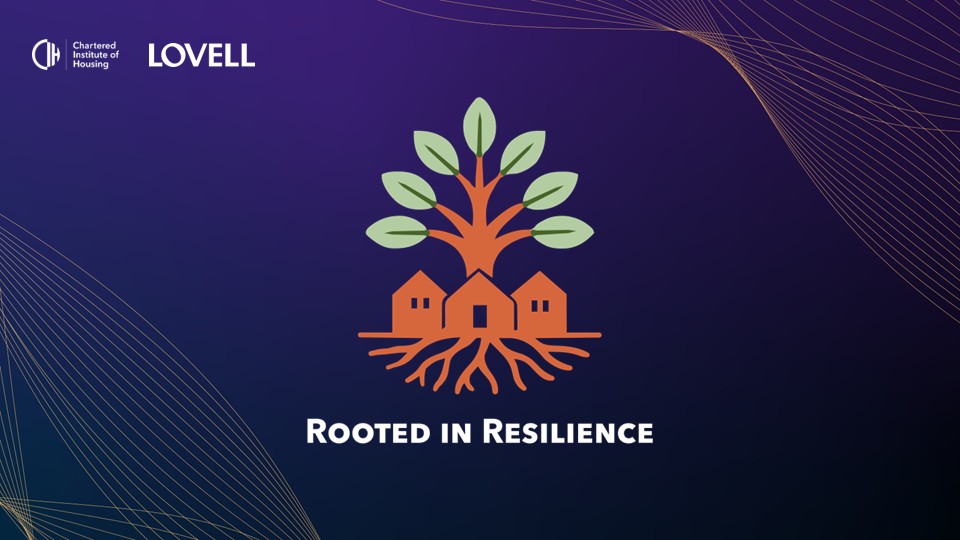
That experience sits behind my Rooted in Resilience campaign.
But this campaign is not separate from CIH’s work – it builds on it.
CIH has long championed:
- Continuous professional development
- Growth mindset
- Strong leadership
- Professional standards
- And the power of networks and community.
Rooted in Resilience brings these together – recognising that resilience future-proofs:
- Our colleagues
- Our services
- Our organisations
- Our communities
- And, importantly, ourselves.
Building resilience in housing means that we develop and support a culture that makes wellbeing a strategic priority – we need positive cultures to be created, and people need to feel supported, valued and connected.
We need to harness the power of a growth mindset – nurturing resilience, ensuring learning is constant and mistakes are seen as stepping stones to something better, not as setbacks. No matter your role, or seniority, leadership and resilience should be modelled across all organisations.
Because resilience is essential.
And resilience is structural.
In a world of increased regulation, pressure and scrutiny, these are not optional extras. Your leadership challenge today is to take these five things back.
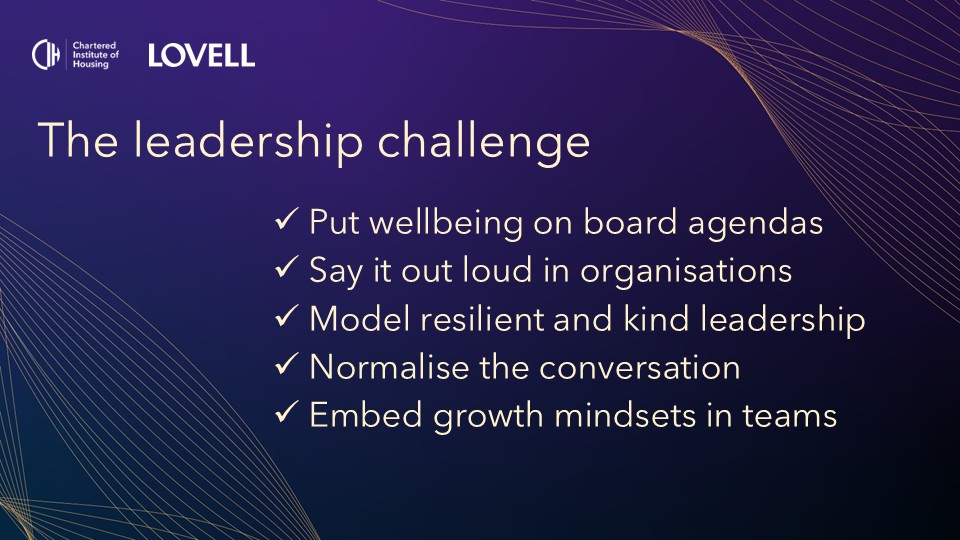
When wellbeing is placed on the board agenda, it quietly signals what truly matters.
- Saying it out loud in your organisation gives people permission to acknowledge it.
- Modelling resilient, kind leadership visibly shows others how to lead without being told.
- As conversations are normalised, stigma naturally begins to fall away.
- When growth mindsets are embedded in teams, capability expands without pressure.
Because professionalism sets the standard, and leadership ensures the systems around them work.
I’m not the only person to champion mental health resilience and cannot let tonight’s address go by without acknowledging the fantastic work that Paul Bridge did in this space, championing the importance of mental wellbeing and resilience for housing professionals.
Sadly, Paul passed away last month after struggling with his own mental health and will be a much-missed figure within the sector. Our thoughts are with Paul’s friends and family at this difficult time.
For me, it brings into sharp focus that we will all know someone – a friend, family, a colleague, a loved one, or indeed ourselves personally – that struggles with mental health issues. Sometimes this is visible, for others hidden.
One thing is certain. We must take resilience seriously and champion its importance.
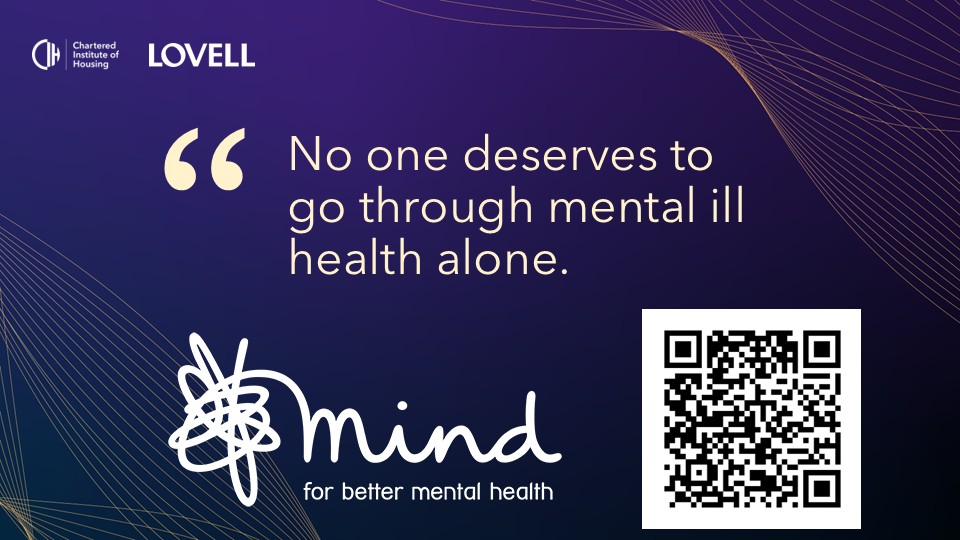
Interestingly, today is Time to Talk Day. Pioneered by Mind and Rethink Mental Illness, Time to Talk Day is the nation’s biggest mental health conversation. A chance to listen, share and talk about what really matters.
Exactly what I’ve had the opportunity to do this evening.
As part of my campaign, I’m fundraising for Mind – the charity who ensures people do not have to face mental ill-health alone.
My ask – please scan the QR code and support Mind. Every donation changes lives.
I must say, as a believer in the universe, it does feel that my campaign has been written in the stars, hosting tonight’s dinner on Time to Talk Day and launching at CIH’s AGM, which coincided with World Mental Health Day.
So, back to our man, Sifta Sam – you can probably see why I asked you to hold onto his image… the white beard, the wild look in his eyes, a lot like I remember the vision of my dad at that time or the feelings that flood back still years on, when someone close has a wild white beard…
I kept him in mind because resilience isn’t taken seriously – until suddenly it is.
It bends. It looks a bit wild. It survives the storm, and comes back a little crooked – but still standing. As my dad did, and as many of us do.
So, if resilience can restore lives, strengthen communities and sustain national productivity – Then let us ask ourselves this:
Why would we NOT give resilience the importance it deserves within our sector, our services, and within ourselves?
If you were in any doubt about the awe-inspiring nature of resilience we have best-selling author, Mandy Hickson, here with us tonight.
After the main course Mandy will talk about her time as the only female member of the RAF Frontline Tornado Squadron making split-second decisions at supersonic speeds, leading teams under intense pressure, and delivering results when the stakes were exceptionally high.
After hearing from Mandy, I defy you not to go home inspired and ready to act on the importance of embedding resilience in your organisations.
But now it’s time for food. Thank you for your attention, your support, and your belief, as leaders in this room, in progress. Please enjoy your evening.
Visit Julie's Rooted in Resilience campaign
Learn more about what being rooted in resilience means for Julie and how you can take away learnings from her campaign resources.
Rooted in Resilience