

10 Mar 2026
CIH International Group: Questioning our policy
Having been a member of CIH for many years, it was very exciting to be able to participate in a housing knowledge exchange in October 2025.
Jonathan Rose Companies
A for-profit mission-driven affordable housing provider
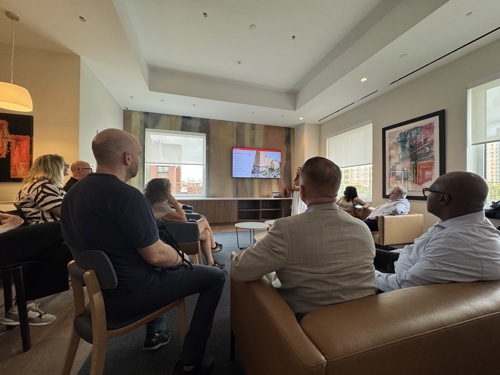
It was nice to meet others in downtown Brooklyn for some food and drinks on the first evening before starting the week’s busy trips. After navigating where in the neighbourhood had the best coffee (Black Seed Bagels was the clear winner for me, with the bonus of having a daily bagel) we set off on the subway to Jonathan Roses' fantastic offices. Located near Grand Union station, we met the team to discuss their model of affordable housing being delivered by a for-profit, mission-driven provider.

There was a lot to take in and comprehend, acknowledging just how different our affordable housing projects are funded and structured.
One staggering fact was that one quarter of New Yorkers spend more than 50 per cent of their income on rent.
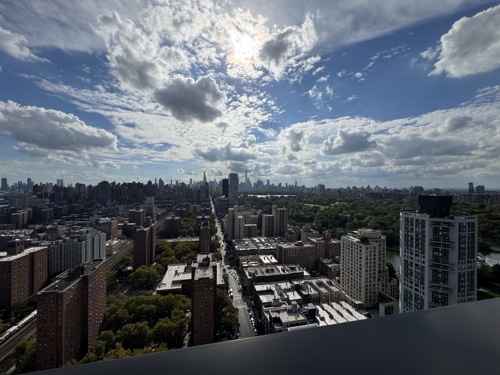
To bring this all to life after lunch, we went to visit Sendero Verde a new Passivhaus project in East Harlem. We were able to admire a different view of the New York skyline, and we realised just how close we were to Central Park, with many of us taking advantage of this by taking a stroll on a gloriously sunny day back to Manhattan.
NYCHA (New York City Housing Authority)
State-provided affordable housing partnership with Settlement Housing Fund an affordable housing provider, non-profit, mission-driven organisation
- NYCHA was established in 1934; it serves one in 17 New Yorkers.
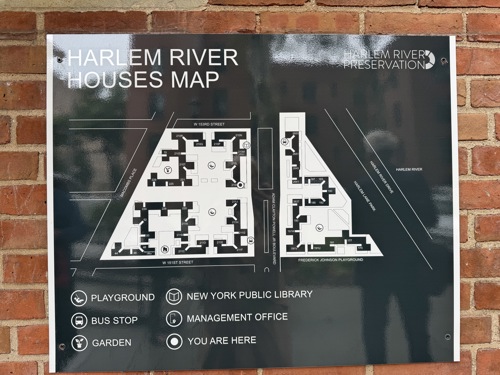
- Harlem River Houses – one of the first affordable housing projects delivered by New York in 1936, as part of Roosevelt’s New Deal legislation.
- “I see one-third of a nation ill-housed, ill-clad, ill-nourished.” Franklin Delano Roosevelt, Second Inaugural Address, January 20, 1937.
In the 1930s a similar pressure on the condition of housing could be felt in England, and London in particular. Speaking on 26 February 1930, the Lord Bishop of Southwark (HL Deb, 1930, col. 682) raised the issue of housing conditions in London, resulting in the 1930 Housing Act:
“Nowhere, I suppose, is the problem of housing more difficult than in London... The London County Council have, with great heroism and courage faced the problem. Huge housing estates have come into existence… But even in London, the problem is very far from solved.”
Housing was segregated by race in the United States until the 1950-60s. Harlem River Houses was a development for African Americans. Access to housing was restricted to married inhabitants or veterans.
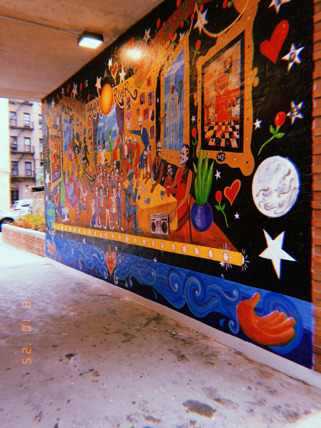
Due to underinvestment and a lack of access to funding to maintain housing, Harlem River Houses required NYCHA to review how they were operating their buildings. NYCHA look to work with a PACT (Permanent Affordability Commitment Together) partner to undertake these works. This process typically follows the programme below:
- Listen and learn (3-6 months)
- Partner selection (6 months)
- Design (12-18 months)
- Construction (18-24 months).
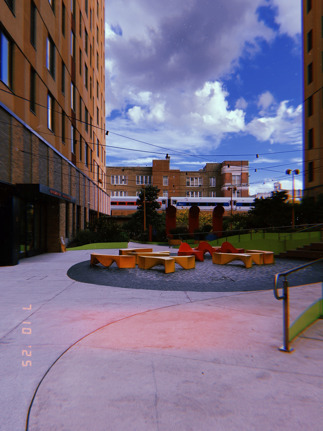
This has allowed for reinvestment of the properties to a habitable standard, becoming once again a popular place to live. By retaining the existing buildings, which had a positive reception at the time due to the massing and height of buildings, rather low scale compared to New York typically and the enclosed communal areas, Harlem River Houses remains a high-quality residential area. The refurbishment ensured demolition wasn’t required, as opposed to many regeneration schemes in London and the UK.
Similarities and learning points from the visits
Building management and operations
Most affordable housing developments in New York have a resident services coordinator based in each building; they are a registered social worker. It is quite common for not-for-profits to take on this role and management of a building, e.g. Jonathan Rose Companies, a for-profit no longer manage their own buildings.
24/7 case management with weekly check-ins
This operating model seems very different to the stripped-back version of housing management we see in England, with other government agencies responsible for working with tenants, i.e. social services, support workers etc. If this were dealt with at a local level within a building, would this lead to an improved wrap-around support service?
It was mentioned that there was one difficulty that landlords did face in New York – demonstrating the value of this support, which is similar to social value measurement in England, although we do have tools to do this such as Social Value Calculator and HACT.
The landlord typically pays for the water supply, therefore, this incentivises the monitoring of leaks, water wastage, etc. for the landlord, as it will directly impact their bottom line. Could this help with energy and water monitoring in England?
With stringent requirements, as guided by the London Plan, for water monitoring and usage within the energy performance monitoring of buildings in use, some examples from New York could be useful to accelerate the management of this.
Allocations and rent
15 per cent of housing is required to be set aside for New Yorkers experiencing homelessness. Allocations for homes take place on a lottery allocation system. In Sendero Verde, there were 250,000 applicants for 600 homes.
The typical approach for rent calculation in New York is one based on a percentage of Area Medium Income (AMI). AMI seeks to ensure no more than 30 per cent of income is spent on rent. Residents have to recertify their rent every year based on income.
At Sandero Verde, the AMI is £1,836 with residents’ incomes ranging between $19,646-$192,610.
Should we be more prescriptive about the level of rent residents pay in the context of affordable housing being a finite resource?
Not only does this create a fairer system, but it also allows for more quartiles of the population to access affordable housing, beyond just those most in need. This thinking isn’t particularly new and has been proposed previously, with no government willing to proceed in making it a change in policy (so far!)
Final reflections
Hearing what others were enjoying and prioritising during their visit to New York via the WhatsApp group was a great way to get to know each other and inspire what to do in the spare time we had. From jazz clubs to the New York State Museum, Coney Island visits, drag performances, and the high jinks of getting to Ellis Island to visit Lady Liberty were just some of the great times had in the group.
If you get the chance to visit another country and get access to professionals and organisations, without leaning on the group’s and CIH’s connections, I suggest embracing the opportunity.
Sophie is senior development manager at Sanctuary Housing