


EDI (or DEI as it may also be called) stands for equality, diversity and inclusion. Below we have put the breakdown of the definition of each below for more information. The 'e' can also sometimes be substituted for equity.
Equality
Equality means striving for a better balance in opportunities, resources, and decision-making processes for staff, customers and communities. The Equality and Human Rights Commission describes equality as:
"Equality is about ensuring that every individual has an equal opportunity to make the most of their lives and talents. It is also the belief that no one should have poorer life chances because of the way they were born, where they come from, what they believe, or whether they have a disability. Equality recognises that historically certain groups of people with protected characteristics such as race, disability, sex and sexual orientation have experienced discrimination."
What is equity and how is it different to equality?
Whilst we use the term equality in our definition of EDI, many in the EDI space have started using the term 'equity' in place of equality.
Equity is about providing different levels of opportunity for different people to ensure a fair outcome, rather than providing everything equally (equality) for possible different outcomes.
A good example to think of for this is a fence. Picture three people stood behind the fence and in front of the fence there is something to see. The first person is tall and can see over the fence without support. The second person is average height and can just about see, but needs a box to stand on to be able to see the same thing as the tall person. The third person is shorter and cannot see anything and so needs two boxes to be able to see the same thing as the others.
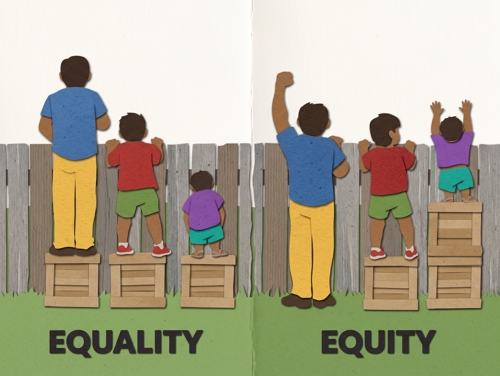
This visual helps us to understand that equality is less about giving everyone the same opportunities, it is about providing reasonable adjustments to our services to suit the individual. Think of this less as EDI, and more about good business practice.
Diversity
Being more aware of and proactive about the diversity of customers will ensure housing organisations provide the right services and meet the right needs and aspirations.
Diversity is the different characteristics that occur in a group of people. It is made up of the things that make us unique and different which could include cognitive skills, personality traits or the things that make up the protected characteristics such as race, age, gender, religion or sexual orientation.
Inclusion
An inclusive sector acts transparently and fairly, builds good relationships, and works collaboratively with tenants, partners, customers and communities to achieve better outcomes.
Inclusion is including people in a way that is fair for all, values everyone’s differences, and empowers and enables each person to be themselves and achieve their full potential and thrive at work and in their homes and communities.
An inclusive workplace culture is one in which everyone feels that they belong through feeling safe in being themselves, that their contribution matters, policies and practices are fair, and a diverse range of people are supported to work together effectively.
Everyone benefits from EDI
Although there is a perception that EDI is an 'add on' to things an organisation has to do, when you actually look at EDI in detail, you start to understand that EDI impacts on every single person in the world.
There are nine protected characteristics and every person falls into at least one – actually more than this, but some may be less visible or understood. So whether you're considering EDI as it's own policy, or just considering general business good practice, EDI is playing it's part.
Things you can do
At CIH we are committed to making the housing sector a fairer place to live and work. We have a few resources for members and their organisations to utilise to make sure this happens.
As a member you can:
- Fill in our rolling annual census
- Explore our EDI framework for your organisation
- Understand your strengths in our professional standards
- Read our other guidance on best EDI practice.