


All-Ireland Housing Awards 2026
Read all the shortlisted entries into this award category, best housing development, at the All-Ireland Housing Awards (AIHA) 2026 and find out who won the award on the night.
This award recognises developments that provide desirable and sustainable places to live, improving the lives of people within the community. The well-designed development will demonstrate creative approaches and excellence from concept to delivery.
This award was sponsored by Housing Agency.
Winning project name
Richmond Place - Housing With Supports
Winning organisation
Circle Voluntary Housing Association
Partner organisation
DCC
Statement of support
In March 2025, Circle completed Richmond Place, a purpose-built, 52-apartment supported housing scheme designed to enable people to age in place with dignity, independence, and community connection. Designed specifically for older people, it offers flexible living arrangements for individuals, couples, siblings, and those requiring overnight care. This Pathfinder Project, the first of its kind in Ireland, is an innovative model and offers a mix of 35 x 1.5- and 17 x two-bedroom apartments, specifically tailored to meet tenants evolving needs.
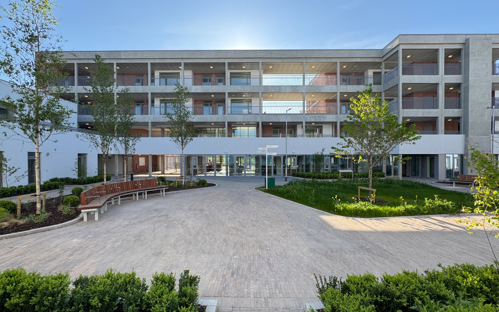
Richmond Place’s well-designed, accessible homes in a supportive environment promote autonomy, facilitate right-sizing, and reduce reliance on the need for hospital or nursing home care. Research shows that in cases where people live independently with access to integrated care, they are less likely to call emergency services and can be discharged from hospital quicker. This project represents a scalable supported housing model that blends environmental responsibility with social impact, providing a high-quality, dignified environment for older people.
Circle owns the properties and delivers tenancy and asset management while ALONE provides onsite, 24/7 social and care support to the tenants. This includes regular care coordination, assessments, health and social care signposting and monitoring with the HSE, volunteer befriending engagement and assistive technology alongside visiting care support packages from the HSE. A robust management framework ensures the Richmond Place scheme is safe, well-maintained, and responsive to tenant needs.
A Steering Committee (chaired by an independent chairperson) and made up of representatives from Dublin City Council (DCC), the Department of Housing, Local Government and Heritage (DHLGH), the Department of Health (DOH), the Heath Services Executive (HSE) (nationally and at CHO Area 7 level) and the Irish Council for Social Housing (ICSH) was established to oversee and support the development of the project. The members provided invaluable guidance to Circle throughout the design, delivery, and development of the Richmond Place model. Their expertise shaped a housing solution that balances autonomy with access to care, an approach that is both scalable and replicable.
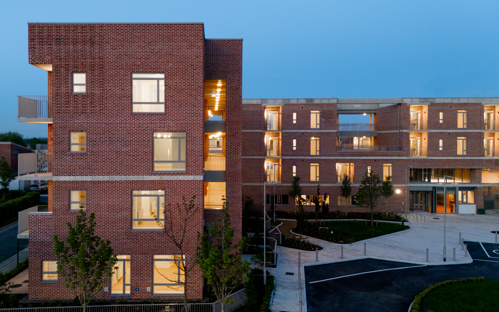
Richmond Place features high-quality, age-friendly housing built for placemaking, liveability, and long-term adaptability. Features include infrastructure for ceiling hoists and "soft spots" in walls for future adaptations. All apartments are dual aspect to maximise light and ventilation, fully accessible, support lifetime adaptability and meet evolving care needs, including overnight provision. Wide corridors, level access, and clear sightlines contribute to a safe and welcoming environment. All apartments are built to A2 standards, using durable, low-maintenance materials and energy-efficient systems, reducing running costs and addressing fuel poverty. Each apartment is equipped with an assistive technology system provided in collaboration with Tunstall Emergency Response, enhancing security and connectivity with 24-hour onsite enablement services.
Community integration is fostered through shared spaces such as communal gardens, a multipurpose community room, kitchen, and hair salon, encouraging social interaction and reducing isolation.
A significant innovation is the allocation process, uniquely supported by Dublin City Council. For the first time, Circle, ALONE, and the HSE collaboratively identified older people most in need of this specific housing and support combination, ensuring a person-centred approach that maximises impact and sets a new standard for integrated housing in Ireland. While predominantly social housing, the local authority’s financial contribution scheme enabled private homeowners to downsize, promoting a diverse, integrated community. Another innovative design element is the inclusion of 36 x 1.5-bedroom apartments. These apartments provide additional flexible space for family or overnight carers, allowing residents to be cared for comfortably at home, addressing Ireland's growing elderly population and the rising cost of healthcare. This model offers a viable alternative to long-term residential care, delivering quality housing and substantial cost savings to the state.
Outcomes and achievements
Richmond Place has established itself as an exemplar scheme for older person, as identified by The Department of Housing in their new housing plan. Its successful delivery, through an unprecedented partnership between Circle, ALONE, the HSE, and Dublin City Council, has created a first-of-its-kind Pathfinder Project in Ireland.
This project delivers 24/7 onsite social and care support, alongside visiting care packages, within a purpose-built, accessible residential setting ensuring that tenants with medical or personal care needs receive consistent, responsive support within their homes.
The person-centred allocation process, ensured that housing and support were precisely matched with those most in need, maximising the project's social impact. Early findings indicate measurable improvements in the wellbeing of many tenants, particularly those with medium and high support needs.
The project also boasts exceptional design. Its A2 BER standard apartments, featuring lifetime adaptability and assistive technology, ensure a safe, sustainable, and future-proofed environment. Recognition for this project includes a Pilot Award for the European Certificate for Ageing in Place (2021), the ICSH Social Impact Award (2024), and ICSH Community Housing Awards for Best Large Regeneration Project and Overall Winner (both 2025), along with being Highly Commended at the RIAI Awards (2025).
Shortlisted entries
Galway City Council - Bóithrín na Saoirse – Traveller Group Housing Scheme
Application entry
- Project name: Bóithrín na Saoirse – Traveller Group Housing Scheme
- Lead organisation: Galway City Council
- Partner organisation: CENA
Statement of support
Bóithrín na Saoirse – A Landmark Traveller Housing Development
Bóithrín na Saoirse is a landmark development of five Traveller-specific homes on Circular Road in Galway City. The project involved the full demolition of the former 1988 halting site and the construction of five modern, energy-efficient homes designed specifically for Traveller families.
This initiative represents a transformative collaboration between Galway City Council and CENA, the Traveller-led Approved Housing Body, marking a new approach to delivering Traveller accommodation. Traveller families were centrally involved – co-designing their homes, shaping shared spaces, and articulating cultural requirements to ensure comfort and sustainability.
Designed by deSiún Architects and built by Pat Loftus Construction Group, the scheme was completed in July 2025, with families moving in the following month.
From Halting Site to Modern Homes
The original Circular Road halting site, established in 1988, consisted of five aging bays with mobile homes and basic service units. Over decades, the site deteriorated significantly, offering poor-quality accommodation that no longer met residents’ needs. The Galway City Council Traveller Accommodation Programme 2019-2024 identified the site for redevelopment, as it stood in stark contrast to wider improvements in the area and failed to reflect modern expectations for safe, culturally appropriate living.
Input from the Local Traveller Accommodation Consultative Committee, CENA, and the families themselves shaped a new vision: permanent, modern homes that are attractive, integrated into the community, and respectful of Traveller culture.
Design Principles
The brief, prepared collaboratively by Galway City Council and CENA, focused on two objectives:
- Replace the halting site with a culturally appropriate group housing scheme of five units.
- Deliver accommodation that meets Traveller cultural needs within a sustainable community setting.
A key design strategy was removing the high concrete boundary wall that had previously isolated the site. This allowed integration with the tree-planted Claremont open space and created a visually coherent termination of the vista along Claremont Park, contributing positively to the suburban character of the area.
Integration and Layout
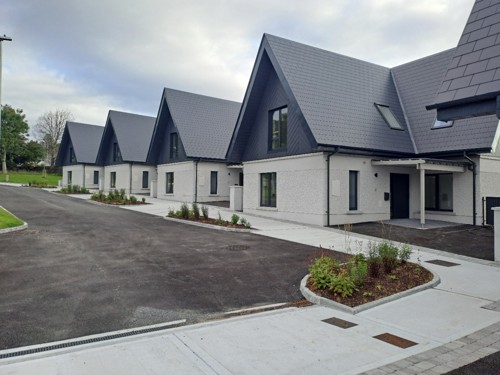
The houses are arranged in a semi-circular arc around a shared green space, evoking the traditional image of wagons facing onto a camp green. Additional native planting and landscaping enhanced the amenity of the internal street and surrounding green spaces.
Internally, homes feature open-plan kitchen and living spaces oriented east toward rear courtyards, with ‘L’-shaped layouts allowing views west to the entrance and parking area. To reflect the primacy of outdoor culture, each home includes a covered veranda extending the living space externally. Parking is provided for a car or van, with minimal front space.
The design responds sensitively to both cultural requirements and suburban context.
Sustainability and Impact
The initiative delivers substantial and lasting benefits:
- Sense of Ownership: Active participation fostered strong resident ownership, essential for sustainable tenancies.
- Inclusion and Visibility: The development is integrated into the community, a visible demonstration of inclusive housing policy.
- Pride of Place: Families take pride in homes that reflect their identity and heritage.
- Sustainable Tenancies: Community involvement encourages care of homes and shared spaces.
- High-Quality Homes: Safe, modern, energy-efficient housing tailored to Traveller needs.
- Improved Outcomes: Quality housing supports better health, education, employment, and social participation.
A Positive Shift
Bóithrín na Saoirse exemplifies how public housing can be inclusive, attractive, and culturally appropriate. It sets a new standard for Traveller accommodation – one rooted in collaboration, respect, and community integration.
Outcomes and achievements
Bóithrín na Saoirse was officially opened on 11 of November by the city’s deputy mayor, Councillor Alan Cheevers and Mr Éamon Ó Cuív, former Galway West TD and deputy chair of the Joint Oireachtas Committee on Key Issues affecting the Traveller Community.
Leonard Cleary, chief executive of Galway City Council, described the project as “a model for future provision of sustainable Traveller housing that recognises identity and distinct culture in a meaningful way.”
Brian Dillon, CEO of CENA Approved Housing Body, echoed this, stating: “These homes – and the process behind them – show that people do not have to be marginalised or hidden away to celebrate diversity. CENA is committed to bringing lessons from Galway to other communities across Ireland.”
Local resident and mayor Mike Cubbard expressed pride in the development: “This project shows the real impact of working together – families, the Traveller community, Galway City Council, and CENA all played their part. These homes represent not just bricks and mortar, but stability, respect, and opportunity for families to thrive.”
The scheme has received strong endorsement from resident families, who report improved quality of life and pride in homes tailored to their culture and daily needs. Bóithrín na Saoirse stands as a powerful example of inclusive, community-led housing that delivers lasting benefits for families and the wider city.
Apex Housing Association - Hopefield Avenue, Newtownabbey
Application entry
- Project name: Hopefield Avenue, Newtownabbey
- Lead organisation: Apex Housing Association
Statement of support
Hopefield Avenue in Newtownabbey is a transformative housing development that exemplifies excellence in design, community engagement, and sustainability. Delivered by Apex, the scheme comprises 107 social homes alongside four affordable homes for sale, responding directly to the needs identified by the Northern Ireland Housing Executive (NIHE). This includes 11 bespoke homes for families with complex needs and 24 homes tailored for tenants aged 55 and over, ensuring inclusivity and accessibility for all.
A sense of place
The development occupies a 4.4-hectare site formerly home to Newtownabbey High School. Rather than imposing a generic layout, the design competition process embraced the site’s unique characteristics, creating a sense of place that resonates with local memory and identity. Two original school entrances were retained, providing continuity with the past while facilitating practical access.
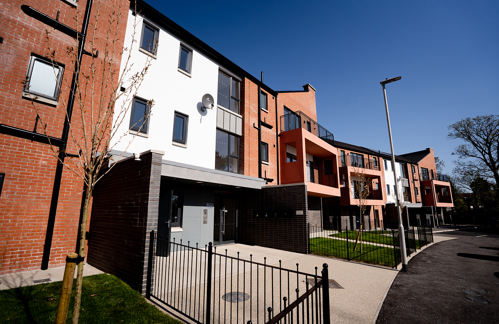
The crescent-shaped apartment buildings for older residents overlook mature trees and grassland along the Shore Road, preserving natural assets and offering serene views. Balconies framed by greenery encourage interaction with the outdoors, fostering wellbeing and community connection.
Apex’s long-standing engagement with the Rathcoole community informed every stage of development. Residents’ aspirations shaped the design, ensuring the scheme reflects local values rather than a lowest-cost approach. The entrance sequence, framed by park railings and high-quality landscaping, signals respect for the area and creates an inviting gateway. At the heart of the development lies a vibrant open space and inclusive play park, featuring equipment designed for children with disabilities. These elements promote social cohesion and intergenerational interaction.
Innovative design and construction
Innovation is evident throughout. The architectural team introduced playful design features, including varied brick patterns, zinc cladding, and distinctive roof forms, adding visual interest and character. Contractors demonstrated exceptional craftsmanship, with fire-stopping works documented as best practice for future projects. Sustainability was prioritised through a Nearly Zero Energy Buildings (NZEB) pilot, achieving an 83 per cent reduction in CO2 emissions and significant savings on tenants’ utility bills. Real-time monitoring via a dedicated app ensures ongoing performance evaluation, informing future developments.
“I’ve died and gone to heaven”
The success of Hopefield Avenue is best illustrated through the voices and stories of its residents. One memorable moment occurred during a tour by NIHE Place Making teams when a tenant in an over-55 apartment spontaneously invited more than twenty visitors into her home. She declared “I think I’ve died and gone to heaven”, sharing how she had initially feared leaving her bungalow but now delights in the light-filled communal spaces, the sense of security, and the joy of sitting on her balcony overlooking mature trees and listening to the birds. The crescent-shaped design of the apartment blocks allows her to wave to neighbours, fostering a sense of community reminiscent of the Royal Crescent in Bath. She proudly spoke about the secure communal gardens, complete with a pergola and raised planters for vegetables - features that encourage social interaction and wellbeing.
This ‘pocket of happiness’ exemplifies what Apex is continually striving to achieve in new developments. There are many other ‘pockets of happiness’ throughout the development that make Hopefield Avenue a wonderful place to live. A teenage wheelchair user enjoys a kitchen adapted for baking, positioned to overlook the garden - a deliberate design choice to give him the best view.
Families living in bespoke homes for complex needs speak of layouts that make daily life easier and more dignified. These personal experiences reflect the development’s core achievement: creating homes that are not only functional but uplifting, tailored to individual needs and aspirations.
Hopefield Avenue is more than a housing development; it is a thoughtfully designed community that harmonises with its surroundings, meets diverse needs, and sets a benchmark for innovation and sustainability in housing.
Outcomes and achievements
Hopefield Avenue delivers measurable and meaningful outcomes for the Newtownabbey community:
- Meeting local needs: 107 social homes, including 11 bespoke units for complex needs and 24 homes for older residents, directly address NIHE’s identified housing requirements. Four affordable homes integrate seamlessly within the scheme.
- Sense of place: Retention of mature trees and original school entrances preserves local heritage. Crescent-shaped apartments and landscaped open spaces create a cohesive, welcoming environment.
- Innovation and sustainability: NZEB pilot homes achieve an 83 per cent reduction in CO₂ emissions and lower energy costs, monitored via smart technology. Architectural creativity - playful brickwork, zinc cladding, and varied rooflines - enhances visual identity.
- Community impact: Inclusive play areas, secure communal gardens, and adaptable home designs foster wellbeing and social interaction. Resident feedback highlights exceptional satisfaction, with tenants describing their homes as “heaven” and praising light-filled spaces and security.
- Recognition and replication: The development has attracted interest from NIHE Place Making teams and other community groups as a model of best practice.
Hopefield Avenue stands as a dynamic, sustainable and inclusive development that enriches lives and strengthens community cohesion.
Clanmil Housing Association - The Savoy
Application entry
- Project name: The Savoy
- Lead organisation: Clanmil Housing Association
Statement of support
The Savoy, Bangor is an exemplary housing development that delivers high quality, sustainable homes while celebrating local heritage, meeting identified housing need and fostering a strong sense of place and community. Led by Clanmil Housing Association, the scheme demonstrates excellence from concept through to delivery and embodies innovation, imagination and social value.
Clanmil has owned the Savoy site since 1986 and has a long standing commitment to its use for independent living accommodation for older people. The Main Savoy building is a Grade 2 listed 1930’s Art-Deco former hotel building. To the rear were two additional buildings also used as residential accommodation but added later and not in the same style. In 2015, Clanmil began exploring the sensitive redevelopment of these rear buildings to better meet contemporary housing need while respecting the site’s historic significance.
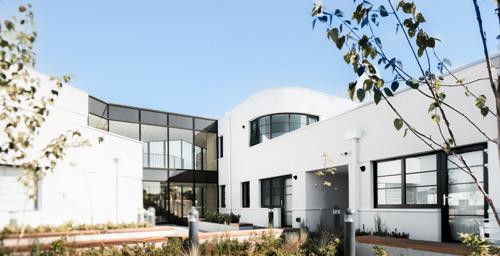
The completed development provides 26 well designed, two bedroom apartments for customers aged 55 and over, a client group with significant and growing demand in Bangor. The scheme was approved through the Northern Ireland Housing Executive Social Housing Development Programme, ensuring alignment with local housing need, value for money and deliverability. Homes were allocated through the NIHE Common Selection Scheme and the development is now fully occupied, demonstrating its success in meeting demand.
Located on a 0.17 hectare site less than half a mile from Bangor city centre, the development benefits from excellent access to shops, leisure facilities and a key public transport hub. The sites constrained access informed a carefully considered layout, with two new residential blocks positioned towards Broadway and the existing access lane. This arrangement maximises south facing private terrace space for residents, provides a raised communal amenity garden concealing parking, and creates a clear and legible entrance sequence with informal meeting and gathering spaces at the heart of the scheme.
The Savoy achieves a strong sense of place and cohesion with its surroundings. Rather than replicating the historic hotel, the new buildings draw inspiration from the elegance and streamlined forms of Art Deco architecture, reinterpreted in a contemporary manner. Curved forms, a restrained material palette and careful detailing allow the development to sit comfortably alongside the listed building while reinforcing Bangor’s architectural identity.
Community integration was central to the design approach.
Extensive pre application consultation enabled meaningful engagement with local residents. The development strengthens its relationship with the surrounding neighbourhood through an active street frontage along Broadway, introducing ground floor entrances and private terraces facing the street. This reflects the established on street residential pattern of the area and gives residents a strong sense of ownership, encouraging natural surveillance and community care.
Innovation is evident throughout the scheme. Homes are oriented to maximise natural daylight and solar gain, with triple glazed windows and a concrete structure with external insulation delivering excellent thermal performance and reduced running costs. Landscaped areas, including a first floor podium garden and planted buffers with wildflowers, enhance biodiversity while providing attractive shared spaces for residents to socialise and relax.
In early 2025, The Savoy was selected by NIHE as a Housing for All shared housing scheme, recognising its contribution to inclusion, good relations and long term community sustainability.
Customer feedback highlights the scheme’s impact. Veronica Murphy, occupant of Clanmil’s 6,000th home, commented, “I am delighted with my new apartment and already feel right at home. I downsized from a three bedroom house and this apartment suits my needs perfectly.”
The Savoy exemplifies best practice in housing delivery, responding to need, respecting place and enhancing lives.
Outcomes and achievements
The Savoy, Bangor has successfully delivered 26 high quality two bedroom apartments for customers aged 55 and over, contributing to a total of 65 homes across the wider Savoy complex. The development is fully occupied and meets an identified local housing need through the NIHE Common Selection Scheme.
Key achievements include
- Selection as a Housing for All shared housing development, supported by NIHE and the Department for Communities
- Sensitive redevelopment of a long established site that complements a landmark Grade II listed Art Deco building
- Delivery of energy efficient homes with an EPC rating of B, reducing fuel costs and environmental impact
- Creation of attractive communal and landscaped spaces, including a raised podium garden, supporting wellbeing and social interaction
- High levels of resident satisfaction, with positive feedback highlighting comfort, design quality and proximity to the city centre
- Provision of active street frontages along Broadway, strengthening community safety and integration
- Completion of Clanmil Housing Association’s 6,000th home, marking a significant organisational milestone.
The Savoy stands as a lasting asset to Bangor, providing sustainable homes, reinforcing local identity and setting a benchmark for future housing led regeneration.
Kerry County Council - Housing at Clogharesta, Tralee, Co Kerry
Application entry
- Project name: Housing at Clogharesta, Tralee, Co Kerry
- Lead organisation: Kerry County Council
Statement of support
Background
In 2004, Tralee Town Council identified that the Mitchel’s/Boherbee area of the town needed major regeneration to deal with the underlying physical, economic and social problems that affected the area. The severe social and economic deprivation at its core had impacted on the wider community in the surrounding area.
To date the Mitchel’s/Boherbee Community Regeneration Project has delivered a suite of community, social and residential projects, through new build, conservation, refurbishment, energy upgrades and public realm works, all of which have resulted in creating a safe, attractive environment.
Social and voluntary housing projects and associated public realm works are delivering high quality residential solutions that help to bring the community together, in an urban environment.
Project and Scope
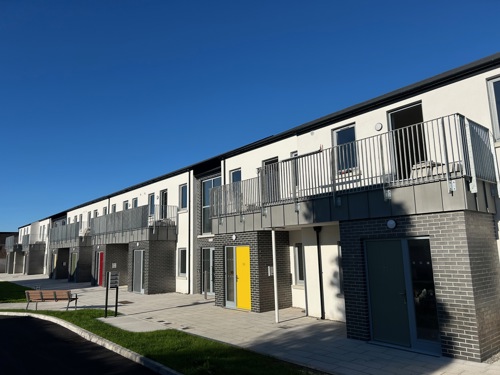
This project as a final movement in the regeneration programme was to construct 16 new family dwellings at Clogharesta, Cloonmore. The scope included construction of a terraced apartment block containing, 12 one-bed and four two-bed homes; a tenancy office and all associated public realm and siteworks to compliment the regeneration works already completed.
Client Requirements
The brown-field site is less than 1km from Tralee town centre and forms part of the previously demolished St Martin’s Park housing estate. The dwellings are designed in a manner to enhance the regeneration area in line with good practice and in accordance with Quality Housing for Sustainable Communities and Design Manual for Urban Roads and Streets. The objective of this project was to provide a good standard of living accommodation for individuals on the local authority housing list and continue the regeneration of the Mitchel’s Boherbee area.
Dwellings
The new two storey apartment building respects the scale of the existing housing which it is located behind. The 16no apartments, 8no on ground floor and 8no on first floor, along with a lift are all fully wheelchair accessible. The dwellings are all BER A2 rated. A ‘fabric first’ approach was taken optimising the performance of materials used. Elemental u-values for floors, walls, ceilings and windows exceeded Building Regulations and the dwellings benefit from solar gain and thermal mass through traditional masonry cavity wall construction. Heating and domestic hot water is provided by high-efficiency exhaust air heat pump units in each apartment and heat distribution is achieved via a low temperature underfloor heating system. Ventilation is provided via humidity-controlled window vents. The low energy homes contribute to low energy bills reducing fuel poverty. South facing ground floor terraces and first floor balconies provide pleasant private open space for residents
Landscaping
The hard and soft landscaped semi-private courtyard to the southern perimeter provides a social meeting place for the residents, helping to establish a community spirit. To the rear of the building is a communal private garden for all apartments. Electric vehicle ducting has been installed throughout the scheme ensuring all car parking spaces can facilitate future EV charging installations.
Sustainability
The reuse and revitalisation of this urban brownfield site epitomises sustainable development. The repurposing and reshaping of this site is in line with National and Local Planning Policy, helping to create more liveable and environmentally conscious towns. This sites central location within Tralee ensure residents are in proximity to an extensive range of existing facilities, all within 15minute walking distance. The redevelopment of this site and the broader regeneration project is helping to enhance the economic viability of the Mitchel’s/Boherbee area.
Outcomes
The development was managed by Kerry County Council, designed by Ailtirí Architects and constructed by Evans and Kelliher Construction Ltd. The project was funded by the Department of Housing, Local Government and Heritage under the Social Housing Investment Programme. Construction commenced in March 2023, and the scheme was completed in December 2025.
The key client requirement was to produce high quality housing suited to local needs and in a manner that supports and develops a vibrant community. The outcome has been a well-integrated residential development which compliments the wider regeneration works completed in the area.
Outcomes and achievements
Since 2004 Kerry County Council’s continuous commitment to the Mitchel’s/Boherbee Regeneration Project has helped ensure the positive transformation of this area. The scope and scale of regeneration work carried out to date has been immense encompassing community, social and residential projects, through new build, conservation, refurbishment, energy upgrades and public realm works.
The redevelopment of Clogharesta secures the objectives of the Mitchel’s/Boherbee Community Regeneration Plan. It underlines the principle of sustainable development and consolidates the existing character and settlement pattern in the area as well as improving and enhancing the visual appearance of the regeneration area. The completed development has exceeded in this objective delivering a high-quality design with meticulous execution by the contractor.
A critical element in delivering this project successfully involved extensive consultation and close liaison with representatives from the local community, allocated tenants and adjacent property owners during the design and construction phases. Despite challenging site conditions, construction progressed smoothly and has resulted in the delivery of high-quality housing and public realm spaces, further regenerating the Mitchel’s/Boherbee area. This sustainable, appropriate and integrated housing development secures the vibrancy of this regeneration area.
North and East Housing Association - Bayview Gardens: From Dereliction to Renewal – A Landmark for Drogheda
Application entry
- Project name: Bayview Gardens: From Dereliction to Renewal – A Landmark for Drogheda
- Lead organisation: North and East Housing Association
- Partner organisations: Louth County Council, Van Dijk Architects and Urban Life
Statement of support
Bayview Gardens is a well-designed, sustainable development that improves lives and creates a sense of place. Delivered by North and East Housing Association (NEHA) in partnership with Louth County Council, Van Dijk Architects and Urban Life, this project transformed a long-neglected brownfield site opposite Drogheda Railway Station into 58 high-quality homes that blend heritage with modern living. Urban Life developed the scheme, which was funded through the Capital Advance Leasing Facility (CALF) and senior loan finance from the Housing Finance Agency (HFA).
Meeting Local Needs
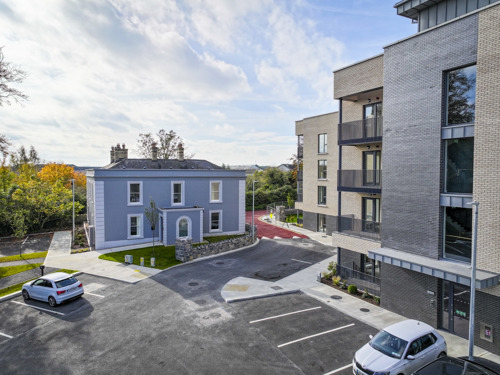
The development responds directly to local housing demand, providing a balanced mix of 21 one-bed, 30 two-bed and three three-bed apartments, plus two maisonettes in the restored Bayview House and two apartments in the repurposed Coach House. Universal design features such as level thresholds, lift access and generous circulation ensure accessibility for all ages and abilities. Strong uptake has seen 51 homes occupied within weeks of completion, with the remaining homes in final stages of allocation, clear evidence of demand and community confidence.
Sense of Place and Cohesion
Bayview Gardens restores dignity to a site once associated with dereliction and anti-social behaviour. At its heart is Bayview House, a protected structure dating to 1853, meticulously conserved under a Grade 1 architect-led method statement. Original sash windows, plaster cornices and roof profiles were reinstated using lime-based materials, while the Coach House was repurposed with a contemporary extension that respects historic character. These heritage elements anchor the development in Drogheda’s urban story, creating a lived heritage experience.
The development includes landscaped gardens, mature trees protected under a Tree Preservation Order, and 1,130 square metres of public open space that encourage biodiversity and social interaction. Pedestrian access to Dublin Road has been reinstated, improving links to the town centre and rail services and integrating the scheme with its surroundings.
Innovation and Imagination
Bayview Gardens demonstrates creative approaches from concept to delivery:
- Sustainability: BER A ratings for new-build apartments and the Coach House, supported by MVHR and solar PV, deliver strong energy performance and an estimated annual carbon reduction of 35 tonnes. EV charging points and secure bicycle storage encourage low-carbon mobility.
- Construction: Sensitive restoration combined with modern engineering resolved structural decay, fire damage and damp ingress. Geo-cell root protection and permeable surfacing safeguarded mature trees during works.
- Design: The scheme exceeds national apartment standards, offering bright, spacious homes with large windows, underfloor heating in the Coach House and high-efficiency systems throughout. Communal spaces include play areas, picnic seating and pollinator-friendly planting.
Testimonials and Endorsements
“Bayview Gardens was a rare opportunity to bring heritage and modern living together. Designing around a protected tree and making it a focal point was one of the most rewarding parts of the project.” – Aleksandra Ostapiuk, Project Architect, Van Dijk Architects
“Bayview Gardens is a landmark development for Drogheda, blending heritage with modern living and strengthening the heart of the town.” – David Conway, Chief Executive, Louth County Council
Residents describe Bayview Gardens as safe, welcoming and life-changing:
“The windows in my open-plan sitting room and kitchen, the light they let in is fabulous.” – Jordane
“Our favourite thing is its location, close to the city centre, with the bus stop and train station just across the street.” – Nina
“The spacious layout and beautiful Victorian character are definitely my favourite things.” – Agata
Bayview Gardens proves that social housing can be ambitious, beautiful and sustainable. It sets a benchmark for future regeneration projects, demonstrating that collaboration and creativity can turn dereliction into opportunity.
Check out an aerial video of the development at https://youtu.be/OFuiQWm8OdA
Outcomes and achievements
Bayview Gardens has delivered 58 sustainable homes through bold regeneration and careful conservation. To date, 51 homes are occupied, with the remaining homes in final allocation, reflecting strong demand and successful integration into the community.
Key Outcomes and achievements:
- Housing delivery: 21 one-bed, 30 two-bed, and three three-bed apartments, plus heritage homes in Bayview House and the Coach House.
- Energy performance: BER A ratings for new build and Coach House units, supported by MVHR and solar PV. Estimated annual carbon savings of 35 tonnes reduce household energy costs and environmental impact.
- Accessibility: Universal design features throughout, including lift access and level thresholds.
- Place and landscape: 1,130 sqm of public open space and 410 sqm of communal amenity with sociable seating, play areas, and pollinator-friendly planting. Mature trees protected by a Tree Preservation Order were safeguarded during construction and now define the gardens, enhancing biodiversity and identity.
- Heritage: Bayview House and the Coach House were restored under rigorous oversight, preserving sash windows, cornices, and roof profiles, and using lime-based materials to ensure authenticity.
- Bayview Gardens transforms a damaged site into a safe, connected, and welcoming place to live. It supports wellbeing, celebrates heritage, and offers a replicable model for sustainable town-centre housing.
- Bayview Gardens has been shortlisted in the Best Social Housing Development category at the 2026 Sunday Business Post Property Awards.
Woven Housing Association - Striking New Homes at Lorne Street, Belfast
Application entry
- Project name: Striking New Homes at Lorne Street, Belfast
- Lead organisation: Woven Housing Association
Statement of support
This new build development set in a developing area off the Lisburn Road represents the very highest standards in social housing.
- It forms part of a major investment by Woven of £33 million across Belfast ensuring a range of housing solutions in each area to meet the needs of the widest possible range of tenants with diverse environments to help communities thrive.
- Regenerating the area, paving the way for future investment and footfall.
- Providing new social housing in an area dominated by student accommodation and private rental flats, at a more affordable rent.
- Four-storey timber frame construction was used for sustainability and ease of building on a tight site.
- Lorne Street is also a 'Housing for All' funded scheme involving actively engaging with the local community, with the goal of creating a neighbourhood committed to establishing a network of support with external agencies, improving community development and community safety for all residents.
- Joint launch with partners from Ark Housing Association at Morton Community Centre for our Housing for All, five-year Good Relations Programme for Lorne St and Malone Mews.
It is a stylish development of 31 No new-build, self-contained general needs units procured on an ‘Off the Shelf’ basis. It comprises 1No 2P/1B Wheelchair apartment, 1No 3P/2B Wheelchair apartment, 9No 2P/1B apartments and 20No 3P/2B apartments, agreed collaboratively with key stakeholders at the Northern Ireland Housing Executive.
Woven refined the scheme taking on board development, housing, maintenance and community comments.
There was a former warehouse on the site, with housing on either side. The site is located in a residential area with shops and businesses, a church and a community centre. It’s redevelopment offered a good opportunity for sustainability and biodiversity, in an area of high housing need close to amenities, facilities and public transport.
Consultation prior to construction was extremely positive and served to reinforce the Association’s strongly held belief that the site represented a good news story for the area and a chance to demonstrate the very best of the housing sector.
The development is set on Lorne Street and forms an important corner turning on to Lower Windsor Road, with a central mews courtyard to the rear, providing for an intimate character.
Gardenhill Properties commenced work on site in March 2023 at a cost of £6,300,000, and proceeded efficiently to deliver the scheme on time and budget, with completion in August 2025.
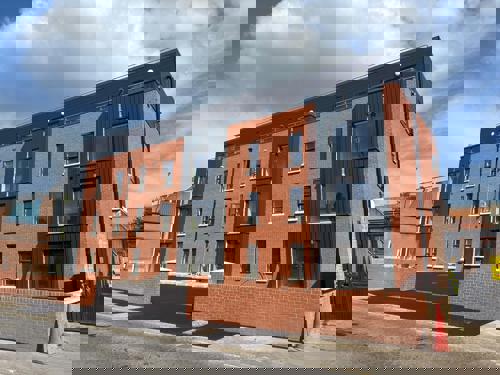
The attractive and sympathetically designed buildings comprise 31 dwellings, in four storey blocks, complementary to the neighbouring properties. The striking frontage comprises brick with dark metal cladding to feature windows and the upper floor set back, and rendered walls to the courtyard. There are shared parking spaces together with a sustainable travel plan. Rooftop amenity space is available.
The properties conform to the DfC Housing Association Guide requirements, and with energy measures as ‘fabric first’. The overall building comprises four storey timber frame construction with brick and rendered walls, rc stairwells and lift shafts, flat roofs, pvc window and door frames, quality thermal and sound insulation and appropriate services. Construction and operation includes waste management, recycling and care with resources.
The tenants are assisted with operational and energy information and benefits advice and they have already shown in their décor their enthusiasm for their new homes.
A tenant shared - I absolutely love my apartment, where I'm situated is ideal and feel very secure. I was previously in a single let for 18 years and this was a god send. It's has Improved my mental health and has given me a lift. My home is perfect for me.
Outcomes and achievements
The development makes an innovative contribution to the Lower Lisburn Road area with its attractive design and regeneration led approach. It is a tasteful and positive addition to the environment and benefit to the local area, providing much needed quality housing, and additional footfall.
- Sensitively developing a brownfield site.
- Adding to regeneration of the Lisburn Road area.
- Increasing sustainability and biodiversity.
- Providing much needed housing in an area of substantial need.
- Quality new housing for up to 83 persons / 31 households.
- Innovative design to challenge social housing stereotype.
- Quality construction and build management.
- Appealing features including brick/ render, feature cladding, pvc doors and windows.
- Quality dwelling layouts and specifications.
- Very satisfied tenants with ongoing advice and comfortable homes.
- Attractive streetscape.
- Working with neighbours, MLAs and Councillors.
- Substantial investment of £6,552,000, in tandem with other substantial investment in Belfast.
- Huge opportunity to make a difference as a properly resourced Housing for All scheme, with further community involvement plans involving tenants and the local community.
Following the success of this development, Woven is continuing its developments in Belfast with 103 apartments at Marlborough House, a major city centre retrofit, totalling to a substantial investment in this area of over £33,446,000.
DLRCC - Shanganagh Castle Estate, Shankill, Co. Dublin - Designed for Living, Built for Community
Application entry
- Project name: Shanganagh Castle Estate, Shankill, Co. Dublin - Designed for Living, Built for Community
- Lead organisation: DLRCC
- Partner organisation: LDA
Statement of support
Shanganagh Castle Estate is a development of 597 social and affordable homes, with community amenities, delivered by Dún Laoghaire-Rathdown County Council (DLR) and the Land Development Agency (LDA). The development was the LDA’s first direct delivery project on state land and is not only the largest public housing project in decades but is also one of the largest passive housing developments in Europe.
It is an exemplar development and testament to the determination and ambition of DLR and the LDA to deliver affordable housing provision at scale on state owned land.
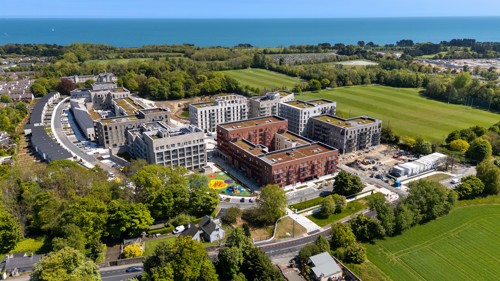
Shankill and the wider South Dublin region is an area of high housing demand. Shanganagh Castle Estate has combined quality with affordability, at scale, in a much sought after location. It has delivered high quality A-rated and passive homes across a mix of tenures - affordable purchase, cost rental and social. The development provides a range of housing options to cater for young professionals and families, older people and social housing tenants. The design and tenure mix of the development creates a diverse neighbourhood with amenities on its doorstep but also provides opportunities for residents to integrate into the wider Shankill and south Dublin community.
There was an enormous demand for the affordable sale and cost rental units when they were launched in 2024 and 2025. The success for the owners and tenants is already being felt with low bills, good indoor air quality and warm comfortable homes. Other factors to note is that other than the affordable sale homes, the bulk of the homes will be kept in LDA ownership long term, with the idea of being able to move people to more suitable accommodation within the scheme as their needs change over time. This is considered to be a positive aspect – that they will remain in state ownership so that future generations can avail of them.
When the LDA joined in partnership with DLR as the project progressed on through design development, tender stage and construction, their sustainability ethos matched with DLR’s vision, and they maintained the desired PH standard. Then the contractor Walls Construction took up the mantle to produce these super homes at scale. Built using ‘modern methods of construction’ or ‘MMC’, it is also an important Irish exemplar in the field of ‘rapid build’. But it was the decision by DLR several years ago to include the exacting PH standard that has led to the environmental quality achieved today. The public sector needs to demonstrate ambition that others can follow. As building projects have such a long lead-in time, it is important to clearly set out a low energy mission for the benefit of future residents well in advance on projects that won’t be complete for a number of years.
Active travel and community integration were key considerations for both DLR and the LDA with a focus on low car parking provision (.56 space per home), high bicycle parking provision of over 1,300 spaces. A district heating system, design features to make working from home easier, communal green and play spaces, a dedicated crèche, a café and community facilities all support sustainable living.
This development has been delivered beside the new Woodbrook Dart Station, a Bus Connects corridor, active travel access to neighbouring amenities and a nearby electric bike rental system.
The lush surrounding of Shanganagh Park and woodlands are adjacent which offers scenic walking trails, playgrounds and sports facilities. And within the site is an historic pond originally part of the grounds of Shanganagh Castle. The site layout was designed to reflect the historic landscape setting with sweeping driveway and views.
Outcomes and achievements
Shankill and the wider South Dublin region is an area of high housing demand. Shanganagh Castle Estate has combined quality with affordability, at scale, in a much sought after location. It has delivered high quality A-rated and passive homes across a mix of tenures - affordable purchase, cost rental and social. The development provides a range of housing options to cater for young professionals and families, older people and social housing tenants. The design and tenure mix of the development creates a diverse neighbourhood with amenities on its doorstep but also provides opportunities for residents to integrate into the wider Shankill and south Dublin community.
Shanganagh Castle Estate is more than simply a quality housing development; it is thoughtfully designed to foster a vibrant and inclusive new community. Innovation and leadership have been demonstrated throughout the development of this scheme, from the initial plan-led approach established by the Local Area Plan adoption and supported by the Councillors, through the sustainable design and construction phases, to the mix of tenures and partnership between the local authority and the LDA, to the range of facilities, right to the dissemination of learnings now that the scheme is occupied.
DLRCC - Park House – a Model of Regeneration
Application entry
- Project name: Park House – a Model of Regeneration
- Lead organisation: DLRCC
- Partner organisation: dlr County Architect
Statement of support
This project involved the regeneration of a long-vacant, underutilised prominent corner building at the entrance to the main street of Dún Laoghaire town centre, transforming it into four high-quality social housing units (two one-bedroom and two two-bedroom apartments), above a fully accessible commercial unit. Bringing the ground floor unit back into use adds vitality to the area, while locating the communal entrance door to the upper-level apartments off the main street creates a direct relationship and emphasises the town centre importance. The building had remained empty for several years, contributing to visual decline, reduced footfall, and diminished vitality in a key urban location. Its vacancy represented a heritage risk, a loss of economic activity, and a lost opportunity for much-needed social housing in a prime area.
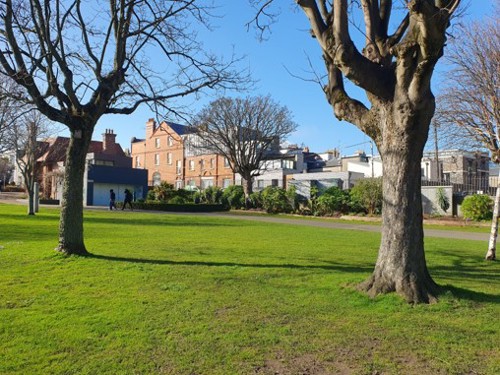
The project strongly aligns with Architectural Conservation Area policies in the Dún Laoghaire-Rathdown County Development Plan including policies that favour refurbishment over demolition where at all possible, the Architectural Heritage Protection Guidelines, and national regeneration frameworks such as Town Centre First, Housing for All, and the Climate Action Plan. The reoccupation of the vacant ground floor unit was especially important in the context of the policies set out in the Dún Laoghaire Urban Framework Plan within the County Development Plan.
The initiative addressed multiple local needs simultaneously: increasing social housing supply within the existing settlement footprint, supporting compact urban growth and reactivating a prominent brownfield site. Delivered within an Architectural Conservation Area, the project balanced heritage considerations with modern standards. Original brickwork was repaired and retained, poor-quality additions removed, and new zinc and contrasting brick elements were sensitively introduced in a contemporary but subservient manner to the original retained structure. Energy upgrades including air-to-water heat pumps, high-performance windows, and deep fabric enhancements enabled the achievement of A rated dwellings, further addressing fuel poverty and supporting climate targets. The refurbishment of the existing building was a very challenging project especially structurally, but also to ensure building regulation compliance and best in class conservation principles.
The project demonstrates how heritage-informed adaptive reuse can strengthen communities, reduce vacancy, and provide safe, sustainable homes for diverse households, including singles, couples, and families. The reactivation of the building has increased passive surveillance, strengthened town centre vitality, and enhanced the visual coherence of the Architectural Conservation Area, given the prominent location of the building at the entrance to the town’s main street.
It aligns perfectly with the Government’s desire to have demonstration projects relating to ‘living over the shop’ in town centres. It has already featured in several conference presentations and site visits as an exemplar and demonstrates the current appetite that exists for high quality examples of regeneration in towns. The project provides a replicable model for adapting vacant upper floors and existing buildings for housing. The conservation approach, energy upgrades, and mixed-use activation offer a clear toolkit that can be applied elsewhere. It demonstrates how local authority leadership can unlock new housing supply, strengthen heritage outcomes, and deliver climate-aligned regeneration.
The success of this initiative positions it as a strong template for other local authorities addressing vacancy within historic town centres.
Outcomes and achievements
The project delivers lasting benefits, beginning with the provision of energy-efficient, centrally located homes for households on the social housing list. Reduced heating costs address fuel poverty, while excellent air quality and warm, well-ventilated interiors support resident health. Residents report high satisfaction with comfort, location and design. By reactivating an empty building, the project strengthens town centre safety through passive surveillance and increases local economic resilience by enabling commercial activity in the unit below.
Environmentally, the reuse of the existing structure preserves embodied carbon and supports compact growth, reducing car dependency and protecting greenfield land. Durable materials, low maintenance finishes, and efficient systems ensure longterm sustainability for both residents and the Local Authority.
The project demonstrates positive outcomes for both heritage and people. A once vacant building is now home to four A rated social housing units, reducing fuel costs, supporting vulnerable households and supporting climate targets.
Socially, the scheme fosters integration by locating homes close to services, transport, and community amenities. The project is already regarded as having set a strong precedent for future adaptive reuse initiatives across the country, demonstrating how vacant or underutilised urban buildings can become anchors for sustainable, inclusive communities.
Co-operative Housing Ireland - Cronin’s Wood
Application entry
- Project name: Cronin’s Wood
- Lead organisation: Co-operative Housing Ireland
- Partner organisations: KPH Construction, Kerry County Council
Statement of support
Cronin’s Wood is a large-scale social housing development located in Killarney, Co. Kerry, comprising 249 homes and representing the largest single housing development delivered by Co-operative Housing Ireland to date. The development is being delivered to Co-operative Housing Ireland in phases, with 117 homes successfully delivered to date. All remaining phases are scheduled for delivery by December 2026.
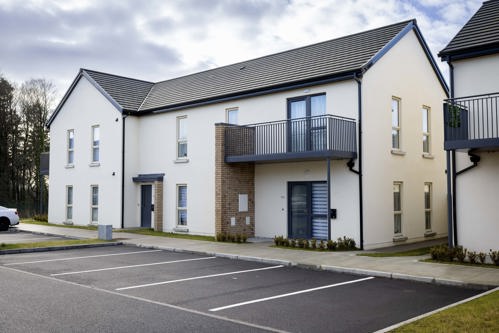
The homes are situated on 19.6 acre site, approximately located 1.8 kilometres northeast of Killarney Town Centre, allowing Member Tenants to allowing residents to live close to employment, services and amenities. The development benefits from strong local and regional connectivity due to its proximity to the N22 roadway, providing access to Killarney town and wider County Cork and Kerry.
The development directly addresses a significant and evidenced need for social housing in County Kerry. In confirming support for the development, Kerry County Council provided social housing waiting list data for County Kerry, which informed the scale and mix of homes delivered at Cronin’s Wood. The identified need included 803 households awaiting a one-bedroom or studio home, 347 awaiting a two-bedroom home, 271 awaiting a three-bedroom home, 53 awaiting a four-bedroom home and six awaiting a five-bedroom home.
The developer for the scheme is KPH Construction. KPH Construction has delivered several schemes to Co-operative Housing Ireland and Kerry County Council and has an established track record in delivering high quality social homes. Co-operative Housing Ireland has a strong and established working relationship with this developer, and which has contributed to the efficient delivery of 117 homes. This strong relationship benefited Co-operative Housing Ireland from the early stages of negotiation to the delivery of these homes. The partnership is continuing through the remaining phases of the development to final completion.
The development has excellent pedestrian connectivity and is within walking distance of Killarney town centre, supporting access to services and amenities without reliance on private transport. The site is located within an established area of mixed residential and commercial development, supporting integration with the existing community.
The development includes eight distinct areas of public open space designed for Member Tenants use and enjoyment. Theses spaces include are a mix of formally arranged areas, amenity walkways and rockeries with flowers and plants.
A two-storey creche facility will be provided for Member Tenants (by an external provider), with a dedicated outdoor space for residents with plenty of open space provided. There is a wide selection of amenities in Killarney for residents, such as schools, places of employment and medical facilities
The development provides 510 surface car parking spaces for residents, including accessible spaces, along with 19 dedicated surface parking spaces for the on-site creche. In addition, 352 bicycle parking spaces are provided throughout the development.
This development is significant as the largest delivered by Co-operative Housing Ireland to date and demonstrates the organisation’s capacity to deliver large-scale, high-quality social housing in response to the growing demand for homes nationally.
Outcomes and achievements
The development was approved by Co-operative Housing Ireland’s Board of Directors in June 2024. The first phase, comprising 48 homes, was delivered in May 2025. The second phase, comprising 26 units, was delivered in July 2025. The third phase, comprising 43 units, was delivered in November 2025. The remaining phases are scheduled for delivery to Co-operative Housing during 2026.
The initial phasing proposed by the developer was adjusted during construction to support delivery progress. As construction progressed, phasing was adapted to facilitate efficient delivery. This process was seamless due to strong communication and collaboration between Co-operative Housing Ireland, the developer and Kerry County Council. All parties shared a clear objective: to deliver high-quality social homes as quickly as possible.
Co-operative Housing Ireland - Davitt Rd, Dublin
Application entry
- Project name: Davitt Rd, Dublin
- Lead organisation: Co-operative Housing Ireland
- Partner organisations: Randalswood and Emrajare Limited, Dublin City Council
Statement of support
The Davitt Road development comprises 188 social homes, delivered by Co-operative Housing Ireland in 2025. The scheme includes a mix of 20 studio apartments, 79 one-bedroom apartments and 89 two-bedroom apartments. The development was delivered in two phases by Co-operative Housing Ireland and reached completion in December 2025. The scheme includes a dedicated playground area and a number of shared open spaces for Member Tenants.
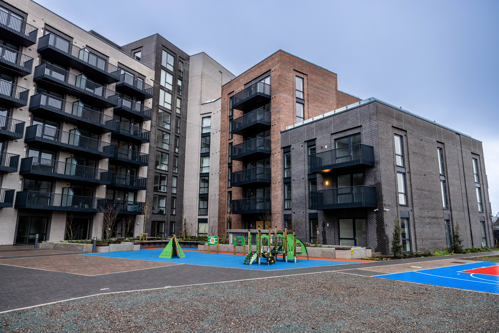
There is a strong and well-evidenced demand for social housing in this location. Dublin City Council confirmed social housing waiting list figures when the scheme was first proposed. At the time of the funding application, demand was recorded as 1,176 households awaiting a one-bedroom or studio apartment, 986 awaiting a two-bedroom apartment, 510 awaiting a three-bedroom apartment, 79 awaiting a four-bedroom apartment and eight awaiting a five-bedroom apartment.
The homes are located on Davitt Road in Dublin 12 on the southern side of the Grand Canal. The surrounding area comprises a mix of industrial and residential buildings. The development benefits from its proximity to Kilmainham, which offers a wide range of cultural and recreational amenities, including the Royal Hospital Gardens, the Irish Museum of Modern Art and Kilmainham Gaol, as well as cafés, restaurants and local services. The location is also close to major employment centres, including St James’ Hospital, which employs over 4,500 people. The new state of the art National Children’s Hospital is currently under construction nearby. The development is centrally located and well served by public transport. The development is close to the Luas and local bus services. The area has a range of primary and secondary schools as well as other amenities due to its proximity to Dublin City Centre.
The developers of this scheme were Randalswood and Emrajare Limited. Randalswood is an experienced apartment developer in Ireland and have delivered homes to Co-operative Housing Ireland in the past. Co-operative Housing Ireland has an established and positive working relationship with both delivery partners, which supported the efficient delivery of high-quality homes.
Outcomes and achievements
The Davitt Road development delivered 188 new social homes in Dublin 12 in 2025, significantly increasing the supply of much-needed housing in a high-demand urban area. The scheme was completed in December 2025 and delivered in two phases, enabling earlier occupation of homes and a staged handover process.
The development provides a mix of 20 studio apartments, 79 one-bedroom apartments and 89 two-bedroom apartments, aligning closely with local social housing demand for smaller household units. Member Tenants benefit from shared open spaces and a dedicated playground area, supporting wellbeing and community use within the development. The phased delivery approach also supported efficient programme management and reduced disruption during handover.
A key outcome of the project was the successful delivery of a large-scale urban social housing scheme within a constrained city location. Strong collaboration between Co-operative Housing Ireland, the delivery partners and key stakeholders supported efficient phased delivery and completion within the planned timeframe.
The project reinforced the value of clear communication and flexibility during construction, particularly in managing phased delivery in a dense urban environment. This experience has strengthened Co-operative Housing Ireland’s approach to managing large-scale apartment developments and will inform future urban social housing delivery.
Choice Housing - Lagmore, Dunmurray
Application entry
- Project name: Lagmore, Dunmurray
- Lead organisation: Choice Housing
Statement of support
The Lagmore Development in West Belfast represents transformative placemaking, turning 1.04 hectares of derelict Diocese owned car park into 43 high quality, energy efficient homes that directly address acute housing need. Completed in January 2026, the £7.6 million scheme delivers 20 Category 1 apartments for active older people and 23 family homes, including five fully wheelchair accessible properties. Housing approximately 148 residents, the development reduces the Belfast waiting list by around 0.35 per cent and provides a strong model for community centred regeneration.
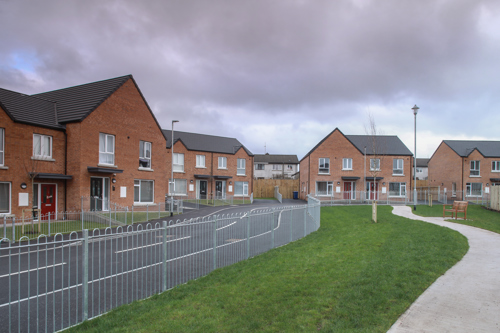
Lagmore is a close knit community that has faced sustained housing pressure for more than a decade. As of March 2023, 12,175 applicants were on the Belfast City District Council waiting list, including 9,531 in housing stress, with only 1,582 allocations made that year. Older residents in particular lacked suitable accommodation, often remaining in unmanageable homes or leaving the area entirely. The site itself 1.04 hectares of deteriorating car park, had long symbolised wasted potential at the heart of the neighbourhood.
Choice Housing’s vision was to transform this dormant land into a community asset; create a balanced, mixed age neighbourhood; enable older residents to downsize locally; and design for dignity, independence and long term wellbeing. The design approach focused on architecture that respected the neighbouring Chapel, homes that prioritised accessibility and energy efficiency, and shared spaces that fostered connection, safety and pride.
Early proposals met concerns around traffic, density and the impact on church grounds. Newpark, working with McGirr Architects, prioritised transparency and collaboration. They undertook extensive consultation, engaged directly with neighbours, worked closely with the local primary school and adapted the design in response to feedback, including enhanced boundary treatments that strengthened the relationship with the Chapel.
Engagement highlights included:
- A public consultation event on 22 June 2022
- One to one meetings with immediate neighbours
- Design modifications including improved railings and boundary enhancements
- Engagement with Lagmore Youth Project and SureStart
The partnership with the Diocese extended beyond land transfer. Newpark ensured sympathetic boundary treatments, shared maintenance agreements and ongoing communication to minimise disruption during services and events. As Father Robert McMahon noted, “The development enhances the character of the area, respects the importance of the church, and contributes positively to the local environment.”
Planning and delivery were characterised by strong collaboration with Belfast City Council and statutory consultees. Construction was completed 12 months ahead of schedule, with Newpark and P&K McKaigue maintaining a solution focused partnership throughout. The scheme significantly exceeded its social value commitments, delivering 954.6 social value points against a target of 760 a substantial outperformance demonstrating measurable community benefit.
The transformation of the site is striking. A neglected expanse of tarmac has become a thoughtfully designed residential neighbourhood centred around a three storey apartment building with a yellow brick façade. Twenty three two storey family homes are arranged around landscaped green spaces, with safe play areas and biodiversity rich communal gardens that foster connection, wellbeing and shared stewardship.
Design quality is evident throughout. All homes achieve EPC B ratings, with high quality finishes and architecture that reflects local character. Five homes meet full wheelchair accessible standards, including level access, wider circulation and eco through floor lifts. Communal spaces are designed to encourage interaction and support healthy living.
A standout innovation is the optional annual Translink travel card offered to older residents for three years, supporting independence, reducing isolation and enabling continued participation in community life.
A key measure of success is the response from residents themselves. Local resident Martina McVeigh captured this sentiment, stating:
“This new social housing development is a real asset to our community… Developments like this show what can be achieved when homes are built with care, purpose and people at the heart of the design.”
Outcomes and achievements
The Lagmore Development has transformed a long-derelict site into a thriving, inclusive neighbourhood with clear benefits for residents and the wider community:
- Transformed 1.04 hectares of derelict, Diocese-owned car park into a high-quality residential neighbourhood, completed January 2026.
- Delivered 43 energy-efficient homes (£7.6m investment), including 20 Category 1 apartments for active older people and 23 family homes.
- Provided five fully wheelchair-accessible homes, promoting inclusivity, independence and long-term living.
- Housed approximately 148 residents, reducing the Belfast housing waiting list by an estimated 0.35 per cent.
- Enabled older residents to downsize locally, preventing displacement and supporting community continuity.
- Achieved EPC B ratings across all homes, exceeding energy efficiency standards and reducing fuel poverty.
- Created landscaped green spaces, safe play areas and biodiversity-rich communal gardens to support wellbeing and social connection.
- Delivered the scheme 12 months ahead of programme through strong partnership working.
- Exceeded social value targets by 25 per cent, achieving 954.6 points against a target of 760.
- Embedded extensive community engagement, resulting in design changes that strengthened relationships with neighbours and the adjoining Chapel.
- Established a positive partnership with the Diocese, including shared maintenance and respectful boundary treatments.
- Introduced an innovative three-year Translink travel card for older residents, supporting mobility, independence and reduced isolation.
Oaklee - The Sidings
Application entry
- Project name: The Sidings
- Lead organisation: Oaklee
Statement of support
The Sidings stands as a flagship example of Oaklee’s commitment to delivering high quality, energy efficient, and affordable homes that strengthen communities across Ireland. Conceived as a response to the growing national demand for secure, long term, and cost effective housing, the development provides 154 cost rental and 30 social homes designed to meet the needs of the local market while enhancing the wider Adamstown area. Its delivery demonstrates how thoughtful planning, innovative design, and community focused principles can create a neighbourhood that residents are proud to call home.
Meeting the Needs of the Local Market and Local People
The Sidings was developed at a time when many households struggled to access affordable, high quality homes. By offering a mix of one-, two-, and three-bedroom apartments, the scheme responds directly to the diverse needs of modern households, from single professionals to growing families. The homes are spacious, well designed, and equipped with modern kitchens, fitted wardrobes, utility rooms, and generous storage, ensuring they support contemporary lifestyles rather than simply meeting minimum standards.
Affordability was a core priority. As a cost rental and social housing scheme, The Sidings provides long term price stability and transparency, giving residents security in a volatile housing market. This model ensures that high quality homes remain accessible to those who might otherwise be priced out of the area, supporting social balance and preventing displacement.
Energy efficiency was another critical need addressed. All units are A rated, incorporating triple glazed windows, high performance insulation, solar panels, heat pumps, and smart energy systems. These features significantly reduce running costs, helping to combat fuel poverty while supporting national sustainability goals. Additional measures – such as Dimplex PLXE panel heaters, EDL 200 hot water systems, and whole unit ventilation with Xpelair Air 180 MVHR and G3 filters – ensure excellent air quality and efficient energy use, directly improving residents’ comfort and wellbeing.
Creating Pride, Cohesion, and a Strong Sense of Place
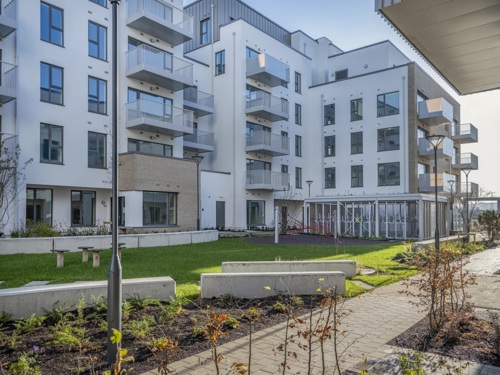
The Sidings was designed not just as a housing scheme but as a cornerstone of a new urban village. Its architectural design, led by Henry J Lyons and delivered by Evara, complements the first phase of The Crossings development, creating visual continuity and a sense of identity for the area. The nine storey building acts as a landmark within Adamstown, with feature balconies, high quality brickwork, and active ground floor frontages that contribute positively to the street environment. These design choices help residents feel part of a distinctive, well considered neighbourhood rather than an isolated housing block.
Community cohesion is further supported through shared green spaces, safe and well lit communal areas, and proximity to essential amenities. The Crossings village centre features supermarkets, retail outlets, a public plaza, and a three acre park, creating a lively, walkable environment where residents can meet, shop, and socialise. Nearby schools, crèches, and employment hubs make the area particularly attractive for families, while excellent transport links, including a purpose built train station and regular bus services, ensuring strong connectivity to Dublin and beyond. This integration of homes, services, and transport fosters a sense of belonging and pride among residents.
Innovation and Imagination in Design and Construction
Innovation is embedded throughout the development. The combination of renewable technologies, advanced ventilation systems, and high spec materials demonstrates a forward thinking approach to sustainable construction. The fully costed 40 year planned preventative maintenance survey reflects a long term asset management strategy, ensuring the development remains in excellent condition and avoids costly reactive repairs.
Architecturally, The Sidings showcases imaginative design through its landmark form, active street edges, and thoughtful integration with the wider urban village. The development balances aesthetic appeal with functionality, proving that affordable housing can be both beautiful and durable.
Outcomes and achievements
The Sidings delivers a transformative set of outcomes for Adamstown, establishing itself as a benchmark for high quality, affordable, and sustainable housing in Ireland. By providing 154 cost rental and 30 social homes, the development directly addresses local housing pressures, offering long term security and stability for a diverse mix of households. Its spacious, well designed apartments, equipped with modern kitchens, ample storage, and high quality finishes, ensure residents enjoy a standard of living that exceeds typical affordable housing provision.
A major achievement lies in its exceptional energy performance. All homes are A rated, incorporating triple glazing, advanced insulation, solar panels, heat pumps, and smart energy systems. These features significantly reduce running costs, combat fuel poverty, and enhance indoor comfort and air quality through modern ventilation and heating technologies.
The development also strengthens community cohesion and local identity. As a landmark building within The Crossings urban village, The Sidings contributes to a vibrant, walkable neighbourhood supported by shops, green spaces, schools, and excellent transport links. Its architectural quality, active street frontages, and shared communal areas foster pride and belonging among residents.
Tuath Housing - Clai Mor, Ballybrit, Old Monivea Road, Galway
Application entry
- Project name: Clai Mor, Ballybrit, Old Monivea Road, Galway
- Lead organisation: Tuath Housing
- Partner organisations: Galway City Council, OCC Construction and Lizamber Limited
Statement of support
Clai Mor is a 102-home mixed tenure housing development in Ballybrit, Galway City. Delivered by Tuath Housing in partnership with Galway City Council, Lizamber Limited and OCC Construction, Clai Mor sets a new standard for innovative housing solutions that meet local need while contributing thoughtfully to community and placemaking. It is also the largest delivery of homes by an Approved Housing Body (AHB) in Galway City.
Meeting community need: housing
Clai Mor comprises 41 CALF social homes allocated to families on Galway City Council’s housing waiting list. 28 Cost Rental homes are also provided for middle-income families. The 33 Capital Assistance Scheme (CAS) homes on site are designated for older persons, people exiting homelessness and individuals with disabilities, offering long‑term, supported housing.
This blended tenure model creates a sustainable and inclusive mixed-tenure community while meeting housing need in this growing urban area.
Meeting community need: placemaking
Built on a derelict brownfield site, Clai Mor transforms underutilised land into a vibrant, people-centred neighbourhood that seamlessly integrates into the wider Ballybrit community.
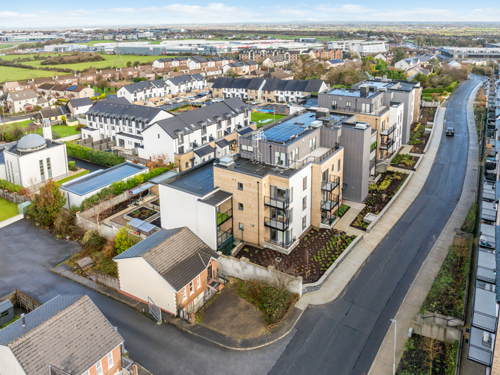
Clai Mor’s layout thoughtfully captures views of Lough Corrib, Galway Racecourse, Oranmore Bay and the Maumturk Mountains; providing residents with a strong sense of place within a busy urban environment. By adding walking and cycling connections to the surrounding Ballybane Road and Old Monivea Road, Clai Mor is designed to be an integrated extension of the nearby existing residential communities.
Shared spaces such as the playground, crèche and landscaped areas are designed as neighbourhood assets for the wider Ballybrit community that encourage interaction among residents and other locals. Combined with support from Tuath’s dedicated Housing Services and Community Engagement teams, Tuath continues to work with residents to create a strong new community at Clai Mor that supports long-term cohesion.
Further, Clai Mor residents benefit from the locality’s pre-existing amenities, including local employers, transport connections, education and healthcare.
Innovation in design and construction
As the first large-scale implementation of Light Gauge Steel (LGS) Modern Methods of Construction (MMC) in the west of Ireland, Clai Mor represents a major step forward in Ireland’s public housing delivery.
The use of MMC on this project promoted sustainability and speedier construction. With the LGS structural system manufactured offsite, quality control was strengthened, and negative environmental impact was reduced compared with traditional blockwork. Further MMC undertaken include Building Information Modelling and Lean Construction Ireland's Last Planner System. Combined, this use of MMC significantly reduced project timelines. The project offered 20% time savings compared to those with traditional construction methods, meeting the project’s ambitious 18-month timeframe to urgently address local housing demand.
Industry impact
As the first large‑scale LGS MMC project in the west of Ireland, Clai Mor has influenced peer organisations and encouraged other local authorities to pursue MMC. Dedicated stakeholder education on fire safety, including CPD sessions and full‑scale prototypes, strengthened confidence in LGS performance and helped streamline Fire Cert and DAC approvals. The project has since inspired follow‑on MMC developments, including initiatives being actively progressed by Clare County Council and Westmeath County Council.
Stakeholder impact
The project’s impact is best reflected by residents. Daniel, who moved into a home with his young family, described the life‑changing value of secure housing at Clai Mor: “A new place, new house, new possibilities… Sometimes dreams can happen.”
Minister for Housing, Local Government and Heritage, James Browne TD, called Clai Mor a key milestone for Galway, commending the project partners for addressing “very real affordability security challenges” by offering “high-quality homes with secure, long-term tenancies.”
Galway City Council’s Director of Services, Elizabeth Fanning, emphasised Clai Mor’s significance, noting it will “will help meet the housing needs of the local community.”
Outcomes and Achievements
Clai Mor showcases best practice in housing delivery, offering pioneering solutions to address housing demand while strengthening the local community.
As one of the largest housing developments delivered by an Approved Housing Body in Galway City, Clai Mor has successfully provided 102 high-quality homes for more than 200 residents. Local housing need in Galway’s growing urban area is evident through the 1,821 applications Tuath received for Clai Mor’s 28 Cost Rental homes.
Beyond housing need, Clai Mor has also promoted social inclusion for priority groups such as the elderly and individuals with disabilities through its 33 CAS social homes. Further, designed with placemaking at its core, Clai Mor enhances the wider Ballybrit community through cycling connections, childcare facilities, a playground, and ease of access to local services.
Through innovative construction solutions, including the first large‑scale use of Light Gauge Steel (LGS) in the west of Ireland, the project offered construction time savings of 20%. This enabled the partners to respond more urgently to housing need by providing additional homes in the first delivery phase. Extensive industry interest in this MMC implementation and active progression of similar MMC projects by local authorities demonstrate Clai Mor’s further impact on Ireland’s housing landscape.