


All-Ireland Housing Awards 2026
Read all the shortlisted entries into this award category, beyond housing, at the All-Ireland Housing Awards (AIHA) 2026 and find out who won the award on the night.
This award recognises organisations or projects that have demonstrated commitment to tenant involvement, to help improve services or neighbourhoods.
This award was sponsored by Circle VHA.
Winning project name
Woven as One Empowering tenants and Building Capacity
Winning organisation
Woven Housing Association
Statement of support
Our tenants, working in partnership with Woven, have led the design and delivery of a robust and inclusive approach to tenant involvement. Through a range of tenant-driven initiatives – including Regional Panels, Residents’ Forum, Policy Review Group, Newsletter Group, Anonymous Shopping Programme and Service Improvement Group – tenants directly influence decisions, shape policies and scrutinise services. These initiatives have strengthened resident skills and confidence, improved service quality and accountability, and delivered tangible improvements that enhance the wider community.
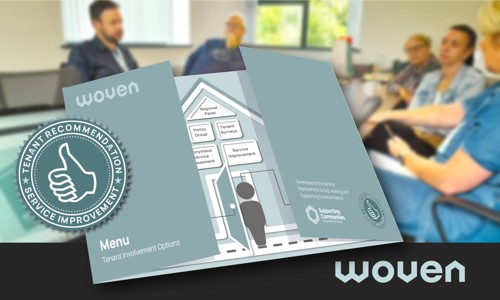
The commitment to delivering innovative and effective involvement has been recognised externally as we were delighted to pick up the Member Engagement and Communications Award at the Association and Institute Awards 2025. The award recognised the ongoing engagement with tenants by the homes and communities team in the design and redevelopment of the menu of tenant engagement. Further to this award we were delighted to be highly commended at the All-Ireland Tenant Engagement Awards hosted by Supporting Communities in October 2025, celebrating the dedication and impact of the tenant-led Anonymous Shopping Group in driving service improvement.
A key example of Woven’s approach is the tenant-led Anonymous Shopping Programme, an initiative placing tenants at the heart of service scrutiny, delivery and improvement of services. The programme empowers tenants to assess housing services from a customer perspective, identify service gaps, recognise good practice and directly influence change that benefits the wider community.
Woven’s community involvement team providing tailored training and ongoing support to 11 tenants, establishing a dedicated Anonymous Shopping Group.
The group assessed 13 key service areas, completing 142 anonymous shopping scenarios that evaluated both service quality and customer experience. Tenants met to analyse the data and co-produce a detailed report, which they presented directly to Woven’s senior leadership team.
Tenant feedback led to tangible service improvements, including the creation of a dedicated tenant engagement email address, the introduction of call-waiting alerts, improved promotion of community hubs through newsletters, a review of the website to enhance customer engagement, and targeted frontline staff training shaped by tenant insight. Notably, tenants recognised the improvement from the previous year’s recommendation calling for clearer and more consistent information resulted in the introduction of staff desktop aids, ensuring consistent messaging across the organisation.
The Anonymous Shopping Programme is now embedded as an annual, tenant-led scrutiny process, ensuring continuous improvement, accountability and a lasting culture of tenant involvement.
Tenants within the Service Improvement Group reviewed Woven’s grounds maintenance service. A survey of 1,742 residents revealed mixed satisfaction, with concerns around overgrown trees, garden maintenance, litter and unclear responsibilities between tenants, Woven and contractors. While maintenance was in place, findings highlighted communication gaps that undermined confidence in the service.
Tenants worked collaboratively with staff and external partners to develop practical solutions, including a directory of gardening and environmental support services, and environmental health awareness materials developed with the council (including interpreted flyers for tenants whose first language is not English). These actions delivered clearer communication, improved understanding and a more coordinated approach to neighbourhood management.
Tenants developed valuable skills in service evaluation, communication, report writing and influencing decision-makers. Tenant empowerment is enhanced through tailored capacity building training to building the skills and confidence of our tenants. A tenant focus group identified training to benefit them and the wider communities. Training identified included autism awareness, mental health first aid, paediatric first aid, healthy eating on a budget, which would complement the ongoing capacity building programme offered to tenants and local groups. Woven successfully secured £19,000 from the National Lottery to deliver training and programmes in 2025-26, building confidence and resilience among the isolated and vulnerable families across the communities that we develop.
Outcomes and achievements
- All-Ireland winner of the Member Engagement and Communications Award 2025, Association and Institute Awards.
- Highly commended All-Ireland Tenant Engagement Award 2025.
- Menu of Involvement co-designed by tenants, outlining the tenant engagement structure.
- Quarterly Community Newsletter distributed to all tenants via text co-designed by tenants for tenants.
- 138 community involvement events held across Northern Ireland.
- 1,926 tenants and residents attended events, reducing isolation and improving health and wellbeing of tenants and the wider community.
- Six service improvement meetings held to review the grounds maintenance service, identifying areas for improvement and make recommendations to improve the service.
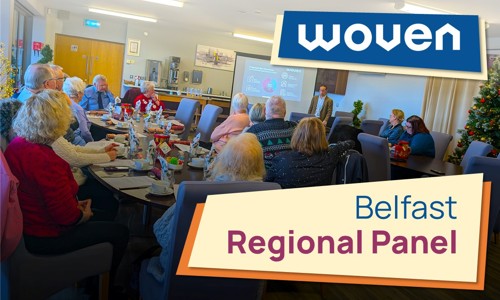
- 11 Regional Panel meetings held in Dungannon, Derry, Coleraine and Belfast,
- Two Resident Forum meetings held to act as a conduit to the regional panels, discuss province-wide issues at a strategic level.
- 119 tenants attended regional panel meetings, to discuss regional issues specific to the needs on the ground, enhance service delivery and act as a communication between Woven staff and tenants.
- 23 tenants attended tenant training, empowering them to have the skills and expertise to improve service delivery.
- £161,751 invested 2024-2025, including ‘Housing for All’, Community Investment and Community Relations Council funding.
- Four policy review groups, ensuring policies are accessible and enhancing accountability.
Shortlisted entries
Cluid Housing Association - BEYOND THE FRONT DOOR – The Elsie Black Oral History Project
Application entry
- Project name: BEYOND THE FRONT DOOR – The Elsie Black Oral History Project
- Lead organisation: Cluid Housing Association
Statement of support
For more than a century, social housing has shaped the everyday landscapes, communities and family histories of Ireland. From the first tentative state-led housing schemes of the 1920s, through the mid-century decades when local authorities built homes on a scale never seen before or since, to the late-20th-century shift toward private provision and the renewed housing crises of recent years, the story of social housing closely reflects Ireland’s wider social and economic transformation. Yet much of this story is missing from official records, policy documents and town plans. What survives most vividly is carried in memory, passed through families and communities.
For this reason, recording the histories of our residents is vital. It allows us to capture the lived reality behind policy decisions and structural change, preserving the voices of people who built communities, endured hardship, formed identities and made homes within constantly shifting social and economic landscapes. These stories reveal the human impact of housing decisions, showing how choices made in council chambers were felt around kitchen tables and across generations.
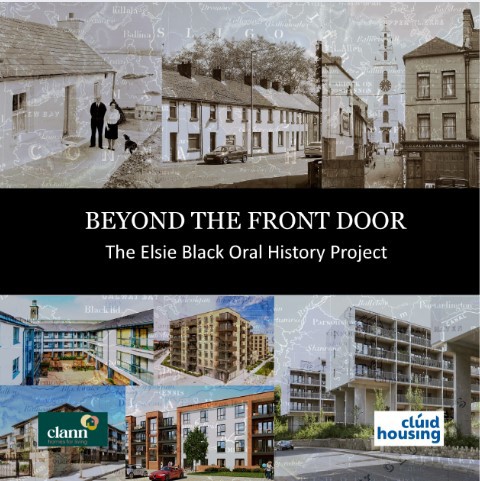
Clúid’s Beyond the Front Door – The Elsie Black Oral History Project is a resident-led community engagement initiative created to honour and safeguard these experiences. Through this project, Clúid residents generously opened their doors and shared their personal housing journeys, offering insight into their lives, relationships and communities, and reflecting on how social housing shaped not only their own paths but those of their families and neighbours. At its heart, the project was designed to ensure that residents’ voices are heard, respected and preserved as an essential part of Ireland’s social housing history.
The oral histories gathered demonstrate that social housing residents possess deep, first-hand knowledge of everyday life, resilience and community bonds that are rarely captured in formal documentation. By allowing residents to speak in their own words, the project challenges stereotypes and stigma often attached to social housing, replacing abstract statistics with real stories of diversity, creativity and contribution. It recognises residents not as passive recipients of services, but as experts in their own lives, affirming their dignity, agency and authority over their experiences.
Equally important, the project strengthens community identity and belonging. Sharing stories builds intergenerational connection and pride. These stories also have practical value, highlighting what works and what does not in housing design, management and support services, and offering invaluable guidance for future policy and practice grounded in lived experience rather than assumption.
Central to Beyond the Front Door is its focus on empowerment and capacity building. By placing residents at the centre of the process, the project equipped tenants with skills, confidence and a platform to share their stories and shape conversations about housing and community life. In doing so, it positioned tenants as catalysts for real and lasting change within their communities. The project also exemplified Clúid’s commitment to innovative and meaningful resident involvement, because the oral histories recorded during this project stand as powerful testimony to the importance of listening. They preserve memory, inform understanding and affirm that the true history of social housing is found not only in archives and policies, but in the voices of the people who lived it.
Outcomes and achievements
Permanent cultural record - A published book capturing all resident oral histories was produced, alongside 13 audio recordings, ensuring lived experiences of social housing are preserved and accessible for future generations.
Cultural and educational impact - The project provides an important learning resource for younger generations, offering insight into the lives of parents and grandparents and deepening understanding of how social, economic and housing conditions shaped family and community life over time. Personal narratives challenge stigma and stereotypes associated with social housing, humanising residents’ experiences and shifting negative perceptions and biases.
Intergenerational connection - By sharing personal housing stories, the project strengthens links between generations, fostering empathy, respect and a shared understanding of community history.
Community pride and belonging - Valuing residents’ voices reinforces a strong sense of identity, pride and belonging, helping residents see their experiences as an important part of a wider collective story.
Empowerment and capacity building - The resident-led nature of the project positioned residents as active contributors and catalysts for meaningful change within their communities.
Stronger, thriving communities - By encouraging participation, recognition and shared ownership of community history, the project supports social cohesion and contributes to the development of resilient, engaged and thriving communities.
Leadership in tenant involvement - The project demonstrates Clúid’s commitment to innovative and effective tenant engagement, placing residents at the centre of storytelling, community building and social change.
Hosford Community Homes - Hosford Community Homes
Application entry
- Project name: Hosford Community Homes
- Lead organisation: Hosford Community Homes
- Partner organisation: East Belfast Mission
Statement of support
Beyond our Hosford Homelessness services, we also offer the community our Employability project, our Irish Language project, our Community Fridge and of course our thriving church community which offers community groups, counselling and pastoral care to those who need it.
Belfast Works
The Belfast Works Project is a Belfast City-wide project which seeks to address the issue of long-term unemployment by supporting those most removed from the job market. It is a voluntary, client-centred programme offering:
- Employment mentoring
- Wellbeing coaching
- Free industry related training
- A link to real jobs
Employability Mentors provide one-to-one support to clients in East Belfast Mission and in Outreach Centres across East Belfast. Mentors have years of experience in providing advice and guidance on education, training and careers, and work alongside clients to offer the support they need to progress into employment, including:
- Help preparing a CV
- Help job searching
- Help completing application forms
- Mock interviews
Access to free training which includes Health and Social care, Childcare, Hospitality, Business Admin, as well as basic ICT to ECDL, word processing and spreadsheets.
Counselling
The East Belfast Mission counselling and psychotherapy service has been established for over 10 years. Our experienced counsellors and therapists strive to create a warm, safe and personal space for clients to be able to explore difficult thoughts and feelings and support them in their journey to find solutions to their difficulties.
We provide counselling and psychotherapy for children, young people, adults, and older adults, to individuals, couples, and families.
Community Fridge
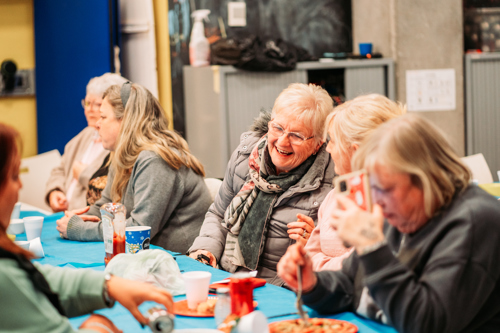
The Community Fridge is a way to share food within a community, with the aim of reducing food insecurity. It allows people to pick up the food they need and donate when they can. It does not require referrals and there is no means testing.
Anyone is welcome and we never judge or ask questions. We can also refer people to our other services if they are struggling with mental health, employment, housing or family stress.
Tenancy Support
Hosford Tenancy Support workers provide practical and emotional support to people who are living independently but encountering problems and could lose their home. They aim to enable people to live independently through developing their skills and their ability to deal with problems. The service is about preventing homelessness by intervening in its causes.
Tenancy Support Workers are available to meet with clients in their own homes or other locations in the community. Appointments may be arranged on a daily, weekly or monthly basis for up to two years depending on the needs of the client.
Health and Wellbeing Project
Hosford’s Health and Welling Project aims to tackle the health and wellbeing issues faced by people who are homeless or at risk of homelessness. This project gives those involved opportunities to learn new skills, make progress in their lives, meet friends, and to be part of a community.
The project offers a wide range of activities such as cooking, gardening, art, drama, and community events.
Turas
“Turas” meaning journey or pilgrimage in both Irish Gaeilge and Scots Gàidhlig is an Irish language project which aims to connect people from Protestant communities to their own history with the Irish language. Turas is based on the belief that the language belongs to everyone and that it can be a mechanism of reconciliation.
Outcomes and achievements
Being able to provide the local community with the tools to build their lives back up is paramount within EBM.
And the below achievements of those services demonstrate the impact they have on people and their everyday lives:
Belfast Works
From March 2023 to present Belfast Works has helped approximately 1,325 people.
The project hopes to support a further 4,680 people including gaining a qualification and securing employment.
Counselling
Throughout the year 2022 the Care Counselling team delivered approximately 1,092 client sessions.
At £30 per hour, that is equal to £32,760 of free professional counselling in that year.
Community Fridge
Anyone is welcome, and we never judge.
We welcome approximately 200 people per week.
It is a lifeline to the local community.
Health and Wellbeing Project
In 2025, the service supported 35 long terms clients.
One of our clients – “C” was struggling with debt to paramilitaries for cocaine.
He speaks to our mental health support worker regularly.
He is slowly rebuilding his life.
Turas
Turas offers a programme of weekly language classes to 800 learners for a range of ability levels: including beginners and intermediate levels.
Also available are heritage sessions on the historic links between Protestants and the Irish language and the relevance or the language in present day society.
Radius Housing - Supporting our local and wild neighbours - intergenerational environmental project with Radius Independent Living Schemes and local schools
Application entry
- Project name: Supporting our local and wild neighbours - intergenerational environmental project with Radius Independent Living Schemes and local schools
- Lead organisation: Radius Housing
- Partner organisation: Keep Northern Ireland Beautiful
Statement of support
This programme had two main outcomes developed to address feedback from tenants in our sheltered schemes who wanted to enhance their outdoor environments and develop friendships to address loneliness. Tenants were keen to have an active role in developing and maintaining their shared outdoor green spaces, and in the process develop new friendships.
The programme promotes intergenerational connections, environmental awareness, and community pride through hands-on, educational engagement. This innovative programme paired up six Radius Independent Living schemes across Northern Ireland with their local primary school building intergenerational relationships and knowledge whilst boosting biodiversity and supporting the natural environment. The project focused on increasing knowledge and understanding of biodiversity in the local community and steps that can be taken to facilitate more wild neighbours, all whilst building friendships across the age divide. Workshops were delivered jointly at both schemes and schools.
Tenants were engaged with the design and delivery of the programme. Workshops increased biodiversity skills through educational and hands-on workshops.
Activities included biodiversity audits, bird boxes and identification, bug boxes and minibeasts, hedgehog boxes, composters and planting pollinator friendly plans and fruit trees. The installation of a wildlife camera allowed tenants and pupils to see what wildlife was living in their gardens and included deer, foxes and squirrels!
The lasting legacy of the programme includes increased biodiversity skills and improved outdoor environments. Tenants were actively involved in workshops and now have the knowledge, skills and enthusiasm to maintain and upkeep new planting and wildlife features. Tenants and pupils having been established (or in some cases reestablished) relationships will keep up intergenerational relationships going forward. Other events which been run out since this project has completed include pupils singing for Radius tenants and Christmas workshops between tenants and pupils.
Stephanie Burns, scheme co-ordinator, Maine Fold: "This project was an immense success with our residents and the local school children. The residents enjoyed learning more about the environment around them, installing the wildlife camera and watching what happens when the lights go down! The residents also enjoyed our visit to the primary school where we worked with the children to make bug hotels. It was lovely for the children to then join us at the fold for a celebration event where they got to help place the bug hotels around the garden. The staff from KNIB were exceptional with our tenants working alongside them giving knowledge and also their invaluable help with the planting of our pollinator friendly plants and shrubs. The relationships that have been formed through this project will undoubtedly continue long after the end of this project."
Anna Green, KNIB: "Bringing our youth and more senior members of the community together to explore and appreciate the natural world around them has been an invaluable experience for all. Pupils and residents alike have learnt new things about the wealth of biodiversity we have on our doorstep but more importantly have connected with nature and each other"
Supporting Our Wild Neighbours programme is supported by the Department for Communities and the Northern Ireland Housing Executive’s ‘Housing for All’ Shared Housing Programme
Outcomes and achievements
Quantitative
- 24 workshops delivered across six Independent Living Schemes and six partner primary schools.
- Six schools and six Radius schemes actively participating in intergenerational biodiversity activities.
- Over 200 participants engaged, including Radius tenants, pupils, and staff.
- Environmental accreditations supported (Eco-Schools Green Flags for schools and Community Green Flags for schemes).
- Four out of the six primary schools have active green flags. Portstewart PS and Broughshane PS were awarded in 2025. Groggan PS and St Patricks PS Newry- already had a green flag and are renewing this year.
- Four out of the six Radius Independent Living Schemes applied and were awarded their green flag (Tullaghmurray , Maine Fold, Mill Brae, Donard).
Qualitative
- Building relationships of Radius tenants in Independent Living Schemes with staff and children in their local primary school.
- Enhancing scheme and school gardens through provision of bespoke planting, hedgehog box, bird boxes, bug boxes and composters.
- Increasing biodiversity skills through educational and hands-on workshops.
- Enhance biodiversity and outdoor learning topics for primary schools on their International Eco-Schools Green Flag Journey
- Encouraging Independent Living Schemes to enter for the Community Green Flag award.
Circle Voluntary Housing Association - Circle VHA Tenant Engagement Team
Application entry
- Project name: Circle VHA Tenant Engagement Team
- Lead organisation: Circle Voluntary Housing Association
Statement of support
Circle Voluntary Housing Association (Circle VHA) has demonstrated a deep and sustained commitment to tenant involvement by embedding tenants at the heart of governance, service design, and organisational decision-making. Managing over 3,500 homes across urban and rural Ireland, Circle supports a diverse tenant population, including families, older people, migrants, and people on low or fixed incomes. Recognising that traditional consultation models can limit meaningful influence, Circle has intentionally shifted towards structured, capacity-building approaches that empower tenants as equal partners and catalysts for change.
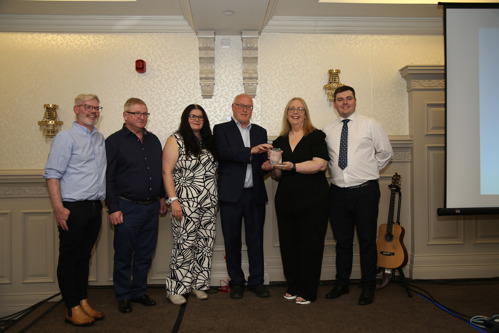
A cornerstone of this commitment is Circle’s innovative approach to tenant representation at board level. While tenant board membership is increasingly common, Circle recognised that without proper preparation it risks being tokenistic. Circle therefore took the view that any tenant board member must hold the same knowledge, responsibility, and confidence as other board members. This principle shaped the development of a robust, tenant-designed pathway into governance.
Through the co-production of Circle’s first Tenant Communication and Engagement Strategy, where tenants and staff jointly created a menu of involvement opportunities, including board membership. Learnings highlighted that achieving meaningful tenant representation required time, resources, and structured support. In response, Circle launched the Tenant First Link Committee (TFLC) as a board sub-committee, creating a formal bridge between tenants and governance.
The TFLC is underpinned by an eight-step “Tenant to Board Pathway,” developed collaboratively between tenants and staff. The committee comprises five tenant members, two board members, and an independent member, ensuring balanced oversight and shared learning. Since its establishment, the TFLC has met six times, attended board away days, and contributed directly to key organisational decisions. Tenants have scrutinised and made recommendations on tenant satisfaction metrics, complaints handling, gas servicing compliance, anti-social behaviour policy, procurement and contractor performance, regulatory matters, financial reporting, and data protection.
Crucially, Circle has invested heavily in tenant capacity building. TFLC members have undertaken training in governance, professional boundaries, conflicts of interest, and chairing skills through Boardmatch. A tenant chair process has been approved, further strengthening the pathway for tenants to participate fully and confidently at board level. This ensures tenant voices are not only heard but are influential.
Alongside governance innovation, Circle has demonstrated a strong commitment to tenant-led service improvement. Tenants were central to the co-production of a revised Anti-Social Behaviour (ASB) process. Prompted by low satisfaction scores, staff feedback, and tenant experiences, Circle chose a co-production model rather than an internal review. Five tenants with lived experience of ASB worked alongside ten staff as equal partners, supported by an external ASB specialist and legal advisors. Over nine months, the group co-designed a new ASB Policy, Procedure, guidance documents, templates, and tenant-friendly resources, all approved by the TFLC and Board.
Similarly, Circle’s Tenant Communication and Engagement Strategy (2025–2027) was fully co-produced with tenants, informed by survey responses from 155 tenants and 37 staff. Nine tenants, supported by an external facilitator and staff through 12 working group meetings – shaped every line of the strategy, agreeing priorities, goals, and principles such as plain English, flexibility of engagement, and a strong focus on equality and inclusion. The strategy was launched in 2025, with tenants speaking about their ownership and influence. Circle VHA’s Tenant Advisory Group (TAG), consisting of seven tenant members, maintains operational oversight of the strategy’s delivery.
Together, these initiatives demonstrate Circle VHA’s long-term commitment to empowering tenants, building skills and confidence, and embedding tenant voices in governance and service delivery. This approach has driven a cultural shift from consultation to partnership, creating lasting structures that deliver meaningful, tenant-led change for services and communities.
Outcomes and achievements
Tenant Communication and Engagement Strategy 2025-2027 delivered by tenants, for tenants.
Nine participation groups delivered, six of which were task and finish groups, with 32 different tenants participating to improve service delivery.
35 tenant engagement activities delivered, attended by 239 different tenants.
10x €500 awards and 20x Digital Tool pack awards in the first year of the Fr. Patsy Carolan Education Bursary.
Six Tenant Advisory Group meetings to oversee the implementation of the Tenant Communication and Engagement Strategy (TCES) workplan.
Tenant co-chair of Tenant First Link Committee.
Launched tenant engagement impact surveys to measure the qualitative impact of tenant engagement, with 133 responses.
Tenants that attended an on-scheme activity rated their trust in Circle four out of five stars.
50 per cent of tenants trust Circle more after attending an on-scheme activity.
Launch of the Tenant Communication preferences survey, receiving 391 responses.
Reviewed Anti-Social Behaviour Policy, Procedure, guidance documents, templates and tenant-friendly resources.
Window and door replacements Steering Group developed three tenant-friendly documents and FAQ’s to explain the 3-phase project.
Tenants shared best practice during panel discussions at Supporting Communities’ All-Ireland Tenant Engagement Conference.
Tenant-approved quarterly newsletter translated into over 130 languages.
95 per cent completion of the 2025 TCES workplan.
Tuath Housing - Tuath Foundation 'Building Brighter Futures'
Application entry
- Project name: Tuath Foundation 'Building Brighter Futures'
- Lead organisation: Tuath Housing
Statement of support
In March 2025, Tuath Housing launched the ‘Building Brighter Futures’ Tuath Foundation, a transformative initiative designed to empower residents, strengthen communities, and foster inclusive, sustainable living. This pioneering programme within the Approved Housing Body sector unites a suite of impactful supports, both established and newly launched, under one strategic umbrella, amplifying Tuath’s commitment under the Foundation to tackle specific challenges like digital exclusion, access to education and personal development, building stronger communities, supporting social inclusion and diversity, and increasing climate action awareness. Tuath consulted directly with residents and community groups to ensure the programmes reflect real needs, from digital literacy to cultural integration.
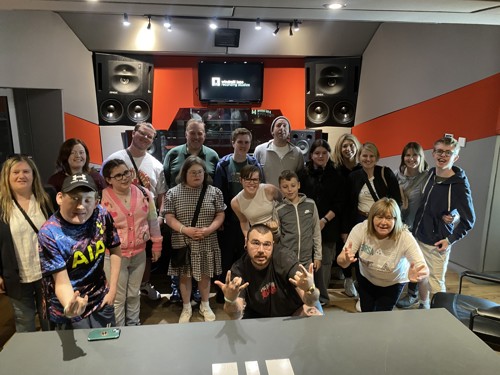
The Foundation consolidates and expands Tuath’s support offerings under five funding streams, including:
- New Horizons Education Bursary: Supporting residents in accredited and non-accredited education.
- Tuath Community Fund: Funding local projects that foster creativity, safety, and intergenerational connection.
- Digital Support Fund: Bridging the digital divide by providing tools, training, and access to essential online services.
- Social Inclusion and Diversity Fund: Celebrating Ireland’s rich cultural tapestry through events and programmes that promote integration and understanding.
- Climate Action Fund: Investing in green spaces and sustainable practices to help communities adapt to climate change.
The Foundation empowers residents by:
- Facilitating access to opportunities: Assisting individuals in entering education, personal development, employment, and training programs.
- Supporting vulnerable groups: Providing support to vulnerable or under-represented groups within our communities.
- Fostering vibrant communities: Developing inclusive communities that celebrate social inclusion and diversity.
Speaking about the Foundation, Professor Paddy Gray, Chair of Tuath’s Foundation, said “Our residents are at the very heart of what we do at Tuath, and the Foundation is our commitment to them that we will continue to support them in ‘Building Brighter Futures’. I am certain that this initiative will be a catalyst for positive change.”
Resident Mark, a recent recipient of the New Horizons Education Bursary, shared his journey: “With the Bursary, I’ve been able to pursue a master’s degree and develop my skills. The support from Tuath has been invaluable. I am very happy that the Foundation will open even more doors for residents and community groups.”
Tuath's 2025 Community Fund supported 23 resident‑led projects that strengthen community spirit, inclusion, and wellbeing. Initiatives ranged from arts and music programmes to intergenerational activities, fostering creativity and connection. “The funding bought instruments and sensory equipment, helping residents showcase their talents and build self‑esteem,” said the Meeting Place Club.
Residents' feedback and stories became ambassadors of success, showing the tangible benefits of the initiative. Another organisation funded through the foundation told us told Tuath that "With the support of the Tuath Community fund, we were able to begin developing a youth forum specifically for young people. The forum created a safe space for these young people to connect, share their voices, and feel part of their community, laying the foundation for lasting inclusion and empowerment."
The Tuath Foundation demonstrates that housing provides not only safe, secure homes but can also build brighter futures: empowering individuals, supporting vulnerable groups, fostering vibrant communities, and ensuring sustainability for generations to come.
Outcomes and achievements
The Tuath Foundation demonstrates a proactive and innovative approach to tenant involvement that extends far beyond housing, building skills, leadership, and resilient communities. The Foundation’s innovation lies in its integrated, future-focused and empowering approach to housing.
The New Horizons Education Bursary supported 40 residents in 2025, offering up to €2,000 per applicant for accredited courses and personal development opportunities. By removing financial barriers, the Bursary boosts confidence, supports career progression, and empowers residents.
The Tuath Community Fund supported 23 resident-driven projects that strengthened community spirit, creativity, and inclusion. Arts programmes, intergenerational activities, and youth initiatives created safe spaces for connection and participation.
Through the Digital Support Fund, 68 devices were provided to residents and community groups. A recipient of the fund told us “As a single mum of three returning to study, this has made a huge difference. It has helped me access my classes and complete assignments. This has given me the tools I need to continue my education and build a better future for my family.”
The Social Inclusion and Diversity Fund offers up to €5,000 per project, with four initiatives funded in its first year to support cultural events, training, and youth engagement that promote integration and celebrate diversity.
The Climate Action Fund awarded €10,000 across six projects, supporting community gardens, recycled plastic seating, sustainability workshops, planter kits, and pollinator-friendly planting.
Choice Housing - Community Development Initiatives
Application entry
- Project name: Community Development Initiatives
- Lead organisation: Choice Housing
Statement of support
Over the past year, Choice has demonstrated a strong commitment to reimagining tenant participation by delivering innovative, inclusive and community-led engagement initiatives. By placing creativity, accessibility and co-design at the centre of Tenant Engagement, these projects have empowered tenants of all ages to play an active role in their communities and in shaping meaningful shared experiences.
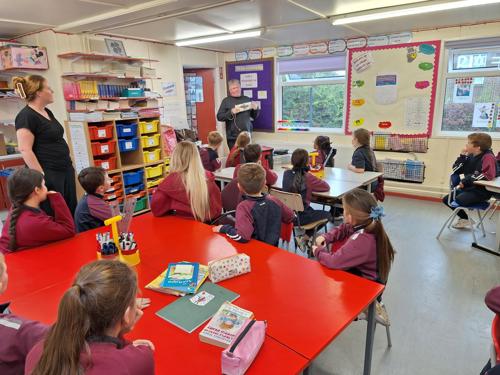
One of the most significant initiatives delivered was a nature-based tenant engagement programme inspired by the popular Springwatch format. Working in partnership with ornithologist Aiden Creen, Choice has delivered a series of bird-focused educational workshops across nine primary schools and three secondary schools, reaching more than 1,800 pupils, many of whom came from tenant families. The workshops combined storytelling, bird identification and hands-on outdoor activities, using local wildlife as a gateway to learning, conversation and connection.
This approach transformed tenant engagement by shifting it away from surveys and formal meetings, towards something more enjoyable, inclusive and accessible. By using schools as the engagement platform, the project reached families who may not traditionally engage with housing services. Parents were encouraged to participate alongside their children, creating shared, intergenerational experiences that strengthened relationships between tenants, families and staff.
The programme also demonstrated a clear commitment to co-design. Tenants, pupils and school communities were involved from the outset, helping to shape the content and focus of the workshops. Feedback gathered during early sessions directly informed later delivery, leading to a stronger emphasis on conservation, biodiversity and protecting green spaces within tenant estates. This ensured that the project developed organically and reflected the priorities and interests of the communities involved.
The impact of this work was recognised when Choice became the only Housing Association to host an educational event during UNESCO Belfast Learning Week 2025. This highlighted how housing-led tenant engagement can contribute to wider learning goals while delivering tangible community benefits. Feedback from teachers, pupils and tenants consistently highlighted the sense of pride, enjoyment and connection created through the programme.
In addition to engaging families and young people, Choice also delivered targeted tenant involvement for older residents through the “Armchair Warriors” initiative, delivered within several housing schemes. This gentle, accessible class was designed to support elderly tenants, particularly those with limited mobility or health conditions, to remain active and informed about their physical wellbeing.
The sessions, lasting approximately 30 minutes, focused on joint mobility, gentle stretching and simple strengthening exercises using only a chair. This minimal-equipment approach ensured the sessions were inclusive and suitable for all abilities. Beyond physical benefits, the initiative encouraged social interaction, built confidence and supported tenants to remain active participants within their communities.
Together, these initiatives demonstrate a clear commitment to empowering tenants, developing skills and delivering real, positive change. By engaging children, families and older residents through innovative, partnership-led approaches, the organisation has strengthened community connections, addressed engagement fatigue and created inclusive opportunities for participation. This work sets a strong example of how tenant involvement can be creative, meaningful and transformative for both individuals and communities.
Looking ahead, Choice continues to build on this momentum by embedding these principles of creativity, accessibility and co-design into future tenant engagement planning. The success of these initiatives has demonstrated the value of meeting tenants where they are, using familiar and welcoming settings, and designing engagement around shared interests rather than traditional consultation methods. By learning from what has worked, and listening closely to tenant feedback Choice is well positioned to further develop innovative approaches that strengthen trust, increase participation and ensure tenant voices remain central to shaping vibrant, connected and resilient communities.
Outcomes and achievements
- Engaged over 1,800 children and their families across nine primary schools and three secondary schools through innovative, nature-based tenant engagement workshops.
- Reached many tenants for the first time by using schools as an inclusive and accessible platform for participation.
- Strengthened relationships between tenants, families, and staff by creating shared, intergenerational learning experiences.
- Co-designed workshop content with tenants, pupils and schools, ensuring the programme reflected community priorities, adhered to school syllabus, and evolved through feedback.
- Increased awareness of biodiversity, conservation, and protection of green spaces within tenant communities.
- Achieved sector recognition by becoming the only housing association to deliver an educational event during UNESCO Belfast Learning Week.
- Addressed digital exclusion and engagement fatigue by delivering in-person, creative and enjoyable activities.
- Delivered the “Armchair Warriors” initiative for older tenants, supporting mobility, wellbeing and social connection through accessible, low-impact sessions.
- Empowered tenants of all ages to be more active, informed and engaged within their communities.
Co-operative Housing Ireland - Strengthening Services Through Member Tenant Partnership
Application entry
- Project name: Strengthening Services Through Member Tenant Partnership
- Lead organisation: Co-operative Housing Ireland
Statement of support
Co-operative Housing Ireland is committed to ensuring that Member Tenants play an active and influential role in shaping the services they receive. In 2025, this commitment was strengthened through the creation of the Co-operative Housing Ireland Scrutiny Panel a formal, Member Tenant–led structure designed to evaluate key areas of service delivery and provide clear, evidence based recommendations for improvement. This work goes beyond housing delivery by embedding Member Tenants as active partners in service design, governance and continuous improvement. The establishment of The Panel marks a significant milestone in Co-operative Housing Ireland’s partnership approach, embedding lived experience into the organisation’s continuous improvement work.
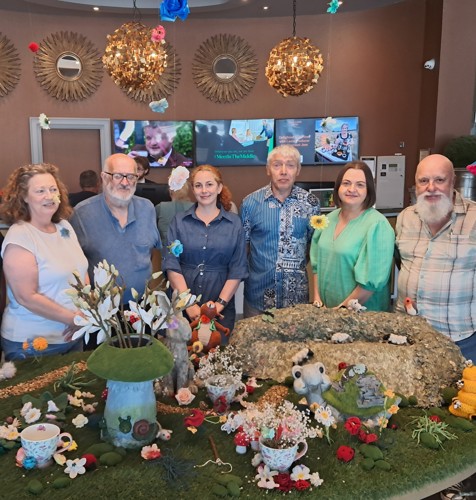
The Scrutiny Panel was developed through an open and inclusive process. All Member Tenants were invited to participate in a three part Tenant Engagement Training Programme delivered by Supporting Communities, designed to give an overview of tenant engagement practices, the purpose of scrutiny, and how Member Tenants can influence service design. Crucially, this training was delivered jointly to Member Tenants and managers from Housing Services and the Community Engagement Team. This shared learning approach created a foundation of mutual understanding, strengthened relationships early on and demonstrated that the scrutiny process was a genuine partnership between staff and Member Tenants. Ten Member Tenants completed the full training series, and from this group, six volunteered to join the inaugural Scrutiny Panel.
From their first meeting, The Panel was intentionally Member Tenant–led. One of their earliest actions was to co create a Terms of Reference and a Code of Conduct, ensuring the group had shared expectations on how decisions would be made, how meetings would run, and how they would work collaboratively. Developing these documents together reinforced ownership, clarity and transparency, demonstrating that this was a structure built with Member Tenants, not for them.
The Panel selected its first area of scrutiny: Co-operative Housing Ireland’s Pre Tenancy Training delivered to all new Member Tenants. The Panel recognised the importance of the early tenancy journey and chose this focus area to ensure new Member Tenants receive clear, consistent and supportive information that helps them prepare for their move.
Across six scrutiny meetings, The Panel undertook a structured and detailed review. They examined the Pre Tenancy Training presentation document alongside relevant policy and procedures and satisfaction surveys, assessing clarity, consistency and accessibility. They reflected on how information was communicated, and whether it gave new Member Tenants the confidence needed to start their tenancy well. Their own lived experience added depth to their analysis, offering insights staff alone could not provide.
Throughout this process, The Panel worked closely with the Neighbourhood Delivery Team, who supplied information and responded to questions while ensuring that the Member Tenants retained full leadership of the scrutiny work. This collaborative model maintained the independence and integrity of The Panel’s role while ensuring they had the support required to conduct a thorough review.
The Panel’s findings were constructive and practical. They recognised strengths in the existing training material but also identified several opportunities to strengthen clarity and consistency. Their recommendations included improvements to the presentation document to ensure more consistent, clear information and the addition of content that would help Member Tenants fully understand the pre tenancy process.
The creation and impact of the Co-operative Housing Ireland Scrutiny Panel demonstrate what genuine partnership looks like. Member Tenants were not simply asked to provide feedback; they were trained, empowered and trusted to lead a structured service review. Their recommendations are now informing improvements to Co-operative Housing Ireland’s Pre Tenancy Training and supporting better outcomes for future Member Tenants.
Beyond the immediate findings, the project has strengthened relationships, increased confidence among Member Tenant leaders and established a sustainable model for future scrutiny. The six panel members have emerged as community leaders, illustrating the transformative power of partnership when Member Tenants are supported to shape the services that affect their lives.
Outcomes and achievements
The development of the Co-operative Housing Ireland Scrutiny Panel has delivered strong outcomes in Member Tenant engagement, service improvement and organisational transparency. Ten Member Tenants completed the preparatory engagement training, with six progressing to form the inaugural panel. Their first scrutiny project examined Co-operative Housing Ireland’s Pre Tenancy Training, a core service that supports new Member Tenants as they prepare to move into their homes.
Over six meetings, The Panel independently reviewed the Pre-Tenancy Training presentation document and relevant policy and procedure. Working in partnership with the Neighbourhood Delivery Team, they assessed how clearly and consistently information was presented, how accessible it was, and how well it prepared Member Tenants for the responsibilities and expectations of their new tenancy. Their lived experience brought valuable insight into what new Member Tenants need to feel confident and supported.
The Panel’s recommendations focused on improving clarity, consistency and completeness within the presentation document, helping ensure future Member Tenants have a clear and accurate understanding of the process.
In early 2026, the next step is to present Co-operative Housing Ireland’s response back to the Scrutiny Panel, closing the feedback loop and demonstrating how their work has directly influenced service improvements. The results of the overall project will be published in the Co-operative Housing Ireland newsletter to ensure that all Member Tenants are aware of the work of the Scrutiny Panel.
This project has built Member Tenant confidence and strengthened Co-operative Housing Ireland’s commitment to genuine partnership and co-production.
Newington Housing Association - Empowering Tenants to Lead Change Across North Belfast
Application entry
- Project name: Empowering Tenants to Lead Change Across North Belfast
- Lead organisation: Newington Housing Association
Statement of support
Newington Housing Association (NHA) demonstrates a strong commitment to going beyond the provision of housing by placing tenants at the centre of its work. NHA works across North Belfast focuses on empowering tenants, building skills and supporting residents to become active leaders and positive agents of change within their communities.
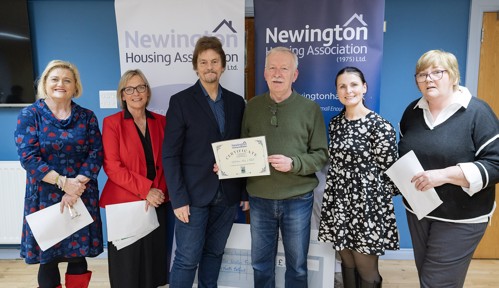
Tenants are represented at board level, ensuring the tenant voice directly influences strategic direction and organisational priorities through the Tenant Forum. Following the implementation of the Tenant Participation and Community Involvement Strategy and the Community Investment Strategy 2023-26. NHAs board has supported the Association’s need to positively impact tenants the lives of NHA tenants and the wider community.
To support this and other work NHA invests three per cent of rent receivable back into the community, in 2014-25 this was Examples of work include:
- Financial Support – NHAs Brian Mullan Community Fund provides funding to voluntary and community organisations operating in North Belfast, beyond where NHA has housing. The fund helps deliver projects that are important to the community and range from improving mental health, fitness, seasonal events, sports and many more. Funding applications are assessed by NHAs Tenant Forum, who are NHA tenants. This supported by NHA staff. In the past year NHA has provided £30,584 to 34 different community organisations within North Belfast.
- Developing Tenant Skills and Leadership - Newington places a strong emphasis on developing tenant skills and leadership. The Eat Meet and Heat Community Hub, a tenant led initiative that has operated successfully for more than six years. To date NHA has invested £35k in the community hub. Newington tenants volunteer their time to plan and deliver weekly hot meals in a warm and welcoming environment. There are also monthly information sessions including energy efficacy and benefit advice. The tenants manage shopping, budgeting, cooking, and event planning, while also organising seasonal family events throughout the year. This initiative reduces social isolation, supports residents during periods of financial pressure, and strengthens positive relationships across neighbouring communities.
- Newington Empowering Women’s Skills (NEWS) group – Working with female residents on the Limestone Road NHA worked with and supported the development of NEWS group. Women from different communities were came together this has improved their confidence, mental health and community relations. Initial sessions focused on mindfulness, stress management and budgeting. As trust developed, the group progressed naturally into skills development. Through partnership working with a women’s training organisation, participants developed practical skills such as basic home maintenance alongside creative activities. The group has created a safe space for learning, mutual support and positive cross community engagement.
- Safer Neighbourhoods/ASB - NHA works in partnership with tenants, residents, community, voluntary groups and statutory partners to work to improve neighbourhoods and services. Newington leads and facilitates several local working groups that ensure community voices directly inform decision making. A key example is the Safer Streets, New Lodge partnership, which Newington facilitates to address community safety concerns. This group brings together community representatives and statutory agencies to identify issues, plan actions and implement solutions that respond to local need.
- Engagement - Newington promotes meaningful tenant participation through structured engagement, including a tenant forum, youth forum representation, resident committees, and regular consultation exercises. These platforms ensure tenants and their families influence service delivery and community priorities. This approach has strengthened trust, improved communication, and increased resident confidence in engaging with services and partners. Newington also provides financial support including emergency financial assistance, student bursaries, youth engagement programmes. These measures help tenants during times of difficulty while promoting NHA advocates for tenants, celebrates community achievements and delivers lasting social impact. Its work demonstrates how meaningful tenant involvement can transform services, strengthen communities and deliver real change beyond housing.
Outcomes and achievements
Newington Housing Association has made significant strides in tenant participation and community involvement through the Tenant Participation and Community Involvement Strategy and the Community Investment Strategy 2023-26. The Safer Streets partnership has enhanced communication between residents and partner agencies, leading to coordinated responses to community safety concerns and increased resident confidence. The Brian Mullan Community Fund has supported various community projects addressing food poverty, mental health, social isolation, arts, and sport, strengthening local voluntary organizations in North Belfast. The Eat Meet and Heat Community Hub provides weekly support to reduce loneliness and foster community connections, organizing seasonal events and initiatives like the Cash for Kids appeal. Emergency financial assistance, bursaries, and youth engagement initiatives have supported tenants during critical times, improving quality of life and building long-term resilience. Tenants influence strategic priorities through representation on the Board and Housing Advisor Panel, leading the Safer Streets partnership for effective problem-solving and increased community trust. The Brian Mullan Community Fund invested £30,584 in projects addressing mental health, inclusion, and poverty relief, led by the Tenant forum and Youth form. The Eat, Meet and Heat Hub reduces social isolation and financial stress through weekly meals and advice. The Newington Empowering Women’s Skills group has improved mental health and cross-community relations with practical training in Home DIY.