


All-Ireland Housing Awards 2026
Read all the shortlisted entries into this award category, community champions, at the All-Ireland Housing Awards (AIHA) 2026 and find out who won the award on the night.
The community champions award recognises organisations that champion diversity and foster inclusive, cohesive communities.
Winning project name
Ballymena Schools PB
Winning organisation
Radius Housing
Partner organisations
Hare's Corner Co-operative, Politics in Action, NI Electoral Comission
Statement of support
The Ballymena Participatory Budgeting (PB) Programme is an innovative, youth-led initiative delivered in partnership by Radius Housing, Hare’s Corner Co-operative and five secondary schools in Ballymena. This pioneering project represents the first ever participatory budgeting programme delivered within schools in Northern Ireland. Demonstrating long-term commitment and sustainability, Radius Housing has commenced year two of this project to allow for deepening learning and skills development within the schools. The project is supported by the Department for Communities and the Northern Ireland Housing Executive’s ‘Housing for All’ Shared Housing Programme.
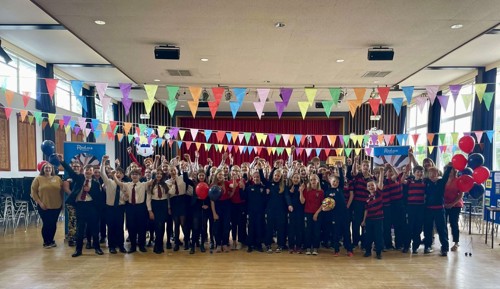
Participatory Budgeting (PB) is a proven community development tool that brings decision-making power over public funding directly to those who will benefit. In Ballymena, this principle is embedded at grassroots level through a student design team, made up of pupils from all five participating schools. Each year, this team takes ownership of designing and delivering the PB process within their schools, including agreeing the programme name, theme, budget breakdown, rules and communication strategy. This approach ensures the process is genuinely youth-led and responsive to the needs and priorities of young people.
The programme demonstrates a clear and intentional commitment to diversity and inclusion. It actively promotes equality, mutual respect and understanding by encouraging participation from all pupils – not only those on school councils or those most confident to speak out. Particular effort is made to support students who may be marginalised, quieter, or for whom English is a second language, ensuring voices that are often unheard are actively encouraged and mentored. This inclusive approach empowers pupils whose ideas may never previously have been considered in school decision-making.
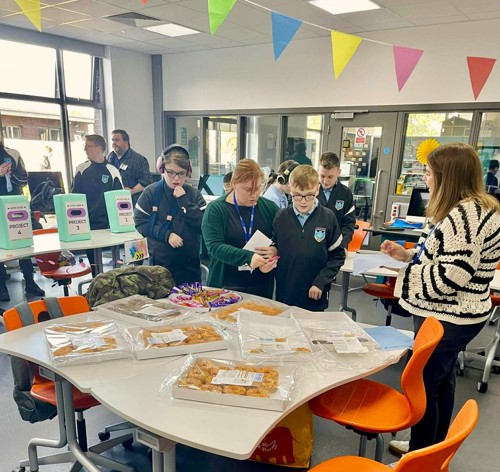
To date, over 4,000 pupils and teaching staff have participated, bringing together a diverse range of backgrounds, faiths and cultures. The schools involved include grammar, secondary and special education settings, creating meaningful opportunities for cross-school collaboration and shared learning. Importantly, pupils make the final decisions on how funding is spent; teachers facilitate the process but do not vote, reinforcing trust in the democratic integrity of the programme.
The programme delivers tangible outcomes for both pupils and schools. Staff gain valuable insight into what truly matters to students in relation to wellbeing and school life, while pupils develop key life skills including leadership, budgeting, project development, communication, public speaking, mentoring and event management. The PB process also introduces pupils to the principles of community development, civic engagement and democratic participation. For many, this is their first experience of voting in a real election, complete with polling booths, ballot papers and proportional representation, helping to counter voter apathy and build confidence in democratic systems from an early age.
There have been powerful and transformative moments throughout the programme. One particularly impactful example occurred when pupils from Castle Tower Special School addressed students and teachers from other schools, articulating the importance of inclusion and equal participation for all young people. As one teacher reflected:
- “Our young people don’t often get the chance to mix. They can be left out of projects like this. It was so good that the programme started here in the school. An important lesson is not to limit the opportunities for the young people, to go with it.” Aoidin Darcy, Castle Tower School
Evaluation data further demonstrates the programme’s effectiveness. Exit polling on voting days showed that 88.9 per cent of pupils enjoyed the experience, 77.25 per cent felt the voting was well organised, 65.34 per cent believed PB is a good way to decide how money is spent, and 77.24 per cent felt it was beneficial for their school. Additionally, 72.49 per cent reported that the voting process was easy to understand, highlighting the accessibility of the model.
The Ballymena PB Programme is a creative, inclusive and impactful example of how participatory democracy can be embedded within education, empowering young people, strengthening communities and fostering a more inclusive future.
Outcomes and achievements
Year one:
- History was made; this was the first Participatory Budgeting project delivered in schools in NI.
- Five schools participated in this 18-month experiential programme.
- “There was a breaking down of barriers between schools involved, Special Ed, Grammar, Catholic, Protestant. It was encouraging how the schools inspired each other.” Caron Mulligan, Slemish College
- Over 4,000 pupils took part in the programme.
- 20 pupils formed the PB Design Team to design the PB programme from start to finish.
- All junior school pupils in each school were offered the opportunity to bring forward ideas/bids for pupil wellbeing.
- The whole student body were invited to vote on the ideas to select projects that would run in the schools.
- Teaching staff from across the schools were involved in the process. Form teachers aided by the design team brought short lessons on what PB is to their form classes, and they support pupils to submit their ideas through packs supplied.
- £6,000 was allocated to projects within the five schools, £1,200 per school.
- Nine projects were funded and completed within the five schools in year one; a new nurture space in Castletower school, sports equipment and support of fundraising and celebration days at St Louis, a Games room resource at Dunclug, a new water fountain and after schools Ju Jitsu for five weeks for Ballymena Academy and a School fun day, movie club and cheerleader taster sessions for Slemish College.
- One celebration event brought all schools together alongside Ballymena Community reps, elected representatives, MLAs and TEO Junior Ministers to talk about the programme and celebrate outcomes.
In year two we have expanded our partnership to include politics in action who are delivering workshops on democracy, campaigning and voting across the five schools.
- We have linked in with the Northern Ireland Electoral Commission to partner with them on their ‘Welcome to Your Vote Week’ campaign and to bring further educational possibilities into the schools. This is important in community with the voting age being lowered to 16.
- We have tied in with the push to increase democratic education in schools and are working to equip young people to be active citizens with community development skills.
Highly commended
This year, due to the high quality of entries, a second entrant was also chosen for a highly commended award.
- Project name: Creating inclusive, connected communities
- Lead organisation: Apex Housing Association
Apex Housing Assocation - Creating inclusive, connected communities
Application entry
- Project name: Creating inclusive, connected communities
- Lead organisation: Apex Housing Association
Statement of support
Apex Housing Association (Apex) is committed to creating inclusive, connected communities where diversity is celebrated and everyone has the opportunity to thrive.
In 2025, Apex undertook research to identify groups most at risk of marginalisation within its communities. This informed a series of targeted initiatives designed to foster belonging and create environments where people of all backgrounds can live, learn and grow together.

Shining a light on African culture
One key focus was supporting the growing African population in the Derry City and Strabane District Council area. Apex played a pivotal role in establishing the African Caribbean Community Network (ACCN), ensuring strong governance structures and capacity-building support.
To amplify their visibility and cultural presence, Apex partnered with ACCN to host World Africa Day in St Columb’s Hall in May 2025. The event attracted 600 attendees and featured vibrant music, dance, food and traditional dress, creating an atmosphere of celebration and mutual understanding. This initiative strengthened social cohesion, empowered ACCN members to adopt leadership roles, and laid the foundation for its continued growth.
Fighting fit and breaking barriers
Recognising the challenges faced by marginalised young people - particularly young males, Apex collaborated with Fight2Thrive, a youth development start-up, to deliver a six-week programme blending mental and physical fitness. Led by professional boxer Steven Ward, the programme helped 64 culturally diverse young people, some of whom were at risk of involvement with the criminal justice system, to build emotional resilience, manage anxiety and set personal goals. Delivered across shared housing areas in Dungannon, Dunmurry and Ballycastle, the initiative concluded with a celebration event featuring world champion boxer Carl Frampton.
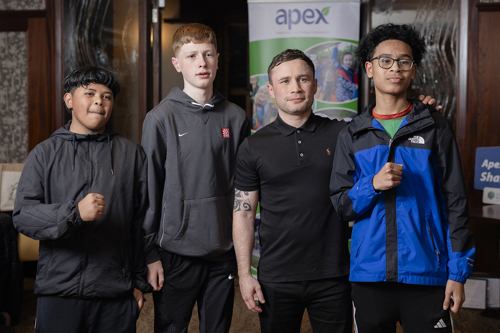
Its success inspired further community-led activities, including an event in Dungannon which saw involvement from over 40 boxing clubs from the island of Ireland. It was supported by a local up-and-coming boxer from the Traveller Community who was celebrated on the night. The event finale was the first ever semi-professional boxing match in Dungannon which drew a crowd of over 600 people and was commentated by sports presenter Adrian Logan.
‘Our Shared Street’ comic book
Apex also identified a gap in the understanding of shared housing among children. To address this, Apex partnered with Revolve Comics to create ‘Our Shared Street’, an educational comic developed with input from over 120 children from six areas of Northern Ireland.
Launched during Good Relations Week 2025, the comic uses engaging illustrations to explore themes of inclusion, homelessness, and newcomer experiences, helping young people understand how shared housing can offer safety, opportunity and meaningful connection in a creative and accessible way.
Inclusion through football
Furthering its commitment to inclusion, Apex partnered with eight other housing associations and the Irish Football Association to support the Inclusion and Disability Football Programme. This initiative enabled people with disabilities - including those with learning disabilities, cerebral palsy, visual impairments and powerchair users - to participate fully in sport. It also provided referee training opportunities for Sports Management students from Belfast Met, ensuring a legacy of long-term impact and skills development.
The programme featured weekly training sessions, regional leagues, national competitions and elite pathways; with more than 80 disability football teams taking part across Northern Ireland.
Conclusion
Through these initiatives, Apex has demonstrated unwavering commitment to fostering diversity and inclusion. By combining research-driven planning with creative, community-led solutions, Apex continues to build vibrant, resilient communities where everyone feels valued and connected.
Outcomes and achievements
Apex’s initiatives have delivered significant, measurable outcomes:
- ACCN membership grew by 50 per cent in 2025, with the organisation expanding to new geographical areas and a new branch in Omagh opening recently. New subgroups have been formed including a women’s network with over 200 members, a healthcare group with 120 members, and a youth group with nearly 100 members. World Africa Day attracted 600 attendees, reinforcing ACCN’s visibility and advocacy role.
- The Fight2Thrive programme improved school attendance and focus among participants, with St Patrick’s College and Drumglass High School reporting positive changes. 18 young people who had never boxed before now train regularly, boosting fitness, confidence and mental health. Dungannon Boxing Club launched a new female programme, and Fight2Thrive grew from a part-time venture into a thriving business employing six staff.
- ‘Our Shared Street’ engaged over 120 children from six areas, amplifying youth voices and deepening understanding of shared housing. Meanwhile, the Inclusion and Disability Football Programme created opportunities for people with disabilities to participate in sport and supported referee training for Belfast Met students, promoting equality and skills development.
- Collectively, these achievements highlight Apex’s success in fostering diversity, promoting inclusion and delivering lasting benefits for individuals and communities.
Shortlisted entries
Rural Housing Association - Voices Without Borders
Application entry
- Project name: Voices Without Borders
- Lead organisation: Rural Housing Association
- Partner organisation: Woven Housing Association
Statement of support
Rural Housing Association and Woven Housing are proud to submit Voices Without Borders for the CIH Community Champion Award, recognising our commitment to championing diversity, fostering inclusion and strengthening community cohesion across Northern Ireland.
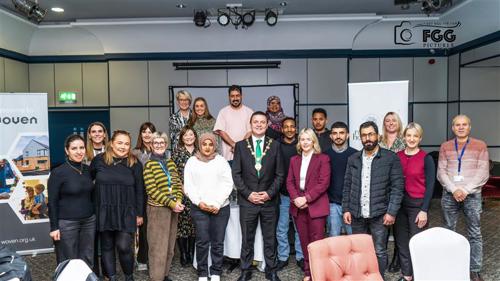
Delivered as part of Good Relations Week 2025, Voices Without Borders was a community storytelling event celebrating diversity, empathy and human connection. Funded through the Housing Executive’s Housing for All Programme and Derry City and Strabane District Council’s Special Initiatives Fund, the initiative brought together local residents, partners and civic leaders to listen to the lived experiences of refugees and asylum seekers who now call Northern Ireland home.
The project was community-led from inception. It emerged from the vision of our Sion Mills ‘Housing for All’ Advisory Group, ensuring tenant voice and lived experience shaped both the purpose and delivery of the event. Tenant representative Valerie Walker played a pivotal role in identifying and engaging key partners, including the Western Health and Social Care Trust, Derry City and Strabane District Council and the Housing Executive. This collaborative approach ensured the event reflected real community needs and priorities.
At the heart of Voices Without Borders were the voices of refugees and asylum seekers themselves. Individuals and families from Syria, Yemen, Iran, Eritrea and Kuwait shared powerful personal stories of displacement, resilience and rebuilding life following conflict and hardship. These honest testimonies highlighted not only the challenges of forced migration but also the positive experiences of welcome, safety and opportunity found in Northern Ireland.
By creating a safe and respectful space for these stories to be heard, the event actively promoted equality, dignity and belonging. It challenged misconceptions around migration, replaced fear with understanding, and encouraged empathy through shared human experience. Importantly, refugees and asylum seekers were not positioned as service users, but as valued community members with voices, agency and contributions to make.
The use of storytelling as a creative engagement tool was central to the project’s success. Small-group conversations hosted by storytellers allowed for meaningful dialogue, reflection and connection across cultural and social boundaries. This approach fostered trust, reduced social distance and encouraged participants to listen deeply to perspectives different from their own.
The event also demonstrated strong civic leadership and partnership working. The attendance and support of the Mayor of Derry City and Strabane District Council reinforced a shared commitment to inclusion and community cohesion, while cross-sector collaboration strengthened relationships that will continue beyond the event itself.
Voices Without Borders exemplifies how housing providers can go beyond bricks and mortar to help create thriving, inclusive communities. By amplifying marginalised voices, embedding co-production and promoting understanding, the initiative created the conditions for stronger, more connected neighbourhoods where diversity is recognised as a strength.
This project reflects Rural Housing Association and Woven Housing’s ongoing dedication to championing diversity and ensuring that everyone – regardless of background – feels welcome, valued and at home in their community.
Outcomes and achievements
Voices Without Borders has delivered meaningful social impact by strengthening understanding, empathy and inclusion within the local community.
Key outcomes and achievements include:
- Increased empathy and awareness among attendees through first-hand accounts of refugee and asylum seeker experiences, helping to challenge stereotypes and misconceptions around migration.
- Creation of a safe, empowering platform for refugees and asylum seekers to share their stories with confidence, reinforcing dignity, voice and belonging.
- Strengthened community cohesion, with participants reporting a deeper appreciation of diversity and shared humanity across cultures.
- Enhanced partnership working between housing providers, local government, health services and statutory agencies, supporting a joined-up approach to inclusion.
- Demonstrated the value of tenant-led, co-produced initiatives, with the Sion Mills Housing for All Advisory Group playing a central role in shaping and delivering the project.
The event has helped lay the foundations for ongoing dialogue and future inclusive initiatives, embedding learning from Good Relations Week into longer-term community engagement. Voices Without Borders has shown that creative, community-led approaches can deliver lasting social value and support communities to flourish together.
Choice Housing - Choice Community Champion, Dirk Lakeman
Application entry
- Project name: Choice Community Champion, Dirk Lakeman
- Lead organisation: Choice Housing
Statement of support
Dirk Lakeman is a remarkable example of a Community Champion who has shown exceptional commitment to tenant engagement and community improvement through his leadership of the Community Garden at Mersey Street Primary School and his monthly blog, ‘Drop in with Dirk’. Through his generosity, inclusivity and community engagement, Dirk has created opportunities for tenants of all ages and backgrounds to connect, grow and thrive.
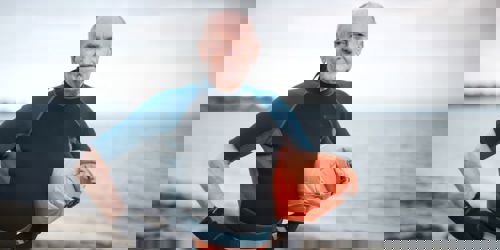
A tenant at Trinity Heights in Bangor, Dirk has become widely known across Choice for his passion for healthy living, his enthusiasm for bringing people together and his willingness to share his skills for the benefit of others. Dirk is a powerful advocate for active ageing and community participation and champions that age is no barrier to making a positive difference.
With support from Choice Housing, Dirk has gone far beyond tending plants, he has cultivated a culture of inclusion, collaboration, and wellbeing, inspiring tenants and partners alike. What began as a gardening initiative has now grown into a platform for learning, connection, and ensuring the tenant voice is heard.
Dirk has been the driving force behind the Community Garden, dedicating his time to planting, growing, and maintaining the space. His leadership extends far beyond the garden beds, he actively involves tenants, families and schoolchildren, encouraging them to participate, share knowledge, and enjoy the benefits of working together outdoors. He has also introduced cooking demonstrations, showing how produce from the garden can be transformed into affordable, healthy meals, further connecting tenants to the value of sustainable living. By leading through example, Dirk has created a project where people of all ages and abilities feel welcome, inspired and proud to contribute.
Through ongoing dialogue with Choice staff, tenants and local schools, Dirk has influenced decisions how the garden has been developed. His feedback and advocacy have secured resources, guided planting choices and shaped how the space is used, ensuring it reflects community needs and priorities. Dirk has worked closely with external organisations to promote wellbeing, employability opportunities, and to support food education and accessibility. These collaborations have broadened the impact of his work and embedded the tenant voice in service delivery beyond the housing sector.
The ‘Drop in with Dirk’ blog provides updates on the garden’s progress alongside practical recipes made from homegrown produce, making healthy living simple, relevant and approachable. By sharing tips, inviting contributions and linking to his cooking demonstrations, Dirk has created opportunities for engagement that extend well beyond the garden. He has promoted inclusion by representing a wide range of tenant voices and ensuring everyone has a way to connect, whether through hands-on gardening or food education.
The impact has been significant. The Community Garden provides fresh produce, outdoor learning opportunities for school children, and a shared space where tenants, families, and staff can come together. Dirk’s blog and cooking demonstrations have strengthened communication and engagement, offering both practical value and a sense of connection. His collaborations with schemes and schools, have created a network of support that benefits the whole community and serves as a model for tenant-led partnership working.
Jonathon Blakely, Community Development Manager explains, ‘Dirk Lakeman exemplifies excellence in tenant engagement. Choice is proud to support Dirk in his leadership of the Mersey Street Primary School Community Garden, his ‘Drop in with Dirk’ blog and his cooking demonstrations. He has inspired others, shaped decisions, championed inclusion, and delivered lasting outcomes. Dirk’s dedication shows how a tenant-led initiative can grow into a thriving example of collaboration, creativity, and community pride’.
Outcomes and achievements
Dirk’s work has delivered clear and measurable benefits for Choice tenants and the wider community. The Community Garden has become a valued shared space, providing fresh produce, outdoor learning opportunities and a welcoming environment where tenants, families and schoolchildren can connect. This has strengthened relationships across generations, encouraged regular engagement and helped build a stronger sense of community.
Through ‘Drop in with Dirk’, Choice tenants have gained valuable skills in cooking, budgeting and tips on how to stay healthy throughout the year. The blog, which is published on the Choice website and advertised on Social Media, is accessible to all and provides practical advice in a way that feels inclusive and achievable.
Dirk states in the blog, ‘So grab a cuppa, and feel free to drop in anytime.’ This inviting tone reflects the welcoming and inclusive nature of his work, helping reduce feelings of isolation amongst tenants and creates a welcoming community spirit.
Dirk has fostered a sense of inclusion, pride and belonging. His dedication, positivity and willingness to lead by example have created lasting benefits for the entire community and his contribution clearly reflects the values of the Community Champion Award.
Court View Residents Association - Court View "The Shedium"
Application entry
- Project name: Court View "The Shedium"
- Lead organisation: Court View Residents Association
- Partner organisation: North and East Housing Association
Statement of support
Court View Residents Association has been established since 2023, a tenant led initiative to encourage all tenants of Court View, an age-friendly development with 16 homes based in Stradbally, County Laois, to work together for the benefit of their community. Underpinned by a desire for cohesion and inclusion within their community the tenants came together to create a space where every individual, regardless of their background, capacity, identity, or experiences, feels valued, respected, and empowered to participate.
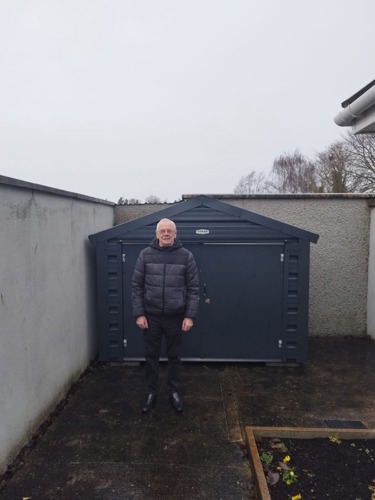
The establishment of this diverse and inclusive Residents Association has brought a huge number of benefits to their community including “out of the box” solutions to local issues, a collective approach in communication to external service providers and a reflection on the needs of everyone in the estate. The Resident’s association has also been paramount in forming and strengthening community bonds within the development and facilitating a genuine sense of belonging amongst the tenants.
In May 2025, the resident’s association met with NEHA staff to outline their outstanding needs with regard to the enhancement of the estates, they requested additional funding for plants and gardening, the identified the need for a communal shed and inquired about paint to upcycle estate walls and doors. While all requests were heard, the tenants were advised to “project manage” the acquiring of the communal shed, including accessing quotes for the purchase and installation of the structure, insurance review, user manual in terms of access and general upkeep and maintenance.
They embraced the tasks at hand, and the project was completed before the end of 2025 with a complete ownership of success from the work the resident’s association undertook. This project incorporated the skill sets of the tenants in managing the project, it also facilitated social inclusion, sustainability and active participants in the development and management of their communities. This collaborative project has brought the tenants together far beyond their initial ask, the realisation of achieving such a significant goal has left a positive impact on all tenants in the estate and an inspiration for what can come next. and pooling resources, such initiatives strengthen bonds, inspire further engagement, and leave a lasting positive impact on the estate.
While the work of this association has been phenomenal in terms of inclusion, the association does have a “champion” a tenant called Hazel who had been instrumental in setting up the Residents Association and achieving all project goals in 2024. She is extremely aware of the needs of her neighbours and is happy to support their involvement in the community in whatever way is necessary. Her work on the estate enhancement initiative is representative of creating the conditions for her local community to flourish and thrive.
NEHA recognises the establishment of a Residents Association and/or the procurement of a community resource i.e. shed may not resound as the most community champion project, however, if we contextualise the success in relation to the development demographic and the outputs beyond the physical structure, we are happy to nominate the tenants.
Outcomes and achievements
Court View "The Shedium" project has delivered significant outcomes for the tenants both individually and collectively. There are the practical outcomes with tenants now having access to shared space, tools and resources, which encouraged activity on estate gardening and maintenance projects improving individual homes and communal spaces. All participating tenants have gained practical skills, with the added advantage of sustainability promotion through eco-friendly practices.
As the project is embedded in inclusive and cohesive practices there are a noteworthy number of outcomes for tenants in terms of growth and development of the resident’s association and community. The tenants have acknowledged the empowerment experienced when challenged to manage the project themselves and evidence of stronger social connections as both the planning and implementation of the project was successful in bringing people together through common goals.
Finally, the realisation of Court Views Shedium project has been instrumental in their desire to do more, they have identified community training in gardening/tool usage to allow all tenants gain skills and confidence and equality of access to the shared resource. Tenants have indicated their intent to continue to engage in long-term projects and initiatives beyond the shed, they have identified more estate enhancement projects for completion in 2026 and have communicated strongly these will not occur without including all tenants in the planning, preparation and completion stages.
Homeless Connect - Echoes of Home
Application entry
- Project name: Echoes of Home
- Lead organisation: Homeless Connect
Statement of support
Echoes of Home is a powerful example of how lived experience can be placed at the centre of community decision-making to foster inclusion, cohesion, and long-term social change. Established by Homeless Connect in 2022, the group brings together people with lived experience of homelessness to meaningfully influence policy development, research, and service delivery across Northern Ireland.
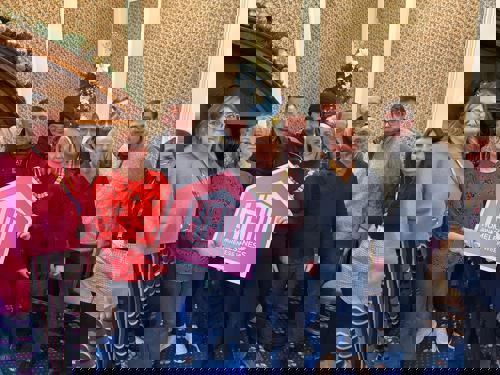
From the outset, Echoes of Home demonstrated a clear dedication to diversity and inclusion. Homeless Connect recognised that people directly affected by homelessness are often excluded from decisions that shape housing systems and services. Echoes of Home was created as a safe, supportive space where individuals with lived experience could share their views, build confidence, and engage collectively. Group work and meetings are facilitated by Homeless Connect’s Lived Experience Coordinator, ensuring participants feel supported, respected, and empowered to contribute.
The group’s work has grown significantly in both scale and impact. Members have engaged with consultations, raised awareness of homelessness issues, and participated in events across Northern Ireland. Echoes of Home members have attended events at Stormont, completed training, and contributed to discussions through the All-Party Group on Homelessness. These opportunities have enabled participants to engage directly with policymakers and housing professionals, ensuring lived experience perspectives inform strategic discussions.
Echoes of Home has delivered demonstrable outcomes through creative and effective strategies. Throughout 2025, members worked alongside university researchers at the Administrative Data Research Centre and statutory bodies, including the Northern Ireland Housing Executive, to co-produce research on the causes and consequences of homelessness. This collaboration represents an innovative approach to inclusion, combining lived experience insight with academic data to strengthen evidence-based policy. As one member noted, “Working with the ADRC and the research we are doing can use my experience and their data to make a difference in the fight against homelessness.”
The group has also played an active role in public engagement and awareness-raising. During Homelessness Awareness Week 2025, Echoes of Home co-produced and facilitated a trauma-informed workshop, took part in a social media photoshoot to challenge stigma, and met with the Lord Mayor of Belfast. These activities helped amplify lived experience voices, promote understanding, and encourage more inclusive conversations about homelessness.
Echoes of Home of Home has created lasting conditions for communities to flourish by empowering individuals who have historically been marginalised. Members report increased confidence, skills, and a sense of purpose through their involvement. As one participant reflected, “Echoes of Home of Home not only gave me a welcoming place to share my experiences but also a chance to make real, tangible changes to the lives of people currently facing homelessness.”
Through its commitment to inclusion, co-production, and community leadership, Echoes of Home of Home exemplifies what it means to be a community champion, creating meaningful change that will continue to shape policy and practice into 2026 and beyond.
Outcomes and achievements
Echoes of Home has delivered clear outcomes by embedding the voices of people with lived experience of homelessness into policy, research, and public engagement across Northern Ireland. Established in 2022, the group has grown from early consultation activity into sustained, meaningful engagement with decision makers, researchers, and statutory organisations.
Members have raised awareness of homelessness by attending events at Stormont, contributing to cross party discussions, and engaging directly with senior decision makers. These opportunities have increased understanding among housing professionals and policy leaders, helping ensure lived experience perspectives shape housing policy and service delivery.
In 2025, Echoes of Home achieved significant impact through co producing research with university researchers and working closely with the Northern Ireland Housing Executive. This collaborative approach combined lived experience insight with academic data to strengthen understanding of the causes and consequences of homelessness. As one member reflected, “My hope is that this research can use my experience and their data to make a difference in the fight against homelessness.”
During Homelessness Awareness Week 2025, the group co produced and facilitated a trauma informed workshop, took part in a public social media campaign, and met with the Lord Mayor of Belfast, further strengthening confidence, influence, and community impact.
Tuath Housing - Tuath Heartbeat Heroes
Application entry
- Project name: Tuath Heartbeat Heroes
- Lead organisation: Tuath Housing
Statement of support
“Bringing life saving Defibrillators and CPR/ AED training to communities across Ireland.”
The Tuath Heartbeat Heroes Project is a pioneering, resident-centred community safety initiative designed to expand access to life saving defibrillators and empower residents with essential CPR/AED skills. The project installed defibrillators across ten housing schemes nationwide between January and November 2025, facilitated by Tuath Housing’s Community Engagement Team. The project was inspired by a real medical emergency in which a defibrillator saved a resident’s life. This moment became the catalyst for a national programme focused on safety, inclusion, and community resilience.
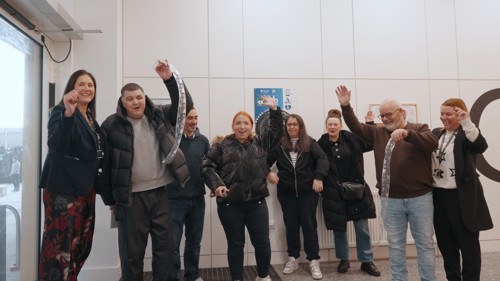
Commitment to Diversity and Inclusion
Heartbeat Heroes was intentionally designed to be accessible to residents of all ages, abilities, and backgrounds. Training sessions were delivered free of charge and held in local settings, ensuring that participation was not limited by cost, travel, or confidence barriers. Many participants had never previously received CPR training, highlighting the project’s success in reaching individuals who are often underrepresented in community initiatives. Each installation event brought together families, older residents, young people, and those who may not typically engage in community programmes, fostering a sense of belonging and shared responsibility.
Key Outcomes and Social Impact
The project installed defibrillators across 10 housing schemes nationwide, supported by community led events and awareness campaigns. More than 100 residents received hands on CPR/AED training, and a national post installation survey gathered feedback from 233 residents. The results demonstrate significant impact:
- 88 per cent of residents reported feeling safer knowing a defibrillator is available in their community.
- 68 per cent expressed interest in further CPR/AED training.
Following training residents reported increased confidence, reduced anxiety about medical emergencies, and stronger connections with neighbours. Resident feedback reflects the project’s inclusive value:
- “The training gave me the confidence to help someone in an emergency.”
- “Knowing there’s a defibrillator nearby gives peace of mind to every family.”
Heartbeat Heroes transformed a community building engagement experience. Each defibrillator launch doubled as an educational and community event, blending practical training with social connection. The project also leveraged strong partnerships with Tuath contractors such as HousingLinks property services company, installing the devices at no cost which maximised social value.
Lynn, a resident and member of the Lockkeepers Residents’ Group, Dublin told us: “The defibrillator is a big thing for everyone. It’s not just for our building; it’s for the whole complex to use and for the surrounding community. In our own block, it brings a sense of safety and protection. The first aid training was very good, very informative, and very helpful. We hope we don’t ever need to use it, but we know that we can if we have to.”
The Heartbeat Heroes project celebrates empowered residents, life saving skills, stronger communities, expanded defibrillator access, and the shared spirit that transforms ordinary neighbours into confident champions of safety, inclusion, and connection.
“What makes the Heartbeat Heroes project so special is its inclusivity. Every resident regardless of age, background, or ability had the opportunity to learn, participate, and feel part of something meaningful. This initiative has delivered real and lasting social value. Residents feel safer, more confident, and more connected to one another. The sense of pride and reassurance this project has brought to our communities is remarkable.” Margaret Hanrahan, Customer Engagement Manager, Tuath Housing.
By bringing training directly into communities, the initiative removed traditional barriers and ensured equitable access to life saving knowledge. Its design is scalable, sustainable, and forward thinking.
Another resident and training recipient Michael from Cork said “The defibrillator is available in a complex with senior citizens who may need it in the future, the training is vital and was provided free of charge by Tuath, it’s there as an asset and a support to the community”
Outcomes and achievements
- Over 100 residents across the 10 schemes gained hands-on skills and knowledge through certified AED training sessions. For many, it was their first experience learning how to save a life.
- 88 per cent of residents surveyed said they would feel safer with a defibrillator in their community.
- 68 per cent of the 10 schemes surveyed expressed interest in attending CPR/AED training.
- 87 per cent did not know the location of their nearest defibrillator before this project showing a clear need for improved visibility and education.
Key Outcomes
- Rapid access to AEDs in communities can increase survival chances by up to 70 per cent when used within the first three minutes of cardiac arrest.
- Each device now serves hundreds of residents and visitors annually, offering reassurance and readiness within each community.
- Improved health and wellbeing by increasing awareness of cardiac health, early response, and lifesaving actions.
- Participants reported feeling empowered to assist in emergencies and to pass their learning on to others.
- The initiative strengthened trust, community pride, and collective responsibility between residents and Tuath Housing.
- Residents report a renewed sense of belonging, connection, and mutual care within their schemes.
Heartbeat Heroes turns community spirit into lifesaving action, equipping residents, training volunteers, and proving that grassroots projects do not just make a difference, they transform neighbourhoods into safer, stronger, more connected and inclusive places to live.
Co-operative Housing Ireland - Co-Creating Community: Co-operative Housing Ireland’s National and Local Engagement Approach
Application entry
- Project name: Co-Creating Community: Co-operative Housing Ireland’s National and Local Engagement Approach
- Lead organisation: Co-operative Housing Ireland
Statement of support
Across Co-operative Housing Ireland’s estates, engagement varies widely. Some communities see Member Tenants actively seeking support to improve their local area, while in others participation develops more gradually. Barriers such as lack of confidence, uncertainty about collective organising, limited access to skills, or previous engagement experiences that did not lead to meaningful change can prevent sustained involvement. A structured, inclusive approach was needed to ensure all Member Tenants had accessible, Member Tenant-led pathways to connect, organise and influence their communities.
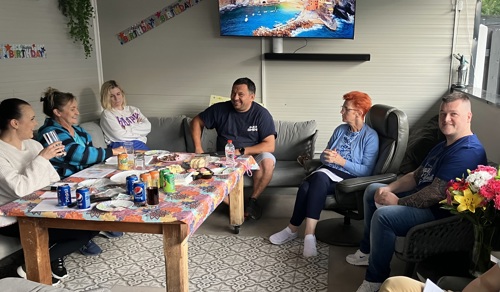
Co-operative Housing Ireland’s Community Engagement Team delivers a flexible, strengths-based community development model that adapts to local context and Member Tenant readiness. The team works alongside Member Tenants, responding to Member Tenant-led requests while also proactively widening participation. Trust, relationships and inclusion are central to this approach.
Engagement is delivered through consultation with communities in a variety of ways, including paper and online surveys, on estate consultation meetings, in person one to one meetings, and informal activities such as litter picks or meet and greet opportunities. These methods reduce barriers and create accessible, relaxed opportunities for Member Tenants to connect with staff and neighbours.
To further widen engagement pathways, Co-operative Housing Ireland also delivers a broad range of national initiatives that offer flexible, interest based opportunities for Member Tenants to get involved. These include an online book club, creative writing courses, a national garden competition and a variety of training opportunities. These initiatives provide alternative, inclusive routes into connection and participation, supporting Member Tenants who may feel more comfortable engaging through shared interests or personal development before moving into estate-based activity.
As relationships strengthen, Member Tenants are supported to build skills in community leadership, inclusive engagement, governance, consultation and event planning. Guided by Co-operative Housing Ireland’s Community Leadership Wheel, this ensures consistent, flexible, Member Tenant-led practice.
Member Tenants shape the process throughout identifying priorities, choosing how they wish to engage, and deciding whether to form Member Associations. Co-operative Housing Ireland’s flexible Community Fund supports Member Tenant-led initiatives, enabling low-cost, meaningful local activity.
Outcomes and achievements
Over the past 12 months, Co-operative Housing Ireland’s community development approach has delivered measurable improvements in engagement, inclusion and community cohesion. In 2025, 17 Member Associations accessed the Co-operative Housing Ireland Community Fund to deliver Member Tenant-led activity that strengthened social connections, reduced isolation and fostered local pride.
Clear progression pathways have emerged from informal involvement into formal Member Tenant voice structures within Co-operative Housing Ireland. In 2025, three Members from Member Associations joined their Local Co-operative Board and the Co-operative Housing Ireland Scrutiny Panel ensuring lived experience informs organisational decision making at multiple levels.
Responding to Member Tenant feedback at Co-operative Housing Ireland’s 2024 National AGM, the Co-operative Housing Ireland Community Fund has been re-developed to make it more accessible to all Member Tenants, reducing barriers to early engagement and enabling communities without formal Associations to participate fully.
The initiative demonstrates strong value for money while delivering measurable social impact. Modest funding, paired with staff-led training and informal engagement methods, has enabled Member Tenants to lead activities independently, reducing reliance on staff delivery and supporting long term sustainability.
In 2025, a Member Association Forum was implemented as an online peer learning space. Although early in its development, it has already supported shared learning, confidence building and reduced duplication of effort.
Key learning emphasises the importance of flexibility, Member Tenant readiness, building trust and the early integration of peer to peer support.
Alongside measurable improvements in participation and leadership, Member Tenants report a stronger sense of belonging and confidence.
“Crofters Quarter feels like a real community because people are encouraged to get involved. Support from CHI made it easier for us to come together and do something positive for our estate.” Member Tenant, Crofters Quarter.
RESPECT Project - The Ignite Your Health Youth Programme
Application entry
- Project name: The Ignite Your Health Youth Programme
- Lead organisation: RESPECT Project
- Partner organisations: Arbour Housing and Radius Housing Associations (through the Housing for All program)
Statement of support
Martin Connell has achieved fantastic work within the Newry community working with the youth from all over the city. Through the Housing for All shared housing program Arbour and Radius Housing have had the opportunity to do partnership working with the RESPECT project. This has enabled a lot of young people to gain qualifications, gain knowledge, make new friendships and build on their life and employment skills.
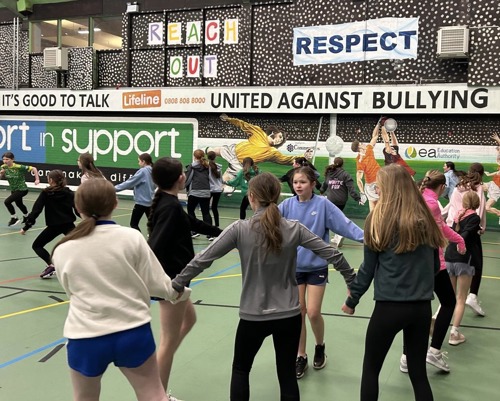
The Ignite Your Health Youth Programme builds on the successful delivery of the youth peer leadership programme ran over the last 12 years. This year we targeted girls specifically for participation in programme as we feel there is an imbalance in gender representation of our current youth peer leaders. We feel by targeting more girls as youth peer leaders will help promote positive role models in local communities and help engage more girls in future programmes we deliver.
We identified participants via engagement with key stakeholders within the Newry City area and via our outreach work which we have carried out throughout the Newry City area through our community kicks programme which was delivered over the summer months.
This programme was open to the entire Newry community and Arbour and Radius housing associations also extended the invitation to their tenants within their housing and shared housing schemes. This encouraged participants to come together from all areas of Newry through their Housing for All shared housing schemes achieving a shared mix and promoting diversity.
Outcomes and achievements
To date there has been an engagement of approx. 20 girls aged between 12 – 15 years of age in weekly activities over the 16-week programme, a minimum of one social action project developed and delivered by young people involved in programme and approx. 20 young people have gained an 'I Can Lead' qualification.
The participants have also improved on their physical and Mental Health, they have gained a formation of Healthy Habits, improved Social Development, developed confidence and resilience and gained Independence and responsibility.
We hope that this aspect of the programme will give the participants a platform to address a topic of interest and empower them to make a difference in their community going forward.
Oaklee - The Harbour, Athy
Application entry
- Project name: The Harbour, Athy
- Lead organisation: Oaklee
Statement of support
Oaklee is a not-for-profit Approved Housing Body with a strong social purpose. Established in the year 2000, we provide over 2500 homes nationwide, with a key focus on delivering more homes, better services, and stronger, inclusive communities.
At The Harbour in Athy, Co. Kildare, we manage 20 apartments within a wider scheme of 49. A disadvantaged area, primarily home to single men, alongside older people and families with young children from various ethnic backgrounds. Many tenants come from low socio-economic backgrounds and face complex challenges such as poor mental health, substance misuse, and disabilities.
In recent years, the community faced persistent anti-social behaviour, drug misuse, and social isolation. Strangers regularly gained access to the blocks, crime increased, and families retreated behind closed doors. The Harbour’s reputation in the town deteriorated, leaving residents feeling stigmatised and unsafe in the place they called home.
Recognising the scale of the challenge, key stakeholders came together to establish a multi-agency working group. This included Oaklee, Kildare County Council, An Garda Síochána, Sláintecare, the Alternative Project, and others. Crucially, tenants were invited to sit at the table as equal partners. Through coffee mornings, evening meetings, and a full needs assessment, residents shared both their concerns and their hopes: cleaner shared spaces, better security, play areas for children, access to services, and opportunities to connect as a community.
Small but important changes soon followed. A bulky waste amnesty and communal skips cleared out rubbish and improved the physical environment. Block doors were secured, cutting off easy access for non-residents causing disruption. These visible steps sent a powerful message: tenants’ voices mattered, and action was being taken.
Momentum grew quickly. Tenants co-designed a summer Family Fun Day, bringing people of all ages together in celebration. More recently, discussions about the neglected green space have sparked proposals for benches, planter boxes, and integration with Kildare County Council’s “Age friendly Mile” initiative along the canal to the front of The Harbour. More than landscaping, this is about reclaiming shared spaces and creating a safe place for connection.
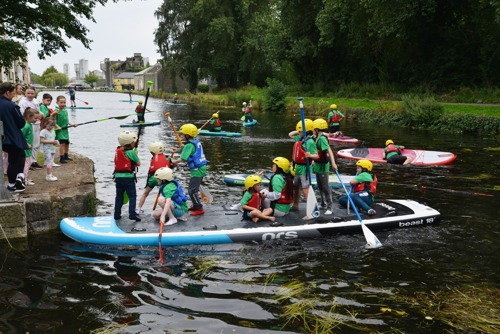
Partnerships extended beyond Oaklee and the tenants. Gardaí have increased their local presence and are engaging directly with residents, building trust. Youth services have launched targeted outreach, providing young people with positive alternatives. Sláintecare and the Sports Partnership are exploring new health and wellbeing initiatives, the most recent being water-based activities at the Family Fun Day. Together, these collaborations created a web of support with each strand reinforcing the next.
The Harbour has undergone a meaningful change, with neighbours who once felt isolated now meeting, connecting, and supporting each other. Agencies that previously worked in silos are now aligned. Most importantly, tenants are no longer passive recipients of decisions, they are co-designers of solutions, actively shaping their future.
A successful award from the Social Investment Fund has significantly contributed to the progress achieved so far. With continued support, we will deliver a sustained programme of community development, helping residents feel safe, proud, and connected.
The Harbour stands as a powerful example of how a multi-agency partnership, grounded in genuine tenant engagement, can begin to transform even the most challenged communities:
- It starts with listening and small, meaningful wins.
- Trust is built by following through on promises.
- Tenants are empowered when they’re invited to co-own solutions.
- And lasting change is supported by a strong, consistent partnership forum.
The Harbour is still on its journey, moving from fear and fragmentation towards a future defined by safety, pride, and belonging. One resident most recently summed it up: “It’s not just about stopping the problems, it feels like we are building something together.” Another reflected with pride, “For the first time, I feel proud to invite my family to visit.” The Harbour shows what is possible when partnerships are genuine, when tenants are empowered as equal partners, and when small wins grow into lasting change.
Outcomes and achievements
Oaklee’s work at The Harbour reflects our core purpose: to provide affordable homes and the supports needed to enable people and their communities to live, thrive and prosper. Faced with long standing anti social behaviour, social isolation, and deteriorating safety, Oaklee helped establish and lead a multi agency partnership that placed tenants at the heart of decision making. This approach directly supports our mission to change people’s lives by providing secure and stable homes where they can thrive.
Early actions, such as securing block doors, organising bulky waste clear outs, and improving shared spaces, demonstrated Oaklee responding quickly to community concerns. By creating tenant forums, hosting coffee mornings, and co designing events like the Family Fun Day, we worked with people, listening deeply and acting on what mattered most to residents. Our ambition is reflected in the evolving long term plans, including proposals to revitalise the green space and link the scheme to the Age Friendly Mile, strengthening connection and wellbeing.
Partnerships with Gardaí, youth services, Sláintecare, and others have expanded local supports and rebuilt trust. Today, residents who once felt unsafe and isolated are engaged, empowered, and shaping their future. The Harbour now stands as a living example of Oaklee’s commitment to building sustainable, inclusive communities where people can genuinely thrive.