


All-Ireland Housing Awards 2026
Read all the shortlisted entries into this award category, striving for sustainability, at the All-Ireland Housing Awards (AIHA) 2026 and find out who won the award on the night.
The striving for sustainability award celebrates organisations that are progressing successfully to achieve their sustainability goals. By recognising efforts like striving closer for net zero targets, adopting renewable energy, and practicing sustainable asset management, this award highlights the importance of environmental responsibility and social impact.
This award was sponsored by Clanmil Housing.
Winning project name
Whitehaven, Santry, Dublin 9
Winning organisation
Tuath Housing
Partner organisations
Cairn Homes and Fingal County Council
Statement of support
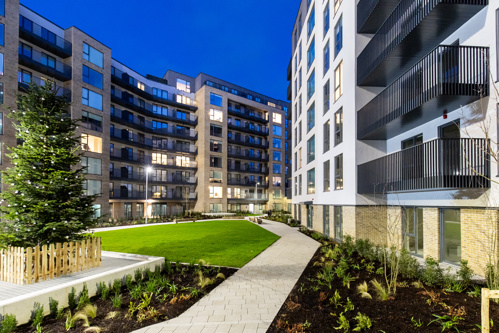
Whitehaven is a landmark achievement in sustainable housing, exemplifying what large‑scale, high‑performance and socially focused development can deliver. Delivered by Tuath Housing in partnership with Cairn Homes and Fingal County Council, the 255‑home scheme the first of Ireland’s largest residential Passivhaus developments to be delivered and sets a transformative precedent for sustainable social and cost rental delivery.
1. Construction methodologies to achieve Passivhaus
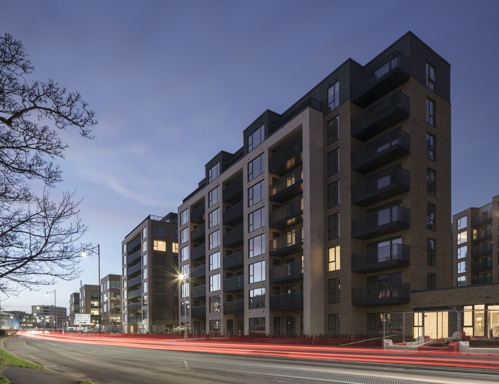
Whitehaven’s five buildings, comprising 161 cost rental and 94 social homes, were engineered to meet the rigorous Passivhaus standard, a globally recognised benchmark for ultra‑low‑energy performance. Achieving certification required an integrated, construction‑led methodology grounded in precision, craftsmanship and meticulous quality assurance. MCORM, Whitehaven’s lead architect wrote the compliance specification on this project. Every element, from airtightness and window glazing specification to insulation continuity and the elimination of thermal bridges, was designed to work as a cohesive system.
Passivhaus delivery at scale demanded a stringent culture of verification, supported by each partners' commitment to sustainability and expertise in Passivhaus. Multiple airtightness tests, continuous design reviews, careful inspection of insulation installation and rigorous oversight of ventilation systems ensured the homes achieved target thermal comfort, durability and energy efficiency.
2. Outcomes for tenants – comfort, quality of living and affordability
The benefits of Passivhaus for residents at Whitehaven are substantial and long‑term. Passivhaus homes maintain steady indoor temperatures of 20°C year‑round, eliminating draughts, cold spots and overheating. Mechanical ventilation with heat recovery provides constant fresh, filtered air, improving indoor air quality and supporting overall health and wellbeing. Adaptable features such as panel heaters and operable windows allow personal comfort control. The combination of high‑performance insulation, airtightness and triple glazing also creates a quiet, peaceful indoor environment that reduces external noise and the risk of damp or mould.
In a period of rising consumer energy costs, the development’s ultra‑low‑energy design will translate into significantly reduced utility bills. Residents will benefit from dramatically lower heating demand, energy efficient hot‑water heat‑pump systems and residents will no longer rely on finite energy. This improved energy stability supports long‑term affordability. These cost savings are reinforced by rents at Whitehaven’s cost rental homes, set 30 per cent below local market averages.
Whitehaven proves that sustainability and social impact are not competing priorities. Instead, they are mutually reinforcing.
3. Monitoring performance – closing the loop between design and lived experience
Whitehaven not only blends reduced environmental impact with resident comfort but is also a pioneering research and performance‑led project. As one of the world’s largest post‑occupation evaluation monitoring programmes, with more than 1,100 sensors installed across its buildings, the project measures airtightness, internal comfort, ventilation effectiveness and energy use across the development. This real‑time data provides unprecedented insights into long‑term performance and tenant experience. From a housing management perspective it will also provide insights into whether a property is occupied or over-occupied.
Carried out by MosArt, the continued monitoring and analysis of these data points will “close the loop” between design intent and post‑occupancy outcomes, enabling Tuath to confidently manage comfort and energy performance across Whitehaven.
4. Recognition
Whitehaven has received strong recognition from government and local leadership.
At the official opening, Minister for Housing James Browne TD stated:
- “I am delighted to be here in Whitehaven today for the launch of these much‑needed new homes… We are responding to a housing crisis, and we need more homes like these across all tenures.”
Mayor of Fingal Cllr Tom O’Leary added:
- “The opening of the Whitehaven development… is a shining example of what can be achieved when innovation and partnership come together.”
Cairn CEO Michael Stanley reinforced the collaborative achievement:
- “These 255 homes… built to Passivhaus standard, offer significant energy cost savings to residents. We are proud to continue our partnership with both Tuath Housing and Fingal County Council.”
Outcomes and achievements
Whitehaven represents a blueprint for the future of sustainable living. As one of Ireland’s largest residential Passivhaus developments, among the first delivered by an Irish approved housing body, Whitehaven sets new standards in sustainability, resident comfort, and long‑term affordability.
The scheme has achieved significant carbon savings of approximately 3,900 tonnes, and the completed homes deliver a 55 per cent reduction in heat demand compared with Near‑Zero Energy Building (NZEB) compliance. This efficiency translates into substantial energy‑cost reductions, estimated at €15,000 per unit and €4 million across the development’s lifetime.
Beyond decarbonisation and cost savings, residents benefit from enhanced comfort through airtight construction that reduces dust intake, minimises noise pollution, and ensures stable indoor temperatures. These conditions are expected to support improved health outcomes for more than 650 residents, including reductions in asthma‑related symptoms and many other air borne conditions. To support residents to achieve maximum benefits of Passivhaus and to ensure staff understood the guiding principles, Tuath delivered a comprehensive education and support programme and will continue to hold energy clinics on site.
Performance across the development is continuously tracked through more than 1,100 environmental sensors, creating one of the world’s largest post‑occupancy evaluation datasets. This data will shape future Passivhaus delivery at national and international levels and provide extensive learning on behaviour patterns and benefits.
Shortlisted entries
Woven - Journey to Net Zero
Application entry
- Project name: Journey to Net Zero
- Lead organisation: Woven
Statement of support
As we move closer to UK’s 2050 net zero deadline, Woven is demonstrating clear sector leadership in responding to the sustainability challenge by adopting an innovative, evidence-led approach that recognises the environmental value of our housing estates as places, not just buildings. While reducing operational emissions remains a priority, Woven has gone further by identifying, mapping and quantifying the carbon stored within our green assets, positioning nature-based solutions as a core component of our Environmental, Sustainability and Governance (ESG) strategy. This work reflects a growing understanding that housing providers are also land stewards, with a responsibility to manage natural assets in ways that support long-term climate resilience, in tandem with ensuring our future tenants are provided with a healthy place to live.
Through the comprehensive mapping of trees, green spaces and landscaped areas across our portfolio, Woven has established a robust baseline of natural capital. This has enabled us to calculate the amount of carbon currently stored within these assets and to understand their contribution to offsetting our organisational carbon footprint. By embedding carbon accounting into asset and land management, Woven is ensuring that environmental value is considered alongside financial, operational and social factors in strategic decision-making. To-date we have established that while our annual CO2 emissions are ~ 533 kg CO2e/year, we are in credit when considering our total green asset portfolio of approximately ~ 4355 kg CO2e, mapped across NI through the All-Ireland Pollinator Plan (AIPP). Moreover, we have also denoted a habitat type for each individual green assets we have recorded, from pioneer, intermediate to climax habitats, whilst further breaking these down into tenant or Woven’s managed space.
The impact of this work on tenants and residents has been tangible and meaningful. By evidencing the environmental importance of local green spaces, Woven has strengthened their protection and prioritised their enhancement, ensuring that residents continue to benefit from greener, healthier neighbourhoods. Engagement linked to the project has increased residents’ understanding of how their immediate surroundings contribute to tackling climate change, improving air quality and supporting biodiversity. This has fostered greater pride, awareness and shared responsibility for communal outdoor spaces, reinforcing the connection between sustainability action and everyday lived experience.
The initiative has also directly informed estate management decisions, enabling Woven to focus investment and maintenance activity on green assets that deliver the greatest environmental and community benefit. As a result, tenants and residents experience improved wellbeing through access to high-quality green spaces, while also knowing that their homes form part of a wider organisational response to the climate emergency.
To deliver this work, Woven has taken a series of clear, structured and measurable steps to improve organisational sustainability. These include undertaking detailed green asset mapping across our estates; calculating the volume of carbon stored within those assets to inform our carbon footprint assessment; and integrating this data into sustainability planning and asset management frameworks. The findings are being used to guide sustainable land management practices, prioritise protection of high-value green assets, and identify opportunities for enhancement and future carbon sequestration.
Crucially, this approach has been designed to be transparent, scalable and transferable. Woven’s methodology can be adopted by other housing organisations seeking to move beyond compliance-based sustainability and towards a place-based, nature-inclusive model of climate action. By demonstrating how existing estates can actively contribute to carbon offsetting, Woven is sharing learning that has relevance across the housing sector, such as our recent case study published by the CIH.
This work stands out because it moves sustainability from aspiration to measurable action. It aligns strongly with CIH values around climate leadership, social responsibility and long-term stewardship, showing how housing providers can use their existing assets to deliver lasting environmental benefit while improving places for residents. In doing so, Woven is not only reducing its environmental impact, but also setting a replicable example of how housing organisations can lead the transition to a more sustainable future by rethinking the often overlooks green assets within all our porfolios.
The project also strengthens organisational accountability by providing a clear evidence base against which future progress can be measured, reviewed and reported. This ensures continuous improvement and supports informed engagement with partners, regulators and residents alike, reinforcing Woven’s commitment to transparency, learning and leadership in addressing the shared challenge of climate change across the housing sector and beyond while supporting resilient, inclusive and environmentally responsible communities nationwide.
Outcomes and achievements
The green asset mapping project has delivered clear, measurable outcomes for Woven and its communities. The organisation now has a comprehensive, evidence-based understanding of its natural capital, including the volume of carbon stored across its estates. This has established a robust baseline against which future carbon reduction and offsetting activity can be measured, strengthening organisational accountability and long-term sustainability planning.
A key achievement has been the integration of carbon storage data into asset and land management decision-making, ensuring that green spaces are actively protected, enhanced and recognised as strategic environmental assets contributing to Woven’s ESG. This represents a significant shift from traditional estate management approaches and embeds nature-based solutions within core organisational practice.
The project has also delivered wider social and environmental benefits, including improved protection of green spaces that support resident wellbeing, biodiversity and air quality. By making the climate value of local environments visible, Woven has increased awareness and engagement among tenants and residents, reinforcing shared responsibility for sustainable places.
Overall, the project demonstrates innovation, measurable impact and transferability, providing a replicable model for housing providers seeking to align place-making, climate action and social value.
Apex Housing Association - The Nearly Zero Energy Building (NZEB) Project
Application entry
- Project name: The Nearly Zero Energy Building (NZEB) Project
- Lead organisation: Apex Housing Association
Statement of support
Apex’s commitment to environmental responsibility and sustainability continues to strengthen year on year. Reducing the environmental impact of its work is now a central priority, underpinning Apex’s work to provide high-quality, affordable homes and build thriving communities across Northern Ireland.
Sustainability Strategy 2023-2026
Apex’s current corporate Sustainability Strategy runs until March 2026, and development of the next three-year strategy is already underway. The new plan is being shaped collaboratively with specialist environmental consultants and Apex’s cross departmental Net Zero Committee, whose members have all completed Carbon Literacy training. This ensures a shared understanding of the climate agenda and the organisation’s responsibilities.
In early 2025, Apex strengthened its internal capacity by appointing an Environmental and Sustainability Advisor to champion sustainability – embedding it in organisational culture, decision-making and service delivery.
Apex’s strategy focuses on reducing fuel poverty, cutting carbon emissions, improving biodiversity, limiting resource use, supporting staff and enhancing community wellbeing. Key targets include ensuring all new homes achieve a minimum EPC rating of ‘A’, increasing tenant satisfaction with energy efficiency and expanding green spaces within Apex developments. Through the use of a carbon management platform, the organisation has enhanced its monitoring of Scope 1 and 2 greenhouse gas emissions, enabling accurate measurement, visualisation and reduction of carbon emissions, while strengthening transparency and accountability.
In 2025, Apex adopted the Sustainability Reporting Standard (SRS) for housing. This framework will underpin the next sustainability strategy and guide ESG reporting, ensuring alignment with the highest standards in the sector.
The NZEB pilot project
Apex’s most significant sustainability initiative is its Nearly Zero Energy Building (NZEB) project. Following extensive research, Apex identified two pilot projects - one masonry built and one timber framed - to test different NZEB approaches and gather evidence to inform future development. This demonstrates Apex’s commitment to innovation and its determination to build homes that are environmentally responsible and affordable to heat.
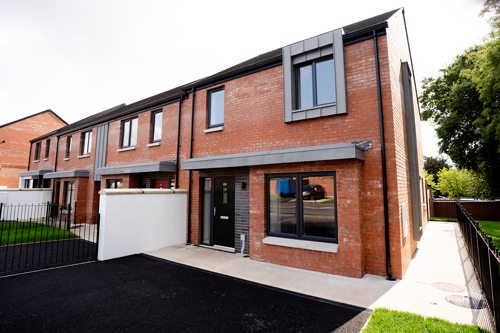
The first pilot project at Hopefield Avenue, Newtownabbey, comprises six masonry homes built through a fabric first approach, incorporating high levels of insulation, airtight construction, triple glazing and mechanical ventilation with heat recovery. Each home includes an air source heat pump, solar PV panels and battery storage, with variations in heating systems to compare performance.
Monitoring by Simpson and Crawford, with full tenant consent, has provided valuable insights. Homes with oversized radiators achieved the lowest average monthly heating cost at £45, while those with full underfloor heating averaged £81 - both significantly lower than the baseline building control compliant home at £122 per month. Carbon emissions from the NZEB homes are approximately 83 per cent lower than the baseline gas heated property, demonstrating a clear contribution to UK and Northern Ireland carbon reduction targets.
The pilot also highlighted the importance of tenant engagement. Early challenges - such as a tenant blocking an air source heat pump or switching off ventilation - reinforced the need for clear communication. Apex responded by providing indepth demonstrations for technical staff, professionally recorded for future training, and weekly follow-ups with tenants to ensure understanding and confidence.
These lessons directly shaped the second pilot at Lisnagarvagh Park, Lisburn, where demonstrations were expanded to staff from all departments and preparatory training was delivered via Microsoft Teams. This whole organisation approach ensures that every staff member can support tenants effectively and consistently.
Apex acknowledges that delivering NZEB homes requires an additional investment of 17 per cent per property, but views this as a responsible and necessary commitment to sustainable development and long-term tenant wellbeing.
Looking ahead
Apex recognises that cultural change is essential. Staff and tenants can be apprehensive about new technologies, so the organisation prioritises transparency, education and shared learning. An NZEB tenant has been invited to speak at a tenant engagement event to highlight the real life benefits of living in an NZEB home.
Apex’s forthcoming Sustainability Strategy 2026–2029 is deliberately ambitious. The organisation is embracing the challenge with optimism, evidence based planning and a commitment to bringing employees, tenants and communities with them on the journey to a more sustainable future.
Outcomes and achievements
Apex’s sustainability initiatives have already delivered significant environmental, financial and organisational benefits. The NZEB pilot project demonstrates that high-performance homes can substantially reduce both carbon emissions and tenant energy costs.
Monitoring at Hopefield Avenue shows that NZEB homes achieve an 83 per cent reduction in CO₂ emissions compared with a standard gas heated property. Heating costs have also been dramatically reduced, with NZEB homes averaging between £45 and £81 per month, compared with £122 in the baseline gas-heated home. These outcomes directly support national carbon reduction targets while helping protect tenants from fuel poverty.
The pilots have strengthened organisational learning and improved service delivery. Real time monitoring, tenant feedback and staff engagement have shaped enhanced communication strategies, ensuring tenants understand how to operate their homes efficiently and safely. The expansion of training to all frontline departments has embedded sustainability knowledge across the organisation, enabling staff to provide consistent, informed support.
Culturally, Apex has fostered a more sustainability aware community. Tenants are increasingly confident in using low carbon technologies, and staff are more engaged in promoting sustainable practices. The appointment of an Environmental and Sustainability Advisor and the development of the new 2026-2029 strategy demonstrate Apex’s long-term commitment to continuous improvement and leadership in sustainable housing.
Radius Housing - St Johns Close Sustainability Project
Application entry
- Project name: St Johns Close Sustainability Project
- Lead organisation: Radius Housing
Statement of support
St Johns Close is a three-storey apartment block comprising 48 single-person flats, built in the 1990s and located in central Belfast. In recent years, the building experienced increasing levels of anti-social behaviour, declining tenant morale and a deteriorating external profile. Many tenants had lived in the scheme for a long time and felt disengaged from decision-making, leading to a clear need for a new approach that prioritised both the physical condition of the building and the wellbeing of its community.
In response, Radius Housing’s Tenant Engagement Team worked closely with colleagues from Communities and Assets to develop a refreshed, collaborative vision for St Johns Close. From the outset, tenants were placed at the centre of the process, with meaningful consultation and active listening shaping every stage of the project. This approach moved beyond traditional notification methods and focused instead on building trust, improving communication, and empowering tenants to influence outcomes that affected their homes and lifestyle.
Radius appointed a sustainability consultant to establish clear objectives and provide a robust evidence base for decision-making. This included surveying the existing building fabric, assessing energy and water usage, carbon emissions, current energy costs and identifying issues relating to security and traffic noise. At the same time, tenants’ needs and wider sustainability principles were carefully considered, including waste and recycling, health and wellbeing and practical options for reducing energy consumption and household costs.
Recognising that written communication alone would not be effective, Radius adopted a varied and inclusive engagement strategy. This included face-to-face discussions at times that suited tenants, lifestyle and energy-usage surveys, accessible newsletters using large fonts and photographs, on-site community workshops and product selection events. Security concerns were addressed directly through engagement with a Crime Prevention Officer, ensuring tenants felt listened to and reassured. To recognise their time and contribution, tenants were also rewarded with vouchers for participating in the process.
As a result of this collaborative approach, stakeholders developed a shared sense of ownership over the project. The works programme reflected both technical sustainability goals and tenants lived experiences, culminating in a comprehensive refurbishment that improved comfort, safety, energy efficiency and communal spaces. The success of this engagement-led model was recognised nationally when the project won the 2024 Unlock Net Zero Award for Engagement Campaign of the Year, highlighting the value of meaningful tenant involvement in delivering lasting positive change.
Outcomes and achievements
The St Johns Close project has delivered significant physical, social and environmental outcomes. Sustainability measures included the installation of photovoltaic panels, individual high-efficiency gas combination boilers, mechanical ventilation with heat recovery units, external cladding and internal insulation upgrades, including a lightweight insulated floor screed for additional thermal performance. These interventions have improved thermal comfort, reduced carbon emissions and lowered tenants’ energy costs.
Externally, the building benefitted from roof repairs, new uPVC fascia and rainwater goods, triple-glazed windows, upgraded fire doors/alarms, enhanced perimeter fencing, CCTV improvements and the creation of a secure landscaped garden and seating area. Internally, tenants’ homes were transformed through new floor and wall finishes, upgraded joinery and ceilings, new kitchens and bathrooms.
Collectively, these improvements are projected to deliver a 75 per cent reduction in CO₂ emissions, up to a 64 per cent reduction in regulated energy costs for tenants and an uplift in EPC ratings from bands D/E to a strong band B. Importantly, the project has also improved indoor air quality, thermal comfort, safety and overall tenant wellbeing.
Beyond the physical improvements, the project has fostered a renewed sense of community pride and ownership. Tenants now feel actively involved, safer and more connected. St Johns Close is now a modern, energy-efficient building with a vibrant, engaged community.
Choice Housing - Choice Striving for Sustainability
Application entry
- Project name: Choice Striving for Sustainability
- Lead organisation: Choice Housing
Statement of support
Choice have a long history of taking action to manage energy consumption, address sustainability and support their tenants. Their dedicated Sustainability and Energy Team (currently five staff) is unique in the sector and demonstrates commitment to striving for sustainability.
Alongside effective asset management, a number of unique projects completed in 2025, demonstrate practical investment and steps taken to make Choice more sustainable:
New Sustainability and Energy Strategy (2025-2028)
In 2025, Choice launched their new strategy which confirmed their ambition to be net zero by 2050. 21 targets in the strategy build on previous areas of success and plan for new areas of important work, including producing a Climate Adaptation Plan and Heat Decarbonisation Pathway in 2026.
Improving the energy efficiency of existing homes
Choice increased their coverage of Energy Performance Certificates (EPCs) to over 95 per cent of their 14000 unit stock and have targeted improvements. In 2022, they had around 215 EPC Band E, F or G properties and this number was reduced to less than 70 in 2025. Their average EPC energy efficiency rating has also increased to almost 77 and over 87.5 per cent of homes have an EPC rating of A-C (with a target in place to achieve 92 per cent by 2028).
Over £5m was invested in energy efficiency and carbon reduction during the last strategy period 2022-2025, including fabric improvements and heating and lighting upgrades. Additionally, over £250,000 was invested in innovative technologies and processes, including solar PV with batteries, software systems and remote heating controls.
Deep Retrofit Pilot
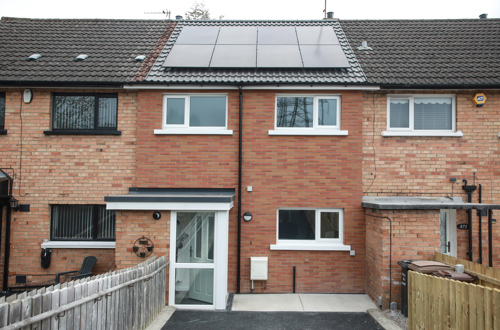
In 2025, Choice completed the deep retrofit of two homes in Belfast to EPC A (achieving an energy efficiency rating of over 100). The works aligned with the processes of PAS2035 and included floor, loft and external wall insulation, and triple glazed windows. Thermal bridging was modelled with measures taken to improve this and air permeability. A mechanical ventilation system was installed along with a new efficient heating system with enhanced controls, and a solar PV system to generate renewable electricity. The completed homes were showcased to inform the wider sector, and performance monitoring is underway.
Developing new energy efficient homes
Choice have outlined their ambition to develop new homes to SAP Band A where financially viable, and regularly review design standards. This also includes wider areas such as biodiversity, with one example being an increased number of swift bricks at new homes.
Investing in renewable technologies
Choice have invested in renewable energy over the last 15 years and now have over 700 Solar PV systems. In 2025, they also invested in three landlord solar PV systems with batteries, allowing as much renewable electricity as possible to be used on site. It’s estimated that this initiative may collectively save their tenants around £5,000 per year and reduce emissions by around six tonnes annually.
Reducing landlord energy consumption and emissions
With annual landlord energy costs of over £2m, which are passed onto tenants, Choice proactively manage this area. Effective procurement and contract management continues to deliver savings, whilst regular engagement with schemes, investment in new remote heating controls and monitoring of data has resulted in energy consumption and emissions being significantly reduced over time.
Protecting biodiversity loss and enhancing the environment
In 2025, Choice launched their first Biodiversity Action Plan, further developing work in this area, through holding annual biodiversity weeks, staff and tenant competitions and taking practical steps including increased tree planting and installation of bird and bat boxes. A new community garden in Riverdale was completed, alongside improvements at a housing scheme in Ballymena. Choice are currently recruiting a Biodiversity Coordinator to lead in this area.
Outcomes and achievements
By continuing to take action, Choice have delivered significant benefits for stakeholders and tenants. Examples of these achievements include:
- Energy contract management delivered significant financial savings, with over £40,000 saved through effective procurement and invoice validation.
- Reduced energy consumption and costs - by taking action to improve EPCs and continued investment in renewable technologies, tenants will have reduced energy costs and improved comfort. As an example, investment in a replacement communal heating system at one housing scheme has led to energy reductions of around 21 per cent over 12 months and carbon savings of over 70 tonnes.
- Landlord energy consumption was reduced by almost six per cent between 2023/24 and 2024/25 with Scope 1 and 2 emissions down by around four per cent and longer-term carbon reductions of 21 per cent achieved in the last three years compared to a 2020/21 baseline.
- Choice’s solar PV portfolio generated around 1,500Wh renewable electricity during the last three year strategy, saving around 300 tonnes of CO2 and delivering financial savings of over £500,000.
- Choice supported Northern Ireland’s Energy Week with daily articles and social media posts, as well as holding stakeholder briefings, energy clinics at schemes, and a ‘switch and save’ competition for staff driving tenant engagement.
Alpha Housing - Leading in nature’s recovery
Application entry
- Project name: Leading in nature’s recovery
- Lead organisation: Alpha Housing
Statement of support
Northern Ireland is one of the most nature depleted places in the world. Reversing this decline is essential if the region is to remain healthy and attractive for future generations. This challenge cannot be met by government alone.
Alpha Housing believes that social landlords can fulfil a central role in the vital task of nature recovery. As major housing providers, landowners and housebuilders, we have great opportunities to make a difference in how we manage existing sites and build new homes. Housing associations are uniquely positioned to create spaces that benefit both people and wildlife.
Over the last year, Alpha has intensified our work to support nature. Our sheltered housing tenants had a central role in initiating and leading this work. Alongside environmental gains, this work has delivered clear wellbeing benefits.
Alpha has been making major progress in ensuring that our sites across NI are as nature friendly as possible, providing a welcoming environment for wildlife. Measures include minimising the use of herbicides; setting aside ‘no mow’ areas on most sites; planting hundreds of native trees; building raised beds for tenants to grow vegetables; establishing wildflower meadows; and installing habitat boxes for a range of birds and bats. In the past year, Alpha has become the first social landlord to install wildlife ponds within sheltered schemes in Bangor and Belfast.
For newbuild schemes, they have been working with development partners to design-in habitats for wildlife. At Alpha’s new apartment scheme in Cullybackey, 20 swift bricks have been installed to support declining bird populations. This will be supplemented by a ‘living mural’ at the scheme in spring 2026, with artwork highlighting local wildlife and the need to protect it.
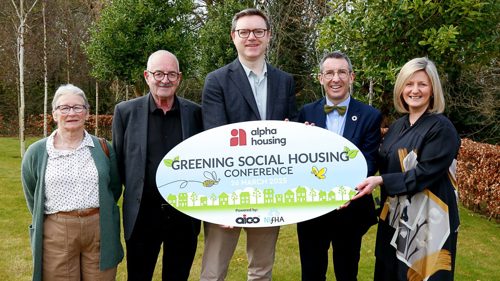
Alpha has been working closely with sector partners to support and equip other social landlords to get involved in nature recovery. In March 2025, we held our first Greening Social Housing Conference in partnership with Aico and NIFHA. The event brought together housing associations, environmental organisations, tenant representatives, planners and policymakers, with the support of Environment Minister Andrew Muir MLA, to explore how nature-based solutions can be integrated into housing design, estate management and organisational strategy.
The conference created a space to share learning, challenge established practice and encourage practical action. A further conference is planned for 2026.
This external leadership has been matched by internal commitment. Supporting biodiversity is now recognised as a strategic priority that informs decisions around estate management, investment and tenant engagement.
Over the past year, Alpha has delivered a range of practical, low cost and scalable interventions. These measures include no mow areas, raised beds with native planting. A strong example of this approach can be seen at Montgomery Manor in Bangor. Here, Alpha has supported a tenant led biodiversity initiative, enabling residents to play an active role in improving their outdoor environment. Tenants and staff have worked together to introduce no mow areas, create raised beds with wildflowers and herbs, plant native hedgerows and install bird boxes and bug hotels. Herbicide use has been significantly reduced, allowing wildlife to thrive while improving the appearance and enjoyment of shared outdoor spaces.
This work forms a part of Alpha’s wider approach to sustainable asset management. Alpha has focused on making better use of existing green spaces, improving biodiversity while also enhancing the appearance, usability and enjoyment of shared outdoor areas.
Tenant involvement has been central throughout. Residents are encouraged to shape changes, share feedback and take pride in their outdoor environments.
Through a combination of sector leadership, strategic commitment and practical delivery, Alpha has demonstrated a credible and replicable response to the sustainability challenge facing social housing.
Outcomes and achievements
Alpha’s approach has delivered clear environmental, social and sector wide outcomes. Across schemes, biodiversity has been enhanced through native planting, reduced mowing and the introduction of wildlife friendly features. Tenants value the quieter, greener surroundings and the pride that comes from living in cared for environments, leading to increased use of outdoor spaces and connections with nature.
Tenants at Montgomery Manor, Bangor, and Lowry Court, Belfast, describe the gardens as spaces that support wellbeing and social connection. One tenant said that spending time outdoors allows them to “take in the smells and the sounds”, while another shared that “to be able to plant things and see them grow… that’s just wonderful”. Tenants also noted wider social benefits, with more people spending time outside.
At a sector level, the Greening Social Housing conference marked a significant step forward. As the first event of its kind locally, it placed nature and biodiversity firmly on the agenda for housing providers and highlighted the value of practical, replicable action.
With the launch of the draft Nature Recovery Strategy consultation, Alpha believes the social housing sector can play a central role in halting biodiversity loss and creating a cleaner, greener and more nature friendly NI.
Co-operative Housing Ireland - Improving Warmth and Wellbeing – Cosy Home for Christmas, Townsend Street, Dublin 2
Application entry
- Project name: Improving Warmth and Wellbeing – Cosy Home for Christmas, Townsend Street, Dublin 2
- Lead organisation: Co-operative Housing Ireland
- Partner organisations: Kingdom Installations and Sustainable Energy Authority of Ireland One Stop Shop provider
Statement of support
Co-operative Housing Ireland is committed to providing warm, secure and sustainable homes that support the health, wellbeing and long-term resilience of Member Tenants and communities. Many older housing developments, while rich in social connection and long-established communities, were built to standards that no longer meet modern expectations for energy efficiency, comfort or climate performance. Poor thermal performance, draughts and outdated heating systems can result in homes that are difficult to keep warm, higher energy costs and negative impacts on physical and mental wellbeing, particularly during winter months. Intervention was required to address these challenges while enabling long-standing Member Tenants to remain in their homes and communities.

In response, Co-operative Housing Ireland delivered a comprehensive retrofit programme at Townsend Street, Dublin 2, transforming an older apartment block into a modern, energy-efficient development while retaining the character and community of the scheme. The project forms part of a wider organisational commitment to improving energy performance across existing housing stock and supporting national climate action targets through reduced carbon emissions and lower reliance on fossil fuels.
The retrofit works were delivered in partnership with Kingdom Installations, an experienced retrofit delivery partner and Sustainable Energy Authority of Ireland One Stop Shop provider. Following detailed assessments and energy modelling of the building, a full suite of upgrades was implemented across the 17-apartment scheme. These included the installation of triple-glazed windows, insulated external doors, air-to-water heat pump systems, new radiators, mechanical ventilation, insulated pipework and fabric improvements throughout the building.
Together, these measures significantly improved heat retention, indoor air quality and day-to-day comfort for Member Tenants, while reducing long-term energy demand and exposure to rising energy costs.
- “It’s made a world of difference. For the first time in years, I don’t feel the cold in my bones. You come home and the place is just warm - that’s all anyone wants in their own home.” Maura, Member Tenant, Townsend Street
Member Tenant involvement was central to the success of the project. Clear and ongoing communication was maintained throughout, with Member Tenants receiving early information on the scope of works, expected benefits and timelines. In-person engagement ensured that questions and concerns could be addressed, and all Member Tenants were supported to remain in their homes during the retrofit process. Once works were completed, tenants received individual inductions on the new heating and ventilation systems, including practical guidance and demonstrations to ensure Member Tenants could confidently operate the technologies installed. Ongoing access to advice and support was also provided.
The project stands out for its people-centred approach to sustainability. Rather than focusing solely on technical upgrades, the retrofit was designed to protect health, enhance everyday comfort and strengthen community stability. For many Member Tenants, including long-standing tenants living in homes built to earlier construction standards, the retrofit delivered an immediate and tangible improvement in warmth, comfort and quality of life. Homes are now consistently warm, quieter and brighter, with improved air quality, better ventilation and no condensation or draughts.
The project was strengthened through partnership working and grant support, with up to 50 per cent of costs supported through the Better Energy Communities Scheme. This collaborative approach enabled a deep retrofit that would not otherwise have been financially viable, delivering long-term value for both Member Tenants and the housing provider.
By upgrading an older building without displacing the people who call it home, the Townsend Street retrofit demonstrates how sustainability, social responsibility and community preservation can be achieved together. It provides a strong and replicable model for improving existing housing stock while placing Member Tenant wellbeing and lived experience at the heart of climate action.
Outcomes and achievements
The retrofit of Townsend Street has delivered measurable improvements for both Member Tenants and Co-operative Housing Ireland. Homes that were previously difficult and costly to heat are now consistently warm, comfortable and energy efficient. Member Tenants report immediate improvements in comfort, reduced draughts, better air quality and quieter living environments, with a significant positive impact on daily wellbeing.
The installation of air-to-water heating systems, combined with fabric and ventilation upgrades, has reduced overall energy demand and reliance on fossil fuels, supporting lower household energy costs and reduced carbon emissions. While final post-completion energy ratings are being confirmed, the scheme has been upgraded to meet modern efficiency standards appropriate for long-term sustainable housing.
From an organisational perspective, the project contributes to reduced reactive maintenance associated with older heating systems and building fabric over time, delivering long-term operational efficiencies. Grant support through the Better Energy Communities Scheme represented strong value for money, enabling a deep retrofit that delivers lasting benefits.
Key learning from the project highlights the importance of early Member Tenant engagement, clear communication and tailored support when introducing new technologies. This approach will continue to inform future retrofit programmes across Co-operative Housing Ireland’s housing stock.
DLRCC - Shanganagh Castle Estate – Leading the Way to a Better Future for All
Application entry
- Project name: Shanganagh Castle Estate – Leading the Way to a Better Future for All
- Lead organisation: DLRCC
- Partner organisation: LDA
Statement of support
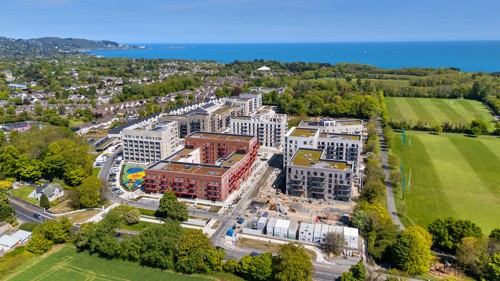
Shanganagh Castle Estate is a development of 597 social and affordable homes, with community amenities, delivered by Dún Laoghaire-Rathdown County Council (DLR) and the Land Development Agency (LDA) in contract with Walls Construction. The development near Shankill, located in the grounds of Shanganagh Castle, a former boys’ open prison, was the LDA’s first direct delivery project on state land. It is not only the largest public housing project in Ireland in decades but is also one of the largest passive housing developments in Europe.
The challenge of decarbonisation requires stepping up across a range of areas. DLR is delighted however with this project in Shanganagh to be well ahead of the curve. But rather than being an outlier, they believe this quality should be the norm.
It is not often that the opportunity exists to design an entire new ‘community’ from scratch, and it was important to DLR to make it the very best possible, so aspirations were set very high from the outset. Their objective was to develop a truly sustainable community – culturally, socially, economically - with all the necessary amenities and services. They wanted to build the right type of houses and buildings, of the highest quality for the occupants, and for the benefit of the planet.
Significant planned features to promote a fully integrated community include central amenities, residents’ support, external play facilities, communal lounge areas, community and function rooms, an external village square which can be used for social events, business pods and co-working units, a creche with capacity for c.100 children, playgrounds, a gym, a convenience store and a café.
The scheme has delivered almost 600 homes in an area of great housing need and where affordable housing is challenging to deliver. The affordable and cost rental homes are significantly below market rates. The Council’s commitment to sustainability is shown in the design approach where each unit built to passive house standard adds a layer of innovation to the scheme, cited as a landmark development for the State.
Designed to the highest environmental standards it has deployed the use of sustainable construction methods. Using a Design Build contract, with the Contractor co-opted as joint designer, meant that the LDA/DLR could leverage the contractor’s expertise in terms of design innovation in construction techniques, while at the same time delivering a highly designed appropriate architectural solution. It was built using ‘modern methods of construction’ or ‘MMC’ and so is also an important Irish exemplar in the field of ‘rapid build’.
At Shanganagh Castle Estate DLR has demonstrated to the social housing sector and to the wider construction industry that the delivery of large-scale housing projects to Passive House standard is possible and this has provided confidence to developers, contractors and supply chains. It is now clear that such housing can be delivered at scale, at speed, at quality and at affordable costs. At the outset DLR hoped the scheme would act as a catalyst and be an exemplar for others to follow. Recently a number of developers have stepped up and have made a commitment to build to PH, so this has already proven to be the case. One developer for example now has c.1800 PH homes underway, acknowledged as directly attributable to the leadership of Shanganagh.
The contractor, the LDA, the Energy specialist and dlr Architects have facilitated site visits and demonstrations, given lectures, webinars, workshops and conference presentations in Ireland and abroad to disseminate the learnings of the project and to advance the progression of low energy buildings in Ireland.
The impact and influence of this project have already stretched well beyond the site boundary.
Outcomes and achievements
Shanganagh Castle Estate is more than a housing development; it is thoughtfully designed to foster a vibrant and inclusive community.
The construction is only one aspect of how the key feature of sustainability is embedded in the project. Other aspects that contribute to the creation of this new residential community include:
- A high density and compact site layout
- Avoidance of underground parking
- Use of modern methods of construction such as off-site manufacturing
- A very low energy demand. Built to the PH standard, this ensures energy efficient, comfortable, economic to run, healthy homes with excellent indoor air quality for the occupants
- Use of a centralised district hot water heating system utilising renewable energy heat pumps
- A very low car parking provision (0.54 spaces per home)
- A very high bicycle parking provision of over 1,300 spaces for residents, in secure buildings, plus visitor bicycle parking
- 34 charge points for electric cars; all other resident spaces ready for future connection
- Adjacent Bus Connects corridor and electric bike rental
- New Woodbrook Dart station nearby which commenced operation in tandem with the arrival of the new residents.
DLRCC - Roebuck Road Housing – Setting the Standard for Sustainable Living
Application entry
- Project name: Roebuck Road Housing – Setting the Standard for Sustainable Living
- Lead organisation: DLRCC
- Partner organisation: dlr County Architect
Statement of support
This small development sensitively inserted into a long vacant corner surface carpark site in Clonskeagh, Co. Dublin demonstrates a smart and forward-thinking approach to the sustainable use of energy, prioritising a design that generates more energy than it uses annually, with the benefit of negligible energy costs for the tenants.
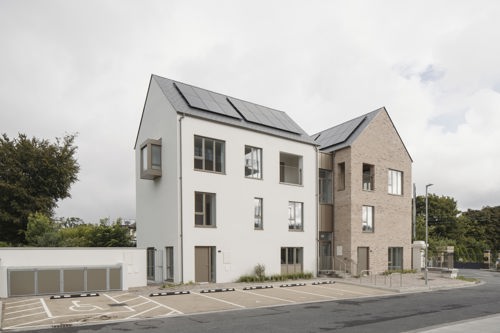
The development consists of two four-bedroom family homes with two one-bedroom apartments overhead, addressing the identified lack of suitable accommodation in the community for large families and for single-bedroom units.
Through the careful selection of a vacant site adjacent to a major bus route, and within minutes' walk of shops, mosque, church, schools and university, the development will encourage the new residents to walk or use public transport, enhancing both the community’s air quality and the residents’ health.
Looking ahead beyond 2030, the Climate Action and Low Carbon Development Act’s call is to achieve Net Zero emissions no later than 2050. The public sector needs to demonstrate ambition in Energy Efficient Design to inspire others. Dún Laoghaire-Rathdown County Council (DLR) use the fabric first approach and have been designing to the Passive House (PH) standard for some years now, which makes it easier to adjust to another high-performance standard.
Residential buildings account for approximately 70 per cent of building energy demand. Most of this energy is used for space heating, water heating, cooking, lighting and appliances. Furthermore, they are responsible for about half of Green House Gas emissions, so residential buildings are a critical focus for achieving net-zero targets. ‘Operational net-zero housing’ refers to homes that produce as much energy as they consume during their operational life, typically through a combination of energy efficiency measures with renewable energy generation.
This project entailed that the design team took a fabric-first approach, and by incorporating space and water heating systems that minimise energy consumption, tenant utility costs are considerably reduced. Like other previous low energy projects, DLR designed the buildings to meet the PH standard and then in this case to go ‘positive’ added lots of Photovoltaic panels on the roofs.
Although designed to the Department of Housing, Local Government and Heritage ‘design standards’ layouts and sizes, the homes were arranged and stacked to maximise the site’s potential, harnessing the benefits of appropriate orientations in the rooms and to ensure Photovoltaic panels could be installed on all roofs to maximum effect. This project can be easily replicated through the creative adoption of similar standard layouts.
The project was closely monitored during construction to ensure energy-efficient detailing was executed correctly, especially the air-tightness measures at critical junctions. The contractor had not delivered to this stringent standard previously but with a good attitude, attention to detail and care on site, managed without undue difficulty.
Having a performance gap between the expected Building Energy Rating and the reality on site is a known risk, but this was mitigated by using the PH approach. PH is not a formulaic checklist, but rather it is based on building physics, with a quality focus.
To further strengthen the case for future PH and Net Zero Operational housing schemes, evidence-based data will be gathered via energy consumption and air quality sensors. The installation of post-occupancy monitoring equipment to identify individual energy loads will help the home users identify their own energy usage and adapt and modify their behaviour to save both energy and money. The data will be collected on a custom-designed dashboard so that the efficiency of the units can be monitored in real time. This will better inform future developments and will validate the high-quality specifications. Monitoring also swiftly identify faults, helping to reduce and mitigate ongoing maintenance costs.
Outcomes and achievements
The Roebuck Road Housing scheme is an exemplary project in its field, reputedly being the first recorded Operational Net-Zero Social Housing scheme in Ireland.
The aspiration is that this reimagined derelict site will be acknowledged as a vibrant addition that nestles sensitively and seamlessly into the established existing neighbourhood which most directly benefits the residents who occupy the four homes, but also benefits the local area as it removes a derelict site from within their locality.
The Building Energy Rating (BER) certificates show energy usages of -10.27 to -27.87 kWh/m2/yr. This is ‘off’ the BER scale. In addition, the homes have been designed to meet the PH standard. The EPC (energy performance co-efficient) and CPC (carbon performance co-efficient) levels are showing multiple times better than the mandated national nZEB (nearly zero energy buildings) thresholds, with the CO2 emissions levels ranging from -1.31 to -3.57 kgCO2/m2/yr.
The residents will not only enjoy reduced energy bills and carbon emissions into the future, but also draught free homes with even comfortable temperatures and excellent indoor air quality. They will not have to worry about any financial penalties due to energy consumption – this small scheme is truly setting the standard for sustainable living.