

All-Ireland Housing Awards 2026
Read all the shortlisted entries into this award category, working in partnership, at the All-Ireland Housing Awards (AIHA) 2026 and find out who won the award on the night.
This award recognises collaboration between organisations or groups that achieves the best possible outcomes.
This award was sponsored by Department for Communities (NICS).
Winning project name
Turning lives around: Alpha and Outwork
Winning organisation
Alpha Housing
Partner organisation
The Turnaround Project
Statement of support
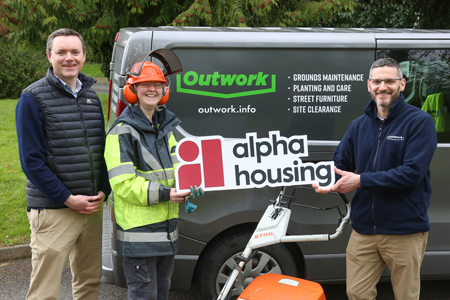
Alpha Housing has developed an innovative partnership with Outwork, a grounds maintenance social enterprise operated by The Turnaround Project that improves sheltered housing scheme gardens while helping turn around the lives of people who have spent time in the justice system.
Alpha provides sheltered housing for older people across 35 schemes in Northern Ireland. For many residents, spending time in shared outdoor spaces is an important part of everyday life, supporting wellbeing, social connections and sustained independence
Previously, while tenants consistently reported high satisfaction with housing services, tenants and staff had concerns about the standard and responsiveness of grounds maintenance provision. Alpha committed to improving this service and creating outdoor spaces that residents could enjoy and feel proud of.
In 2019, Alpha was approached by Outwork, a social enterprise that provides transitional employment for people with involvement in the justice system. Outwork supports individuals who are serving, or have served, sentences in prison or the community by offering paid work, training and support.
This created an opportunity for a partnership that would improve services for Alpha’s tenants while enabling Outwork to deliver positive employment and social outcomes for people facing significant barriers to work and inclusion
Following discussion and due diligence, Alpha appointed Outwork to a year-long trial partnership from January 2020. This represented a new way of working for Alpha. Using reserved procurement provisions, Alpha directly awarded a contract to the social enterprise, a route rarely used by housing associations in Northern Ireland. The decision was driven by a shared commitment to service quality, social value and community wellbeing.
From the outset, the partnership was built on collaboration rather than a traditional client and contractor relationship. Clear service standards were agreed, alongside defined roles, regular communication and monthly review meetings to monitor performance and respond to feedback. Scheme Co-ordinators and tenants were encouraged to engage directly with Outwork supervisors, creating a more personal, visible and responsive service.
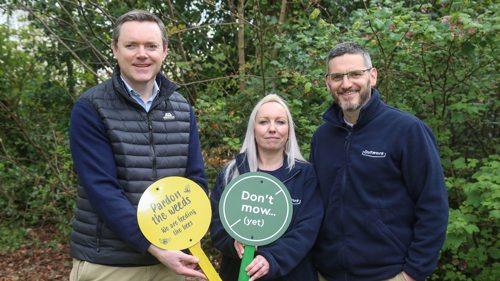
The impact on residents was quickly evident. Routine grounds maintenance such as grass cutting, hedge trimming, power washing and bed maintenance was carried out with greater care and consistency. The partnership also enabled new approaches to environmental sustainability that directly benefited residents. In several schemes, no-mow areas and tree and wildflower planting were introduced to support biodiversity.
At Montgomery Manor, a sheltered scheme in Bangor, Outwork worked alongside Alpha staff and residents to support improved grounds maintenance that enabled tenant-led biodiversity activity. This included wildflower planting, planting native hedging and the creation of wildlife-friendly areas, helping residents to take an active role in caring for their outdoor environment while enhancing local biodiversity.
A defining feature of the partnership is its social impact. Outwork crews are typically made up of an experienced supervisor and trainees, many of whom have experience of the criminal justice system. Through paid employment, training and structured support, participants gain routine, confidence and practical skills, helping them to rebuild stability, self-esteem and positive relationships within the community.
The presence of Outwork teams on Alpha’s sites has created positive everyday interactions between tenants and trainees. Tenants regularly comment on the professionalism of the crews, while trainees benefit from trust and a sense of purpose. These interactions help to reduce stigma and demonstrate the value of inclusive, community-based working.
This partnership demonstrates how housing organisations can improve core services while contributing to wider social change. By working collaboratively with a social enterprise, Alpha has delivered better outcomes for tenants, supported people to turn their lives around and shown how procurement can be used as a tool for positive community impact.
Outcomes and achievements
The partnership between Alpha and Outwork has delivered clear and sustained outcomes.
Improved outcomes for tenants
Sheltered scheme gardens are now maintained to a consistently high standard. Residents report greater satisfaction with outdoor spaces, increased use of communal areas and a stronger sense of pride. Feedback highlights the professionalism of Outwork crews.
Positive change for people with involvement in the criminal justice system
Since 2020, Alpha and Outwork have engaged 84 people with involvement in the justice system through paid employment, training and structured support. Participants have gained routine, confidence and practical skills during a critical transition period. The partnership has enabled Outwork to grow in scale and impact, providing over 30,000 hours of paid transitional employment. Outwork trainees have moved on to work for conventional employers, further education, or into permanent more senior roles within Outwork.
Wider community and environmental benefits
Biodiversity improvements, including wildflower planting, no-mow areas and native tree and shrub planting, have enhanced outdoor environments and created new wildlife habitats across multiple schemes.
Transferable partnership model
This partnership demonstrates how social landlords can improve service quality while delivering social value through collaborative working and innovative procurement, providing a model that can be adopted across the sector.
Highly commended
This year, due to the high quality of entries, two additional entrants were also chosen for a highly commended award.
- Project name: Old Parochial House, Bryson Street
- Lead organisation: St Matthews Housing Association
- Partner organisation: Apex Housing Association
- Project name: Irish Tenant Engagement Network (ITEN)
- Lead organisations: Tuath Housing, Circle VHA, Clúid Housing Association, Cooperative Housing Ireland, Fold Housing, Oaklee Housing, Focus Ireland, Apex Housing, HAIL, Respond, Novas, North and East, The Iveagh Trust, Cabhrú , Foscadh and Gheel Autism Services CLG.
- Partner organisations: Irish Council for Social Housing and The Housing Alliance
St Matthews Housing Association - Old Parochial House, Bryson Street
Application entry
- Project name: Old Parochial House, Bryson Street
- Lead organisation: St Matthews Housing Association
- Partner organisation: Apex Housing Association
Statement of support
St Matthew’s Housing Association (SMHA) is a long-standing, community-anchored housing provider in the Short Strand area of East Belfast. As a small organisation with 237 homes under management, its role extends far beyond bricks and mortar – it is a trusted community asset that has supported residents for almost five decades.
To meet the growing and changing housing needs of our community, SMHA required a partner able to bring significant development expertise, financial capacity, and sector-leading innovation. Apex Housing Association (Apex) provided exactly that. Over the last decade, SMHA and Apex have built a strategic development partnership that enables the delivery of high-quality homes where they are needed most, while ensuring community control over the long-term management and stewardship of those homes.
This collaboration has produced several landmark developments in Short Strand and surrounding areas:
- Mountpottinger Road (10 homes)
- Bryson Street (11 homes)
- McClure Street, Lower Ormeau (22 homes)
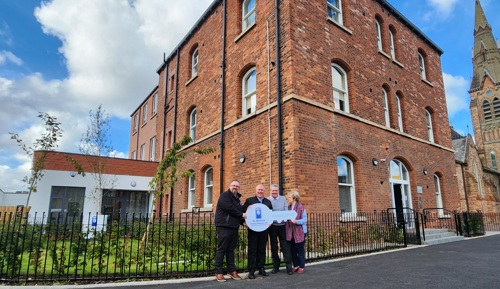
- Bryson Street Parochial House (eight homes and office accommodation)
Each scheme has responded directly to local demand; however, the transformation of the former St Matthew’s Parochial House stands out as an example of innovative partnership working that has achieved meaningful, lasting community benefit.
The Parochial House is a building of historic and cultural significance. Having fallen into disrepair and no longer suitable for its original purpose, its future was uncertain. Working closely with the Parish, SMHA purchased the building and surrounding land, enabling the Parish to reinvest in new clergy accommodation and community facilities on their own grounds. Apex then brought development expertise, design innovation, and project management leadership to deliver a sympathetic refurbishment and extension of the building.
Together SMHA and Apex have created:
- Eight new Category 1 homes for older residents - enabling them to remain within their lifelong community
- A modern, fully-accessible local housing office - improving access to services and strengthening SMHA’s long-term viability
- A landmark restoration that protects architectural heritage and community identity
While modest in scale, this project has delivered a step change in how a small community-based association can work with a larger development partner. It has demonstrated that partnership can be empowering, not centralising - enabling a grassroots organisation to grow sustainably, unlock investment, and deliver homes of exceptional quality.
This approach has also supported wider community wellbeing. Rehousing older residents locally has released larger homes for families in acute need. Having SMHA staff permanently located on the ground has strengthened relationships, enabled earlier intervention when support is required, and reinforced our commitment to being a visible, responsive landlord.
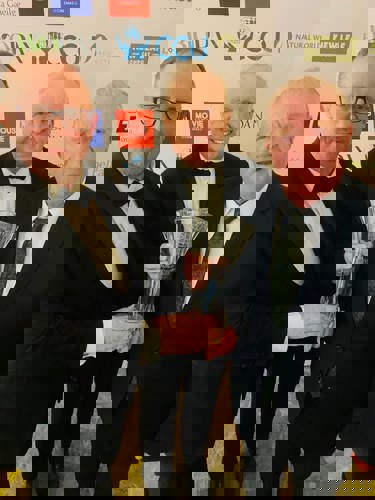
The impact has been recognised publicly: the development recently won the Movie House Community Building Award at the Aisling Awards 2025 - a celebration of the pride local people feel in the transformation of a neglected building into a vibrant community asset.
Apex’s willingness to share skills, design excellence, and financial capacity - with no significant financial reward to themselves - reflects their strong social ethos and commitment to championing smaller associations. The partnership has been built on mutual trust, transparency, and shared ambition for the communities served.
This nomination reflects the collective effort of SMHA, Apex, McGirr Architects, Brendan Loughran and Sons, St Matthew’s Parish and, crucially, the people of the Short Strand. Looking forward to the future, this partnership has laid the foundation for continued development, innovation, and community empowerment for the next 48 years and beyond.
Outcomes and achievements
This refurbished building of architectural heritage has been restored and future-proofed for a new purpose - providing eight high-quality, accessible homes for older people wishing to remain close to their support networks.
By relocating these residents into modern accommodation tailored to their needs, larger family homes in Short Strand were freed up, helping to address housing stress locally. The relocation of SMHA’s office into the building has significantly improved service accessibility and created a welcoming environment for tenants to seek support.
The project has strengthened SMHA’s financial sustainability, expanded its operational capacity, and visibly reaffirmed a long-term commitment to the area. The community response has been overwhelmingly positive; the project has become a symbol of renewal and pride for local people.
When this partnership began, it was in a context of Short Strand being one of the most traditionally disadvantaged communities within NI. The housing waiting list has over 150 households specifically requesting rehousing in Short Strand.
Recognition in winning the Community Building Award at the 2025 Aisling Awards reinforces the value of this innovative partnership - one that has safeguarded heritage, delivered urgently needed homes, improved access to services, and created a lasting legacy for our community and parish.
Tuath, Circle, Clúid, Cooperative, Fold, Oaklee, Focus Ireland, Apex, HAIL, Respond, Novas, North and East, Iveagh Trust, Cabhrú, Foscadh, Gheel Autism Services CLG - Irish Tenant Engagement Network (ITEN)
Application entry
- Project name: Irish Tenant Engagement Network (ITEN)
- Lead organisations: Tuath Housing, Circle VHA, Clúid Housing Association, Cooperative Housing Ireland, Fold Housing, Oaklee Housing, Focus Ireland, Apex Housing, HAIL, Respond, Novas, North and East, The Iveagh Trust, Cabhrú, Foscadh and Gheel Autism Services CLG
- Partner organisations: Irish Council for Social Housing and The Housing Alliance
Statement of support
Recognising the need for a collaborative, strategic, and professional approach to tenant engagement, the Irish Tenant Engagement Network (ITEN) was launched in November 2021 and in February 2022 we held our first meeting. This was an in online gathering to explore how this new collaboration could support our work and ultimately empower tenants. The network brings together tenant engagement professionals from across the country representing some of Ireland’s leading housing organisations. Tuath Housing, Circle VHA, Clúid Housing Association, Cooperative Housing Ireland, Fold Housing, Oaklee Housing, Focus Ireland, Apex Housing, HAIL, Respond, Novas, North and East, The Iveagh Trust, Cabhrú , Foscadh and Gheel Autism Services CLG.
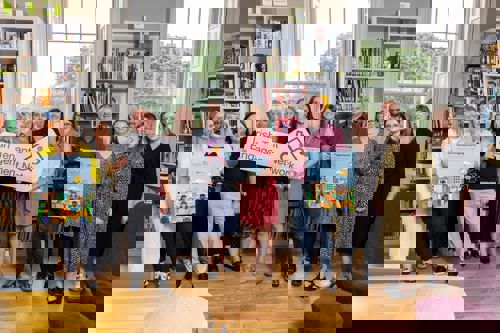
ITEN members provide tenant engagement services to over 90,000 residents in over 41,000 homes nationally. This includes services to residents in general needs housing, older person housing, refugee resettlement, cost rental, private rented, mortgage to rent, supported living and homeless services.
The ITEN is more than a support group, it is a vision in action. Our mission is clear, to embed tenant engagement into the DNA of social housing in Ireland. From the outset ITEN committed to operating in a democratic, collaborative, and transparent manner. We encourage widespread participation and ensure equal consideration is given to all voices within our membership. It is this ethos that defines ITEN, not just as a network of professionals, but as a growing movement committed to changing how housing works in Ireland.
ITEN’s vision is to be the collective voice for affordable housing bodies tenant engagement best practice.
ITEN’s mission is to create best practice standards in ITEN affordable housing bodies member organisations through sharing knowledge and experience, and by co-designing a tenant engagement framework.
In 2024, ITEN secured funding from the Irish Council for Social Housing Collaboration Fund and the Housing Alliance to commission Just Economics to conduct research to support the creation of an evidence-based framework for tenant engagement in Ireland.
The project had three aims:
- To identify best practice in tenant engagement across Europe.
- To identify what tenant engagement data other social housing providers, collect and how these data are used.
- To make recommendations for Irish AHBs in light of these findings.
The ITEN and Just Economics launched the research in June 2025 presenting our findings and recommendations for tenant engagement best practice to housing professionals and organisations from across the sector
Significantly, the research makes the case that tenant engagement is not an end in itself. Its value lies in how tenants’ insights are used to improve decision-making, enhance service delivery, build stronger communities, increase transparency and accountability across the sector. It’s a shift from merely involving tenants to cocreating solutions and developing models that build mutual trust and more resilient housing systems.
Darren Hudson, chair of the Irish Tenant Engagement Network states:
"The research also reminds us that engagement must be inclusive, adaptable, and reflective of tenants’ voices. Whether through peer-led initiatives, digital and in-person channels, or integrated feedback mechanisms, we encourage AHBs across the sector to explore creative approaches that meet tenants where they’re at and support them to play meaningful roles in shaping the services and communities that affect their lives. Ultimately, the value of tenant engagement lies not only in how tenants are involved, but in how their contributions shape decisions, improve services, strengthen future planning and foster mutual accountability. As the sector faces new challenges and opportunities, the insights in this report provide a thoughtful, evidence-informed foundation for AHBs looking to strengthen their approach."
Outcomes and achievements
In 2025 the ITEN as a network of 16 organisations, came together six times setting out strategic plan for 2025-2027. Our goals focus around developing a best practice framework for tenant engagement, endorsing and embedding our research in our member organisations and to enhance ITEN as a supportive network for tenant engagement practitioner leadership.
Since its formation in 2021 the ITEN has grown to a 17-member organisation network; supporting each other through shared learning, knowledge and resources has always been at the forefront of the network and this has gone from strength to strength as the network has grown.
The ITEN is very proud to have strong partnerships with the Housing Alliance and Irish Council for Social Housing who have both contributed financially to the work of the ITEN. These partnerships have given the ITEN the opportunity to continue are work on best practice in tenant engagement in Ireland and will pave the way to embedding the recommendations of our research paper.
Shortlisted entries
Radius Housing - Intensive Support Worker Pilot
Application entry
- Project name: Intensive Support Worker Pilot
- Lead organisation: Radius Housing
- Partner organisation: Extern
Statement of support
Radius recognise the increasing support needs of tenants. We also recognise that statutory and voluntary services that support our tenants are at breaking point. We know that when those who need support receive it they are more likely to sustain their tenancy.
At the start of tenancies, most tenants settle in well and go onto successfully sustain tenancies. However, we are increasingly dealing with a minority of tenants who have histories of behavioural issues, active addictions and mental health issues as well as histories of offences and find it challenging to sustain tenancies. Their range of support needs and traumatic histories can manifest in chaotic behaviours which may cause problems within communities, often making tenancy sustainment difficult and repeat homelessness inevitable. In many instances, these cases have had a series of previous failed tenancies and multiple temporary accommodation placements also.
When such a tenant persistently presents with problems, this can have serious detrimental effects on other residents within communities. Radius has built a network of partners such as PSNI, Council, Health, and other support providers and can rely upon our established working relationships to effectively resolve the problems and help stabilise the community. However, where the interventions fail, the individuals may re-enter the revolving door of homelessness.
To help address this Radius are currently operating a collaborative pilot with Extern which is testing whether a more intensive housing management and support service can enable these clients to successfully sustain tenancies and integrate better within their communities.
This project is for up to 12 tenants in both general needs and Independent Living schemes.
The intended benefits of this project are:
- Tenants with high or complex support needs are offered an intensive housing management and support service incorporating a risk assessment and management action plan that delivers client specific and timely interventions creating a greater chance of permanently resolving their homelessness.
- Develop a tailored ‘wrap around person centred’ support service
- Reducing the barriers in accessing and retaining support from external agencies
- Responding more effectively to crises
- Reducing the likelihood and impact of risk not only to the person themselves but also to others living in the same scheme/location
- Specialist, professional and experienced staff with the skills knowledge and training to respond and address the issues presenting more effectively
- Greater access to a range of support options and services for the tenant using Extern’s established network of services
- Local communities will benefit from greater stability and the provision of support for residents with complex support needs
- The Housing Executive will benefit through repeat homelessness being prevented and progress in delivering the ambitions of the Homelessness Strategy and Strategic Action Plan for Temporary Accommodation
- Health and Social Care Trust – evidence suggests that health interventions are more effective when individuals are in secure and stable housing
- Justice related depts. (PSNI, PBNI etc.)– evidence suggests a reduction in reoffending and easier offender management when people are in stable housing.
A full time Support Officer from Extern provides intensive housing management and support to tenants and develops ‘person centred’ support plans which are reviewed to measure the success of the outcomes achieved against objectives. Our aim is that staff could develop pathways into existing health and other services to benefit to clients. Support plans identify how to maintain support to the individuals beyond the life of the project. Staff can put measures in place with the tenants through external agencies and partners which could continue beyond the project funding period.
The pilot commenced in December 2024 and current stats are:
- 11 active referrals
- 15 closed cases
- Seven waiting list (one to be made active)
Outcomes and achievements
One case which is now closed, the initial referral was made based on declining mental health, addiction etc. With Extern’s support that tenant has engaged positively, is currently receiving relevant support and has secured part time employment.
One active case is a tenant who was about to be served a Notice for her tenancy. Since her engagement with the support worker, there have been no reports of tenancy breach, she has engaged positively on mental health and addiction support and Extern are currently supporting her with this alongside the news that the tenant is now expecting.
One of our Housing Officers provided this feedback regarding a successful intervention: ‘The tenant was referred for hoarding and additional support needs for mental health and motivation. She engaged very well and enjoyed the sessions that she had with her.
We have seen excellent improvement in the condition of the tenant’s home, mental health and motivation levels. Before Alex’s help it was cluttered and the tenant could not use the shower or the bedroom. Alex has provided the tenant with tools to help her continue her journey of healing and to help her enjoy her home and the scheme in which she lives.’
Cluid Housing Association - Supported Housing for Youth (SHY) Pilot
Application entry
- Project name: Supported Housing for Youth (SHY) Pilot
- Lead organisation: Cluid Housing Association
- Partner organisation: Focus Ireland
Statement of support
The Supported Housing for Youth (SHY) Pilot Project has been in operation since October 2024 and houses young people who were previously in long-term emergency homeless accommodation in Dublin.
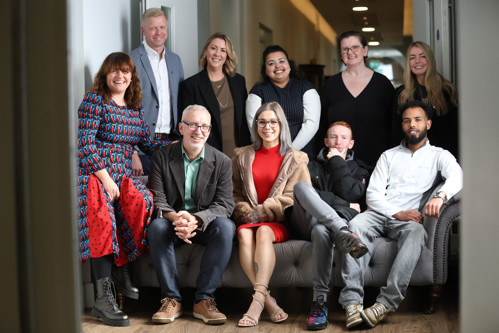
The government’s Youth Homelessness Strategy was published in November 2022, and Action 22 of this strategy was to develop a pilot with housing and support for young people. Cluid Housing and Focus Ireland had been looking at an opportunity to collaborate in the area of youth homelessness for some time, so worked together to submit an expression of interest to deliver SHY and were successful.
The SHY pilot is unique in Ireland and many other jurisdictions and delivers 14 homes for 20 young people aged 18-24, who were previously in emergency homeless accommodation and have some support needs (independent living, employment, education, mental health, substance use, etc). Cluid Housing provide furnished homes, and a 12-18 month licence and licence management, whilst Focus Ireland provides community-based key working and support to each young person. The goal of the pilot is for young people to be supported in the community and to experience managing a licence, a licence fee, bills, neighbours and other aspects of living independently. They are supported to access education, employment and/or support services and to apply for secure, long-term accommodation within 12-18 months (via social housing lists or HAP, private rented, etc).
Cluid supplied 14 pepper potted units around the four Dublin Local Authority areas, and young people were selected from a panel process including Focus Ireland, Cluid Housing, the Dublin Regional Homeless Executive (DRHE) and the Health Service Executive (HSE). At panel, young people are intentionally matched to units and housemates that match their current needs as much as possible. There are six shared units with two young people sharing, and eight single units. Each young person has a support plan and is key worked by Focus Ireland. Prior to allocation, the sharing young people engage with each other and Focus and complete a sharer’s agreement.
The SHY pilot is subject to an ongoing evaluation from an independent evaluator and receives live recommendations.
To deliver this pilot, collaboration has been key between all parties involved, but especially between Cluid Housing and Focus Ireland. Cluid have a dedicated Housing Officer and Manager for SHY, and Focus have two Key Workers and a Service Manager. Much collaborative work went into agreeing on a shared method of working, communicating, values, goals and practical aspects before the start of the pilot. During the pilot, staff across both organisations have worked consistently and constantly with each other to support young people in their licences and manage any issues that arise. Focus Ireland and Cluid staff teams meet bi-weekly to discuss and agree on actions regarding interventions and licences and complete an annual review of the collaboration, service delivery and pilot in general, noting best practice and areas for improvement.
This collaboration has led to two sharers being rehoused after irreparable relationship breakdowns and two current move-ons to secure long-term accommodation, as well as no licence failures. Both parties have demonstrated responsiveness, flexibility and dedication to working together and with young people to achieve the best outcomes possible.
In addition, Cluid, Focus and the DRHE meet monthly to review the pilot and have an agreed Service Level Agreement in place, which is the foundation collaboration agreement for the pilot and also states that all parties are committed to no discharge of any young people back to emergency homeless services.
Outcomes and achievements
Two young people have moved into secure and permanent long-term social housing within the first 12 months of their licence. Further young people are entering the SHY programme.
There have been some anti-social behaviour and licence fee arrears issues, but no licence failures. SHY staff have collaborated responsively and effectively to address and resolve any issues, ensuring that young people maintain their licence and home.
Supported Housing for Youth featured in the government's new strategy Delivering Homes, Building Communities 2025-2030, with plans for national expansion.
The independent evaluator will provide their final report in June 2026.
See a quote from a young person: ‘My SHY accommodation is in a really good location for me – there are shops, bus stops, and the Luas all within about a 20-minute walk. The apartment itself is beautiful, far beyond what I ever expected. It’s an amazing place to live, and I definitely feel safe and secure here.
It’s a real privilege to have a safe space where I can rest, reflect, and regain my strength. I feel a sense of freedom here – the chance to work on myself and focus on my wellbeing. That stability has been invaluable for my mental and emotional health.’
Market Development Association - The Community Wellbeing Kitchen
Application entry
- Project name: The Community Wellbeing Kitchen
- Lead organisation: Market Development Association
- Partner organisations: Queens University, Public Health Agency, Belfast City Council, Radius Housing
Statement of support
Radius Housing have supported the Market Development Association to run out a series of community cooking lessons through their Community Wellbeing Kitchen. Beyond nutrition the Community Wellbeing Kitchen fosters social connection and community cohesion.
The Programme is run out by the Markets Development Association (MDA) in collaboration with Radius Housing, Queen’s University, the Public Health Agency and Belfast City Council. The Markets Development Association is a community development organisation founded in 1995 to promote the wellbeing and socio-economic development of residents within the Market area of South Belfast.
Queens University Belfast through Queen’s Communities and Place (QCAP) utilised year one findings of QCAP’s ‘Growing up in the Market’ study to identify this community need and co-designed the project with MDA whilst applying academic expertise to ensure successful project delivery. In addition eight local residents were trained through the Public Health Agency (PHA) ‘Cook It’ program in order to build capacity within the community. This training enables the residents to instruct other residents in good home cooking and two of the residents now successfully facilitate the Community Wellbeing Kitchen.
Radius Housing has supported the Community Wellbeing Kitchen through funding via the Housing for All Programme.
Cooking lessons run in four-week blocks throughout the year, with each block focusing on a specific theme relevant to participants. Each month participants receive equipment, ingredients and expert guidance whilst preparing selected meals. The project has included.
- Sure Start Sessions - young mums learning about healthy nutrition for early childhood development.
- Batch cooking on a budget workshop for families, promoting affordable and nutritious meal planning.
- Collaboration with Hong Ling Gardens to celebrate Chinese cookery and cultural cuisine.
- Multi cultural culinary experience led by owner of Med-Mex – a local Moroccan chef who is based at St. George’s Market
Residents from Hong Ling Gardens, Radius Housing’s independent living scheme for Chinese people aged 55+, facilitated sessions on traditional Chinese cooking for other Market residents. These sessions provided an opportunity for cultural sharing and learning, with tenants enjoying the chance to exp Residents from the Market area who took part in this block of cooking lessons had the opportunity to connect with Chinese residents, learn more about their culture and cuisine, and develop valuable friendships. This promotes good relations, strengthens community cohesion, and creates opportunities for future partnership work within the area.
The link with Hong Ling Gardens is an example of how partnership working can improve service delivery, service quality and community cohesion whilst creating a welcoming environment through shared learning around culture, cuisine, and nutrition.
Queens Communities and Place are gathering research and evidence, so each cohort also completes a focus group which provides invaluable qualitative data that helps select groups and themes that match the identified need from the residents as well as providing evidence for this model of work.
The Community Wellbeing Kitchen offers residents the opportunity to connect, learn about nutrition, build confidence in grocery shopping and meal preparation, all whilst strengthening community relationships.
Patrick McNally, Health Coordinator, Market Development Association:
“The Community Wellbeing Kitchen block with our neighbours in Hong Ling Gardens has been an amazing experience. Residents from diverse backgrounds came together to share how their cultures prepare and enjoy food, creating connection, learning, and lasting friendships. This is what this special initiative is all about, highlighting the power of food in building stronger, healthier communities
Community Wellbeing Programme is supported by the Department for Communities and the Northern Ireland Housing Executive’s ‘Housing for All’ Shared Housing Programme.
Outcomes and achievements
Collaborative programme with QUB, PHA, BCC + Radius Housing
X144 people directly involved with project participation and delivery
X48 workshops delivered
X8 local Market residents trained in PHA ‘Cook It’ program
X2 local residents help facilitate the Community Wellbeing Kitchen programme
Locally sourced suppliers and ingredients
Learning: Residents develop practical cooking skills and learn adaptable techniques for preparing everyday home-cooked meals.
Confidence: Participants build confidence that encourages healthier food choices and experimentation with nutritious recipes.
Integration: Team cooking and culturally diverse guest sessions help residents connect across backgrounds and strengthen community belonging.
Connections: The programme links participants to wider community networks through partner organisations, specialists, and local services.
This project has established valuable connections between residents, community groups and key stakeholders and demonstrates successful partnership working.
The project is ongoing and has impacted a total of 144 people through 48 workshops with over 140 residents having participated to date.
Market stall holders at St Georges market have benefitted through participating in classes or supplying ingredients.
Participants have gained nutritional awareness, advice on budgeting for better nutrition, equipment as well as recipes for good home cooking.
Hong Ling Gardens involvement in the project allowed the expression of Chinese culture to be shown through teaching traditional Chinese cuisine by local residents.
Meals were shared at a communal table with all participants encouraging dialogue and friendship.
Co-Ownership - Delivering homes in Partnership: Apex and Co-Ownership
Application entry
- Project name: Delivering homes in Partnership: Apex and Co-Ownership
- Lead organisation: Co-Ownership
- Partner organisation: Apex Housing Association
Statement of support
Societal Context and Political Direction
Northern Ireland faces huge housing challenges with unacceptably high levels of homelessness, a rising number of people living in housing stress, an expensive and insecure private rented sector, and a younger generation with limited housing options, unable to access home ownership how their parents did.
The Department for Communities Housing Supply Strategy recognises the need to increase housing supply and affordable options across all tenures to meet growing demand. The strategy also addresses the need to create strong, vibrant communities by making “mixed tenure” the default for residential developments: “Mixed tenure in new or existing housing developments creates a balanced social mix, and as a result, communities are likely to be more diverse, resulting in a more cohesive community where relationships between people from different backgrounds are positive, and differences are valued.”
Transitioning from current largely mono-tenure developments to full mixed tenure will take time and will need strong collaboration and partnership working to be successful.
Housing Associations Working in Partnership
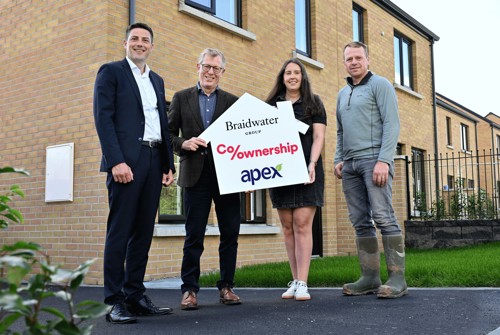
Co-Ownership and Apex have recognised the opportunity this new policy brings and have embraced partnership working to deliver mixed tenure homes in the Black Ridge affordable housing development. Falling within Belfast City Council, Black Ridge when it is finished, will include over 650 new social homes, a community centre, multi-use games pitch, care homes, retail centre and a hotel. As well as the social homes the development also includes 70 intermediate homes available for sale through Co-Ownership. Together with the house builder, Braidwater, and estate agent, Apex and Co-Ownership are working in collaboration to implement mixed tenure and deliver these homes for those that need them.
Delivering Mixed Tenure in Black Ridge
This is Co-Ownership’s first development of this scale, and aims to demonstrate how when adopted, Local Development Plans can successfully unlock opportunity across private and social housing to deliver mixed tenure.
Excellent planning and communication processes were required as neither party had delivered homes in this way before. In order to achieve success, we:
- Discussed and developed specific processes to align with the needs and timelines of all parties. We agreed to complete pre-sale valuations to bring confidence that once a home was ‘sale agreed’ through Co-Ownership, it would meet our requirements and customers would receive a Co-Ownership offer.
- Developed a Memorandum of Understanding between the two associations on how this would work.
- Reviewed all customer communications, ensuring the customer journey and its various touchpoints between each organisation were clear.
- Held status meetings to ensure that on the ground things were working as intended. Learnt through experience and adjusted our approach as we went.
Black Ridge is one of the most significant housing developments projects currently underway in Northern Ireland and represents a significant investment for West Belfast. Together, Apex and Co-Ownership are creating sustainable communities where tenants and homeowners live side by side, sharing a vibrant and inclusive environment. Black Ridge Hill is a great example of how new housing policies and partnerships can harness mixed tenure and deliver real opportunities for people to own their own home. Demand for these homes has been high and thanks to the strong partnership approach taken things are going well.
Lauren Perry recently bought her first home in partnership with Co-Ownership in Black Ridge Hill and commented:
“Getting the keys is huge for me. Owning my home was always going to be a push but with Co-Ownership’s support I’ve taken that step onto the property ladder. It’s exciting to know this house is mine and to start building a future close to family and friends.”
Building Understanding Within The Industry To Deliver More For Customers
The housing sector continues to work together and with the Department for Communities, NIHE, councils and developers to provide affordable home ownership in mixed tenure developments through these Local Development Plans. This ultimately leads to better housing outcomes with more people able to secure a safe and affordable home. And as these homes are new builds, they are of a high quality and are more energy efficient resulting in lower energy costs for our customers and better outcomes for the environment.
Outcomes and achievements
Partnerships like Apex and Co-Ownership’s make home ownership a reality for people, and developments like Black Ridge will remain important in demonstrating how important it is to provide affordable housing for communities.
Black Ridge is currently home to 181 social tenants and seven homeowners, with a further 24 homeowners sale agreed and due to move in in the coming months. Without the partnership between Apex and Co-Ownership, these people would not have been able to remain in their chosen community, close to family and friends.
Co-Ownership’s recent Social Impact Report looks beyond numbers and communicates the real benefits that achieving home ownership has on people’s lives. Here’s what a few our customers have said:
- “Having a house to call my own as a single parent means I feel secure and don’t have to worry about living in instable private rented accommodation.”
- “I can now provide a secure home for my family and financial security for my own future.”
- “My new home has dramatically improved my mental health and peace of mind.”
Co-Ownership looks forward to continuing to work with Apex and other housing association colleagues and private developers to help more people fulfil their dream of owning their own homes.
Galway City Council - Developer Breakfast Briefing
Application entry
- Project name: Developer Breakfast Briefing
- Lead organisation: Galway City Council
- Partner organisation: Galway County Council
Statement of support
Galway City Council and Galway County Council joined forces with a shared objective: to deliver an informative and practical seminar dedicated to educating housing delivery developers on the operation and value of Affordable Housing. The aim was to upskill attendees, clarify compliance requirements, and highlight the wider social and economic benefits of integrating affordable homes into future developments.
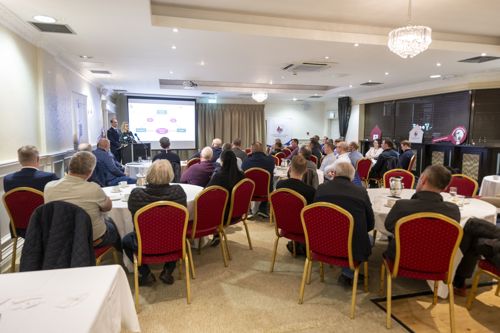
This new approach brought together Chief Executives from both local authorities, alongside a significant number of developers and building contractors. Attendees welcomed the proactive engagement from the local authorities, noting how refreshing it was to see a collaborative approach that prioritised relationship building and long term partnership development. As Affordable Housing had only recently become part of developers’ Part V obligations, Galway City Council recognised the need for early, open communication and invited Galway County Council to collaborate in delivering a unified message.
This joint initiative created a new and innovative way of working. For the first time, both authorities directly engaged with all active housing developers across the city and county in a single forum. This provided clarity, consistency, and a shared understanding of expectations. It also established a foundation for ongoing dialogue, enabling the local authorities to reach out directly to discuss current schemes, mixed tenure opportunities, and future development pipelines.
The impact of this partnership has been significant. The strengthened relationships have streamlined the progression of Part V agreements and supported the delivery of turnkey housing solutions. Developers now have a clearer understanding of local demand, including preferred locations and required housing typologies. This has allowed both authorities to plan more strategically, ensuring that housing delivery aligns with real community needs rather than simply meeting numerical targets.
The collaboration has also broadened the conversation beyond Affordable Housing. The trust built through this process has opened pathways to discuss social housing and homelessness requirements, supporting a more holistic and sustainable approach to community development. By viewing Galway City and County as a shared housing ecosystem, both authorities are now better positioned to foster balanced, mixed tenure communities that support long term well being.
Outcomes and achievements
A notable outcome of this partnership is the shift in developer behaviour. Developers are now approaching the local authorities proactively to explore opportunities for Affordable Housing delivery. The traditional divide between social and private delivery is evolving, with developers increasingly recognising the value – both moral and commercial – of contributing to a more inclusive housing market. Completed schemes already demonstrate the positive impact of this shift, with strong demand evidenced through allocation data and reinforced by public engagement on social media surveys.
This partnership has demonstrated best practice in cross boundary collaboration, transparent communication, and shared strategic planning. By working together, Galway City Council and Galway County Council have created a model that improves service delivery, enhances housing outcomes, and strengthens community well being. The initiative has not only educated and empowered developers but has also laid the groundwork for long term, sustainable partnerships that will continue to benefit the people of Galway for years to come.
Homeless Connect - Home Starter Packs
Application entry
- Project name: Home Starter Packs
- Lead organisation: Homeless Connect
- Partner organisations: Radius, Choice, Apex Housing, Woven Housing Association, Clanmil Housing Association, Woodvale and Shankill Housing Association
Statement of support
The Home Starter Pack initiative is a practical, partnership-led response designed to support people moving into a new tenancy who would otherwise be unable to afford the essential items needed to set up a home. Delivered by Homeless Connect in close collaboration with Housing Associations across Northern Ireland, the initiative ensures that tenants can begin their tenancy with dignity, comfort, and stability from day one.
For many people moving into social housing, particularly those transitioning from homelessness, fleeing domestic violence, or leaving unstable accommodation, new homes are completely unfurnished. These properties often contain no furniture, appliances, bedding, or basic household items. For people on low incomes, the cost of furnishing an entire home at once is overwhelming. Without essential items such as a bed, cooker, or kitchen equipment, people can struggle to sleep properly, prepare food, maintain hygiene, or feel settled in their new environment. These challenges increase stress and can undermine tenancy sustainment at a critical point.
The Home Starter Pack initiative addresses this gap by providing a coordinated, tenant-centred package of support at the point of move-in. Housing Associations identify tenants who would benefit from the scheme and submit applications through Charity Log, a secure online referral system. This ensures a consistent, transparent process and enables fast decision-making. Applications are reviewed promptly by Homeless Connect staff, with joint discussion where further information is needed, ensuring support is targeted appropriately.
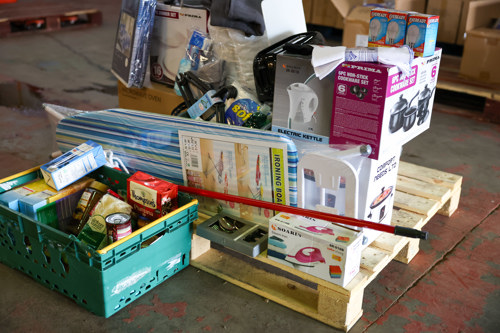
Once approved, a bespoke starter pack is prepared. Each Housing Association selects the contents of their own pack, allowing flexibility to reflect the needs of their tenants and local priorities. Packs typically include essential household items such as small electricals, bedding, kitchen equipment, cleaning materials, and other practical items that enable tenants to live safely and independently. In addition, an ambient food box is included to ensure tenants have access to food immediately upon moving in.
Homeless Connect staff contact tenants directly to arrange delivery at a time that suits them. This direct engagement reduces anxiety, ensures a smooth handover, and reinforces a sense of care and respect. Starter packs and food boxes are delivered directly to the tenant’s new home by Homeless Connect staff, providing immediate, tangible support at a moment of significant transition. Once delivery is complete, the online system is updated, giving Housing Associations confirmation that the tenant has received support and ensuring shared accountability.
The initiative is built on close partnership working. Clear communication, defined roles, and shared systems allow Homeless Connect and Housing Associations (like Radius, Choice, Apex Housing, Woven Housing Association, Clanmil Housing Association, Woodvale and Shankill Housing Association)
and to work efficiently across different areas and client groups. This collaborative model improves service delivery by reducing delays, avoiding duplication, and ensuring that support is provided consistently and at scale.
The impact of the Home Starter Pack initiative extends beyond the provision of physical items. By removing the immediate financial and practical pressures of setting up a household, the initiative supports improved health and wellbeing, reduces stress, and helps tenants feel settled and secure. Being able to cook, clean, sleep comfortably, and welcome others into their home contributes to confidence, independence, and social connection. These outcomes play a crucial role in sustaining tenancies and preventing repeat homelessness.
Ultimately, the Home Starter Pack initiative helps transform empty properties into homes. Through partnership working, tailored support, and a focus on dignity, it provides tenants with a strong foundation to rebuild their lives and integrate into their communities, demonstrating how collaborative, practical interventions can deliver lasting social impact.
Outcomes and achievements
The Home Starter Pack programme has delivered clear Outcomes and achievements over the past year by supporting people at the point they move into a new tenancy. In the last year, Homeless Connect supported 510 tenants moving into Housing Association tenancies with starter packs containing essential household items. In addition, between 1st April 2025 and 30th June 2025, a further 443 Northern Ireland Housing Executive tenants were supported through a dedicated starter pack contract, which concluded in June 2025.
These figures demonstrate the scale and reach of the programme and its role in supporting tenancy sustainment during a transition period. Starter packs remove the immediate financial pressure of setting up a home, allowing tenants to settle quickly, while focusing their income on longer-term needs such as furniture.
The impact of the programme is illustrated through individual outcomes. J, a 35-year-old single parent, moved from nine months in hostel accommodation into a two-bedroom Radius flat in Belfast. She was initially overwhelmed by the number of items required to set up her new home. Following an assessment by her Housing Officer, J received a starter pack delivered directly to her door shortly after moving in. The pack saved her an estimated £380.
East Belfast Mission - You're Home
Application entry
- Project name: You're Home
- Lead organisation: East Belfast Mission
- Partner organisation: Commonweal Housing
Statement of support
The 'You're Home' project is a community-led housing pilot supporting those exiting homelessness, developed and delivered in partnership between homeless prevention charity East Belfast Mission and action-learning charity Commonweal Housing.
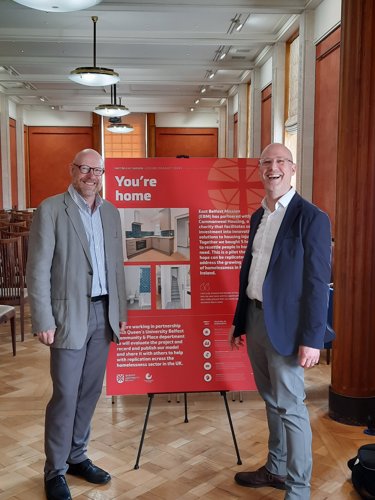
You're Home provides accommodation at reduced rents to individuals with low needs, allowing tenants to progress in their recovery from homelessness and transition to independent living in stable, long-term housing. Since commencing in 2023, the pilot has operated across five properties in Belfast.
The innovative partnership combines complementary expertise and resources: financial and technical (housing) support from Commonweal, and East Belfast Mission’s frontline delivery experience and community roots.
Commonweal sourced patient capital investment totalling £570,886, covering property acquisition, renovation costs, and technical surveying support, as well as sponsoring the independent evaluation aimed at capturing project learnings.
East Belfast Mission manages the day-to-day housing operation, including property maintenance and rent collection. Additionally, experienced outreach support workers provide wraparound services to tenants across mental health, employment, and life skills development.
The independent evaluation, produced by professors at Queen's University Belfast, found that the partnership approach is crucial to the project's fundamental success:
‘East Belfast Mission's community embeddedness and established service networks, combined with Commonweal's technical financial expertise, access to social investors and emphasis on evaluation and learning, to create integrated benefits that translated into positive outcomes for tenants.’
Collaboration began in 2021, when East Belfast Mission applied to Commonweal’s funding programme, offering grants to conduct feasibility studies evaluating new housing models for at-risk groups.
East Belfast Mission aimed to address the challenges its 'Hosford Homeless Hostel' clients face transitioning into stable housing. Barriers to moving on, such as a lack of affordable private rentals, landlord prejudice, and limited access to social housing make it difficult for low-needs clients to access longer-term housing. As such, the You're Home model creates a pathway to affordable, self-contained accommodation, while freeing hostel bedspace.
Commonweal awarded East Belfast Mission £5,400 to investigate the model's functionality, with Homelessness Service Manager, Aidan Byrne, stating: "I cannot overstate how much we learned through this process and how beneficial it has been for our work."
Following a successful business case, Commonweal utilised its highly regarded and successful social investment model to raise capital to purchase the homes. Commonweal pays investors a guaranteed yield and/or share of the capital uplift from property sales upon a pilot’s conclusion, insulating investors from financial risks.
The You’re Home model employs an innovative blended financial approach. Its lease-based rental structure utilises patient capital investment facilitated by Commonweal, supplemented by housing allowance top-ups to bridge the gap between benefit rates and actual rental costs. The independent evaluation found that the flexible investment approach enables the pilot to remain financially viable.
To date, the pilot has provided flexible tenancies to seven households: three local residents and four asylum seekers and refugees. The flexible tenancy model enables individuals to stay in their homes as necessary for a successful move-on.
The You're Home pilot has enabled East Belfast Mission to leverage Commonweal's initial investment to work towards securing significant additional funds to expand their post-homelessness stock, significantly benefitting the community.
Furthermore, the investment model provides an adaptable learning framework for organisations in Northern Ireland's homelessness sector looking to adopt loan or patient capital interventions - a relatively new practice.
Project lead at East Belfast Mission, Tom Dinnen, commented: “Few homelessness organisations have the capacity and resources to take on a capital housing project, a challenge we faced until we approached Commonweal. We want to use our partnership with Commonweal and our project’s community impact to highlight the need for improved access to national social finance within Northern Ireland’s homelessness sector.”
Outcomes and achievements
The evaluation of the You're Home project provides evidence that targeted housing interventions, supported by patient capital and delivered through community-embedded services and place-based partnerships, can challenge homelessness cycles whilst generating both financial and social returns.
The project's cost-benefit analysis forecasts a £2.39 return for every £1 invested, generating financial returns for investors, public sector savings (such as reduced healthcare or social services costs), and tenant wellbeing value.
Clients have reported positive outcomes across educational, training, and employment opportunities, as well as improved family relationships. Overall, the model demonstrates effectiveness in facilitating genuine transitions from hostel accommodation to community-based independent living.
Reflecting on their journey, one tenant said: "It's perfect. I went there for the first time and I didn't know whether to laugh or cry...It had been two years since I have my own home... I couldn't explain the feeling the first day waking up. It was love!"
Beyond its direct impact on tenants, the pilot has catalysed wider impacts for East Belfast Mission’s work. The pilot's test-and-learn approach has informed discussions around obtaining a £2 million Financial Transactions Capital investment loan from the government, which, if secured, could deliver 18 additional You're Home units.
Oaklee Housing - Grounded in Community,Guided by People
Application entry
- Project name: Grounded in Community,Guided by People
- Lead organisation: Oaklee Housing
- Partner organisations: Corkagh Grange Residents Association, South Dublin Leader Partnership, Saoirse Women's Refugee, MABS Clondalkin, Active South Dublin, Jigsaw, South Dublin County Council
Statement of support
Corkagh Grange in Clondalkin is a community facing many challenges linked to long-term social and economic disadvantage. Many residents experience poor health, social isolation and significant barriers to accessing help. Anti-social behaviour and drug activity in the wider area contribute to an ongoing sense of insecurity. A major difficulty within the estate has been a deep lack of trust in public services, local supports and An Garda Síochána. As a result, many vulnerable tenants who would benefit from support do not use the services available to them.
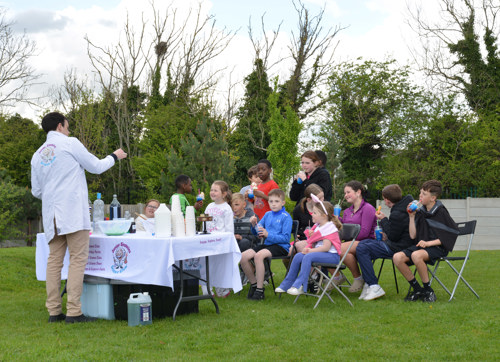
Oaklee and Comhar Housing had worked for a long period to encourage engagement with local services. This included leaflets, sharing information at meetings and informal conversations, yet the level of uptake stayed very low. Tenants often explained that travelling outside the estate felt overwhelming. For some, leaving the area is a major ordeal due to anxiety, mobility issues, stigma or fear of being judged. Many felt they were looked down on by service providers, who they saw as authority figures who dressed differently, spoke in unfamiliar language and did not understand their daily lives.
In response, Oaklee and its partners decided to take a new approach: bringing the services directly into the estate through a community festival held onsite. The purpose was to break down barriers, help tenants feel safe and respected and allow services to meet people in an environment where they were comfortable. An important part of the planning process involved meeting with all participating organisations in advance. Each service was asked to use plain English, dress casually and take a friendly, informal approach. The goal was to build relationships rather than carry out formal assessments.
The event took place on a warm, sunny day, which supported strong turnout. A wide range of children’s activities were provided to help create a relaxed and welcoming atmosphere. These activities were crucial, as many families felt more comfortable attending when there was something enjoyable for their children. A broad group of services took part, including the Domestic Violence Refuge, the Irish Heart Foundation, Jigsaw, the Clondalkin Traveller Action Programme, the Local Drugs Task Force, Community Gardaí, the money advice service, South Dublin Partnership and Active South Dublin.
The day was very successful and created an immediate shift in engagement. Tenants who had never spoken with services before met them for the first time and several individuals made self-referrals or referrals for family members. Residents said they appreciated meeting service staff within their own estate, and services reported that seeing the environment firsthand helped them better understand people’s needs. Tenants also said the day challenged their belief that service providers were distant people “from ivory towers,” and instead saw them as ordinary people who wanted to help.
This event was the starting point for positive change. After the festival, tenants formed a new Residents’ Association, which has continued to grow and develop. The group built strong links with several of the services that took part in the event and has since been connected into further supports. Through these partnerships, the association has secured grants to organise family day trips and community events. Attendance at local activities, including events in the community centre, has increased significantly, especially when these events are organised and promoted by residents themselves.
This initiative shows the power of partnership, trust-building and meeting people where they are. By removing barriers and building respectful relationships, Oaklee and its partners helped create lasting improvements in engagement and strengthened the community.
Outcomes and achievements
The community festival in Corkagh Grange led to major positive outcomes for both residents and service providers. The most immediate impact was a clear increase in engagement. Residents who had previously been unsure, anxious or unwilling to access help were able to speak directly with services in a familiar and trusted setting. Several tenants made self-referrals or referrals for family members in areas including mental health, financial support, domestic violence and addiction.
Trust between residents and service providers increased significantly. Tenants said they felt respected and understood, and that meeting staff in a relaxed setting helped remove feelings of stigma or judgement. Service providers also gained a deeper understanding of the living conditions and daily challenges faced by the community, which has supported more empathetic and responsive work going forward.
A major long-term achievement was the creation of a new Residents’ Association. This group has become an active voice for the estate, developing ongoing partnerships with local agencies. Through these relationships, the association has secured funding for family trips, community events and additional supports.
Attendance at community activities has grown greatly, showing improved confidence, pride and engagement. The event marked a turning point, laying the foundations for long-term, resident-led community development.
Ark Housing - Community FUNding Newtownards
Application entry
- Project name: Community FUNding Newtownards
- Lead organisation: Ark Housing
- Partner organisations: NI Housing Executive, Radius Housing
Statement of support
The Newtownards Community FUNd demonstrates the strength of partnership working in supporting local communities. The initiative is delivered collaboratively by three housing providers: Ark Housing, the Northern Ireland Housing Executive (NIHE), and Radius Housing, who have aligned their priorities and pooled resources, expertise, and funding to deliver a more coordinated and effective approach than any one organisation could achieve alone.
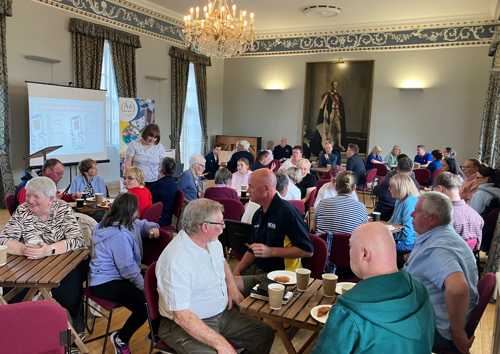
This unified approach provides a more coordinated and effective method of community investment than any one organisation could achieve alone, specifically designed to promote Participatory Budgeting (PB), a democratic process where local residents decide exactly how public money is spent to meet local needs.
The project demonstrates new and innovative ways of working by placing community decision-making at the absolute centre of funding. Moving away from a "top-down" approach, the partners introduced a "market-stall" style event. This format allows community groups to present their ideas in person and engage directly with residents. Instead of an anonymous application form, groups showcase diverse projects, ranging from intergenerational initiatives bringing together pre-school children and people living with dementia, to inclusive fishing clubs for those with disabilities. As one attendee observed: "Having so many diverse groups in one room at a time was really special. There were groups there that I never thought I would ever have seen in the same room, never mind sharing ideas and views together!"
The partnership has directly improved service delivery and quality by simplifying access for local groups. By providing a single, coordinated application route, the FUNd removes the administrative barriers that previously made it difficult for small groups to engage with multiple housing providers. This joined-up approach has led to a 110 per cent increase in participation, with applications rising from 10 to 21 community groups over three years. This growth reflects a profound increase in community confidence. The total funding pot of £18,000 allowed the partnership to award £1,000 each to 18 distinct projects, including youth programmes that provide safe spaces and football-based schemes used to connect local neighbourhoods.
Furthermore, the initiative has demonstrated best practice and improved the wellbeing of communities by establishing lasting networks. The market-stall events encourage discussion and trust between groups that had not previously collaborated. This is evidenced by the positive impact on younger participants; one group leader shared: "My team, including the little ones, enjoyed their time... It has given them a little spring in their step and boosted their confidence." Once all 18 projects are delivered, they will reach approximately 1,500 people. By pooling resources, the partnership has maximised financial impact while minimising duplication, creating a sustainable model of effective collaboration that serves as a new standard for the social housing sector across the UK and Ireland.
Beyond funding, the initiative has strengthened community connections. The market-stall events encourage discussion, idea-sharing, and collaboration between groups that had not previously worked together, building networks and trust across Newtownards. Through this partnership approach, the FUNd not only supports individual projects but also contributes to longer-term community development. It provides a model of effective collaboration that could be adapted in other social housing contexts across Northern Ireland, demonstrating the positive impact of organisations working together for the benefit of local communities.
Outcomes and achievements
Key achievements include:
Strategic Financial Impact: The partnership pooled resources to award £18,000 to 18 diverse local projects, ensuring a wide distribution of wealth across the community.
Increased Engagement: The number of community groups engaging with the housing providers increased by 110 per cent in just three years (from 10 to 21 groups).
Diverse Community Outreach: Funded projects successfully addressed complex social issues, including dementia support, disability inclusion in sports, and mental health for men’s groups.
Democratic Transparency: 100 per cent of funding was allocated via Participatory Budgeting, with residents acting as the sole decision-makers, thereby building trust between tenants and landlords.
Community-led decision-making: All funding was allocated through direct community voting, providing a transparent and accessible process and reinforcing trust in how shared housing resources were distributed.
Stronger local networks: The market-stall event created opportunities for groups to meet and exchange ideas, leading to at least four new collaborative projects following the event.
Overall, the project demonstrates how housing providers can work in partnership to support inclusive decision-making, improve community connections and enable residents to have a meaningful role in shaping their neighbourhoods.
Ark Housing - Socialize and Energize
Application entry
- Project name: Socialize and Energize
- Lead organisation: Ark Housing
- Partner organisations: Ark Housing, Armagh City, Banbridge and Craigavon Borough Council, the Southern Health and Social Care Trust, and the charity Sports Changes Life
Statement of support
The Socialize and Energize programme in Armagh demonstrates how housing, health, and local government partners can work together to support an aging population. This partnership, comprised of Ark Housing, Armagh City, Banbridge and Craigavon Borough Council, the Southern Health and Social Care Trust, and the charity Sports Changes Life, was born out of a shared necessity identified through the Armagh Advisory Group. The Advisory Group is a strategic partnership that provides oversight for the "Housing for All" five-year Good Relations Plan, ensuring that social housing delivery is anchored in local insight and strategic guidance. By moving beyond traditional professional boundaries, the partners addressed a critical gap: the urgent need to reduce social isolation, as well as encourage physical activity and social connectivity among residents aged 50 and over.
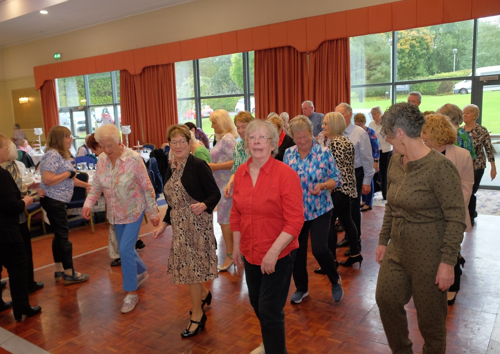
The programme meets the criterion of new and innovative ways of working by moving away from siloed, traditional service models. Instead, the partners co-designed a unique "blended model" that integrates conversation-based learning with multi-sports engagement, including activities such as boccia, pickleball, table tennis, and badminton. This approach is innovative because it treats physical activity not just as a health goal, but as a primary vehicle for social connection, reaching participants who might not engage with traditional wellbeing services. The importance of this outreach in rural settings was highlighted by one participant, who noted: "We need more of this in rural areas. People over 60 are often forgotten in rural areas. We are supposed to keep fit at our age but there is nothing in our area."
The partnership has directly improved service delivery and quality by streamlining the participant journey across different sectors. In a traditional setting, a tenant might receive housing support, health advice, and leisure opportunities from three disconnected sources. Through Socialize and Energize, these services are coordinated and delivered as a single, seamless experience. This cross-agency collaboration reduces the administrative barriers for residents and ensures they receive higher-quality, multifaceted support. The expertise provided by Sports Changes Life adds a layer of professional coaching and mentorship, significantly enhancing the quality of the sessions. As one resident shared: “I really enjoyed this event, staff were very respectful and fun. I would love to attend some more of these activities”
Furthermore, the initiative has demonstrated best practice and improved the wellbeing of communities by encouraging sustainable social networks aligned with the NI Executive’s "Together Building a United Community" vision. The six-week programme was designed to break down social barriers and encourage peer support. By bringing tenants together in a shared physical space, the partnership has helped rebuild the community fabric in Armagh, ensuring sustainable outcomes for residents within a five-mile radius of the housing scheme. The positive impact was captured by a participant who stated: “Brilliant events. Lots of interesting things to try and very social. I would be interested in doing this on a regular basis.” This model now serves as a replicable blueprint for integrated community care across the housing sector.
Outcomes and achievements
The Socialize and Energize programme has delivered measurable improvements in the lives of Armagh residents over the last 12 months. By successfully integrating housing, health, and leisure services, the partnership reached over 50 individuals who were previously identified as being at risk of chronic social isolation.
Key results include:
Reduced social isolation and improved social connectivity: by creating regular, meaningful social connections for people aged 50+, many of whom had limited previous engagement in community activity.
Increased physical activity and confidence, with participants becoming more active and comfortable taking part in group and multi-sport sessions.
Improved mental wellbeing, including increased confidence, motivation and sense of purpose through peer support and conversation-based learning.
Stronger engagement with services, with participants gaining awareness of and trust in housing, health and council supports.
Strategic Collaboration: The Armagh Advisory Group successfully implemented a coordinated referral pathway between Ark Housing and the Southern Health and Social Care Trust, ensuring sustainable support and shared decision-making.
Community Cohesion: The initiative successfully bridged gaps between incoming residents and the surrounding community, leading to long-term trust and social integration in line with the "Together Building a United Community" vision.
TDS Northern Ireland - Project DIPI: Developing Leadership, Pitching for Inclusion
Application entry
- Project name: Project DIPI: Developing Leadership, Pitching for Inclusion
- Lead organisation: TDS Northern Ireland
- Partner organisation: Social Enterprise Northern Ireland (SENI)
Statement of support
TDS Northern Ireland (TDSNI) and Social Enterprise Northern Ireland (SENI) have formed a dynamic partnership to strengthen leadership and long-term sustainability within the region’s social enterprise sector. This collaboration, launched in 2025, brings together two organisations with a shared vision: to build resilient, community-focused enterprises that drive meaningful social impact. The partnership delivers two core initiatives.
The first is an Executive Leadership Development Programme, designed to equip up to sixty social enterprise leaders with the skills, confidence, and commercial acumen needed to grow their organisations. Delivered by experienced facilitators of the Social Enterprise Academy, the programme blends six in-person training days with three online masterclasses, creating a flexible learning experience. Participants explore sustainable business models, organisational resilience, and income generation strategies. The programme also offers optional accreditation, further strengthening professional development across the sector. Demand has been high, with 34 leaders registering interest and 14 beginning the first cohort in October 2025. Those unable to join this cohort have been successfully placed in upcoming cohorts, ensuring inclusivity and continuity. The programme reflects a deep understanding of sector needs and encourages cross-sector learning by welcoming leaders from both social enterprise and private organisations.
The second initiative is a regionally delivered Social Enterprise Grant Fund, offering £15,000 in support to help organisations scale, innovate, and invest in long-term growth. Funds are awarded through Dragons’ Den-style events that bring together enterprise leaders, funders, and the wider community. The partnership has remained on schedule, within budget, and on track to deliver all objectives. What sets this partnership apart is its unique blend of leadership development, regional investment, and practical innovation. It is the first initiative of its kind in Northern Ireland to combine executive training, private-sector engagement, and locally delivered funding - creating a joined-up, whole-region response to sustainability challenges. Crucially, the partnership prioritises inclusion. Organisations supporting ethnic minorities, disabled people, and young people have been given targeted access to both leadership development and funding support. This inclusive design ensures that communities most in need benefit directly from the programme’s impact. Participant feedback reflects the programme’s value: “I found the course both challenging and valuable. I’ve gained practical ideas for improving our organisation’s sustainability.” Participant from The Link, an organisation who help vulnerable and at-risk individuals, many of whom experience deprivation, exclusion or loneliness. “The programme has helped me connect with like-minded people across the sector. I left with new insights and energy to take back to my team.” Participant from The Workspace Group, a profit-for-purpose social enterprise that provides business property, support services, and community projects to help local entrepreneurs start and grow businesses and improve social inclusion across parts of Ireland and the UK.
The partnership has also received recognition from the Economy Minister, Dr Caoimhe Archibald, who said: Economy Minister Dr Caoimhe Archibald welcomed the partnership, stating: “Our social enterprise sector is a key contributor to our local economy. I very much welcome initiatives that support its continued and increased contribution to inclusive economic development. The new programmes this partnership will deliver are an investment in this vital sector and the people who drive it.” By working together, TDS Northern Ireland and Social Enterprise Northern Ireland have delivered a practical and scalable model for capacity building in the community sector. This collaboration stands out for its clarity of purpose, strong governance, and measurable impact. It is a model of innovation and best practice that demonstrates how housing organisations can work beyond traditional boundaries to achieve meaningful impact.
Outcomes and achievements
In just six months, the partnership has delivered measurable results across leadership development and community investment. Thirty-four social enterprise leaders registered for the Executive Leadership Development Programme, with fourteen beginning the first cohort in October 2025. Three online masterclasses complement the in-person training, and two further cohorts are in development. Feedback from The Link, and The Working Group participants below highlights stronger leadership, new ideas, and improved confidence: “The first couple of days were both challenging and valuable… I gained practical ideas for improving sustainability.” “The programme allowed me to meet like-minded people and take back fresh inspiration to the team.” The Social Enterprise Grant Fund will award 10 grants of £1,500 scheduled for 2026, with six more grants to be awarded. These investments will help social enterprises test new models and expand their reach. All planned milestones have been delivered on time and within budget. The programme is already generating outcomes aligned to inclusive economic development and organisational sustainability. By building leadership and investing locally, the partnership is strengthening community services and setting the foundation for long-term impact across Northern Ireland.
Alpha Housing - Turning lives around: Alpha and Outwork
Application entry
- Project name: Turning lives around: Alpha and Outwork
- Lead organisation: Alpha Housing
- Partner organisations: The Turnaround Project
Statement of support
Alpha Housing has developed an innovative partnership with Outwork, a grounds maintenance social enterprise operated by The Turnaround Project that improves sheltered housing scheme gardens while helping turn around the lives of people who have spent time in the justice system.
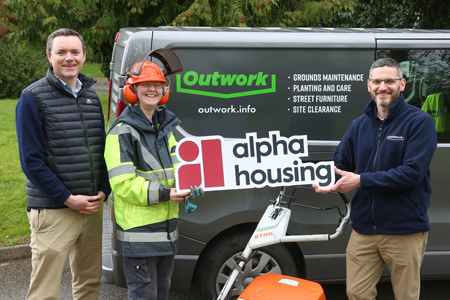
Alpha provides sheltered housing for older people across 35 schemes in Northern Ireland. For many residents, spending time in shared outdoor spaces is an important part of everyday life, supporting wellbeing, social connections and sustained independence
Previously, while tenants consistently reported high satisfaction with housing services, tenants and staff had concerns about the standard and responsiveness of grounds maintenance provision. Alpha committed to improving this service and creating outdoor spaces that residents could enjoy and feel proud of.
In 2019, Alpha was approached by Outwork, a social enterprise that provides transitional employment for people with involvement in the justice system. Outwork supports individuals who are serving, or have served, sentences in prison or the community by offering paid work, training and support.
This created an opportunity for a partnership that would improve services for Alpha’s tenants while enabling Outwork to deliver positive employment and social outcomes for people facing significant barriers to work and inclusion
Following discussion and due diligence, Alpha appointed Outwork to a year-long trial partnership from January 2020. This represented a new way of working for Alpha. Using reserved procurement provisions, Alpha directly awarded a contract to the social enterprise, a route rarely used by housing associations in Northern Ireland. The decision was driven by a shared commitment to service quality, social value and community wellbeing.
From the outset, the partnership was built on collaboration rather than a traditional client and contractor relationship. Clear service standards were agreed, alongside defined roles, regular communication and monthly review meetings to monitor performance and respond to feedback. Scheme Co-ordinators and tenants were encouraged to engage directly with Outwork supervisors, creating a more personal, visible and responsive service.
The impact on residents was quickly evident. Routine grounds maintenance such as grass cutting, hedge trimming, power washing and bed maintenance was carried out with greater care and consistency. The partnership also enabled new approaches to environmental sustainability that directly benefited residents. In several schemes, no-mow areas and tree and wildflower planting were introduced to support biodiversity.
At Montgomery Manor, a sheltered scheme in Bangor, Outwork worked alongside Alpha staff and residents to support improved grounds maintenance that enabled tenant-led biodiversity activity. This included wildflower planting, planting native hedging and the creation of wildlife-friendly areas, helping residents to take an active role in caring for their outdoor environment while enhancing local biodiversity.
A defining feature of the partnership is its social impact. Outwork crews are typically made up of an experienced supervisor and trainees, many of whom have experience of the criminal justice system. Through paid employment, training and structured support, participants gain routine, confidence and practical skills, helping them to rebuild stability, self-esteem and positive relationships within the community.
The presence of Outwork teams on Alpha’s sites has created positive everyday interactions between tenants and trainees. Tenants regularly comment on the professionalism of the crews, while trainees benefit from trust and a sense of purpose. These interactions help to reduce stigma and demonstrate the value of inclusive, community-based working.
This partnership demonstrates how housing organisations can improve core services while contributing to wider social change. By working collaboratively with a social enterprise, Alpha has delivered better outcomes for tenants, supported people to turn their lives around and shown how procurement can be used as a tool for positive community impact.
Outcomes and achievements
The partnership between Alpha and Outwork has delivered clear and sustained outcomes.
Improved outcomes for tenants
Sheltered scheme gardens are now maintained to a consistently high standard. Residents report greater satisfaction with outdoor spaces, increased use of communal areas and a stronger sense of pride. Feedback highlights the professionalism of Outwork crews.
Positive change for people with involvement in the criminal justice system
Since 2020, Alpha and Outwork have engaged 84 people with involvement in the justice system through paid employment, training and structured support. Participants have gained routine, confidence and practical skills during a critical transition period. The partnership has enabled Outwork to grow in scale and impact, providing over 30,000 hours of paid transitional employment. Outwork trainees have moved on to work for conventional employers, further education, or into permanent more senior roles within Outwork.
Wider community and environmental benefits
Biodiversity improvements, including wildflower planting, no-mow areas and native tree and shrub planting, have enhanced outdoor environments and created new wildlife habitats across multiple schemes.
Transferable partnership model
This partnership demonstrates how social landlords can improve service quality while delivering social value through collaborative working and innovative procurement, providing a model that can be adopted across the sector.
Woven Housing Association - Play and Unite Project
Application entry
- Project name: Play and Unite Project
- Lead organisation: Woven Housing Association
- Partner organisations: Sports Changes Life, Tackling Awareness of Mental Health, Radius, Apex, Choice and Ark Housing
Statement of support
Play and Unite is a powerful example of collaborative innovation in service delivery, demonstrating how cross-sector partnership working can achieve meaningful and lasting outcomes for communities. The project brought together five Housing Associations – Woven, Radius, Apex, Choice and Ark Housing – with support from the Department for Communities and the Housing Executive’s Housing for All Shared Housing Programme. Working in partnership with Sport Changes Life and Tackling Awareness of Mental Health Issues (TAMHI). Play and Unite delivered a sport-led intervention rooted in good relations, community wellbeing and social cohesion.

The initiative culminated in a one-week summer sports camp in Belfast in 2025, engaging 150 children and 14 sports clubs. However, the true innovation of Play and Unite lies not only in what was delivered, but in how it was conceived, developed and implemented through collaborative working across organisational, geographical and community boundaries
Play and Unite originated from genuine, grassroots community need identified by two coaches, Emma and Stephen, who were working independently with Celtic Boys Belfast and Knockbreda FC. Both coaches recognised ongoing sectarian tensions and previous negative experiences affecting young people and parents associated with their clubs. Rather than allowing these challenges to persist, they identified sport as a unique and powerful platform to build bridges, foster understanding, and promote respect.
This organic, needs-led concept was embraced and strengthened through partnership with housing associations, government-supported programmes and community sport specialists. The project’s development model was innovative and demonstrated best practice in that it combined lived experience with strategic organisational support, ensuring the programme was both authentic and scalable. Partners worked collaboratively from the outset to co-design the programme, align objectives and establish shared values, creating a strong foundation for effective delivery. Play and Unite challenged traditional service delivery models by moving beyond organisational silos. Housing Associations extended their role beyond bricks and mortar to actively address social wellbeing, inclusion and good relations. By pooling resources, expertise and networks, partners created a programme that no single organisation could have delivered alone.
A key innovation was the integration of professional and elite-level sport into a community relations intervention. All top Irish League football clubs – including Linfield, Glentoran, Crusaders and Cliftonville – participated in the camp, demonstrating unprecedented cross-community club collaboration in a shared, community-focused setting. These visits delivered strong, consistent messages around respect, teamwork and inclusion, showing young people that positive relationships can transcend historical and cultural divides.
The programme also featured female international footballers as visible role models, promoting gender equality and inspiring girls to engage confidently in sport. This inclusive approach ensured that Play and Unite reflected the diversity of the communities it served and challenged traditional barriers to participation, by bringing young people from across the interfaces together through sport.
Through partnership working, five Housing Associations delivering ‘Housing for All’, in collaboration with local advisory groups delivering good relations plans for the areas significantly enhanced service delivery by providing funding support to Play and Unite to provide the high-quality sports and wellbeing programming for tenants and their families. The involvement of partner organisations ensured the programme was accessible, inclusive and responsive to community needs. Partners shared responsibility for planning, evaluation and participant engagement, demonstrating best practice in partnership management and governance.
The collaborative approach improved trust between service providers and communities, strengthened relationships across different client groups, and increased engagement with housing and community services.
The programme improved the wellbeing of the communities through working in collaboration to provide workshops on a range of topics including getting to know you, healthy lifestyles, team building and mental health workshops.
Outcomes and achievements
Participants completed a post programme questionnaire to evaluate the end of the programme. These are some of the results -
- 98 per cent enjoyed taking part in the programme,
- 91 per cent learned something about the importance of respect and working as part of a team,
- 88 per cent of participants made new friends.
Other outcomes identified by the partnership included -
- Strengthened partnerships between Housing Associations and community organisations,
- Enhanced community good relations under the ‘Housing for All’ programme,
- A successful model that can be replicated across other communities and regions,
- Participation of 150 children from diverse backgrounds,
- Engagement of 14 sports clubs working together collaboratively from across the interfaces, building positive relationships between clubs,
- A safe, structured environment promoting positive interaction and teamwork.
“This year’s Play and Unite camp was a major success, with really positive feedback not only from participants but also parents/guardians, coaches and clubs. It was a privilege to work with so many young people from diverse backgrounds and see new friendships, confidence and understanding grow throughout the week.” Colin McIlwaine, Sport Changes Life.
The success of Play and Unite shows that when organisations collaborate with a shared vision and purpose, they can deliver innovative, high-quality services that make a lasting difference.
Choice Housing - Lighthouse Hostel Ballymena
Application entry
- Project name: Lighthouse Hostel Ballymena
- Lead organisation: Choice Housing
- Partner organisation: Lighthouse Hostel Ballymena
Statement of support
Lighthouse Hostel has provided accommodation and support services to men experiencing homelessness and addiction in the Ballymena area for over 20 years. During this time, Lighthouse has played a vital role in supporting some of the most vulnerable individuals in the local community, offering stability, care, and pathways towards recovery.
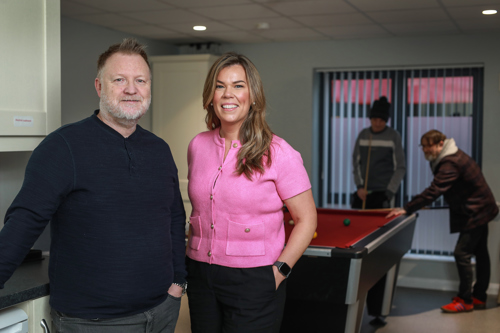
However, the private rented accommodation previously occupied by Lighthouse was no longer fit for purpose. The property was limited in terms of space, condition, and long-term sustainability. Supporting People recognised these challenges and supported the relocation of the service to accommodation that was strategically relevant.
Choice Housing had recently developed George Street, a block of modern self-contained apartments in Ballymena town centre. The development offered high-quality accommodation; and Choice was exploring options for a prospective client group that would benefit from a supported housing model.
Following an approach from Supporting People, Choice began working closely with Lighthouse to explore the relocation of their service to George Street. From the outset, the process was collaborative and partnership-led, involving a wide range of stakeholders to ensure the proposal was viable, sustainable, and sensitive to the local community. Key partners included Supporting People, Development Programme Group (DPG), the Police Service of Northern Ireland, local Members of the Legislative Assembly,
and nearby businesses. Together, stakeholders developed a robust business case, giving careful consideration to resident needs, building design, staffing and management arrangements, and community impact.
Recognising the importance of local engagement, Choice undertook extensive community consultation throughout the process. This ensured that local concerns were listened to and addressed, enabling the service to be positively integrated into the town centre. The involvement of statutory agencies and local representatives provided reassurance and helped build confidence in the project.
The relocation required significant investment and preparation. Structural works were completed to adapt the building for supported housing use. This ensured the accommodation was safe, secure, and fit for purpose, while also providing a quality living environment that promotes dignity, independence, and recovery.
In 2025, Choice formally handed over the service to Lighthouse. The new provision comprises of 18 modern, self-contained apartments, alongside dedicated office space and communal areas designed to support service delivery and resident wellbeing. This represents a significant improvement on the previous accommodation and provides a sustainable base for the continued delivery of specialist support services in Ballymena.
Harvey Grahame-Smith, Director of Lighthouse Hostel, is delighted to report that since the move there has been clear positive outcomes. Resident turnover has reduced as men value and wish to retain their own apartments. Access to private living space has led to less tension and improved mental wellbeing. This has resulted in major change in behaviours, fewer incidents and fewer evictions. Men are developing and re-learning essential independent living skills, with anecdotal evidence of reduced suicidal ideation and fewer overdoses. Support is now more person-centred and adaptable, staff morale has improved, and residents report feeling more content and settled.
Reflecting on the partnership, Mark Forsythe, Director of NI Lighthouse Hostel, stated: “The decision to partner with Choice was as important to us as the building and location itself. From the start, Choice Directors and senior management were inviting, engaged and proactive, willing to listen, learn and adapt to the requirements of our service and our client base. Our client base is thriving with positive outcomes far outdoing previous years, and staff have a new lease of life.”
This George Street project demonstrates the positive outcomes that can be achieved through strong partnership working, community engagement, and a shared commitment to improving housing options for people experiencing homelessness, ensuring Lighthouse can continue to provide life-changing support.
Outcomes and achievements
Through collaboration and innovation, this project men’s homeless hostel has delivered positive outcomes for the Provider, Service Users, and the wider community. The project has:
- Secured the long-term sustainability of Lighthouse Hostel by relocating from accommodation that was no longer fit for purpose to bespoke supported housing.
- Delivered 18 modern, self-contained apartments alongside office and communal spaces that provide a safe, high-quality living environment.
- Established strong multi-agency partnerships involving Lighthouse, Supporting People, DPG, PSNI, local elected representatives, and local businesses.
- Demonstrated an effective partnership-led approach aligned with homelessness and housing supply strategies.
Significant improvements in Service User outcomes include:
- Reduced resident turnover and increased pride in personal space.
- Lower levels of conflict, aggression, and bed closures, reducing returns to homelessness.
- Improved independent living skills, supporting tenancy readiness.
- Reductions in suicidal ideation, overdose, self-harm, and substance misuse.
- Reduced PSNI presence and improved staff morale.
- More person-centred support delivery within self-contained accommodation.
Service User feedback highlights the impact of the move:
- “It’s much better… having my own space has improved my mood.”
- “There is less exposure to drugs. I enjoy cooking for myself.”
- “This is newer and teaches you better for the big wide world. It has made me happier.”
Simon Community - Laurel Lodge
Application entry
- Project name: Laurel Lodge
- Lead organisation: Simon Community
- Partner organisations: Radius Housing and NI Housing Executive
Statement of support
Our Laurel Lodge project demonstrates effective partnership working in practice, bringing together us Simon Community NI, Radius Housing and the Northern Ireland Housing Executive to respond collaboratively to the housing and homelessness crisis. Through shared ambition, complementary expertise and a commitment to doing things differently, the partners delivered a high-quality housing solution at pace, achieving outcomes that could not have been realised by any organisation working alone.
Each partner played a clearly defined and essential role. Simon Community NI provided operational leadership and delivered tailored, person-centred support to individuals experiencing homelessness. Radius Housing brought specialist expertise in property management, refurbishment and compliance, ensuring the building was transformed to a high standard. The Northern Ireland Housing Executive provided strategic oversight and funding support, aligning the project with wider housing priorities and enabling swift progression.
The partnership emerged in response to an unused building in Lisburn that had stood vacant for several years during a period of growing housing need. Recognising the urgency of the situation, the partners came together with a shared ambition to repurpose the property into a safe, supportive environment for people experiencing homelessness. This shared vision was underpinned by a collective belief that existing assets could be creatively reimagined to meet pressing social need.
Evidence of new and innovative ways of working was central to the project’s success. The organisations mobilised at unprecedented speed, challenging traditional timelines and processes. Decision-making was streamlined, with more frequent and focused meetings enabling partners to respond quickly to challenges as they arose. Rather than operating in silos, workstreams were managed collaboratively, fostering shared ownership and accountability throughout the project.
The partnership was characterised by openness, trust and mutual respect. Each organisation brought its own expertise and perspective, strengthening problem-solving and improving outcomes. Regular communication ensured alignment, reduced duplication and supported efficient delivery. This approach marked a shift from traditional transactional relationships towards a genuinely collaborative model of working.
Improved service delivery and quality were direct outcomes of this partnership. Laurel Lodge is Simon Community NI’s first low-needs supported accommodation project of its kind. The service provides a safe, stable environment for individuals who are ready to move towards independent living while still benefiting from light-touch, trauma-informed support. It fills a critical gap between emergency accommodation and long-term housing.
By combining Radius Housing’s refurbishment expertise with Simon Community NI’s frontline experience, the accommodation was designed with resident wellbeing, dignity and safety at its core. The Northern Ireland Housing Executive’s involvement ensured the project delivered value for money and contributed meaningfully to regional homelessness objectives.
The impact of the partnership extends beyond the building itself. A long-vacant property has been brought back into productive use, increasing housing supply and reducing reliance on emergency accommodation. Residents benefit from increased stability, improved wellbeing and greater confidence as they work towards independence.
Partners have provided positive feedback on the strength of collaboration, highlighting clear communication, shared commitment and a strong sense of purpose. The project has reinforced trust between organisations and established a foundation for future joint working.
This partnership demonstrates how collaboration, innovation and shared ambition can deliver sustainable solutions to homelessness. It provides a replicable model for future partnership working and reflects Simon Community NI’s commitment to working alongside others to create lasting change.
Outcomes and achievements
Through clear communication, a shared vision and rapid mobilisation, the partnership achieved what many believed was not possible, bringing a long-unused building back into service within just six months. By working collaboratively and challenging traditional timelines, partners transformed a derelict property into a high-quality housing solution.
By April 2025, Laurel Lodge was fully operational and at full occupancy. The project delivered 24 self-contained flats for individuals with lower support needs, providing safe, secure accommodation that promotes dignity, independence and stability. Each flat offers residents privacy and autonomy while benefiting from seven-day-a-week tailored support delivered by Simon Community NI staff.
This light-touch, trauma-informed support model helps residents build confidence, sustain tenancies and progress towards independent living at a pace that is right for them. The project fills an important gap between emergency accommodation and fully independent housing, supporting early intervention and preventing the escalation of homelessness.
The speed of delivery represents a major achievement, demonstrating how effective partnership working can unlock flexibility, innovation and pace. Laurel Lodge also delivers wider community benefit by revitalising a long-vacant asset and returning it to productive use.
Overall, the project stands as a strong example of how partnerships can deliver rapid, high-impact solutions together nationally.
Co-operative Housing Ireland - Co-operative Housing Ireland and Cheeverstown House – Working in Partnership to Deliver Secure, Accessible Homes for People with Complex Mobility Needs
Application entry
- Project name: Co-operative Housing Ireland and Cheeverstown House – Working in Partnership to Deliver Secure, Accessible Homes for People with Complex Mobility Needs
- Lead organisation: Co-operative Housing Ireland
- Partner organisation: Cheeverstown House
Statement of support
In 2024, a collaboration between Kildare County Council, Co-operative Housing Ireland and Cheeverstown House resulted in the purchase of four Capital Assistance Scheme (CAS) homes in Hillfort, Kill, Co. Kildare. Owned and managed by Co-operative Housing in partnership with Cheeverstown House, these bungalows have been modified to allow residents to live in a safe and secure environment with 24-hour wraparound supports provided by Cheeverstown House.
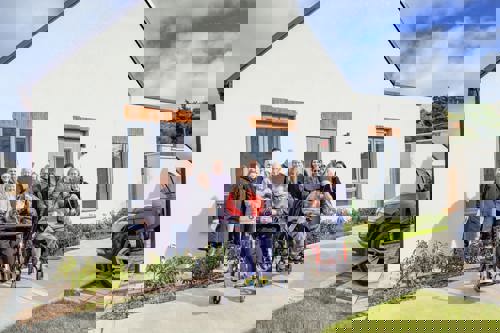
These masonry-built bungalows offer ample opportunities for integration into the surrounding community and beyond. The properties follow the Universal Design model, incorporating features such as assistive technologies, wide entrance doors, level thresholds throughout, and flexible, adaptable hard and soft points. These bungalows allow for ease of use and mobility throughout the properties and are ideal for supported living. Due to the intended use, further additional items were agreed with Cheeverstown. These include enhanced fireproofing in ceilings, internal fire doors and fire-rated plasterboard in enclosed halls, fire alarm panel, emergency lighting and electrical door magnet holders with release buttons.
- Open-plan kitchen diner leads to level-access rear gardens, providing accessibility for wheelchair users.
- Internal doors are fitted with electrical door magnet holders with release buttons to support ease of use.
- Bathrooms have been specifically designed in coordination with Cheeverstown to allow for accessible use – level access showers with bi-folding shower doors and wet room tile flooring.
- Air to water heating system provides sustainable and economical use.
- As these are CAS properties, rent is based on economic rent, which is affordable to the tenant.
- Two of the properties accommodate two Member Tenants, with 24-hour access to Cheeverstown support staff.
- Families of all Member Tenants viewed the properties on several occasions to ensure satisfaction with location and layout.
- Gardens have been specifically designed to allow access to wheelchair users with wrap-around paving.
- Each bungalow features parked paving spaces, concrete footpaths and landscaped lawns to the front and rear of the properties.
To ensure that Member Tenants feel at ease in the properties, it is the internal layout and specification that make these bungalows ideal for supported living. Each bungalow has a modern grey fitted kitchen, wardrobes and timber fire doors. Each internal door is fitted with self-closing devices designed to allow ease of use. Bathrooms are tiled offering level access showers with bi-folding doors and wet room tile flooring. Bathrooms are fitted with a demand control ventilation system which maintains constant extraction of stale air from wet rooms and each room has its own wall vent for fresh air supply. All units are approved to HIQA standards, providing residents with safe, secure and appropriate long-term homes where they can enjoy a peaceful quality of life.
The approach that Co-operative Housing Ireland has taken to the management of the tenancies here is ‘management from a distance’. All tenancies are registered with the Regional Tenancies Board and follow the same Policies and Procedures as all other Member Tenants. Throughout the allocation process, Member Tenants and their families were supported to view the bungalows on multiple occasions to allow for oversight of design and a sense of reassurance regarding the suitability of their long-term homes.
Outcomes and achievements
To bring the properties up to full HIQA compliance, an onus was on Cheeverstown to make further adaptations to ensure that, where applicable, units utilise Design++ standards to better support future collaborations. This includes registration for compliance, an inspection by a HIQA representative and compliance with regulatory standards. This has been a lengthy process. Cheeverstown managed successful allocations by ensuring that one property was compliant before beginning work on another property. This has taken 18 months to achieve. This was due to the number of adaptations required to move the properties from a Universal Design model to a Universal Design++ standard. The steps to achieving compliance included: • Request for adaptations approval from Co-operative Housing Ireland. • Appointment of contractor. • Carrying out of works. • Application to HIQA and awaiting approval. This has been a costly project, averaging €85,000 per unit. A key learning from this project is the importance of earlier collaboration between Co-operative Housing Ireland’s Development team, delivery teams and specialist partners from the onset of design, to ensure that where applicable, units are designed to a higher accessibility standard and support future collaborations with Cheeverstown House and other providers. This partnership has established a replicable model for future collaboration between housing providers and specialist disability services, improving outcomes for individuals with complex needs while strengthening cross-sector working. “Working in partnership with Co-operative Housing Ireland has allowed us to deliver homes that genuinely meet the complex mobility and support needs of the people we support. From early design through to allocation and tenancy management, this collaboration has been grounded in shared values, trust and a clear focus on quality of life. The result is safe, accessible, long-term homes that enable people to live with dignity, security and independence within their community.” – Cheeverstown House.
Healthy Age Friendly Homes Programme - Home Fire Safety Visit Collaboration
Application entry
- Project name: Home Fire Safety Visit Collaboration
- Lead organisation: Healthy Age Friendly Homes Programme
- Partner organisations: Mayo County Fire Service
Statement of support
In 2023, Mayo County Fire Service initiated a pilot project for Home Fire Safety Visits, utilising a template shared by colleagues from other County Fire Services by enhancing and adapting it for a Mayo audience. This pilot project specifically targeted older family relatives of firefighters in the initial stages and then developed into home fire safety visits for older people who requested them during attendance at fire safety talks or by word of mouth. The Home Fire Safety Visit included installation of two 10-year sealed battery-operated smoke detectors provided by the National Directorate for Fire and Emergency Management.
In 2024, a collaboration between the Healthy Age Friendly Homes Programme and the Mayo County Fire Service formalised and broadened existing initiative. This meant that older people living in the community could consent, through the Healthy Age Friendly Homes Programme, to a referral to the Mayo County Fire Service for a free Home Fire Safety Visit. Healthy Age Friendly Homes Programme is a joint Health and Local Government Programme delivered through Age Friendly Ireland, which enables older adults to continue living independently by keeping care close to home and providing a range of alternatives for older people who may otherwise transition prematurely into ling-term residential care. Through the Healthy Age Friendly Homes Programme, Local Coordinators identify participants for home fire safety visits and refer them directly to the Mayo County Fire Service.
On receipt of a referral, two firefighters from the local Fire Brigade schedule an agreed time to conduct a home visit, dedicating two hours to each person referred. They discuss escape plans, install smoke and carbon monoxide detectors, and identify potential fire risks to help the participant mitigate any fire hazards or potential risk behaviours.
Mayo County Fire Service and the Healthy Age Friendly Homes Programme have jointly collaborated to improve the safety and wellbeing of older residents in County Mayo to support them as they continue to live safely in their own homes for as long as they can through the delivery of a free Home Fire Safety Visit. 59 per cent of people who died in a fire between 2019 and 2023 were over the age of 65. Chimneys, flues, hot ashes, and soot are the main causes (source: Department of Housing, Local Government and Heritage). The partnership brings a more local and caring dimension from a service that people trust in their community. Both agencies developed and signed a Protocol of Cooperation to facilitate referrals to the Fire Service with consent from clients for a Home Fire Safety Visit.
This joint protocol covers, inter alia, information sharing, training and education, confidentiality, and evaluation, and is a growing and evolving service due to the collaboration of both parties with regular feedback and review.
In February 2025, the scheme progressed, with the Healthy Age Friendly Homes Programme securing a quantity of carbon monoxide detectors. This further complements the provision of free smoke alarms to older people, serving as a pilot enhancement to the Mayo Home Fire Safety Visits.
The ongoing collaboration involves regular reviews to gather feedback and improve service delivery. The protocol serves as a best-practice model for replicating and scaling similar partnerships between the Healthy Age Friendly Homes Programme and County Fire Services nationally.
Outcomes and achievements
The success of the pilot project in Co. Mayo has been utilised as a best-practice model to scale up and roll out the initiative across all 31 Local Authorities through the Healthy Age Friendly Homes Programme and the relevant County Fire Service. A 5-stage plan was developed to provide a roadmap for collaboration in other Counties. The project has been introduced in six other counties in the last year. Local Coordinators in Mayo continue to refer older people with identified vulnerabilities for a Home Fire Safety Visit. Change in risk behaviours has been observed as a direct impact of the collaboration e.g., changing open fire in bedroom to radiators, thinking about an egress plan, agreeing to action around hoarding, installation of both smoke and carbon monoxide alarms.
Support for the initiative received from the National Directorate of Fire and Emergency Management, and feedback from older people, project reviews, and overall engagement with the project will inform policy change and shape future funding decisions. The Home Fire Safety Visit Collaboration was endorsed at the National Fire Safety Week Launch held in October 2025, relevant to the theme of the year ‘Together Against Fire’