

Scotland Housing Awards 2026
Read all the shortlisted entries into this award category, Housing Team of the Year, at the Scotland Housing Awards (SHA) 2026 and find out who won the award on the night.
The title of housing team of the year will be awarded to a team who have delivered an outstanding contribution to their organisation and for the housing sector. The award is designed to recognise achievement of something special, as part of developing new services, dealing with difficult situations or delivering the best services.
Winner
Craigdale HA
Statement of support
Craigdale Housing Association's team has demonstrated that exceptional housing services are delivered by people who support one another, embrace innovation and remain committed to their purpose, even in the most challenging circumstances. Over the past two years, the team has experienced one of the most difficult periods in the organisation's history, including serious illness affecting colleagues, the loss of several close friends and family through bereavement, and significant staff turnover for such a small team. Rather than allowing these challenges to define them, the team united to rebuild, support one another and create an even stronger organisation.
Recognising that colleague wellbeing underpins excellent customer service, staff established their own Wellbeing Group. This was not a management-led initiative but a genuine grassroots movement, created by employees for employees. Colleagues from across the organisation worked together to improve wellbeing, strengthen collaboration and build resilience while creating a workplace where everyone feels valued, respected and empowered to contribute.
Together, the team embedded a whole-organisation approach to wellbeing based on Craigdale's values of respect, openness, trust and listening. They introduced wellbeing champions, regular wellbeing conversations, physical activities, reflective practice, peer support and opportunities for staff to shape organisational decisions. Wellbeing became part of everyday working life, creating a psychologically safe environment where colleagues feel confident to speak openly, support one another and continuously improve the services they provide.
The results have been exceptional. Craigdale's World Health Organisation (WHO-5) Wellbeing Index increased from 52 to 76. The WHO-5 is an internationally recognised measure of psychological wellbeing, with scores below 50 indicating poor wellbeing and scores above 70 reflecting high levels of positive wellbeing, resilience and engagement. A 24-point increase represents a remarkable cultural transformation and demonstrates the success of the team's commitment to supporting one another through adversity.
The impact extended far beyond the workforce. During the same period, tenant satisfaction increased to an outstanding 96%, compared with the Scottish average of 87%. This clearly demonstrates the link between investing in colleagues and delivering exceptional customer outcomes. Better staff wellbeing has resulted in stronger collaboration, quicker problem-solving, earlier intervention and increasingly compassionate, person-centred services. Craigdale has shown that wellbeing and organisational performance are mutually reinforcing.
Innovation has been central to this journey. The team embedded trauma-informed practice throughout the organisation, encouraging colleagues to move beyond asking, "What's wrong with you?" to instead ask, "What's happened to you?" This simple but powerful shift has transformed both internal relationships and tenant interactions, ensuring services are delivered with empathy, dignity and understanding. The team also strengthened partnerships with mental health organisations, financial inclusion services and community groups, recognising wellbeing as encompassing physical, mental, emotional, financial, social and environmental health.
Craigdale's team exemplifies everything the CIH Housing Team of the Year Award seeks to recognise. Faced with significant personal and organisational challenges, colleagues chose collaboration over isolation, compassion over adversity and innovation over complacency. Their staff-led Wellbeing Group has transformed organisational culture, strengthened resilience and delivered measurable improvements for both employees and tenants.
The evidence speaks for itself: a WHO-5 Wellbeing Index increase from 52 to 76, tenant satisfaction of 96% against a Scottish average of 87%, a stronger organisational culture and a workforce that is healthier, happier and more engaged. Craigdale Housing Association has demonstrated that when people genuinely care for one another and are empowered to lead change, extraordinary results follow. Through collective leadership, innovation and an unwavering commitment to improving lives, Craigdale's team is a truly deserving recipient of the CIH Housing Team of the Year Award.
Outcomes and achievements
The most significant achievement has been the transformation of organisational culture, creating a psychologically safe workplace where colleagues feel supported, empowered and confident to contribute ideas and drive continuous improvement.
World Health Organisation (WHO-5) Wellbeing Index increased from 52 to 76. This internationally recognised measure demonstrates a substantial improvement in staff wellbeing, resilience and engagement, achieved despite a period marked by adversity.
A key outcome has been the creation of a more active and connected workforce. Colleagues now regularly take part in wellbeing activities and other physical challenges together, strengthening relationships while significantly improving both mental and physical health. One colleague, who had recently been widowed, shared that participating in these activities had helped her become far more positive in her words: " I see light at the end of the tunnel." This illustrates the profound personal impact the project has had.
Improved colleague wellbeing has translated directly into better customer outcomes. During the same period, tenant satisfaction increased to 96%, compared with the Scottish average of 87%, demonstrating the strong link between investing in employees and delivering outstanding services. This has created a healthier, more resilient workforce delivering higher-quality services and better outcomes for tenants and the wider community.
Shortlisted entries
Housing Services Team, Cassiltoun Housing Association
Application entry
- Team nominated: Housing Services Team
- Organisation: Cassiltoun Housing Association
Statement of support
From reactive to proactive: Transforming rent arrears through teamwork, insight and early intervention
Like many housing providers, Cassiltoun Housing Association experienced a sharp increase in rent arrears during and after the Covid-19 pandemic. However, unlike many organisations where arrears levels began to stabilise, Cassiltoun continued to face persistently high levels of debt. At its peak, almost 40% of tenants had rent arrears, creating financial pressures for both households and the association.
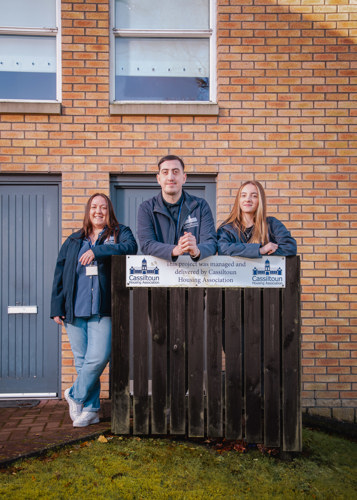
What makes this achievement worthy of recognition is not simply the improvement in arrears performance, but the way the housing services team worked together to identify problems, challenge existing practices, embrace change and develop a new service model that delivered improved outcomes for tenants, communities and the organisation.
The challenge
- Significantly increased rent arrears
- A substantial rise in the number of tenants in debt
- Growing financial hardship caused by the cost-of-living crisis
- Staff turnover and the recruitment of new team members with limited housing management experience
- Increased customer vulnerability and support needs
- Competing service demands resulting in reactive working practices.
Despite the team's commitment and hard work, arrears levels remained stubbornly high for several years.
Initially, a new rent arrears management system was introduced. While well intentioned, it failed to deliver the improvements required. Rather than accepting poor performance as inevitable, the housing services team worked closely with senior management to undertake a detailed review of the service.
The team collectively recognised that the issue was not simply about tenant debt. It was about how the service was organised and delivered.
Working together to find the solution
The introduction of a new housing management system provided a valuable opportunity to review performance data, customer journeys and staff workloads in greater detail.
Through workshops, team discussions and performance analysis, the housing services team identified a number of underlying issues:
Lack of experience
The team had experienced significant change, with newer staff members still developing confidence and expertise in rent arrears management.
Reactive working
Housing officers were spending much of their time responding to incoming enquiries and urgent issues rather than proactively managing tenancies and arrears cases.
Constant context switching
Staff were required to move between competing priorities throughout the day, reducing focus and limiting opportunities for meaningful case management.
Inconsistent approaches
Different officers were adopting different methods of managing arrears, leading to inconsistent customer experiences and outcomes.
The team demonstrated remarkable honesty and professionalism in recognising these challenges and embracing the need for change.
Transforming the service
Rather than focusing solely on enforcement, the housing services team redesigned its approach around prevention, consistency and early intervention.
The team introduced:
- Dedicated arrears focus
Housing officers were given structured time to focus solely on arrears management, reducing distractions and allowing for more proactive casework.
- Improved use of data
The new housing management system enabled earlier identification of risk, improved monitoring and more targeted interventions.
- Consistent performance management
Clear expectations, regular case reviews and shared learning helped develop confidence and consistency across the team.
- Enhanced customer engagement
Staff focused on understanding the reasons behind arrears rather than simply pursuing debt. Conversations centred on affordability, welfare benefits, income maximisation and tenancy sustainment.
- Stronger internal collaboration
The team worked closely with colleagues across the association to ensure tenants received the support they needed before financial issues escalated.
Outcomes and achievements
The results have been significant.
- Through determination, teamwork and a willingness to challenge established ways of working, the housing services team has achieved:
- A substantial reduction in rent arrears - over the past two years arrears have halved
- A significant reduction in the number of tenants in debt - again this figure has halved
- Improved tenancy sustainment
- Earlier intervention with vulnerable households
- Greater consistency in service delivery
- Increased staff confidence and performance
- Less time spent on arrears means there is more time for other housing duties and training
- Improved use of technology and performance data
- Stronger financial resilience for the organisation.
A2D Project Team, Castlehill Housing Association
Application entry
- Team nominated: A2D Project Team
- Organisation: Castlehill Housing Association
Statement of support
Castlehill Housing Association's A2D project team is nominated for Housing Team of the Year in recognition of its outstanding collaborative delivery of the "Your Home, Your Choice" project, which supported tenants through one of the most significant service changes facing the housing sector: Scotland's transition from analogue to digital telecommunications.
The withdrawal of analogue telephone infrastructure by December 2025 presented a major challenge for Castlehill. Twenty-one independent living schemes across Aberdeen City, Aberdeenshire and Moray relied on analogue alarm systems that had supported residents' safety and independence for many years. In addition to replacing alarm provision, associated systems including door entry, fire panels and lifts required upgrading to ensure continued service delivery.
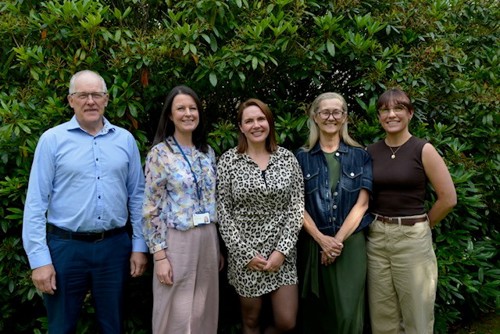
The A2D project team recognised that this was not simply a technical project. For many older tenants, the analogue alarm system represented a trusted and familiar source of reassurance. The transition therefore required a sensitive, customer-focused approach that balanced operational delivery with personalised support.
The team brought together colleagues from housing management, independent living and partner organisations, creating a coordinated and collaborative approach to project delivery. Working across three local authority areas, the team developed a comprehensive programme of engagement designed to ensure tenants understood the changes, felt supported throughout the process and were empowered to make informed decisions about their future alarm arrangements.
Rather than adopting a one-size-fits-all solution, the team placed choice at the centre of the project. Through extensive consultation and engagement, staff identified tenants' concerns around safety, technology and future support arrangements and adapted their approach accordingly. A customer journey was developed which combined structured project management with personalised assistance for residents requiring additional support.
Over a 12-month period, the team delivered scheme roadshows, face-to-face engagement events, individual support meetings, written communications, frequently asked questions and ongoing assistance from trusted independent living scheme co-ordinators. Regular project meetings ensured consistent messaging, effective planning and shared ownership of outcomes across all services involved.
The team's commitment to continuous improvement was evident throughout the project. Feedback gathered during early engagement activities informed future communications and enabled staff to refine their approach as the project progressed. This ensured that tenant concerns were addressed quickly and that communication remained clear, accessible and relevant.
The project demonstrated exceptional teamwork, innovation and partnership working. By combining technical delivery with meaningful tenant engagement, the A2D project team transformed what could have been a disruptive and unsettling change into a positive experience built on trust, choice and support.
As Jennifer Swinswood, Housing Services Manager and member of the A2D project team, stated: "This project showcased the strength of teamwork across Castlehill. Colleagues from housing, independent living and partner organisations came together with a shared purpose and a determination to achieve the best possible outcomes for our tenants. Their ability to combine effective project delivery with exceptional customer care has left a lasting legacy for both our residents and the organisation."
The project reflects the very best of housing practice: collaboration, innovation, customer focus and a commitment to supporting tenants through change while protecting their independence, dignity and wellbeing.
Mhorag Ewen, Director of Housing Services, Castlehill Housing Association said, “The success of the 'Your Home, Your Choice' project is a testament to the dedication, professionalism and collaborative spirit of the A2D project team. They took what could have been a highly complex and unsettling change for our tenants and transformed it into a positive experience built on trust, choice and support. Their commitment to putting residents at the centre of every decision exemplifies the very best of housing practice”.
Outcomes and achievements
The "Your Home, Your Choice" project successfully supported 356 tenants across 21 independent living schemes through the transition from analogue to digital telecommunications.
Key achievements included the full decommissioning of analogue alarm systems across all schemes within national timescales, while ensuring tenants remained informed, supported and actively involved in decisions about their future alarm arrangements. Residents were able to choose solutions that best met their individual circumstances, promoting independence, choice and dignity.
The project delivered strong customer outcomes, including increased awareness of the digital switchover, improved confidence in making decisions about future support arrangements and access to tailored assistance where required. Tenant feedback demonstrated high levels of satisfaction with the communication and engagement approach, with residents commenting that Castlehill provided clear information, opportunities to ask questions and reassurance throughout the process.
The project also strengthened organisational performance by improving cross-team collaboration, enhancing staff knowledge of digital inclusion, embedding customer journey mapping into service change projects and strengthening partnerships with local authorities and service providers.
Most importantly, the team transformed a potentially complex and unsettling change into a positive experience for residents, ensuring no tenant was left behind during the transition to digital services.
Neighbourhood Support Services, Kingdom Housing Association
Application entry
- Team nominated: Neighbourhood Support Services
- Organisation: Kingdom Housing Association
Statement of support
Introduction
Providing ‘more than a home’, Kingdom Housing Association’s neighbourhood support services brings together three complementary strands: tenancy support services, Kingdom Works, and a partnership with Change Mental Health.
These provide a person-centred approach to the interconnected challenges facing tenants and communities. Rather than treating housing, employability, financial wellbeing and mental health as separate issues, the service works collectively and holistically to help people sustain their homes and achieve long-term independence.
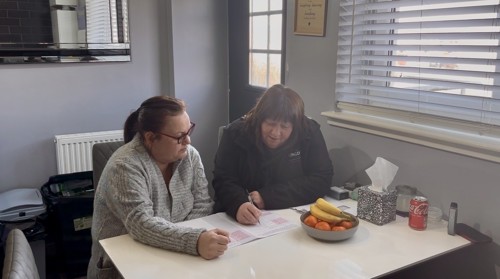
Over the last 12 months, neighbourhood support services has supported more than 1,700 individuals across Fife, Clackmannanshire, Falkirk and Perth and Kinross. At a time of rising living costs, increasing child poverty and growing mental health pressures, they have demonstrated the value of integrated support. This impact extends beyond individual outcomes, with the service delivering a HACT Social Value of £8.88 million.
Delivering outstanding housing services
Housing is about far more than providing a home. Every day, neighbourhood support services works alongside people facing challenges that place their tenancy and wellbeing at risk.
In comparison to the year before, tenancy support officers worked on 230% more cases (3,268), and secured an estimated £1.377 million in financial gains for tenants (a 45% increase) through income maximisation, advocacy, welfare support and energy advice.
Kingdom Works’ employability officers supported 533 individuals, helping 221 people move into employment through training, wellbeing support, employability programmes, self-employment support and vocational academies.
The Change Mental Health Resilience Project supported 57 tenants experiencing poor mental health, trauma, social isolation and substance use. More than 436 hours of one-to-one support helped tenants build resilience, improve wellbeing and sustain their tenancies.
Together, these services address the root causes of tenancy instability. Through early intervention, neighbourhood support services contributed to 96% of new tenancies being sustained beyond one year. The team's work, alongside colleagues across Kingdom Housing Association, also helped reduce current rent arrears from 4.57% to 3.49% over the last 12 months.
The wider impact is reflected in the service's HACT Social Value assessment of £8.88 million, demonstrating the value generated through tenancy sustainment, financial inclusion, employability outcomes and improved wellbeing.
Innovation and service transformation
Over the past year, neighbourhood support services has strengthened its integrated delivery model through:
- Area-based officer responsibilities
- Holistic and transparent case management across the organisation
- Early intervention and triage processes
- Strong referral pathways between wider organisational teams
- Automatic referrals for vulnerable new allocations.
This approach ensures support is coordinated around the individual, enabling tenants to access financial, employability and wellbeing support through one connected pathway.
Demonstrating real impact
Behind every statistic is a person whose life has changed because of the team’s intervention.
One tenant in Dunfermline was at serious risk of eviction after redundancy and the death of his mother. Overwhelmed by debt and grief, he admitted he had “buried his head in the sand”. Tenancy support officers provided emergency food and fuel support while helping him address debt and maximise his income. Eviction proceedings were suspended.
Once the immediate crisis had passed, Kingdom Works provided plant machinery training, travel expenses, food vouchers, driving lessons and potential SVQ totalling £3,500-4,000 in funding.
Recognising that long-term success required more than financial security, he was referred to the Change Mental Health Resilience Project to develop coping strategies and manage his grief.
This case demonstrates the strength of neighbourhood support services. By combining housing support, employability services and mental health intervention, the team prevented homelessness, improved wellbeing and helped one individual move from crisis to stability.
Every day, neighbourhood support services delivers outcomes like this across the communities it serves, transforming lives and creating stronger, more resilient communities.
Outcomes and achievements
- Introduced a new holistic, locality-based operating model, improving joint working, referral pathways and customer outcomes.
- Supported more than 1,700 people across neighbourhood support services during the last 12 months.
- Delivered a HACT Social Value of £8.88 million.
- Resolved 3,268 tenancy support cases, helping people sustain their homes (230% increase on the previous year).
- Secured £1.377 million in estimated financial gains for tenants (45% increase on the previous year).
- Supported 533 people through Kingdom Works.
- Helped 221 people move into employment through Kingdom Works.
- 511 accredited training courses completed.
- Provided specialist support to 57 tenants through the Change Mental Health Resilience Project.
- Delivered 436 hours of one-to-one mental health and resilience support.
- Achieved 96% sustainment of new tenancies beyond one year, supporting long-term housing stability.
- Contributed to reducing current rent arrears from 4.57% to 3.49% through proactive intervention, income maximisation and collaborative tenancy sustainment work.
These outcomes demonstrate the team's ability to deliver measurable benefits for tenants while improving organisational performance and strengthening communities. Through a single, coordinated service, tenants can access housing, financial, employability and mental health support at the right time, reducing barriers and helping them achieve lasting positive outcomes.
Levenmouth Prevention Project, Fife Council
Application entry
- Team nominated: Levenmouth Prevention Project
- Organisation: Fife Council
Statement of support
Fife Council’s homeless prevention by acquisition
On 15 January 2026, Fife Council was notified that 29 households living in properties recently purchased by Torah Capital were at risk of losing their homes following a controversial mass eviction action by the London-based venture capital company. Many of the households were vulnerable, included children, older people and residents with complex support needs. The properties were located within established rural communities where residents had strong local connections, support networks and access to essential services which would have been impossible to re-create.

This threat emerged during a formal housing emergency, with Fife Council already facing unprecedented homelessness pressures and unprecedented demands for temporary and permanent accommodation. If the evictions proceeded, there was a significant risk of homelessness, community disruption and further pressure on already stretched housing, health, social care and other services.
The council's objective was to prevent homelessness for all households, protect vulnerable residents and sustain the existing community. Traditional homelessness responses would have resulted in displacement, significant costs and negative impacts on residents. The head of housing established and led a multi-disciplinary, cross-service team to implement a prevention-focused action plan. Working alongside the Scottish government and engaging with the Scottish Housing Regulator, the team was tasked with identifying a sustainable solution that would allow residents to remain in their homes and had contingency actions through the purchase of additional new build homes.
The team developed an ambitious and innovative acquisition strategy aimed at preventing homelessness and securing long-term affordable housing within the communities.
Colleagues from housing services, legal services, finance, procurement and senior leadership worked together at pace to:
- Develop a homelessness prevention action plan
- Engage directly with Scottish government ministers and senior officials to secure support
- Undertake complex property valuations, due diligence and legal conveyancing processes
- Secure financial approvals with effective governance
- Establish a residents' group to ensure tenants remained central to decision-making
- Create contingency plans, including the acquisition of 14 nearby new-build homes as alternative housing options
- Work collaboratively across services to remove barriers, manage risks and maintain momentum throughout a highly complex project.
Despite challenging timescales and significant legal, financial and operational complexities, the team focused on achieving the best outcome for residents and wider community. By 20 June 2026, the team successfully completed a £5.5 million acquisition project funded jointly by Fife Council and the Scottish government.
Key outcomes included:
- Prevented homelessness for 29 households, avoiding the need for homelessness applications and temporary accommodation.
- Enabled residents to remain in their homes and communities, protecting support networks, family stability and community cohesion.
- Protected vulnerable households from the trauma and uncertainty associated with displacement and homelessness.
- Increased Fife Council's housing stock by 29 homes, securing long-term affordable housing provision within vulnerable communities.
- Reduced future pressure on homelessness services and temporary accommodation.
- Demonstrated the effectiveness of early intervention and prevention, delivering better outcomes than traditional crisis responses.
- Secured significant Scottish government investment and support, showcasing successful partnership working between local and national government.
- Created a long-term public asset, with investment plans now being developed to improve housing conditions and standards.
- Provided a nationally significant example of innovative homelessness prevention during a housing emergency.
The Torah Capital acquisition project transformed a potential mass homelessness situation into one of Scotland's most significant homelessness prevention successes of 2026. Through outstanding teamwork, strong leadership, partnership with the Scottish government, and an unwavering focus on residents, the team protected 29 families, preserved a community, increased affordable housing supply and created a model of good practice for the wider housing sector. The project demonstrates how innovation, collaboration and determination can achieve exceptional outcomes in the most challenging circumstances.
Outcomes and achievements
Through partnership working, innovation and strategic investment, Fife Council and Scottish government prevented homelessness for 29 households and avoided a devastating community crisis within five months. The acquisition of 29 former Torah Capital properties, alongside 14 new-build acquisitions, protected vulnerable residents, sustained an established community and delivered one of Scotland's most significant homelessness prevention interventions during the housing emergency; The collective functional team:
- Prevented homelessness for all of the households at risk of losing their homes, many of whom had complex housing, health and support needs
- Avoided temporary accommodation demand at a time of unprecedented pressure on local services
- Protected vulnerable households and maintained community stability by enabling residents to remain within their homes, schools, GP practices, support services and neighbourhood networks
- The project acted as a catalyst for the creation of a new tenants and residents group, helping strengthen community engagement
- Avoided negative impact in a sensitive rural area
- Tenants gained long-term security through council ownership and management of the homes with a five year capital improvement approach established to improve the neglected homes
- Demonstrated exceptional cross-service collaboration involving housing, legal services, finance, procurement and Scottish government
- Generated Scottish government support and investment enabling the acquisition to proceed at pace
The reaction to a very adverse situation provides a strong national example of how strategic intervention in the housing market can protect vulnerable households and preserve communities during a housing emergency.
Financial Wellbeing Team, River Clyde Homes
Application entry
- Team nominated: Financial Wellbeing Team
- Organisation: River Clyde Homes
Statement of support
River Clyde Homes' financial wellbeing team is an example of excellence within the housing sector and a highly deserving candidate for Housing Team of the Year. Their work embodies our organisational purpose of "Improving Lives and Places", delivering meaningful, life-changing support to some of the most vulnerable people in our communities.
Operating within Inverclyde, an area that includes some of Scotland's most deprived neighbourhoods, the financial wellbeing team provides a vital service to customers experiencing financial hardship and uncertainty. Every day, the team supports individuals and families facing complex challenges, including unemployment, loss of income, changes to benefit entitlement, debt, and the ongoing pressures created by the cost-of-living crisis.
Despite being a small team of three dedicated and highly skilled financial wellbeing officers, their impact is significant. Working on a referral basis, they provide tailored, person-centred support, taking the time to understand each customer's circumstances and identify practical solutions that can improve their financial position and overall wellbeing. Their expertise, compassion, and commitment ensure that customers receive the right support at the right time, often preventing situations from escalating into crisis.
The team's role has never been more important. Rapid and ongoing changes across the social security system require a high level of specialist knowledge and an ability to navigate increasingly complex regulations. The financial wellbeing team continually develops and maintains this expertise, ensuring customers receive accurate advice and access to the full range of financial support available to them. Their guidance provides reassurance at some of the most difficult and stressful times in customers' lives.
In addition to providing one-to-one support, the team has demonstrated exceptional leadership in helping customers prepare for and adapt to welfare reform. As the transition from legacy benefits to Universal Credit has progressed, the team has played a crucial role in ensuring customers are informed, supported, and financially protected throughout the process. Through targeted communication campaigns, advice leaflets and magazines, social media engagement, and community outreach surgeries, they have proactively reached customers who may otherwise have struggled to access the support they needed.
The financial wellbeing team recognises that financial hardship rarely exists in isolation and that wider issues often affect a customer's ability to sustain their tenancy and maintain their wellbeing. As a result, the team regularly works alongside partner organisations and internal services to provide comprehensive support, whether through debt advice, energy assistance, employability support, mental health services, or practical interventions designed to address immediate needs. This collaborative approach ensures customers receive support that extends far beyond financial advice alone.
The team have delivered benefits not only for individual customers but for families and communities across Inverclyde. They have helped residents maximise household income, access vital benefits, sustain tenancies, reduce financial hardship, and improve their overall quality of life. At a time when demand for support continues to grow, they continue to provide an accessible, compassionate, and highly effective service.
The financial wellbeing team consistently demonstrates the values, professionalism, and innovation that define outstanding housing services. Their ability to combine specialist expertise with genuine care for customers has transformed lives, strengthened communities, and helped ensure that no customer is left behind during periods of financial uncertainty and change.
For these reasons, River Clyde Homes' financial wellbeing team is an exceptional example of Housing Team of the Year and a truly deserving recipient of this award.
Outcomes and achievements
- £3.9 million in financial gains generated for customers in 2025/26
- 798 customers supported with over 1,200 welfare benefit related matters
- Average of £4,900 gain per client
- Almost 500 successful claims for welfare benefits made.