


Scotland Housing Awards 2026
Read all the shortlisted entries into this award category, Excellence in Tenant Scrutiny, at the Scotland Housing Awards (SHA) 2026 and find out who won the award on the night.
This award is aimed at landlords and their tenants who can show excellence in working collaboratively to scrutinise work, or to embed scrutiny within the culture of the organisation.
Winning project name
Many Voices, One Purpose: How Diverse Tenants Are Shaping Service Delivery at Paragon
Winning organisation
Paragon Housing Association
Statement of support
Paragon Housing Association believes tenant scrutiny is strongest when it reflects the communities it serves. Our Tenant Scrutiny Panel (TSP) brings together tenants with different lived experiences, communication preferences and levels of confidence. That diversity is not incidental to our approach. It makes scrutiny more relevant, practical and effective.
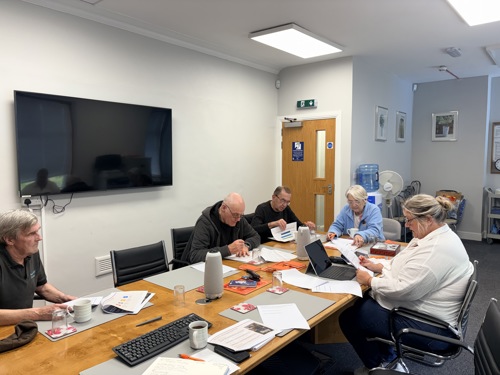
Over the last 12 months, the TSP has supported co-production of the Anti-Social Behaviour Policy, development of the Tenant Communication Profile, improved complaints and repairs scrutiny, stronger challenge of Scottish Social Housing Charter performance, and wider tenant involvement in policy development.
Tenants have also shaped how scrutiny happens. Through feedback, TSP members have influenced meeting arrangements, how information is presented and how people can contribute, including discussion, written feedback, surveys, working groups and remote participation. In simple terms, we let the tenants do the talking. One tenant said: "I’ve been ill and thought I’d have to stop attending meetings, but Paragon simply arranged for me to join online." Another explained: "Having an interpreter sit alongside me for a couple of meetings really helped my confidence and I was able to have a real input." Rather than asking tenants to fit a traditional governance model, Paragon has adapted scrutiny so participation is accessible, flexible and meaningful.
This partnership approach is now embedded in service improvement. TSP members identify areas for review, challenge performance information and test whether services reflect tenants’ real experiences. They receive information on complaints, repairs, anti-social behaviour, tenant satisfaction, rent arrears and other key indicators. Members question trends, ask for evidence and highlight where performance data does not match lived experience. For example, the group asked to examine repairs cases where tenants had expressed dissatisfaction to identify themes. Their influence is reflected in repairs satisfaction rising from 77.3% to 86.1% over the three years the TSP has been involved in this area.
A clear example is the co-production of Paragon’s new Anti-Social Behaviour Policy. The review began after TSP members identified communication and service issues through complaints information and wider performance reporting. Tenants joined a working group with staff, management committee members and other tenants, reviewing the policy, challenging assumptions and helping shape new classifications and response standards. The wider consultation achieved a response rate of just over 11%, showing strong tenant interest in how anti-social behaviour is managed.
Tenant involvement changed the outcome. The revised approach is clearer about how anti-social behaviour is categorised, how tenants are communicated with and how expectations are managed. For example, garden condition might not traditionally have been seen as part of an anti-social behaviour policy, but the TSP said it mattered and the wider consultation supported that view. The process showed that scrutiny is not simply about reviewing decisions after they are made. At Paragon, tenants help define the problem, develop the solution and assess whether the outcome improves services.
Diversity has strengthened this work. Different experiences have helped the TSP identify barriers that may otherwise have been missed, including communication needs, digital confidence, vulnerability and service failure. This has supported the Tenant Communication Profile, helping Paragon understand how tenants prefer to receive information and how engagement can be made more accessible.
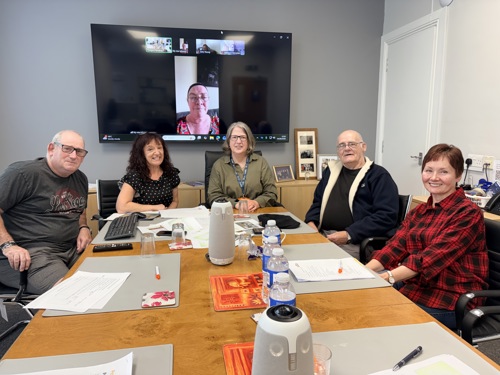
Scrutiny is embedded within Paragon’s governance and performance culture. Findings are reported to management committee, recommendations are tracked and progress is monitored. TSP members also contribute beyond Paragon, including involvement in the annual SHN benchmarking visit and presenting or attending workshops at national events such as the SHN Annual Conference and Tenants Information Service events.
Many voices now influence one shared purpose: better services, stronger accountability and improved outcomes for Paragon tenants and communities.
Outcomes and achievements
Over the past year, Paragon’s Tenant Scrutiny Panel (TSP) has had a direct and measurable impact on service improvement and organisational decision-making. The group has co-produced the new Anti-Social Behaviour Policy, helped develop the Tenant Communication Profile, strengthened scrutiny of complaints, repairs and Charter performance, and increased tenant involvement in policy development.
The TSP has also influenced how engagement is delivered, leading to more accessible and inclusive participation through flexible meeting arrangements, remote access, interpretation support and a variety of ways for tenants to contribute.
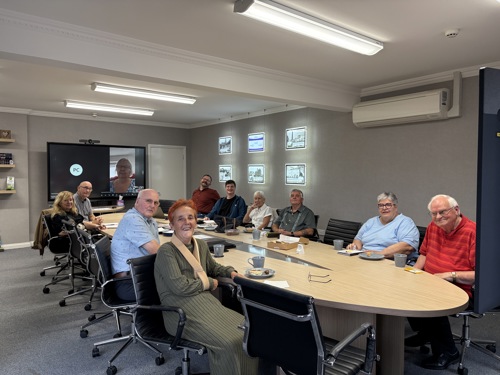
Tenant scrutiny is now embedded within service improvement processes. TSP members actively challenge performance information and use lived experience to identify issues and drive change. Their influence has contributed to repairs satisfaction increasing from 77.3% to 86.1% over a three-year period.
A significant achievement was the co-production of the revised Anti-Social Behaviour Policy, where tenant feedback shaped policy content, communication standards and service expectations. The consultation achieved an 11% response rate, demonstrating strong tenant engagement.
On an individual level we have one tenant who has gone on to join the Tenants Information Service Board. Members of the TSP have also represented Paragon on the national stage, attending events and leading workshops.
Shortlisted entries
Kingdom Housing Association - Kingdom Housing’s Scrutiny Project
Application entry
- Project name: Kingdom Housing’s Scrutiny Project
- Lead organisation: Kingdom Housing Association
- Partner organisations: Tenants Information Service (TIS)
Statement of support
At Kingdom, we recognised that our Scrutiny Panel needed more independence and support to effectively challenge services. Following an organisational restructure, panel members told us that scrutiny no longer felt sufficiently customer-led and that they wanted greater ownership of the process. We listened to this feedback and invested in independent support from the Tenants Information Service (TIS), an organisation specialising in tenant participation and engagement.

From the outset, TIS worked directly with the panel to build their confidence, knowledge and scrutiny skills. To reinforce the panel's independence, Kingdom stepped back from the early stages of the process, allowing members to discuss their priorities openly, shape how they wanted scrutiny to work and build confidence in leading reviews themselves. This created a renewed sense of ownership and established a genuinely customer-led approach.
The panel selected New Build Management: Quality Assurance and Handover of New Build Properties as their first review. This is an unusual and ambitious area for tenant scrutiny, bringing together technical construction processes, quality assurance and customer experience. It demonstrated that customer scrutiny can add value across the organisation, even in highly technical service areas.
The panel led the review from start to finish. Members designed their own customer survey, carried out interviews with customers living in new-build homes, reviewed the findings independently and met with colleagues from the development team, including the development manager. They examined procedures, questioned how decisions were made in practice and tested customer experiences against organisational processes. This broad evidence base enabled the panel to identify both areas of good practice and opportunities for improvement.
The panel's final report contained 12 recommendations grouped under five key themes:
- Procedures and governance – creating clearer processes, greater accountability and more consistent delivery
- Inspection visibility – giving customers greater confidence in how the quality of their new home is checked and assured
- Customer handovers – introducing a more consistent handover experience, supported by improved demonstrations and redesigned home information packs
- Staff knowledge and follow-up – strengthening staff training and introducing more proactive support during the early weeks of a tenancy
- Continuous improvement – ensuring customer feedback, defects information and organisational learning are routinely used to improve future developments.
Importantly, the report recognised several strengths in Kingdom's existing approach alongside opportunities to improve. This demonstrated that the panel had taken a balanced, evidence-based approach, recognising good practice while constructively challenging areas where the customer experience could be strengthened.
Our panel members said: “Having TIS come in to develop our skills has been really valuable and worth our time, we are really happy that we have produced such a meaningful report and that Kingdom are taking our feedback on board!”
Kingdom accepted all 12 recommendations and has embedded them within service improvement plans across the organisation. The project has not only improved services but has also established a stronger model of independent, customer-led scrutiny, giving panel members the confidence and skills to continue influencing how Kingdom delivers services in the future.
Outcomes and achievements
Kingdom has accepted all 12 recommendations from the Scrutiny Panel, demonstrating a clear commitment to acting on independent customer scrutiny. They have been incorporated into service improvement plans and are being progressed across multiple service areas. Progress is monitored through governance arrangements, with the Scrutiny Panel continuing to receive updates and provide feedback as improvements are implemented. Seven recommendations have already been completed, with the remainder due by March 2027.
The review has already led to significant changes to the way Kingdom delivers new build handovers. A redesigned new build process is being introduced, supported by clearer governance arrangements and a more consistent customer handover framework. Home information packs are being redesigned using customer feedback, staff training is being enhanced, and new follow-up arrangements will provide customers with greater support during the early stages of their tenancy. Improvements to inspection information, defects reporting and road adoption communications will also give customers greater clarity about what to expect.
The project has strengthened Kingdom's culture of scrutiny, with panel members reporting increased confidence, knowledge and skills. Scrutiny is now more firmly embedded within Kingdom's approach to continuous improvement, ensuring customers continue to play an active role in shaping services.
Craigdale HA - Craigdale Tenants' Table
Application entry
- Project name: Craigdale Tenants' Table
- Lead organisation: Craigdale HA
Statement of support
Craigdale Housing Association's Tenants' Table has transformed tenant scrutiny by placing the customer journey at the heart of service improvement. Rather than reviewing policies and performance reports alone, members examine services through the eyes of tenants, asking one simple question: "What is it really like to be a Craigdale customer?" This approach has moved scrutiny beyond compliance, ensuring services are shaped by lived experience rather than organisational assumptions.
The Tenants' Table was established in July 2025, with members shaping the group from the outset. They chose their own name, designed a distinctive logo and created an identity reflecting their ambition to be genuine partners in improving services. Rather than a management-led consultation group, the Tenants' Table belongs to tenants and has become a recognised and influential voice across the association.
To ensure members could scrutinise services confidently, they completed structured training covering governance, tenant scrutiny, customer experience, performance reporting and effective challenge. This investment developed the skills and confidence needed to analyse evidence, question existing practice and make informed recommendations directly to the board.
During 2025/26, the group undertook its most ambitious scrutiny exercise by reviewing Craigdale's repairs service and Lettable Standard. Recognising that repairs are the service most important to tenants, members examined every stage of the customer journey, from reporting a repair through to completion and follow-up. They reviewed policies, service standards, complaints, tenant and landlord responsibilities, safety programmes and the Right to Repair Scheme before presenting their findings to the board.
The review identified practical opportunities to improve the customer experience. The Tenants' Table recommended introducing an enhanced online repairs portal allowing tenants to report repairs, receive confirmation, track progress and view completion dates, providing greater transparency and reassurance. They also recommended clearer communication throughout the repairs journey, regular customer updates, practical guidance and short instructional videos to help tenants understand repair responsibilities, and clearer information on the Right to Repair Scheme and compensation arrangements.
The review also examined the Lettable Standard. Members recommended simplifying the document using plain language, removing unnecessary repetition and adopting a 'clean blank canvas' standard so every home is clean, safe and ready for occupation while allowing new tenants to make it their own. They also recommended removing references to future planned maintenance programmes where delivery could not be guaranteed, helping manage customer expectations honestly.
The board accepted the recommendations and commissioned a management action plan, embedding improvements within the association's service improvement programme. Progress is reported regularly to both the board and the Tenants' Table, demonstrating that tenant scrutiny directly influences strategic decision-making while ensuring tenants continue to hold the organisation to account.
The impact extends beyond repairs. The customer journey methodology developed by the Tenants' Table is now informing reviews of other services, embedding customer experience within organisational decision-making. It has strengthened governance by providing independent tenant assurance while fostering a culture where challenge is welcomed and lived experience is valued alongside performance data.
During the same period, overall tenant satisfaction increased to 96%, significantly above the current Scottish average of 87%. While many factors contribute to this achievement, the Tenants' Table has ensured improvements are driven by what matters most to customers.
The Tenants' Table demonstrates that when tenants are trusted, trained and empowered, they become genuine partners in shaping services. From creating their own identity to delivering a customer journey review that has transformed the repairs service and strengthened governance, they have established a sustainable model of tenant-led scrutiny that continues to improve outcomes for customers and Craigdale Housing Association.

Outcomes and achievements
The Tenants' Table's review has delivered tangible outcomes by directly influencing the association's service improvement programme. Following presentation of its report, the board accepted all ten recommendations and instructed management to develop a formal action plan, demonstrating the confidence placed in tenant-led scrutiny and its influence on strategic decision-making.
For a small community-based housing association managing just 407 homes, this level of tenant influence is particularly significant. The recommendations are shaping services across the entire organisation, ensuring that the voice of tenants is embedded in every stage of service improvement.
The action plan is delivering improvements across the repairs service, including the development of an enhanced online repairs reporting and tracking facility, improved communication throughout the repairs journey, and clearer information for tenants about repair progress, the Right to Repair Scheme and compensation arrangements. Practical guidance and digital resources are also being developed to help tenants understand their responsibilities and resolve simple issues independently, improving customer confidence and reducing avoidable repairs.
The review also led to improvements to the Lettable Standard, with the document being rewritten in plain language and the Tenants' Table's 'clean blank canvas' standard adopted for all new tenancies. Most importantly, the action plan has embedded customer journey thinking into continuous service improvement, strengthening governance and creating a lasting culture where tenant experience drives decision-making throughout Craigdale Housing Association.
Ochil View housing Association - Ochil Voice Tenant Scrutiny Group
Application entry
- Project name: Ochil Voice Tenant Scrutiny Group
- Lead organisation: Ochil View housing Association
Statement of support
Ochil Voice, our Tenant Scrutiny Group, is nominated in recognition of its outstanding commitment to customer engagement, service improvement, accessibility, and meaningful tenant influence.

During their recent review of the association’s Customer Service Standards Policy, Ochil Voice demonstrated a thorough and customer-focused approach that ensured the voices of tenants and other customers were at the heart of decision making. From the outset, the group developed a clear action plan and took ownership of the review process, ensuring it was evidence-based, inclusive, and reflective of customer needs.
As part of the review, the group invited the director of housing services to attend a meeting to discuss the existing policy. This provided members with a valuable opportunity to ask questions, challenge current practices, and gain a better understanding of the policy and its purpose. The group also benchmarked the association’s approach against seven other housing associations, taking time to review and compare policies to identify examples of good practice and opportunities for improvement.
A key achievement of the review was the design and distribution of a customer consultation survey. Ochil Voice recognised the importance of gathering direct feedback from tenants, owners, and housing applicants, ensuring a wide range of customer experiences and views were captured. Accessibility was a central consideration throughout the review. Members carefully assessed whether the policy was suitable for people with literacy challenges, disabilities, neurodiverse conditions, or language barriers. As a result, specific questions relating to accessibility and communication challenges were included within the customer survey, ensuring all customers had an opportunity to share their experiences.
The group’s findings highlighted that the existing Customer Service Standards Policy was overly lengthy and contained complex language that could create barriers for customers. Ochil Voice recommended the creation of a more user-friendly version written in plain language. They also reviewed service timescales within the policy and suggested using wording such as “we will aim to” to help manage expectations and ensure commitments remained realistic and achievable.
When the consultation results were reviewed, the group was pleased to note a significant level of positive customer feedback, with very few accessibility concerns identified. Nevertheless, Ochil Voice remained committed to continuous improvement and focused on how information could be presented more clearly and accessibly for all customers.
One of the most significant outcomes of the review was the development of a new Customer Charter. Ochil Voice played a leading role in shaping the design and content of the charter, ensuring it used clear, straightforward language and was accessible in different formats. Members recommended removing watermarks to support customers with visual impairments and including easy-to-read tables and graphics to help those with literacy difficulties, visual impairments, and dementia better understand what they could expect when contacting the association. Importantly, the charter also promotes a culture of learning and recognition by explaining how customers can provide positive feedback as well as make complaints.
The group’s review, findings, and recommendations were formally presented to the board. Demonstrating the quality and impact of their work, all five recommendations were accepted and implemented. The new Customer Charter has now been published and is in circulation, providing customers with a clearer, more accessible understanding of service standards and expectations.
Ochil Voice has shown how effective tenant scrutiny can drive meaningful change, improve accessibility, strengthen customer trust, and ensure that services are shaped by those who use them. Their dedication, collaborative approach, and commitment to continuous improvement make them highly deserving of this award.
Outcomes and achievements
Ochil Voice successfully completed a comprehensive review of the association’s Customer Service Standards Policy, placing customer experience and accessibility at the centre of the process. The group engaged directly with senior management, benchmarked against seven other housing associations, and developed a customer survey that gathered feedback from tenants, owners and applicants.
A key achievement was ensuring accessibility was fully considered throughout the review. The group assessed the needs of customers with literacy challenges, disabilities, neurodiverse conditions and language barriers, leading to recommendations for clearer and more inclusive communication.
The review identified opportunities to simplify policy language, improve customer understanding and manage expectations around service timescales. Consultation results showed high levels of customer satisfaction, with very few accessibility concerns raised, providing valuable assurance while highlighting areas for continuous improvement.
The most significant outcome was the development of a new Customer Charter, designed by incorporating tenant feedback and best practice. The charter uses plain language, clear graphics and accessible formatting, making it easier for customers to understand what standards of service they can expect and how to provide both compliments and complaints.
All five recommendations made by Ochil Voice were accepted by the board and implemented, demonstrating the group's tangible influence on organisational policy and service delivery.
Riverside Scotland - Riverside Scotland Service Improvement Group
Application entry
- Project name: Riverside Scotland Service Improvement Group
- Lead organisation: Riverside Scotland
Statement of support
We are delighted to nominate the Service Improvement Group (SIG) for recognition, celebrating their outstanding contribution to enhancing housing services through meaningful customer involvement and partnership working.

The SIG represents a powerful example of how customer voice can shape and improve service delivery. Comprised of tenants who bring valuable lived experience, the group has worked constructively and collaboratively with housing teams to ensure that services are not only effective, but also accessible, compassionate, and responsive to real customer needs.
Over the past year, the SIG has played a particularly significant role in reviewing and strengthening our approach to complaints handling. Through detailed scrutiny and open dialogue, members provided clear and practical recommendations on how processes and communications could be improved. A key focus of this work was ensuring that all communications are clear, easy to understand, and accessible, removing unnecessary complexity and making it easier for customers to engage with the process.
Crucially, the SIG emphasised the importance of adopting a trauma-informed approach. Drawing on their own experiences, members highlighted how customers in vulnerable or stressful situations may perceive and respond to communication differently. Their insights led to meaningful changes in tone, language, and service delivery, ensuring interactions are more empathetic, supportive, and respectful. As a result, customer feedback and performance data show increased satisfaction with complaints handling, demonstrating the direct and measurable impact of their work.
Building on this success, the SIG also carried out a comprehensive review of our approach to anti-social behaviour (ASB). Once again, their lived experience proved invaluable. Members identified key opportunities to improve how cases are communicated and managed, with a strong emphasis on clarity, transparency, and timeliness. Their recommendations helped shape a more balanced and customer-focused approach, ensuring that those affected feel informed, supported, and treated fairly throughout the process.
This work has contributed to tangible outcomes, including an increase in the number of ASB cases successfully closed over the past 12 months, alongside improved customer understanding and confidence in how cases are handled. The SIG’s influence has been instrumental in ensuring that services are both effective and sensitive to the experiences of those involved.
Importantly, the impact of the SIG goes beyond insight alone. The majority of the recommendations put forward by the group have been implemented, demonstrating a clear commitment from the organisation to listen, act, and deliver change based on customer feedback. This has strengthened trust and reinforced the value of genuine co-production.
The SIG has also demonstrated strong leadership and accountability. Members have attended Board meetings to present updates on their work, ensuring strategic oversight and reinforcing the importance of customer voice at the highest level of governance. Their ability to confidently communicate findings, challenge constructively, and highlight areas for improvement has been both impactful and inspiring.
What sets the Service Improvement Group apart is not only the quality of their insights but also the way in which they engage. Members consistently demonstrate a constructive, solution-focused approach, working in true partnership with staff to co-design improvements. Their willingness to share personal perspectives, challenge respectfully, and collaborate openly has created a culture of mutual respect and continuous learning.
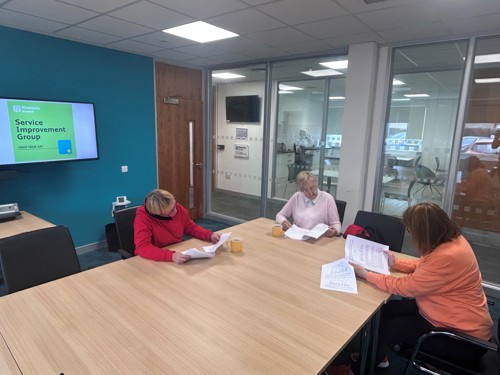
In summary, the Service Improvement Group has made an exceptional contribution to improving services, particularly in complaints handling and anti-social behaviour. Their work has led to measurable improvements in satisfaction and outcomes, while embedding a more inclusive, empathetic, and customer-focused approach.
We are proud to nominate the SIG for this award. They are a powerful example of how empowering customers to have a voice leads to better, more responsive services for all tenants.
Outcomes and achievements
The SIG’s scrutiny of complaints handling and anti-social behaviour has delivered a comprehensive, customer-led programme of improvements, resulting in stronger performance and increased customer confidence. Through clear, actionable recommendations, Riverside Scotland has enhanced communication, consistency, and early intervention across both service areas.
Key achievements include redesigned, more empathetic customer correspondence and improved processes that ensure more timely updates and clearer outcomes. Early engagement approaches have been strengthened, supporting quicker resolutions and reducing escalation. In anti-social behaviour, clearer definitions, improved case categorisation, and a focus on preventative action have enhanced service consistency and effectiveness.
These improvements are reflected in performance. Customer satisfaction with complaints handling has shown improvement, supported by better quality responses and a stronger focus on resolution, alongside reduced repeat contact. At the same time, anti-social behaviour performance has benefited from improved case management, partnership working, and a more proactive approach, contributing to more consistent outcomes and increased customer reassurance.
Importantly, enhanced use of customer insight and satisfaction data is now driving continuous improvement, ensuring feedback directly shapes services. Overall, the scrutiny exercise has delivered a clear step-change in performance, embedding a culture of accountability, learning, and customer-led service improvement across Riverside Scotland.
Link Tenant Scrutiny Panel, Tenant Voice in Action: Driving Change Through Independent Scrutiny
Application entry
- Project name: Tenant Voice in Action: Driving Change Through Independent Scrutiny
- Lead organisation: Link Tenant Scrutiny Panel
- Partner organisations: Link Group
Statement of support
Link Group is proud to submit its Tenant Scrutiny Panel for the Excellence in Tenant Scrutiny category. The panel provides an outstanding example of independent, tenant-led scrutiny that strengthens services, improves accountability and ensures decisions are grounded in lived experience.
Active since 2013, the panel is made up of tenants who voluntarily give their time, skills and insight to scrutinise housing performance and service delivery on behalf of all Link tenants. Members bring a strong mix of personal experience, independence and constructive challenge, supported by a culture that values fairness, inclusion and evidence-based decision-making.
The panel’s recent scrutiny of Link’s aids and adaptations service demonstrates tenant scrutiny at its best. The review was initiated by tenants in response to uncertainty around national adaptations funding and a clear understanding that adaptations are not an optional extra, but essential to dignity, independence, safety and tenancy sustainment, particularly for older and disabled tenants.
Over eight months, from January to August 2025, panel members led a comprehensive review of the service delivered by Link’s in-house inclusive design team. They shaped the scope and aims of the scrutiny, aligning the work with key Scottish Social Housing Charter outcomes including equalities, repairs and maintenance, communication, tenancy sustainment and value for money.
The evidence-gathering process was broad and rigorous. Panel members interviewed staff, managers, operatives, housing colleagues and tenants; reviewed satisfaction surveys, performance information, ARC data, benchmarking and financial information; considered value for money; and compared Link’s performance with peer landlords. Around 180 tenants contributed by either completing a survey designed by the Tenant Scrutiny Panel or by direct telephone interviews, ensuring that tenants with lived experience of adaptations were central to the scrutiny.
The panel’s work was both challenging and constructive. Members identified pressures linked to increasing demand, staffing capacity and funding uncertainty, while also recognising the strength and value of the service. Their recommendations focused on practical improvements to the tenant journey, including clearer information, better communication and improved preparation before works begin.
What makes this scrutiny especially powerful is the way it combines robust evidence with human impact. Tenants described adaptations as life-changing, improving safety, confidence, independence and quality of life. One tenant said their new wet room had “changed my life”, while another said they felt safer and had gained independence.
The panel’s impact also extends beyond a single service review. Members have championed tenant scrutiny through Link’s AGM, TPAS and CIH conferences, the TPAS Scrutiny Summit, presentations to other tenants, scrutiny of Charter performance, and co-production of Link’s Charter Report Card to Tenants and Annual Valuing Complaints Report.
The panel is also outward-looking and ambitious. Members contributed to the University of Stirling’s research on intersectional stigma of place based aging, using that learning to strengthen their understanding of ageing and adaptations in housing. They have also begun a new scrutiny inspection of tenancy sustainment, using digital and traditional engagement methods to gather tenant insight.
This nomination recognises a group that goes beyond traditional scrutiny activities. Link’s Tenant Scrutiny Panel helps shape services, influences decision-making, promotes accountability and champions tenant voice locally and nationally. Their work shows the lasting value of independent scrutiny in creating better, more responsive and more inclusive housing services.
In August 2026, Lesley Baird, TPAS Scotland said: "Link's Tenant Scrutiny Panel is an outstanding example of tenants driving meaningful change. Through rigorous scrutiny, constructive challenge and a willingness to share learning with others, the Panel has demonstrated how tenant-led scrutiny can improve services, influence decision-making and strengthen tenant voice both within an organisation and across the wider housing sector."
Outcomes and achievements
The panel’s scrutiny activities delivered clear outcomes for tenants, services and Link’s governance. Its aids and adaptations review provided independent assurance that the service is highly valued, with 96.67% of tenants satisfied or very satisfied. All tenants who received major adaptations reported that their independence, safety and quality of life had been improved or maintained.
The panel produced practical, tenant-focused recommendations to improve communication, preparation and the overall tenant journey before works begin. These recommendations will help reduce anxiety, manage expectations and improve experiences for tenants, including those who may be vulnerable.
Beyond this review, the panel has strengthened tenant influence across Link by scrutinising Charter performance, co-producing key tenant reports, contributing to investment planning consultation, sharing learning externally and promoting tenant scrutiny at sector events.
The panel has also influenced wider learning through participation in University of Stirling research and has already moved on to a new scrutiny inspection focused on tenancy sustainment.
Wheatley Group - Supporting tenancy sustainment - Wheatley’s Scrutiny Panel thematic review
Application entry
- Project name: Supporting tenancy sustainment - Wheatley’s Scrutiny Panel thematic review
- Lead organisation: Wheatley Group
Statement of support
Over the last 12 months, our Group Scrutiny Panel has continued to show how meaningful tenant involvement can improve services, influence strategic priorities and deliver better outcomes for customers and communities.
The panel brings together tenants from across Wheatley’s communities to scrutinise performance, decision-making and identify opportunities for improvement. Members are supported to analyse performance information, interpret Scottish Social Housing Charter data and undertake evidence-based scrutiny. Crucially, tenants help decide what is scrutinised, ensuring the focus reflects issues that matter most to customers.
Our approach goes beyond reviewing reports. Scrutiny members consider performance trends alongside complaints, customer feedback, lived experience and benchmarking information. This helps them understand not only what performance shows, but what customers are experiencing. By combining data with lived experience, tenants challenge the organisation from a customer perspective and keep the focus on outcomes.
A key area of scrutiny this year focused on tenancy sustainment. Panel members chose to examine not just tenancy sustainment performance, but the support available to help customers establish and maintain successful tenancies. Customers reviewed performance data, tenancy termination analysis, Annual Tenant Visit information, customer feedback and evidence about Wheatley Foundation services. They also carried out site visits to Home Comforts services in Glasgow and Dumfries, spoke directly with staff and helped design customer and staff surveys to gather wider feedback.
Through the review, customers identified the important role played by Annual Tenant Visits, Home Comforts and other foundation services in supporting tenancy sustainment. They also highlighted opportunities to improve awareness of available support, strengthen customer insight and make better use of data. Their recommendations are helping shape service improvements and have informed the development of Wheatley's 2026-31 strategy, including a stronger focus on personalised services and helping customers sustain successful tenancies.
What makes Wheatley's approach distinctive is that scrutiny goes beyond customers reviewing services. It is led by customers and embedded across the organisation. This then influences strategic planning, policy development, service reviews, performance management and governance discussions.
We are strengthening this in our refreshed engagement framework, ensuring the panel’s recommendations are formally tracked and monitored, and that tenant scrutiny leads to action and measurable improvement.
At Wheatley, scrutiny is part of what forms our genuine partnership with our customers. They help set priorities, challenge performance and influence the decisions that shape services. This ensures customer insight is not only heard but used to drive continuous improvement across the organisation.
Outcomes and achievements
Over the last year, scrutiny members have used performance data, customer insight and lived experience to influence strategic priorities, strengthen accountability and improve services.
This included completing a thematic review of tenancy sustainment which you can read about here.
Following the review, an action plan was co-created with staff and the panel to address their recommendations. A six-month review session demonstrated how the panel’s insight had shaped our tenancy sustainment approach.
Thematic highlights include:
- The review reinforced the importance of Annual Tenant Visits, Home Comforts and Wheatley Foundation services in helping customers establish and maintain successful tenancies, with 83% of tenant respondents and 80% of staff respondents agreeing that the foundation support helps sustain tenancies
- Customer feedback identified opportunities to improve awareness of support services, strengthen customer insight and make better use of data to understand customer need and target support effectively. This includes more promotion of Home Comforts, updating websites to make it easier to donate, collecting more feedback about the service and co-ordinated donation drives with customers.
Findings from the review have informed future priorities, including Wheatley's 2026-31 strategy, with a strong focus on personalised services and supporting customers to sustain successful tenancies. Achieving 90%+ tenancy sustainment remains a strategic target.
OTRA - Osprey Tenants & residents Association - Void Lettable standards - handing over great homes
Application entry
- Project name: Void Lettable standards - handing over great homes
- Lead organisation: OTRA - Osprey Tenants & residents Association
Statement of support
Osprey Tenants and Residents Association (OTRA) has demonstrated the power of meaningful tenant scrutiny through a tenant-led review of Osprey’s Lettable Standard. Following the recruitment of new members, OTRA received refresher scrutiny training and established a dedicated scrutiny group, supported with methodology options from TPAS. The group shaped its own approach, analysing policy documents, interviewing staff and visiting void properties to assess whether homes met the standard promised to incoming tenants.

Tenant representatives were given clear performance information, including relevant ARC indicators, peer benchmarking and three internal KPIs linked to the lettable standard. This enabled informed challenge, evidence-based recommendations and direct alignment with the Scottish Social Housing Charter outcomes.
The project resulted in 13 recommendations, all considered through Osprey’s governance arrangements and reflected in updates to the Void Management Policy. Key improvements include a strengthened approach to capturing new tenant satisfaction, a review of the decoration voucher scheme, final void inspections taking place after cleaning, a new cleaning standard appendix, and investment to repair good-quality flooring left in homes for incoming tenants.
Colin Hawkins, Chair of Osprey’s Housing Committee and Board member, captured the significance of the work:
“OTRA’s scrutiny of the Lettable Standard has resulted in the board approving changes which have increased satisfaction levels, secured stronger tenant/landlord relations from the off and ensured lasting value for money. A great result all round.”
Finalised in May 2025, the project’s recommendations were approved by SLT and the board. Customer feedback demonstrates improvement, particularly in the consistency and cleanliness of properties at final inspection.
This project has renewed energy within OTRA and strengthened Osprey’s commitment to tenant-led service improvement. It has embedded scrutiny more deeply into organisational culture, demonstrating that when tenants are empowered with information, support and influence, they can drive practical change that improves services, strengthens relationships and delivers better outcomes for future tenants.
This scrutiny project has supported cross-departmental working and created a shared understanding of how the lettable standard and value for money objectives affect incoming tenants. It also enabled scrutiny group members to meet a wide range of staff involved in the void process, while helping staff better understand tenants’ priorities.
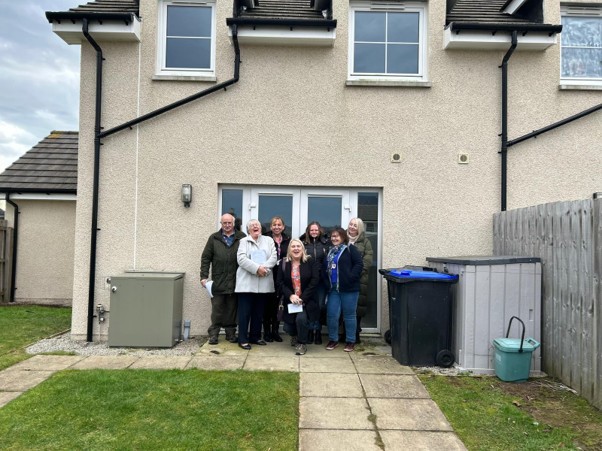
Current OTRA members have said they feel more involved than ever and that the residents’ association has real purpose. Doreen Rippol, Chair of OTRA, shared:
“This process allows for interaction between OTRA members involved in the scrutiny process, management and board members, which in turn means that OTRA always have an open line of communication with Osprey/board members”.
Osprey’s Void Management Policy was updated to reflect the project outcomes and incorporate tenants’ views and recommendations.
Consistency of cleanliness at void was a key issue for OTRA, so a new cleaning standard has been developed to clearly define expectations for contractors.
The additional steps introduced through the scrutiny recommendations have strengthened the void process while maintaining Osprey’s average re-let times. Since the recommendations and new reporting measures were introduced, 55 completed surveys have shown excellent tenant satisfaction:
- 100% satisfaction with the overall condition of the property when signing up
- 96% satisfaction with the cleanliness of the property when signing up
- 91% satisfaction with the decoration of the property when signing up.
Scrutiny is embedded within Osprey’s culture, and OTRA has already begun a new project to review and provide insight into another internal process.
OTRA and Osprey are delighted to demonstrate improved customer satisfaction post void.
Outcomes and achievements
The project resulted in 13 recommendations, all considered through Osprey’s governance arrangements and reflected in updates to the Void Management Policy. Key improvements include a strengthened approach to capturing new tenant satisfaction, a review of the decoration voucher scheme, final void inspections taking place after cleaning, a new cleaning standard appendix, and investment to repair good-quality flooring left in homes for incoming tenants.
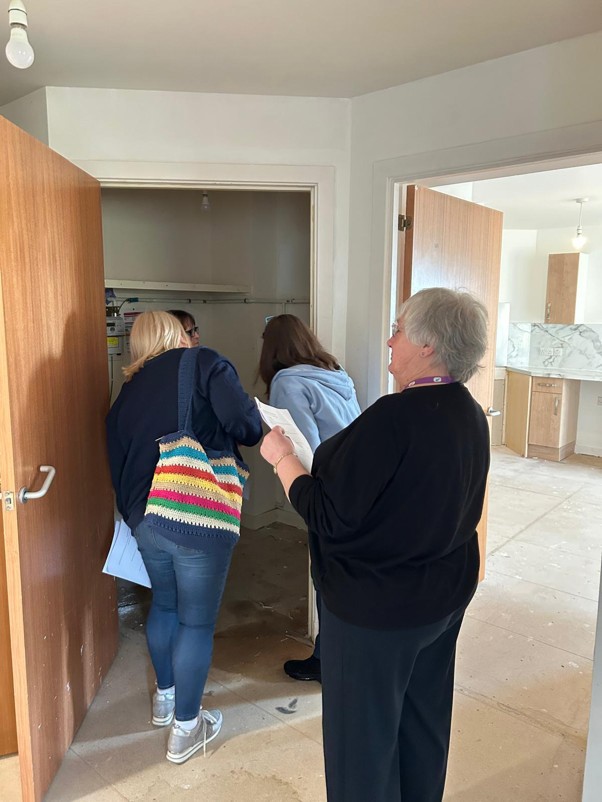
The additional steps introduced through the scrutiny recommendations have strengthened the void process while maintaining Osprey’s average re-let times. Since the recommendations and new reporting measures were introduced, 55 completed surveys have shown excellent tenant satisfaction:
- 100% satisfaction with the overall condition of the property when signing up
- 96% satisfaction with the cleanliness of the property when signing up
- 91% satisfaction with the decoration of the property when signing up.
Govanhill HA - Gillian Scott
Application entry
- Project name: Gillian Scott
- Lead organisation: Govanhill HA
Statement of support
In 2025, Govanhill Housing Association introduced a new Tenants’ Scrutiny Panel to give tenants a stronger and more meaningful voice in how our services are delivered. The panel consists of five tenants who meet monthly to look at our services from a customer’s perspective. We wanted to move beyond simply asking tenants whether they were satisfied. Our aim was to give tenants a genuine opportunity to examine how services are delivered, identify where improvements could be made and influence the changes we make. A key part of our approach is that the tenants panel decide what they want to scrutinise. This means our scrutiny programme is driven by tenants and their experiences, rather than being determined by the organisation. Since its introduction, the panel has identified four areas for scrutiny: customer service, welfare rights and voids repairs.

The panel has almost completed its first scrutiny exercise, focusing on customer service. Members have explored how customers experience our services, considered what works well, identified areas for improvement and challenged staff and managers to think differently about what good customer service should look like. Importantly, the scrutiny is already influencing organisational change. One of the key outcomes from the customer service review is that Govanhill is now looking at introducing a Customer Care Charter. This will set out clearly what tenants can expect from us as their landlord and what good customer care should look like across the organisation. For us, this demonstrates the value of meaningful tenant scrutiny. The panel is not simply a consultation exercise or a group producing recommendations that sit on a shelf. Tenants are actively identifying issues, asking questions, challenging our thinking and influencing discussions with staff and managers.

The approach is also helping to change the relationship between tenants and the organisation. The panel provides a structured space where tenants can challenge us constructively, while staff have the opportunity to listen, explain and learn from the tenant experience. We recognise that effective scrutiny is about more than creating a panel. It is about creating a culture where tenant challenge is welcomed, different views are respected and the organisation is prepared to listen and act on what it hears. Our new approach is already giving tenants a more direct role in shaping our services. Five tenants meet every month, have identified four very important areas for review and are helping us rethink how we deliver customer service.

Outcomes and achievements
The first year of the panel has shown amazing potential. Tenants are no longer simply being asked what they think about our services – they are actively helping to shape what those services should look like in the future. The biggest achievement to date is creating a draft Customer Care Charter that is now out for consultation with staff and residents of Govanhill HA. One of the most important outcomes of the panel to date has also been the change in how both staff and tenants feel about the organisation. The panel has created a stronger sense of trust, openness and partnership, helping tenants feel that their views genuinely matter and giving staff a better understanding of the tenant experience.