


Scotland Housing Awards 2026
Read all the shortlisted entries into this award category, The Marion Gibbs Award for Equality in Housing, at the Scotland Housing Awards (SHA) 2026 and find out who won the award on the night.
This award celebrates projects, initiatives and organisations working to promote equality, diversity and inclusion and address housing disadvantage, including those supporting people with specific protected characteristics or redressing specific inequality.
Winning project name
Double Dykes Gypsy/Traveller Chalet Replacement Project
Winning organisation
Perth and Kinross Council
Statement of support
The Double Dykes Gypsy/Traveller Chalet Replacement Project demonstrates Perth & Kinross Council’s commitment to tackling housing disadvantage, reducing inequality and delivering inclusive, sustainable regeneration for a community that has historically faced barriers to suitable accommodation, participation and trust in public services.
The project was developed in response to ageing chalet accommodation that no longer met modern standards for quality, accessibility, energy efficiency or long-term sustainability. It set out to provide safer, warmer, more accessible and lower-carbon homes while strengthening resident voice, dignity and inclusion throughout the process.
Perth & Kinross Council is replacing 20 outdated chalets with modern accommodation, including 17 open-plan chalets, one chalet with an enclosed kitchen and dining area, and two accessible chalets. The project represents more than £7 million of public investment, supported by £3.532 million of Scottish government grant funding.
The approach was deliberately resident-led. Rather than applying a standard housing solution, the council worked directly with residents to understand their needs, preferences and lived experience. Residents influenced chalet layouts, internal finishes, storage, decant arrangements, site layout, play areas and wider environmental improvements. One-to-one engagement, newsletters, reassurance meetings, factory visits and direct contact with the project team helped make participation accessible and meaningful.
This was particularly important because Gypsy/Traveller communities can be under-represented in traditional consultation. The project prioritised trust-building, face-to-face communication and culturally responsive engagement. The Gypsy/Traveller liaison officer played a key role in ensuring residents’ culture, family circumstances and individual support needs were reflected in decision-making.
Inclusion extended beyond housing design. Children and families contributed to discussions about play facilities and communal spaces, helping shape an environment that supports future generations. Specialist support organisations were involved where required, enabling vulnerable households and residents with differing needs to participate in decisions about their homes and transition arrangements.
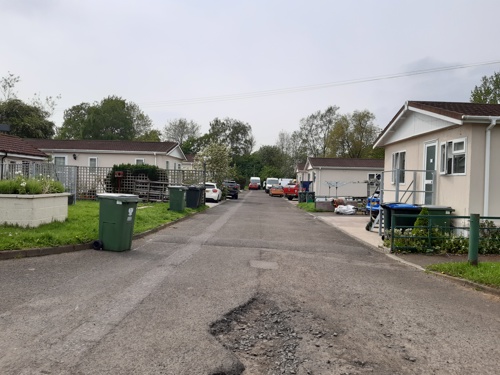
The impact is evidenced through measurable outcomes and resident feedback. The replacement chalets will improve accessibility, thermal comfort, air quality, infrastructure and site sustainability. Monitoring evidence on temperature, ventilation and damp and mould risk supports the improvement in living conditions. Air source heat pumps, solar photovoltaic panels and Mechanical Ventilation with Heat Recovery systems also contribute to lower-carbon, more affordable living.
Resident feedback provides powerful evidence of success. One resident described their new chalet as “ten times better” than their previous home, highlighting improved space, heating and value. Another described it as “the best accommodation I’ve ever had” and “life changing”. These comments show tangible improvements in quality of life, dignity and confidence.
The project has also delivered wider organisational learning. It has shown that inclusive regeneration requires more than technical delivery; it requires listening, flexibility, cultural awareness and visible leadership. Despite contractor administration and programme delay, the council maintained resident trust through transparent communication, rapid procurement action and continued engagement.
Double Dykes provides a practical model for regeneration that addresses housing disadvantage through equality-led design, partnership working and resident empowerment. It demonstrates how public investment can deliver lasting physical and social improvement, reduce inequality, support sustainability and ensure Gypsy/Traveller residents are active partners in shaping better homes, stronger communities and fairer outcomes.
Outcomes and achievements
The Double Dykes Gypsy/Traveller Chalet Replacement Project delivers lasting physical, social and environmental outcomes for residents and the wider community. Through £7.145 million of investment, Perth & Kinross Council replaced 20 ageing chalets with high-quality, warmer, safer and more energy-efficient homes, including two accessible chalets.
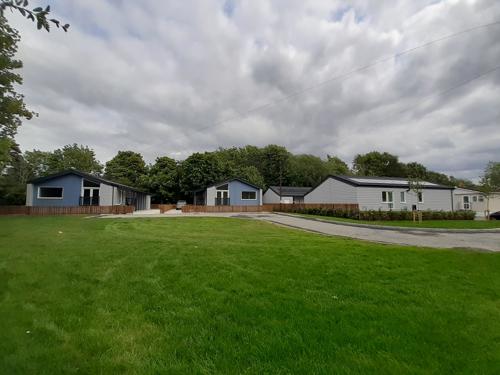
The completed project improves daily living conditions by providing homes that better reflect residents’ social, cultural and family needs. Residents directly shape layouts, finishes, storage, decant arrangements, play provision and wider site improvements, ensuring the final development is designed with the community and not simply for it.
Key achievements include meaningful resident participation, improved accessibility, enhanced safety, upgraded infrastructure, low-carbon technology, better ventilation and environmental monitoring, improved thermal performance and increased flood resilience. These outcomes support reduced energy costs, healthier homes and a safer, more comfortable living environment.
The project also strengthens trust between residents and the council. As an under-represented community, residents have faced barriers to being heard, so building trust was central to the project’s success. Through sustained engagement, transparent communication and respect for residents’ lived experience, the council created the conditions for meaningful participation. Early feedback describes the new homes as “ten times better” and “life changing”, demonstrating clear impact.
Shortlisted entries
North Lanarkshire Council - Connection & Creativity: Breaking Down Barriers and Building Community Inclusion
Application entry
- Project name: Connection & Creativity: Breaking Down Barriers and Building Community Inclusion
- Lead organisation: North Lanarkshire Council
- Partner organisations: Simon Community Scotland
Statement of support
People experiencing homelessness experience some of the greatest inequalities in society. Alongside housing insecurity, many face stigma, exclusion, poor wellbeing and barriers to participating in community life. Opportunities that many people take for granted can be inaccessible due to financial hardship, low confidence, social isolation and discrimination. The Connection & Creativity Pilot was developed to challenge these inequalities by increasing inclusion, participation and equality of opportunity for people experiencing homelessness.
Through a partnership between North Lanarkshire Council and Simon Community Scotland, £8,600 of flexible funding supported a person-centred and co-produced programme designed around the interests, aspirations and strengths of participants. Rather than imposing a predetermined service, individuals were empowered to shape activities and influence how resources were used, ensuring their voices remained central throughout delivery.
The pilot delivered over 25 activities and wellbeing opportunities, including kayaking, fishing, horse riding, football matches, theatre visits, zoo trips, creative workshops, social activities and accredited First Aid training. For many participants these experiences would otherwise have been inaccessible. By removing practical, financial and social barriers, the project enabled individuals to participate in opportunities that promoted learning, connection, achievement and wellbeing.
A key achievement of the project was its contribution to reducing social isolation and challenging the stigma often associated with homelessness. Participants reported feeling more connected, confident and positive, while staff observed stronger relationships and increased engagement. Activities enabled participants to access community opportunities, build supportive networks and develop a stronger sense of belonging.
The project promoted equality of opportunity by enabling participants to develop new skills and confidence. Accredited First Aid training equipped individuals with practical knowledge and recognised skills that may support future volunteering, education and employment. Several participants were supported with equipment and resources to continue hobbies independently, helping sustain participation and personal development beyond the life of the project.
Importantly, the pilot focused on people's strengths rather than their circumstances. Individuals were not defined by their homelessness but recognised for their talents, interests and aspirations. This strengths-based approach challenged negative perceptions and helped participants build confidence, self-belief and a more positive sense of identity.
The project has also left a lasting legacy through investment in mobile phones, fitness equipment, creative materials and a greenhouse, which continue to support wellbeing, inclusion and participation for current and future residents.
The Connection & Creativity Pilot demonstrates how relatively small investment can make a significant contribution to tackling inequality. By reducing barriers, promoting inclusion and creating opportunities for participation and belonging, the project has helped individuals reconnect with their communities, challenge stigma and build more positive futures.
Outcomes and achievements
The Connection & Creativity Pilot has increased inclusion, reduced isolation and created new opportunities for people experiencing homelessness through more than 25 co-produced activities and wellbeing opportunities. Participants reported increased confidence, improved wellbeing, stronger social connections and greater willingness to engage in community activities.
The project removed practical, financial and social barriers to participation, enabling individuals to access recreational, cultural and learning opportunities which may otherwise have been inaccessible. Accredited First Aid training provided recognised skills, increased confidence and opportunities for future personal development.
By placing lived experience at the centre of decision-making, the project empowered participants to shape activities and influence delivery. Staff observed stronger engagement, improved self-belief and greater participation among individuals involved.
A lasting legacy has been created through investment in mobile phones, creative resources, fitness equipment and a greenhouse, which continue to provide opportunities for learning, wellbeing and community connection. The project demonstrates how small-scale investment can help reduce inequality, challenge stigma and promote inclusion, belonging and equality of opportunity.
South Lanarkshire Council - South Lanarkshire Futures Project
Application entry
- Project name: South Lanarkshire Futures Project
- Lead organisation: South Lanarkshire Council
- Partner organisations: Bernardo's and South Lanarkshire Health & Social Care Partnership
Statement of support
South Lanarkshire Council’s Futures project is a partnership-led, rights-based approach that ensures care experienced young people can access safe, suitable and sustainable housing without having to present as homeless.
The project comprises Housing Pathway Plans, dedicated throughcare housing officers and a range of transition and supported housing options, all shaped by strong partnership working and lived experience.
South Lanarkshire’s Futures project represents a fundamental shift in how services respond to the housing needs of care experienced young people. It moves away from reactive, system-led processes and replaces them with a proactive, relational and trauma-informed model that places the young person, their rights and their future at the centre of every decision.
At the heart of this approach is a clear commitment that no young person should need to present as homeless when leaving care. This challenges a long-standing expectation within the sector and replaces it with early planning, coordinated support and a focus on dignity, stability and trust. It also reflects the council’s wider commitment to The Promise by ensuring that young people are not left to navigate complex housing systems at a point of significant transition.
What makes this project model sector-leading is its whole-system integration. This is not a standalone initiative or isolated service improvement; it is a shared commitment across housing services, social work resources, Health and Social Care Partnership and third sector partners. Governance through the Promise Board, alongside the direct influence of the Champions Board, ensures that lived experience is not an additional consideration, but a core driver of service design, decision-making and continuous improvement.
The project is also distinguished by early intervention and continuity of support. Every care experienced young person receives a Housing Pathway Plan and has access to support though a dedicated throughcare housing officer well in advance of any move. This relationship-based approach builds confidence, supports informed choice and reduces the uncertainty that can often accompany the transition from care to independence.
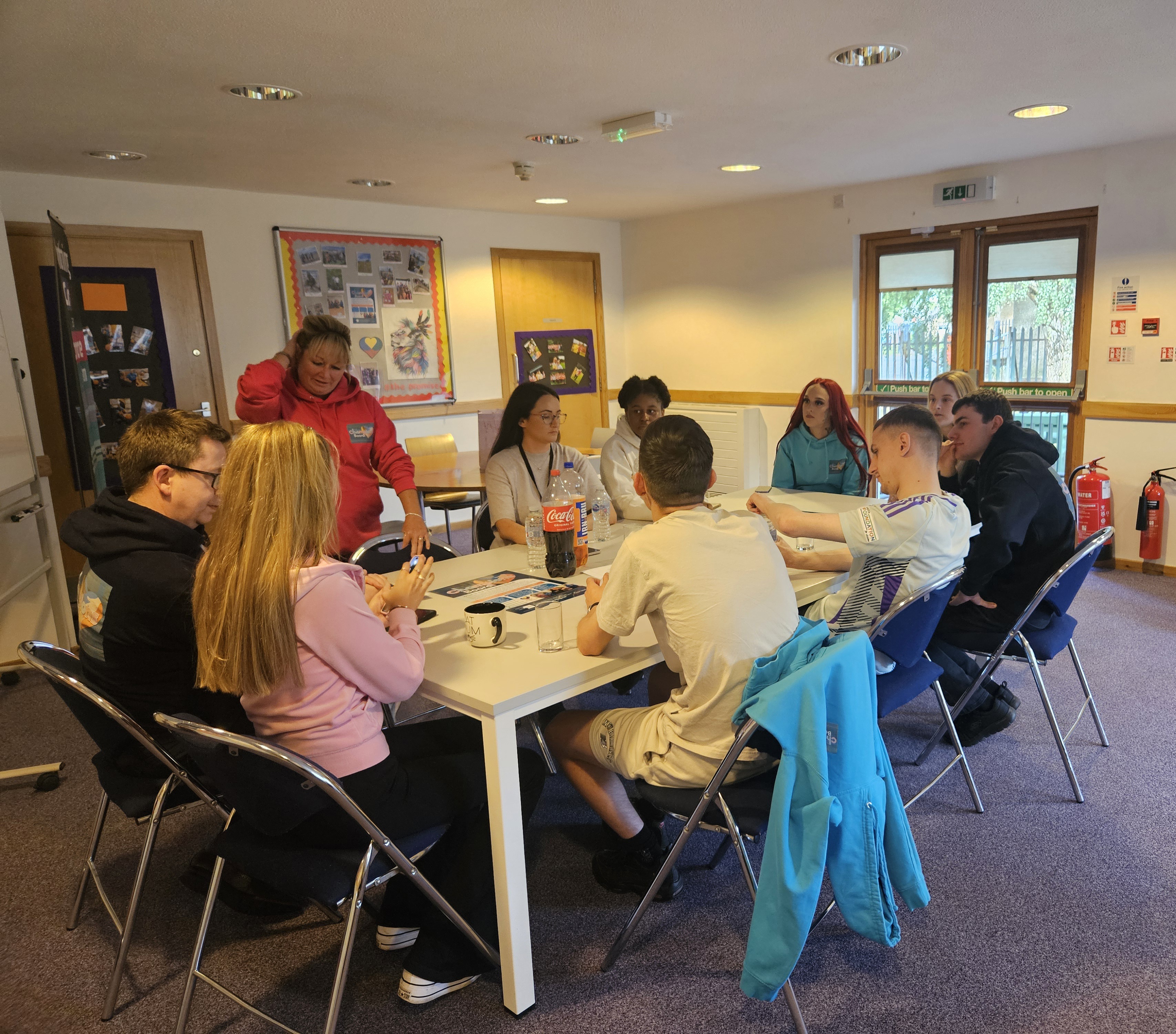
Innovation is demonstrated through a comprehensive housing pathway that offers flexible, tailored solutions based on individual readiness rather than system constraints. This includes eight transition flats supported by Barnardo’s, which provide a safe, supported environment where young people can develop independent living skills, build confidence and prepare for their own tenancy. Alongside outreach support and other supported housing options, the council has developed a clear pipeline of opportunities that enables young people to move forward at their own pace, with the right support available at the right time.
Crucially, this work is delivering measurable and meaningful outcomes. The achievement of 100% Housing Pathway Plans for care experienced young people, together with successful transitions into independent tenancies and increased confidence reported by participants, demonstrates that the approach is not only innovative, but effective in practice.
Above all, the project translates the national ambition of The Promise into tangible local change. It moves beyond policy commitment into practical delivery, embedding a person-centred ethos that supports care experienced young people not only to access housing, but to feel secure, make choices, sustain tenancies and thrive within communities.
Outcomes and achievements
The South Lanarkshire Futures Project is delivering clear, measurable outcomes for care experienced young people. Over the past year, two young people have completed their stay in Barnardo’s supported transition flats and moved into their own tenancies, with a further three expected to do so shortly. This demonstrates the value of safe, supported accommodation where young people can build confidence, develop independent living skills and prepare to sustain a tenancy.
Tenancy sustainment is a significant achievement, with 97% of care experienced young tenants sustaining permanent tenancies over the last 12 months and 33 Scottish Secure Tenancies granted. The housing pathway is helping to prevent homelessness by ensuring a planned approach to young people leaving care, with housing options that reflect needs, readiness and aspirations and support provided throughout.
This preventative work has contributed to fewer care experienced young people requiring temporary or emergency accommodation. The council now supports 151 young people compared with 67 in 2020 and 134 in late 2023, showing increased reach and stronger partnership commitment.
Most importantly, young people are experiencing more positive, planned transitions into adulthood, supported by trusted relationships that help them feel secure, listened to and ready to move towards independence.
Maryhill Housing Association - Valuing People's Differences
Application entry
- Project name: Valuing People's Differences
- Lead organisation: Maryhill Housing Association
Statement of Support
Maryhill Housing Association (MHA) is committed to making a positive difference for our customers and communities by embedding equality, diversity and inclusion (EDI) across all aspects of our work. Through our Equality, Diversity and Inclusion Strategy 2023-2026, we have implemented a transformational programme to tackle housing disadvantage, improve accessibility and ensure our organisation reflects the diverse communities of North West Glasgow.
Our communities have significant diversity and a wide range of needs. With 38% of our customers identifying as having a disability compared with the Scottish average of 24%, while 26% of current tenants and 45% of new tenants identify as being from non-white backgrounds compared with a Scottish average of 11%. These figures highlighted the importance of understanding our communities better, removing barriers to participation and ensuring our services are accessible, equitable and responsive.
Our EDI strategy is built around a clear ambition: to become a sector leader in equality, diversity and inclusion while proactively addressing discrimination and disadvantage. EDI is embedded within our corporate values, including our commitment to “Value People’s Differences”, and is championed by our board, leadership team and staff. A dedicated EDI working group meets monthly to drive progress, monitor outcomes and implement improvements. The group is chaired by our CEO and membership is open to any staff member with an interest in EDI, with many members identifying as having a protected characteristic.
A key focus has been strengthening our understanding of the people we serve. We introduced comprehensive equality monitoring across current tenants, new tenants and housing applicants, current staff, new staff and job applicants, and board members, enabling us to identify inequalities, monitor representation and make evidence-based decisions that improve accessibility and customer experience.
We have also invested significantly in creating an inclusive workplace culture. Staff training has covered disability, mental health, neurodiversity, transgender inclusion and wider equality issues. In partnership with the Scottish Refugee Council, and delivered with our strategic partners Queens Cross Housing Association (QCHA), we delivered specialist training for managers to improve understanding of the experiences of refugees, asylum seekers and immigrants, while challenging common myths and misconceptions.
Partnership working has been central to our success. We support Maryhill Integration Network (MIN) through funding for ESOL tutors and its community garden, helping people build confidence, skills and connections. We funded the West of Scotland Regional Equality Council’s (WESREC) Stepping Into Diversity Maryhill Project, which supported 145 participants to engage with local services, build skills and strengthen community links. We also established a Chai and Chatter group with WESREC, bringing together 25 participants and promoting inclusion and belonging.
Through our Maryhill Helps programme, we facilitate four community events every year involving around 280 participants and provide funding for Young Movers’ community fun days, engaging a further 700 people. These activities celebrate diversity, promote inclusion and strengthen community cohesion.
In June 2025, MHA achieved Housing Diversity Network Accreditation following a rigorous independent assessment of our EDI approach. This recognition reflects both the progress we have made and our commitment to continuous improvement through a detailed action plan overseen by our EDI working group.
Through strong leadership, robust data, workforce development and effective partnerships, MHA is creating a more inclusive organisation and improving access to housing and services for people from all backgrounds. Most importantly, we are building communities where diversity is valued, barriers are reduced and everyone has the opportunity to thrive.
Outcomes and achievements
- Developed and implemented a comprehensive Equality, Diversity and Inclusion Strategy 2023-2026, supported by a detailed action plan and governance framework
- Established a cross-organisational EDI working group of employee volunteers to drive improvement and accountability
- Achieved Housing Diversity Network Accreditation (June 2025) following independent assessment of the association's approach to EDI
- Introduced collection and monitoring of equality data across current tenants, new tenants and housing applicants, current staff, new staff and job applicants, and board members to better understand and respond to customer and workforce needs
- Developed EDI dashboards using PowerBI to help the EDI working group to better understand and respond to trends and patterns
- Delivered extensive staff development on disability, mental health, neurodiversity, transgender inclusion and broader equality and inclusion issues
- Provided specialist training through the Scottish Refugee Council, delivered to over 40 managers from MHA and our strategic partners QCHA, strengthening support for refugees, asylum seekers and immigrants
- Supported MIN to deliver ESOL learning and a community garden
- Supported WESREC to engage 145 participants in the Steeping Into Diversity Maryhill Project
- Delivered community events to 280 participants and funded a Young Movers fund day for a further 700 people.
Wheatley Group - Different Together: using equity, diversity and inclusion (EDI) data, lived experience and customer voice
Application entry
- Project name: Different Together: using equity, diversity and inclusion (EDI) data, lived experience and customer voice
- Lead organisation: Wheatley Group
Statement of support
At Wheatley, we believe tackling housing inequality starts with listening to people whose voices are not always heard. Through our Different Together approach, we use EDI data, lived experience and the customer voice to understand disadvantage and design services around individual needs.

Each year we publish our equalities report ‘One Group, Many Voices’, showing how we’ve used data and insight to make sure our services are accessible and inclusive.
Highlights from 2025/26 include:
We continue to collect and analyse equality data across our housing applicants, customer engagement programmes, foundation services, job applicants, suppliers and board members. This information is used alongside customer insight, lived experience and Equality Impact Assessments (EIA) to inform decision-making, shape policy and improve services. Our Customer Focus Network of staff review EIAs to ensure these consider a diverse range of perspectives. This informed, for example, our strategy implementation and development of a refreshed customer engagement framework.
We continue to support people who are new to Scotland and may face additional barriers to accessing housing and services. In 2025/26, we housed 654 New Scots and continued to strengthen support through interpretation and translation services, welcome information, community engagement activities and supported access to English language classes. Our equality data shows that 18% of housing applicants were non-UK nationals, helping us better understand changing customer needs and tailor support accordingly. We are committed to helping people settle successfully into their communities, ensuring they can access services in ways that work for them.
To inform our New Scots approach, we completed an anti-racist review of housing services in Glasgow. As members of Shelter Scotland’s Anti-Racism in Housing Network, we worked with them and an independent consultant, to engage directly with Black and People of Colour customers in Glasgow to better understand their experiences of housing services. Through surveys, focus groups and lived-experience conversations, customers shared both the barriers they faced and the changes they wanted to see. The review produced clear recommendations which are now shaping staff training, customer communications, translation and interpretation services, hate crime approaches and our wider EDI and New Scots action plans. By listening directly to customers and acting on what they told us, we have taken meaningful steps towards embedding anti-racist practices across our services.
Customer voice is central to our approach. By the end of 2025/26, more than 1,700 customers were registered as part of our Stronger Voices engagement programme. During the year, we engaged more than 6,500 people through community events and supported almost 1,500 customers through local pop-ups and surgeries. A particular focus is placed on reaching underrepresented groups and reducing barriers to participation through inclusive engagement methods, conversational cafés and English language classes.
Listening to customers has resulted in tangible improvements. Feedback gathered through our Stronger Voices programme has directly informed the refresh of our engagement framework, with accessibility and inclusion becoming core design principles. Customers highlighted barriers caused by disability, ill-health, mobility issues and caring responsibilities, helping us adapt both engagement methods and service delivery.
We also tackle socio-economic disadvantage through a range of Wheatley Foundation programmes focused on employability, financial wellbeing, digital inclusion and community support.
What makes this work distinctive is that it combines evidence, lived experience and customer influence to drive change. Whether tackling racism, supporting New Scots, improving accessibility or reducing digital exclusion, we are using customer insight to shape decisions and deliver fairer housing outcomes. EDI is not a separate programme at Wheatley – it is embedded in how we listen, learn and improve services for the communities we serve.
Outcomes and achievements
2025/26 saw Wheatley complete over 90% of its EDI action plan commitments, with remaining actions informing the development of a refreshed plan for the years ahead.
Our commitment to inclusion was recognised externally, with Wheatley’s first Gold TIDEMark accreditation, building on Silver and Bronze previously. Recognised as a sector leader across housing and the third sector, Wheatley ranked 7th of 180 organisations for diversity, inclusion, learning and development.
Working with Business in the Community, we contributed to national research into in-work poverty, ensuring customers’ lived experience helps shape wider employer practice across Scotland. Staff networks have driven meaningful change, increasing support for carers, improving workplace accessibility and strengthening colleague wellbeing.
Our anti-racist review strengthened understanding of the experiences of Black and People of Colour customers, resulting in improvements in staff training, customer communications, translation and interpretation services and hate crime responses.
Through Wheatley Foundation, more than 7,000 customers accessed welfare benefit advice, over 1,600 customers received financial wellbeing support and 224 refurbished devices were distributed through Techshare, helping reduce poverty and digital exclusion.
These examples of our Different Together approach and achievements demonstrate how the customer voice is translated into meaningful action, creating more inclusive, accessible and responsive housing services.