


Scotland Housing Awards 2026
Read all the shortlisted entries into this award category, Net Zero in Housing, at the Scotland Housing Awards (SHA) 2026 and find out who won the award on the night.
The housing sector, like many others, is faced with the challenge of cutting carbon emissions to achieve the Scottish governments’ net zero targets. This award celebrates organisations that can demonstrate they have overcome some of the significant challenges in cutting carbon emissions.
Winning project name
Granite Homes Towards Net Zero: Creating New Homes Inside Old Houses
Winning organisation
Aberdeenshire Council
Statement of support
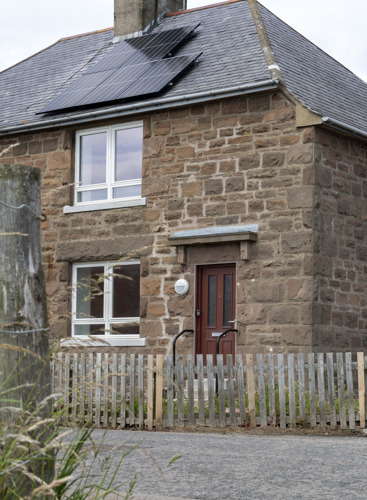
Some of Scotland’s hardest-to-heat homes are now becoming warm, healthy and future-ready through Aberdeenshire Council’s Granite Homes Towards Net Zero programme. The programme tackles one of the country’s most difficult retrofit challenges: transforming historic granite homes into affordable, low-carbon housing while protecting the character of local towns and villages. The council owns around 2,100 stone-built homes, many built between 1900 and 1950 with solid walls, poor heat retention, high air leakage and a greater risk of damp, condensation and mould. For tenants, this can mean cold rooms, high energy use and pressure on already stretched household budgets.
The programme responds through a fabric-first, whole-house approach, supported by clean and renewable technologies. Works include internal wall insulation, suspended floor insulation, loft insulation, draughtproofing and airtightness works, triple-glazed windows, insulated doors, high-heat-retention electric storage heating, solar panels, solar diverters for hot water and mechanical ventilation with heat recovery. Clean heating is not installed in isolation; it is supported by fabric improvements that reduce heat demand, improve comfort and help homes perform well in practice.
The project is innovative because it balances deep-retrofit ambition with practical, value-for-money delivery in social housing. Rather than pursuing a standard that may be technically possible but financially unsustainable at scale, Aberdeenshire Council has applied recognised deep-retrofit principles proportionately. The approach is informed by direct delivery experience, property surveys, archetype analysis and modelling, giving the council a robust evidence base for improving complex granite properties while managing cost, quality, void timescales and tenant affordability.
The results show genuine progress. Over 700 homes have now been completed since the programme began in 2018, with delivery continuing across the wider stone-built stock. Homes that were once among the hardest to heat are being transformed into efficient, comfortable and future-ready housing. Performance is measured through energy assessments, airtightness testing, heat demand modelling, carbon modelling, renewable technology data and ongoing review of the retrofit specification.
The tenant impact is central. Modelling for the latest 100-home phase estimates average fuel-bill savings of £26.67 per property per month, with significantly higher savings for some homes previously heated by older electric systems. For tenants, the difference is felt in everyday life: warmer rooms, fewer draughts, more manageable heating and homes that are easier to live in. Homes need less heat to stay comfortable, ventilation helps manage moisture and air quality, and solar technology supports lower running costs where installed. The programme therefore reduces carbon while directly supporting affordability, comfort and wellbeing.
It is also a just transition in practice. Aberdeenshire Council chose to build an in-house specialist delivery model, supported by local contractors and suppliers, rather than relying solely on large external contractors. The team now includes 46 staff and has supported 10 apprenticeships since the start of the project. This keeps investment in local communities, grows retrofit skills and creates long-term delivery capacity for future net zero work.
Granite Homes Towards Net Zero meets the judging criteria by demonstrating leadership, overcoming technical and financial challenges, reducing emissions and improving tenants’ lives. It aligns with the council’s climate and housing priorities and shows that even complex heritage homes can be improved sustainably, sensitively and at scale. The programme is already attracting enquiries from other social landlords, showing its wider relevance as a practical model for improving hard-to-treat stone-built homes while reducing carbon and protecting heritage. By creating “new homes inside old houses”, Aberdeenshire Council has developed a practical and repeatable model for climate action that protects heritage, reduces carbon and delivers warmer, healthier homes one property at a time.
Outcomes and achievements
Over 700 granite-built homes have been retrofitted since the programme began in 2018, with delivery continuing across a wider stock of around 2,100 stone-built properties. Completed homes show strong energy performance improvements, including one property moving from Energy Performance Certificate rating F22 to B91, a 69-point Standard Assessment Procedure (SAP) uplift.

Airtightness has typically improved from around 16 to around three cubic metres per hour per square metre at 50 Pascals, exceeding the council’s target of five. Modelled heat demand has reduced from approximately 120 to around 50 kilowatt hours per square metre per year.
For the latest 100-home phase, modelling estimates annual carbon savings of around 193,570 kilograms of carbon dioxide equivalent, and lifetime savings of approximately 9.68 million kilograms. Across the wider completed programme, annual operational savings are estimated at around 1.33 million kilograms of carbon dioxide equivalent.
Tenants benefit from warmer, healthier homes, lower heat demand, improved ventilation and average modelled fuel-bill savings of £26.67 per property per month in the latest phase, with higher savings for some homes previously heated by older electric systems. The programme also supports 46 in-house staff, local contractors and 10 apprenticeships.
Shortlisted entries
Riverside Scotland - Pennyburn - Net zero retrofit project
Application entry
- Project name: Pennyburn - Net zero retrofit project
- Lead organisation: Riverside Scotland
- Partner organisation: Union Technical services
Statement of support
Net Zero - Pennyburn Retrofit Project
I am delighted to provide this statement of support for the Pennyburn Retrofit Project, delivered by Riverside Scotland in partnership with Union Technical Services, as part of the CIH Scotland Excellence Awards Net Zero category.

The Pennyburn Retrofit Programme is an outstanding example of how ambitious investment in existing housing stock can accelerate the transition to net zero while delivering meaningful social benefits. Fully funded by Riverside Scotland, the project has transformed 30 of our oldest properties, housing some of our most vulnerable customers in the Pennyburn area of Kilwinning. Through a comprehensive package of retrofit measures including new windows and doors, complete roof replacements, in-roof solar photo panels, battery storage, external and cavity wall insulation, re-rendering works and enhanced ventilation systems, the project has significantly improved the energy efficiency and environmental performance of these homes. We are now progressing Phase 2, which includes the installation of air source heat pumps to further reduce carbon emissions and reliance on fossil fuels.
The project demonstrates the vital role that social housing providers can play in supporting Scotland's net zero ambitions. By reducing heat loss, generating renewable energy and transitioning towards low-carbon heating solutions, the retrofit programme is delivering long-term reductions in household energy consumption while creating warmer, healthier homes for residents. Customers have described the improvements as a "night and day difference", reflecting the transformational impact the works have had on their daily lives.
Importantly, the environmental benefits have been achieved alongside significant financial benefits for residents. Many households are now reporting average utility costs of less than £60 per month, helping to tackle fuel poverty and improve affordability during a period of continued cost-of-living pressures.
A key factor in the project's success has been its customer-centred approach. Residents were actively engaged throughout the programme and were given opportunities to influence cosmetic and design choices affecting their homes. This ensured customers remained at the heart of decision-making while building trust and confidence in the retrofit process.
The quality of delivery is reflected in the feedback received from residents. One customer commented:
"The standard of work has been exceptional from start to finish. Union Technical and Riverside kept us informed throughout, listened to our preferences and made sure we were happy with every aspect of the finished product. The house looks fantastic and feels like a completely different home."
Another resident stated:
"We were consulted throughout the project and were able to make choices about the appearance of our home. It felt like our opinions genuinely mattered. The team treated us with respect, the work was completed to a very high standard and the difference it has made to our comfort and energy bills has been incredible."
The success of the Pennyburn project has already received national recognition through its achievement as Large Scale Project of the Year at the Scotland Energy Efficiency Awards 2026, demonstrating the innovation, commitment and positive environmental outcomes delivered through the partnership between Riverside Scotland and Union Technical Services.
I wholeheartedly support this nomination and believe the Pennyburn Retrofit Project is a highly deserving recipient of the CIH Scotland Net Zero Award.
Outcomes and achievements
The Pennyburn Retrofit Project has transformed 30 homes through a comprehensive package of energy efficiency measures, including new windows and doors, external and cavity wall insulation, new roofs, solar PV panels, loft insulation and improved ventilation. These improvements have delivered warmer, healthier and more energy-efficient homes while supporting Scotland's net zero ambitions.
The project has had a significant impact on residents, with many describing the improvements as a "night and day difference" and highlighting the positive effect on both the comfort of their homes and the appearance of the wider neighbourhood.
A key achievement has been the reduction in household energy costs. Based on resident feedback, the majority of tenants are now reporting average utility bills of less than £60 per month, helping to reduce fuel poverty and ease cost-of-living pressures.
The success of the project has also been recognised nationally, winning Large Scale Project of the Year at the Scotland Energy Efficiency Awards 2026. This award reflects the quality of the partnership between Riverside Scotland and Union Technical Services and demonstrates how investment in existing homes can deliver lasting social, economic and environmental benefits.
West Dunbartonshire Council - Linen Place & Lavender Gardens
Application entry
- Project name: Linen Place & Lavender Gardens
- Lead organisation: West Dunbartonshire Council
Statement of support
The West Dunbartonshire Council development at Linen Place & Lavender Gardens, Bonhill, delivers 26 high quality affordable homes, designed and built to achieve high net zero standards. This new social housing reinstates much needed homes within the Bonhill area of Alexandria and represents a significant investment in sustainable community regeneration and the council’s Climate Change Action Plan.
The site previously accommodated social housing that was demolished in 2006 after being deemed no longer fit for purpose. For many years the land remained vacant due to challenging ground conditions and significant abnormal costs, which prevented the council from securing the investment or funding required to progress redevelopment. The turning point came when West Dunbartonshire Council successfully secured funding through the Vacant and Derelict Land Investment Programme, providing the additional resources needed to bring the site back into productive use and enabling a long awaited return to residential use.
Bonhill is within the 20% most deprived areas in Scotland. To address fuel poverty and the rising cost of living, while also responding to climate commitments and futureproofing the council’s housing stock, West Dunbartonshire Council set an ambition for exceptionally high sustainability performance. This approach ensures meaningful, long term benefits for tenants, both financially and environmentally, and supports wider strategic objectives around resilience and climate policy.
To meet these aims, the council delivered its first development incorporating homes built to both net zero and Passivhaus standards. Six homes were constructed to the Passivhaus Classic standard, a rigorous low energy building methodology independently assessed and accredited by the Passivhaus Institute in Germany. The remaining 20 homes were built to contractor CCG’s Net Zero Homes Standard, combining a fabric first approach with low carbon heating, renewable energy generation and on-site energy storage.
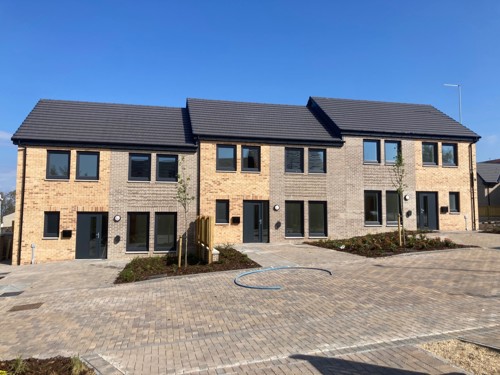
All homes benefit from high performance building fabric, including triple glazed windows and air source heat pumps, which provide zero direct emissions and low carbon heating. Passivhaus homes also incorporate Mechanical Ventilation with Heat Recovery (MVHR) systems, working alongside thermal bridge free and airtight construction to minimise heat loss. The net zero homes feature 8–12 solar photovoltaic (PV) panels per property, paired with 13.5 kW Tesla Powerwall batteries for energy storage, which combine to reduce grid demand and lower CO₂ emissions. In addition, every home is equipped with an electric vehicle charger. When combined, these measures significantly enhance energy efficiency and support long term sustainability.
Operational carbon emissions have been substantially reduced through the integration of high performance building fabric and zero emissions technologies. Annual energy demand for space heating ranges from 1.69 to 24.13 kWh/m², demonstrating exceptionally low operational energy requirements. The development also achieves an average Low or Zero Carbon Generating Technologies (LZCGT) abatement of 103.58%, reflecting its strong contribution to carbon reduction. In addition, the homes have attained a maximum EPC rating of 105 (A) and an Environmental Impact Rating of 101 (A). Operational energy costs are correspondingly low, starting from approximately £35 per month.
These homes set a new benchmark for West Dunbartonshire Council in meeting net zero ambitions, tackling fuel poverty, and set a new benchmark for raising the standard of future developments across the area.
Outcomes and achievements
Most tenants in this development are now experiencing significantly lower energy bills compared with the smaller gas heated homes they previously occupied. Guidance on maintaining steady, consistent heat through the air source heat pumps has helped households optimise their heating systems and reduce costs, and tenants have become confident in using their PV panels and Tesla batteries to offset the cost of electrical appliances and daily showering.
During defects inspections, all tenants were asked about their heating bills. Those living in the larger Passivhaus homes and net zero cottage flats consistently reported very low costs. One tenant shared, “I work away quite a lot and I’m paying next to nothing in heating bills – it’s excellent.” Another said, “I came from a gas property and was paying about £300 a month, now I’m less than £70.”
Many tenants occupying properties in this development receive Universal Credit and these energy efficient Net Zero homes have provided meaningful savings which support with the cost of living. Importantly, this development has also helped lift 30 children out of homelessness, demonstrating the wider social impact of delivering high quality net zero homes.
Highland council - D to C energy efficiency project
Application entry
- Project name: D to C energy efficiency project
- Lead organisation: Highland council
Statement of support
D to C energy project in Highland
Energy Efficiency is a major focus of the Highland’s current Capital Programme. The D-C programme aims to improve Energy Performance Certificate ratings from D or below to at least a C rating. The D-C Programme continues to deliver significant benefits to council tenants and across Highland.
Since February 2025 the project has installed 862 energy efficiency measures in 498 Council homes. The project was paused October 2025 due to funding uncertainty and restarted May 2026. It will run until December 2026 when the current Energy Company Obligation (ECO) scheme ends.
To date it has successfully leveraged circa £7.644 million of external funding through ECO, enabling a range of energy efficiency improvements to the fabric of the property, upgraded heating systems and solar panels (subject to property eligibility/ suitability) which has assisted to make homes warmer, improve comfortable levels for tenants while improving energy efficiency and potentially reducing fuel costs.
Delivered in alignment with the council’s Local Heat and Energy Efficiency Strategy (LHEES) and ambitions to reduce fuel poverty across the region, this investment demonstrates the council’s commitment to improving the quality and sustainability of its housing stock, ensuring residents can enjoy healthier homes and lower energy bills for years to come.
The D-C Programme represents additionality and the works identified and undertaken were not part of the original 2022-2027 HRA Capital Programme.
Outcomes and achievements
The project has initiated signifcant savings for tenants with some experiencing decreases in their fuel bills of between £400 and £700.
The net zero works are accompanied by energy advice and a series of tenant videos have been developed with the support of tenant volunteers. These videos are available on Youtube and provide energy advice and isntruction to tenants on how best to maximise their new heating systems and save energy in the home.
Glen Housing Association - Rockfield Gardens, Glenrothes - Net Zero Retrofit
Application entry
- Project name: Rockfield Gardens, Glenrothes - Net Zero Retrofit
- Lead organisation: Glen Housing Association
- Partner organisations: Changeworks, Sureserve, Scottish Government Social Housing Net Zero Heat Fund and CAF Bank
Statement of support
In 2023, Changeworks produced a 'Net Zero Pathways Archetype Review' for Glen Housing Association using samples of its housing stock. While most properties were close to achieving the EESSH2/SHNZS standard, the modelling showed that the upgrades required to meet this target would have delivered only modest reductions in energy bills. Similarly, replacing existing heating systems with air source heat pumps without further improvements would have provided little, if any, financial benefit for tenants. The review focused on improvements that could:
- Reduce fuel bills
- Improve warmth and comfort
- Support decarbonisation
- Provide a framework for future housing renovation projects.
A range of retrofit scenarios were identified to determine the homes could benefit from energy-efficiency improvements. The review concluded that a deep retrofit approach was needed to meet net zero ambitions while achieving meaningful reductions in household energy costs. Although the proposed works were estimated between £50,000-£60,000 per property, they represented the most effective long-term solution. While implementing these recommendations at scale would be costly and disruptive, the benefits in terms of improved living conditions for tenants would outweigh the risks and for Glen and it would provide a blueprint for future investment. With support from the Scottish Government’s Social Housing Net Zero Heat Fund and Glen's own investment through a 'green loan' from CAF Bank, a project was conceived, adopting a fabric-first approach focused on reducing heat loss before introducing low-carbon technologies. The aims of the project were to:
- Increase the thermal comfort of each home
- Reduce energy bills to mitigate the risk of fuel poverty
- Make households less vulnerable to fluctuating energy costs
- Reduce CO2 emissions and grid consumption
- Maximise decarbonisation and clean electricity usage.
Rockfield Gardens was selected as the ideal location, comprising of two cul-de-sacs and a varied but manageable group of two to three-bed houses and bungalows, in which to demonstrate the benefits of deep retrofit. Taking a whole house approach, the improvement measures included:
- Installing external wall insulation
- Triple glazed windows and insulated external doors
- Upgrading ventilation to dMEV to ensure adequate ventilation
- Replacing gas combi systems with air source heat pumps
- Sunamp thermal battery technology to provide domestic hot water
- Installing Solar PV to increase energy efficiency
- Fitting battery storage to reduce electricity consumption.
The project’s ambitions extended beyond the homes themselves, strengthening Scotland’s technology sector through the innovative introduction of Sunamp thermal batteries and giving tenants the choice to move to an all-electric home by supporting the switch from gas to electric cooking appliances. Introducing new heating systems and renewable technologies can be challenging for residents unfamiliar with them. Glen therefore prioritised communication and support from the outset; contractor Sureserve, the director and housing manager maintained a visible presence on site, helping tenants and their families understand the works and ensuring concerns were addressed quickly. One of the most successful aspects of the project was the use of a void property in the scheme to showcase the retrofit in situ. Over the course of three days, the ‘open’ house brought tenants, neighbours, staff and project partners together to improve understanding, address concerns and build confidence in the new technology. Having experts on-site to answer questions and provide practical advice exemplified Glen's engagement approach, helping to remove uncertainty and encouraging householders and their families to make the most of the improvements to their homes.
Outcomes and achievements
The completion of Glen Housing Association's £1.6 million retrofit programme marks a significant milestone and provides a strong foundation for the future. Designed to improve energy efficiency, reduce carbon emissions and test innovative solutions, the project has upgraded homes from EPC Band C/D to Band B while trialling technologies such as Scottish-made Sunamp heat batteries. Beyond the physical improvements, Glen's understanding of retrofit delivery has been strengthened and built organisational confidence, creating a robust base to inform future investment decisions. It has also demonstrated that ambitious net zero projects are not the preserve of larger housing organisations. Through strong partnerships, meaningful tenant engagement and a commitment to innovation, Glen has shown how a small housing association can deliver transformational change. The knowledge gained at Rockfield Gardens will help shape future improvements across our housing stock and provide valuable learning for the wider housing sector. Most importantly, the project has made a tangible difference to tenants' lives, improving comfort while reducing energy costs. As one tenant explained: "In the first month following installation, my electricity bill was £31.00. That's with me and my husband in the house all day, plus charging our electric car."
This is the true measure of success.
South Lanarkshire Council - Smart Storage Heating Project
Application entry
- Project name: Smart Storage Heating Project
- Lead organisation: South Lanarkshire Council
Statement of support
The innovative South Lanarkshire Council Smart Heating Project has demonstrated how existing electric storage heating systems can be transformed into smarter, more efficient and more affordable heating solutions for residents living in some of the council’s more challenging housing stock.
The project focused on two multi-storey residential blocks, Logan Tower and Springhall Court in Cambuslang, delivering smart heating controls to 113 homes that rely on electric storage heating. Many of these properties are classified as hard-to-heat homes and have historically presented challenges in achieving better energy efficiency outcomes without significant capital investment.
By installing HeatSage technology, the project provided a practical and cost-effective solution that improved resident comfort while helping to reduce energy consumption and running costs.
From the outset, the council worked closely with the technology provider and contractors to ensure the project was delivered with residents at its heart. Tenant engagement was a key component of the approach, with community information events, individual consultations, telephone support and home visits all undertaken to ensure residents fully understood the benefits of the technology and felt confident about the installation process. This resident-focused approach was instrumental in achieving an installation rate of approximately 80% across the eligible properties and ensured that tenants were supported before, during and after installation.
The professionalism and commitment shown by the partners throughout the delivery phase was exceptional. The team provided detailed information packs, attended resident engagement meetings, arranged appointments directly with tenants and conducted follow-up activity where residents had not initially responded. Evening and weekend engagement sessions were also carried out to maximise participation and ensure that no resident was excluded from the opportunity to benefit from the project.
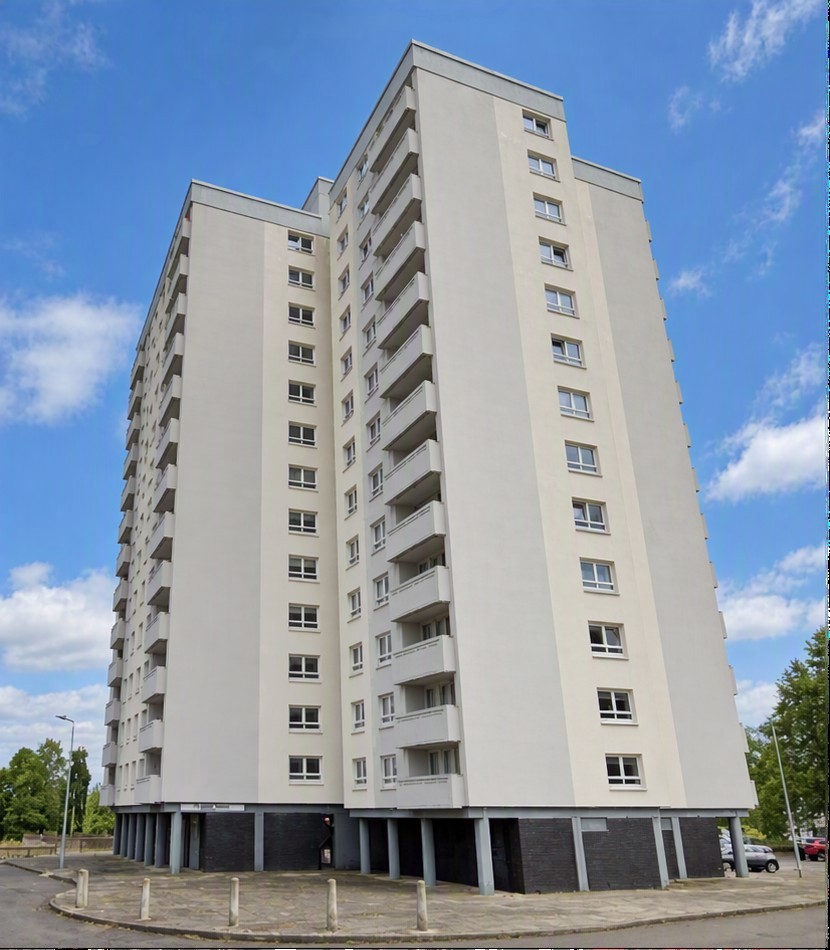
Early indications suggest the project is having a positive impact on residents. Feedback received from tenants has highlighted improved comfort levels, better control over heating and hot water systems, and noticeable reductions in energy costs. Residents have reported that the controls are easy to use and that their heating systems are performing more effectively than before. In several cases, tenants have commented on improvements to their quality of life, including more reliable access to hot water and greater confidence in managing their heating requirements.
One of the most impressive aspects of the project has been its ability to deliver meaningful improvements without requiring the complete replacement of existing heating systems. At a time when local authorities and housing providers face increasing financial pressures, this project demonstrates that innovative retrofit technologies can provide immediate benefits while supporting longer-term decarbonisation strategies. The estimated annual energy savings of between 1,500kWh and 1,800kWh per property illustrate the significant potential of this approach.
The project also aligns strongly with the council's commitments to reducing fuel poverty, improving tenant wellbeing and supporting Scotland's net-zero ambitions. By targeting homes that are often overlooked due to the complexity and cost of heating system replacement, the project has shown that practical and affordable interventions can still deliver substantial benefits for residents and communities.
The project represents best practice in collaboration, innovation and resident engagement and has delivered measurable outcomes, generated valuable learning and created a scalable model that could be replicated across many other social housing developments. The South Lanarkshire Council Smart Storage Heating Project is recommended for a CIH Award nomination in the Net Zero in Housing category for its contribution to energy efficiency, tenant wellbeing and the advancement of smart heating solutions within the social housing sector.
Outcomes and achievements
This project delivered significant benefits through the installation of HeatSage smart optimisation technology. The project transformed legacy electric storage heating systems into intelligent, responsive heating solutions without the need for costly replacement programmes. Estimated energy savings of between 1,500kWh and 1,800kWh per property per year have been achieved, helping tenants reduce energy costs while maintaining comfortable home temperatures. It is estimated that this project delivered annual CO2 savings of 367.84tCO2e.
A key achievement was the successful deployment of a low-cost retrofit solution within fully occupied tower blocks, minimising disruption through installations typically completed in around one hour. The project achieved an 80% installation rate across eligible homes, supported by extensive resident engagement including community events, door-knocking campaigns and personalised consultations.
Feedback from residents has been overwhelmingly positive, with tenants reporting improved heating control, greater comfort, more reliable hot water provision and noticeable reductions in energy bills. Vulnerable residents particularly benefited from improved access to hot water and reduced reliance on expensive supplementary heating.
The project also demonstrated how existing storage heating systems can contribute to net-zero ambitions through smart controls, providing an affordable, scalable solution for social landlords seeking immediate carbon and cost savings while improving tenant wellbeing.
South Ayrshire Council - South Ayrshire Area Based Scheme Programme
Application entry
- Project name: South Ayrshire Area Based Scheme Programme
- Lead organisation: South Ayrshire Council
- Partner organisation: Energy Agency
Statement of support
South Ayrshire Council's housing strategy and regeneration team, working in partnership with the Energy Agency, is making a significant contribution towards Scotland's net zero ambitions through the delivery of an ambitious external wall insulation (EWI) programme. The programme directly supports the objectives of South Ayrshire's Local Housing Strategy (2024-2029), helping ensure residents live in warm, dry, energy-efficient homes that are affordable to heat and maintain, whilst also contributing to the council's Sustainable Development and Climate Change Strategy.
South Ayrshire Council, like many local authorities, faces the challenge of reducing carbon emissions whilst addressing fuel poverty and rising energy costs. Many homes across South Ayrshire are older, hard-to-treat properties that are unsuitable for traditional, lower-cost insulation measures. Without intervention, these homes continue to require higher levels of energy consumption, resulting in increased household costs and greater carbon emissions.
To address these challenges, the housing strategy and regeneration team and the Energy Agency have developed and delivered a targeted Area Based Scheme (ABS) programme, funded through the Scottish government's Energy Efficient Scotland agenda. The programme focuses on improving the energy performance of homes through a fabric-first approach, recognising that reducing heat demand is one of the most effective and sustainable methods of cutting carbon emissions.
The installation of external wall insulation (EWI) has transformed some of South Ayrshire's most energy-inefficient homes. By improving the thermal performance of building fabric, households require less energy to maintain comfortable temperatures, significantly reducing dependence on fossil-fuel-based heating systems. This approach not only lowers household energy consumption but also delivers long-term carbon emission reductions that support Scotland's commitment to achieving net zero by 2045.
A key strength of the programme has been its focus on mixed-tenure neighbourhoods and areas experiencing high levels of deprivation. Delivering large-scale energy efficiency improvements across both social and private housing has enabled a coordinated, area-based approach that maximises environmental impact while ensuring no household within the community is left behind in the transition to a low-carbon future.
The programme has also overcome a number of significant challenges. Securing participation from private homeowners in mixed-tenure blocks often requires extensive engagement and support. Through strong partnership working, effective communication and trusted relationships, housing strategy and regeneration and the Energy Agency have successfully encouraged participation and maximised take-up, ensuring projects achieve the scale required to deliver meaningful carbon reduction benefits.
Beyond environmental gains, the programme is delivering tangible benefits for our own tenants as well as private households within the community. The improved thermal efficiency of homes helps households retain heat for longer, reducing energy consumption and lowering fuel bills. This has been particularly important during the cost-of-living crisis, when many households have faced substantial financial pressures. Warmer, more comfortable homes also contribute positively to improving the council’s wider health and wellbeing outcomes, helping people live more sustainably and affordably.
The programme demonstrates how locally-led action can successfully respond to the net zero challenge while delivering wider social and economic benefits. By targeting hard-to-treat properties, investing in long-term energy efficiency improvements and working collaboratively across sectors, our housing strategy and regeneration team and the Energy Agency are reducing carbon emissions, tackling fuel poverty and creating more sustainable communities.
Through innovation, partnership and a clear commitment to climate action, the programme is helping transform some of South Ayrshire's most challenging housing stock into warmer, greener and more energy-efficient homes. It provides a practical and scalable model for achieving carbon reduction at a local level while delivering lasting benefits for our tenants and wider communities.
Outcomes and achievements
The external wall insulation (EWI) programme has delivered measurable environmental, financial and social benefits.
During 2025/26, external wall insulation (EWI) was installed in 276 homes, including 157 council properties and 119 privately owned homes, representing a total investment of £3.86 million. Through a coordinated area-based approach, the programme has successfully improved the energy efficiency performance of some of South Ayrshire's most fuel-poor and hard-to-treat homes.
The programme is expected to deliver an estimated 16,097 MWh of lifetime energy savings, reducing household energy demand and dependence on fossil fuels. This equates to an estimated 4,317 tonnes of lifetime carbon emissions savings, making a significant contribution towards local and national net zero objectives.
Households are projected to benefit from approximately £1.78 million in lifetime fuel bill savings, helping households manage rising energy costs and reducing the risk of fuel poverty. Improvements have created warmer, more energy-efficient homes that are cheaper to heat and maintain.
Through strong partnership working between our housing strategy and regeneration team and the Energy Agency, the programme has successfully combined carbon reduction, energy efficiency and community regeneration, creating lasting benefits for tenants and residents while supporting Scotland's journey towards a net zero future.