


Welsh Housing Awards 2026
Read all the shortlisted entries into this award category, Campaign of the Year, at the Welsh Housing Awards (WHA) 2026 and find out who won the award on the night.
In challenging times, being there for your community is exceptionally important. Whether you’re a housing organisation whose communication with their tenants and residents has been outstanding, keeping them fully informed and supported or helping them to stay connected; or, you’re an organisation that has led a local or national campaign to persuade key decision-makers to move in a certain direction on legislation or policy, this award recognises the impact of campaigns.
Winning project name
31 Days of Hope
Winning organisation
Trivallis
Statement of support
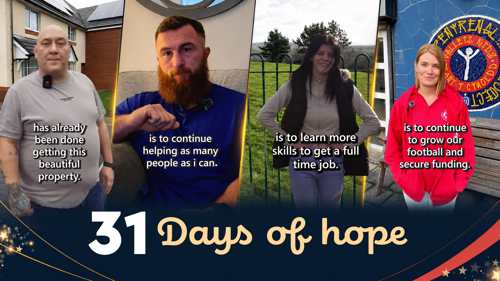
31 Days of Hope was a month-long campaign designed to change the way people see and engage with Trivallis communities.
At a time when housing communications can easily become dominated by repairs, rent, compliance and problems, we took a different approach. Rather than telling people what their communities lacked, we set out to show what was already there: people with skills, ideas, resilience, relationships and a willingness to make a difference.
The campaign was grounded in Asset Based Community Development (ABCD) and a simple principle: our communities know themselves best. Our role is to recognise their strengths, connect people and amplify their voices.

Working with communities and creating new alliances
We deliberately looked beyond our established contacts to find new voices and stories. Across the campaign we featured 16 tenants, 11 community groups or leaders and four partner organisations, including 22 people who had not previously featured in Trivallis content.
The campaign was not simply about asking people to appear in a video. Community visits and filming created opportunities for genuine conversations and relationship-building. We heard what mattered to people, discovered activity we had not previously known about and connected with groups and individuals who could contribute to future work.
These relationships have continued beyond the campaign. We have already filmed follow-up content with two new community partners, while further collaborations are being planned with others. New community leaders and contributors have also been identified who can help us reach people and communicate about issues in ways that feel authentic and locally relevant.
A clear strategy, not just a content calendar
The campaign was carefully planned around audience behaviour. We used daily short-form video across Facebook, Instagram and TikTok, with people telling their own stories in their own words.
Our strategy was to lead with people, not policy. Real neighbourhood settings, conversational language, subtitles, strong opening lines and minimal branding helped the content feel human rather than corporate.
We also deliberately encouraged peer-to-peer sharing. Seeing a neighbour, community leader or local group doing something positive gave people a reason to stop, watch, comment and share.
The campaign also gave us valuable insight into which voices resonate most strongly with different audiences. Young people, older people, support groups and community organisations were among the strongest performers, helping us understand how community voices could subsequently be used to communicate important housing messages.
Creating momentum and changing the conversation
The campaign generated significant digital growth and engagement, but its greatest success was the quality of the response.
Yasmin's story went viral on TikTok, generating a major increase in followers and comments. When a small number of negative comments appeared, the overwhelming response from other users was supportive, with people celebrating Yasmin and encouraging her.
Across the campaign, comments repeatedly demonstrated pride, recognition and connection between residents. People celebrated neighbours, thanked community leaders and shared their own experiences.
This matters because it changed the role of our channels. They became a place where communities could see themselves represented positively and where residents could celebrate each other.
Building something that lasts
31 Days of Hope has given us more than 31 days of content. It has created a new network of relationships, contributors and potential collaborators.
It has also changed how we think about communicating housing issues. Our evaluation showed that community voices can help us earn attention and trust before introducing important messages around energy saving, wellbeing, tenant involvement and new homes.
The next stage is to build on this through a longer-term network of community contributors and reporters, and to revisit participants to ask: did the hope become reality?
That creates a 12-month story of change, while keeping the people and communities involved at its centre.
31 Days of Hope demonstrates that the most effective housing campaigns do not always start with the housing organisation. Sometimes they start by listening to the people and communities we are here to serve.
Outcomes and achievements
31 Days of Hope delivered measurable growth, engagement and new opportunities:
- 358 new TikTok followers, more than doubling our following during the campaign.
- 253 new Facebook followers and 20 new Instagram followers.
110,000 reach and 112,000 impressions across Facebook and Instagram. - A 2.25% engagement rate across Facebook and Instagram.
13 times the reach and eight times the engagement of our nearest peer in benchmarking. - 22 new voices featured who had not previously appeared in Trivallis content.
- Participation from 16 tenants, 11 community groups/leaders and four partner organisations.
- New relationships established with community organisations, with two already progressing to follow-up filming and further collaborations in development.
- A campaign video generated a new enquiry from a tenant wanting to become involved.
- Strong positive community response, with residents publicly celebrating neighbours, community leaders and local achievements.
- The campaign generated a bank of authentic community content and identified new contributors for future communications and engagement.
- Most importantly, the campaign converted communication into relationships and opportunities. People who were previously unknown to us are now part of an emerging network of community voices, creating opportunities for continued collaboration, future campaigns and stronger two-way relationships between Trivallis and its communities.
Shortlisted entries
Cynon Taf Community Housing Group - Home Improvement Hub
Application entry
- Project name: Home Improvement Hub
- Lead organisation: Cynon Taf Community Housing Group
Statement of support
Cynon Taf Community Housing Group's Home Improvement Hub campaign represents an innovative, tenant-led approach to tackling one of the housing sector's most significant challenges: communicating complex decarbonisation and retrofit programmes in a way that is clear, accessible, and meaningful to tenants.
Recognising that many tenants were uncertain about retrofit works, home technologies, climate change, and the reasons behind significant investment in their homes, CTCHG committed to developing a communications campaign driven entirely by tenant insight rather than organisational assumptions. From the outset, the campaign was built on collaboration, evidence, and partnership working, ensuring tenants were not simply recipients of information but active participants in shaping how it was delivered.
To achieve this, CTCHG partnered with independent research specialists Everglow to undertake detailed research into tenants' understanding of retrofit, net zero, climate change, and home improvement works. Through surveys, workshops, focus groups, and communication testing sessions, tenants were asked what information they needed, what concerns they had, and what communication methods they preferred. Particular effort was made to engage a diverse audience, including older residents, digitally excluded tenants, and individuals who had not previously engaged with consultation activities.
This extensive engagement process enabled CTCHG to identify common barriers to understanding and revealed that technical language and sector terminology often created confusion and anxiety. In response, the organisation adopted a plain language approach that translated complex concepts into simple, relatable information. Communications were then tested directly with tenants to ensure they were clear, relevant, and easy to understand before being rolled out more widely.
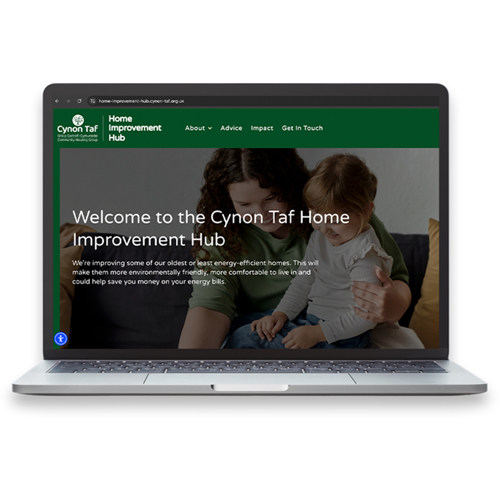
The most significant outcome of this work was the creation of the Home Improvement Hub, a comprehensive digital platform providing tenants with simple, accessible information about home improvements, retrofit works, energy efficiency measures, and new technologies. The hub offers self-service access to guidance, videos, frequently asked questions, and practical advice 24 hours a day, seven days a week, allowing tenants to access information whenever they need it.
The campaign extended beyond digital communications and adopted a truly inclusive, multi-channel approach. Information was delivered through face-to-face engagement events, printed guides, newsletters, videos, social media, QR codes, workshops, and easy-read materials. This ensured that all tenants, regardless of age, digital confidence, literacy levels, or communication preferences, could engage with the information in ways that suited them best.
Collaboration was central throughout the campaign. CTCHG worked closely with tenants, community groups, staff teams, communication specialists, and external partners to ensure messaging remained consistent, trusted, and accessible. Importantly, tenant feedback did not end once the campaign launched. Questions, concerns, and suggestions continue to inform new content added to the Home Improvement Hub, ensuring it remains relevant, responsive, and continuously evolving.
The campaign has also strengthened relationships between tenants and the organisation. By demonstrating a willingness to listen and act on feedback, CTCHG has built greater trust and transparency around home improvement programmes. Tenants have been able to see their views directly influencing communication materials and service delivery decisions, increasing confidence in both the information provided and the wider retrofit programme.
The campaign's success is reflected not only in improved understanding but also in increased tenant participation. New voices emerged through the engagement process, including Danielle, whose involvement began through campaign workshops and has since progressed to becoming an active tenant board member and a Tenant of the Year nominee. This demonstrates how effective communication can become a catalyst for wider tenant empowerment and engagement.
The Home Improvement Hub campaign has transformed the way CTCHG communicates about decarbonisation and home improvements. Through strategic planning, strong partnerships, evidence-based communications, and genuine tenant leadership, the campaign has delivered lasting change. It has improved understanding, increased participation, strengthened trust, and created a sustainable communication model that continues to support tenants while providing a blueprint for best practice across the housing sector.
Outcomes and achievements
The Home Improvement Hub campaign has delivered significant and measurable outcomes for both tenants and Cynon Taf Community Housing Group.
Through independent research, tenant workshops, communication testing, and ongoing engagement, the campaign successfully improved understanding of retrofit works, home improvement programmes, climate change, and emerging home technologies. Tenants reported greater confidence in the information they received and a better understanding of the purpose and benefits of proposed improvements.
The introduction of the Home Improvement Hub created a permanent, accessible source of information available 24/7, providing tenants with clear guidance, videos, FAQs, and practical support whenever needed. This has reduced confusion, improved consistency of messaging, and enabled both tenants and staff to access the same trusted information source.
The campaign also achieved increased engagement and participation. New tenant voices emerged through workshops and consultation activities, with some participants progressing into broader involvement opportunities. A notable example is Danielle, whose first engagement with the campaign led to active participation in tenant governance and recognition as a Tenant of the Year nominee.
Most importantly, the campaign strengthened trust between tenants and CTCHG. By placing tenant feedback at the centre of communication design and continually adapting content in response to resident questions, CTCHG established a sustainable, tenant-led communication model that continues to influence service delivery, improve engagement, and support successful decarbonisation outcomes across its communities.
Hafod Housing Association - Digihwb
Application entry
- Project name: Digihwb
- Lead organisation: Hafod Housing Association
Statement of support
Digital exclusion can create significant barriers for people living in social housing, affecting how they access services, manage their money, stay connected, access education and employment, and maintain their independence. At Hafod, after our Welsh Government funded Minimum digital living standard (MDLS) project, we recognised that there was real demand for digital inclusion support from our customers. Hafod not only pledged to ensure all our customers are meeting the MDLS but committed to extending the employment of our Digital Inclusion Coach for a further 12 months. This led to the development of our DigiHwb service, led by Danielle, our Digital Adoption and Skills Lead, and Gem our Digital Inclusion Coach.
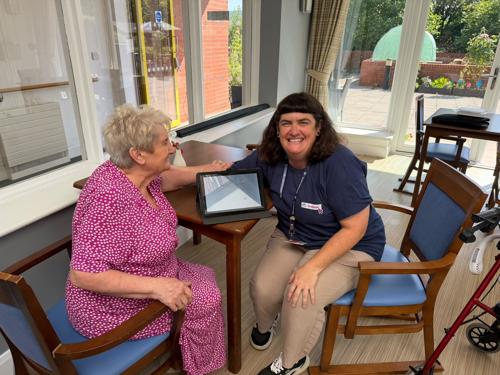
The purpose of the DigiHwb was to continue to support customers across the business with their digital skills and confidence. To do this we worked in partnership and collaborated with our homes and communities’ neighbourhood coaches, customer experience and housing support teams. By working alongside our colleagues who already had established relationships with our customers we could identify which customers would benefit from support. This enabled us to reach individuals who had a variety of different support needs, who live within our communities across four geographical regions, and reach customers in a range of settings such as extra care schemes, our retirement schemes and general needs tenants.
Our planning has been driven by what customers actually need. We recognised that digital exclusion is not one single issue: a customer may lack a suitable device, struggle to afford connectivity, lack confidence or simply not know how to complete a particular digital task. Our DigiHwb model therefore brings all these elements together to ensure that customers are able to thrive in a digital world. As a result, the DigiHwb team have provided practical one-to-one support with phones, tablets and laptops and run monthly digital drop-ins across our extra care and retirement schemes. We have helped customers set up email accounts, download apps, access online services and build their confidence with using their devices. Where connectivity is a barrier, we have provided SIM cards and/or MiFi units, we also discuss affordable broadband options to support our customers to save money. Furthermore, we pride ourselves in being person centred and supporting customers with what they need support with. For example, we have supported Caz, a woman in her 60s to download and play games on her PS5.
In addition, we have developed relationships with external partners such as Kocho and Recognition Circular who have donated laptops that have been securely wiped for us to gift to our customers. Cam, aged 20, living in one of Hafod’s young person’s schemes, said this about being gifted a laptop: “Thank you so much for the laptop. This gift comes at a perfect time and will allow me to do my course. I will now be able to attend online classes. It will help me get my life back on track and I really appreciate your help. Thank you once again!”.
Hafod have also continued to work with the GoodThings Foundation and utilise the Databank so we can provide sim cards to our customers. This has enabled us to tackle digital exclusion by providing much needed devices and connectivity.
The DigiHwb has shown us that digital inclusion is about far more than providing a device or getting someone online. At the heart of it is the customer. It is about taking the time to understand what matters to them, building trust, listening to their needs and giving them the confidence to take the next step, technology is simply the tool the enable this.
Outcomes and achievements
Since its inception in April, DigiHwb has received nearly 100 referrals and has delivered more that 70 digital support sessions. In addition, we have provided over 77 pieces of digital equipment to customers, which include mobile phones, tablets, laptops, sim cards, MiFi units and Amazon Alexas, which have meant substantial cost savings for customers.
One of the achievements of the project is that it enables the provision of digital support in a wide range of environments, including delivering support in our customers’ homes, in regional hubs, via regular drop-ins and within communities. As a result, the impact of the DigiHwb goes beyond the figures. Our person-centred approach means that support is linked to real-life outcomes. Sally, 84, who lives in one of our extra care schemes was given a tablet and supported to set it up and download apps. Sally said, “I am able to watch programmes in bed! And take it to hospital...I think [the support] has been fabulous.” This is just one example of a customer we have supported but demonstrates the wider impact digital inclusion can have on a person's wellbeing and their quality of life.