


Welsh Housing Awards 2026
Read all the shortlisted entries into this award category, Excellence in Housing Innovation, at the Welsh Housing Awards (WHA) 2026 and find out who won the award on the night.
This award recognises programmes or projects that clearly demonstrate an innovative approach which has made a real difference to the lives of tenants and customers
Winning project name
Thrive Project
Winning organisation
Ateb
Statement of support
As customer needs become increasingly complex, housing providers face a critical challenge: how do you engage people when traditional approaches are no longer effective?
The Thrive Project was created by ateb to answer that question.
Thrive is a 12-month pilot based on ateb's innovative Liberated Housing methodology and delivered by a single Housing Solutions Specialist. This submission reflects the first six months of delivery. At its core, Thrive challenges a long-standing assumption in housing management: that non-engagement is a behaviour to be managed. Instead, Thrive treats non-engagement as valuable intelligence, recognising that avoidance or silence often reflects trauma, vulnerability or crisis rather than refusal to cooperate.
Rather than responding to issues in isolation, Thrive uses a whole-risk approach. One specialist builds trusted relationships, identifies root causes and coordinates support to achieve sustainable change.
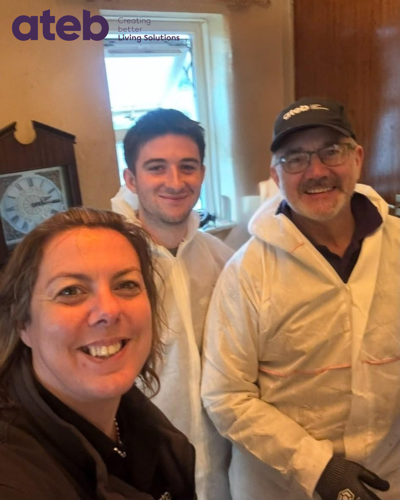
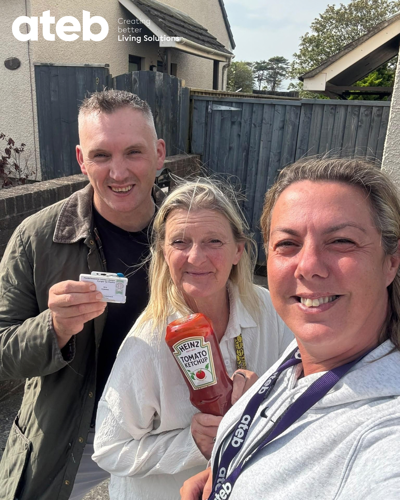
Thrive uses highly personalised engagement techniques tailored to the individual. Progress often starts not with a formal intervention but with a practical act of kindness. In one case, buying a customer a bottle of ketchup helped establish trust and opened the door to wider conversations about support needs and tenancy sustainability. These small but meaningful interactions repeatedly created breakthroughs where traditional housing processes had failed.
Thrive worked with some of ateb's most complex and high-risk households. 84% experiencing mental health difficulties, 74% medical issues, 67% financial problems, 53% neurodiverse, 51% substance misuse issues, 44% safeguarding concerns, 35% hoarding, 30% learning disabilities and 19% experiencing domestic abuse. The majority experienced multiple vulnerabilities simultaneously were and disengagement from support services. Within this highly complex cohort, Thrive achieved measurable outcomes in all 37 households.
Innovation in collaboration has been equally important. Thrive brought together Social Services, Police, Probation, mental health services, health professionals, local authority teams and third-sector organisations around shared goals and coordinated action. Multiple partners have submitted statements of support describing the role as making a "real hands-on difference", strengthening communication, and delivering better outcomes for individuals who often struggle to engage with support.
The intelligence created through these trusted relationships has benefited entire communities. Information gathered through Thrive has supported safeguarding interventions, contributed to successful county lines investigations and assisted domestic abuse enforcement activity and convictions, demonstrating the powerful role housing services can play in identifying risk, protecting vulnerable people and supporting wider community safety.
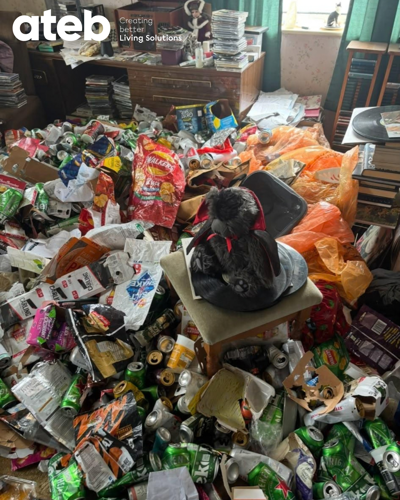
A compliance deep dive reviewed 29 long-standing gas and electrical safety escalation cases that had generated 115 failed appointments and remained unresolved for months, in some cases for over a year. Through engagement rather than enforcement, every case was resolved. More importantly, the review uncovered previously unknown safeguarding concerns, domestic abuse, hoarding, substance misuse, self-neglect, mental health issues and service failures. Thrive transformed compliance from a regulatory process into an early intervention tool capable of identifying hidden vulnerability and preventing crisis.
The impact is best illustrated through lives changed. One customer facing possession action was located in hospital after sustaining life-changing injuries that resulted in the loss of both legs and one arm. Thrive prevented homelessness and protected the tenancy while rehabilitation plans were developed. Another customer, who had refused access and required restraint during access visits for seven years, was engaged through trust-building conversations on a park bench. This led to urgent mental health intervention, resolution of significant tenancy issues and £3,700 payment of rent arrears.
Thrive demonstrates housing innovation is not always about technology or new systems. Sometimes it is about seeing people differently. By replacing enforcement-first thinking with trust, intelligence-led practice and innovative collaboration, one specialist practitioner has transformed outcomes for customers, strengthened communities and redefined what successful housing intervention can look like.
Outcomes and achievements
Out of 37 households achieving measurable outcomes, 84% achieved increased independence, 81% improved mental wellbeing, 68% achieved a safer and healthier home, 60% achieved housing stability, 57% achieved safeguarding improvements, and 57% improved financial resilience. Additional outcomes included substance misuse recovery (32%), protection from exploitation (30%), reduced hoarding risks (27%) and resolution of anti-social behaviour concerns (27%).
The project directly prevented or resolved homelessness risks in 27 households, helping some of ateb's most vulnerable customers remain safely housed. Thrive also recovered £26,947.60 in arrears and delivered £199,800 in direct savings through avoided legal action and tenancy enforcement costs, excluding staff time.
Through an innovative relationship-based approach, Thrive resolved all 29 long-standing gas and electrical safety escalation cases, eliminating 115 failed appointments and uncovering previously unidentified safeguarding concerns, domestic abuse, hoarding, substance misuse, self-neglect and mental health issues.
The project strengthened multi-agency collaboration across housing, Social Services, health, Police, Probation, local authorities and third-sector partners, contributing to safeguarding interventions, county lines investigations, domestic abuse enforcement activity and wider community safety outcomes.
Using HACT Wellbeing Valuation methodology, Thrive generated 124.45 WELLBYs and £871,150 in (50% adjusted) social value, evidencing substantial improvements in wellbeing, independence, safety and long-term housing sustainability.
Shortlisted entries
Merthyr Tydfil Housing Association - Budget Blocks
Application entry
- Project name: Budget Blocks
- Lead organisation: Merthyr Tydfil Housing Association
Statement of support
Budget Blocks: Transforming tenant engagement through innovation
Merthyr Housing developed Budget Blocks, an innovative Monopoly-style board game designed to tackle a longstanding challenge within social housing: helping tenants understand the complex decisions behind investment programmes, compliance obligations and budget allocation, while ensuring their voices directly influence organisational priorities.
Traditional consultation methods often struggle to explain the realities of balancing competing financial demands. As a result, tenants can feel disconnected from decision-making processes and frustrated when improvements they want are not prioritised. Budget Blocks was created to address this challenge in a new and engaging way.
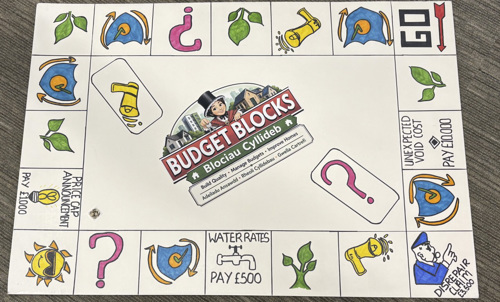
The game places tenants and staff around the same table and gives players responsibility for managing a housing association budget. As they move around the board, they encounter real-life scenarios faced by housing associations every day. Players may secure additional funding through Welsh government grants to support retrofit and decarbonisation programmes or face unexpected financial pressures such as increased National Insurance contributions, compliance costs or disrepair claims that require immediate spending decisions.
Unlike traditional engagement events where information is presented to tenants, Budget Blocks creates a shared experience where both tenants and staff learn together. The game encourages discussion around Welsh Housing Quality Standards (WHQS), decarbonisation, asset management, planned improvements, regulatory compliance and financial sustainability. Through gameplay, tenants gain an understanding of the difficult choices organisations must make, while staff gain valuable insight into tenant priorities and expectations.
A key element of innovation is the collaborative design and delivery of the project. Sessions were attended by tenants alongside members of the executive team and senior leadership team. This broke down traditional barriers between decision-makers and residents, creating open and honest conversations in a way that formal consultations rarely achieve. By placing senior leaders and tenants in the same environment, Budget Blocks demonstrated a genuine commitment to co-production and customer influence.
The project has already delivered measurable improvements in customer understanding, relationships and trust. During workshops, tenants identified priorities relating to planned maintenance, WHQS compliance, sustainability initiatives and reactive repairs. Feedback highlighted a significantly improved understanding of how investment decisions are made and the financial pressures affecting housing providers.
One tenant from Georgetown reflected on the experience: "Before the activity, I had frustrations because I didn't understand how kitchen upgrades were awarded or how improvements were prioritised. The game helped me understand how the housing association manages its budgets and the challenges involved in making those budgets work. The biggest difference was being able to sit down with senior managers and hear directly about timescales, investment decisions and their approach. I still want a new kitchen, but I can better appreciate why decisions are made."
This feedback demonstrates a tangible improvement in customer understanding and transparency, helping to reduce misconceptions while strengthening relationships between tenants and the organisation.
Gemma Watkins, Director of Operations, said: "Budget Blocks has given us a unique way to understand what matters most to our tenants. The game has helped both tenants and staff appreciate the challenges of balancing budgets, meeting housing standards and managing expectations. Most importantly, it has enabled participants to recognise the difference between making decisions with the head and the heart, as tight budgets often mean we cannot do everything we would like to do. Decision-making is guided by tenant-led priorities, and engagement events such as these have created meaningful conversations that will influence how we approach future investment decisions”.
Budget Blocks demonstrates that innovation does not always require new technology. By reimagining tenant engagement through a creative and interactive approach, Merthyr Housing has improved understanding, strengthened trust, increased meaningful participation and placed tenant priorities at the heart of decision-making. The project has delivered real benefits for both residents and the organisation and provides a model that could be replicated across the housing sector.
Outcomes and achievements
Budget Blocks has transformed tenant engagement at Merthyr Housing by replacing traditional consultation methods with an innovative, interactive budgeting experience. The project has improved tenants' understanding of how housing budgets are allocated, the challenges housing associations face, and how investment decisions are made.
The initiative has increased transparency and strengthened trust by bringing tenants together with executive and senior leadership team members, creating meaningful two-way conversations and breaking down barriers between decision-makers and residents. Feedback demonstrated increased understanding of the competing demands of planned improvements, compliance obligations, reactive repairs and decarbonisation programmes.
Most importantly, Budget Blocks has directly influenced service planning and investment decisions. Through tenant feedback, Tai Merthyr adopted a more balanced approach to kitchen and bathroom replacements, considering both age and condition rather than age alone. Tenants also expressed strong support for measures that reduce household energy costs, leading to the prioritisation of solar panel installations where suitable. Feedback on repair priorities has been incorporated into WHQS compliance certificates, and tenants now receive clearer information on planned major repairs and investment timescales.
The project has delivered stronger tenant influence, improved understanding, greater transparency and a replicable model for meaningful tenant engagement and co-production across the housing sector.
Trivallis - Living Well, Living Together / Daisy Referrals
Application entry
- Project name: Living Well, Living Together / Daisy Referrals
- Lead organisation: Trivallis
- Partner organisations: News Pathways, Safer Merthyr Tydfil
Statement of support
Live Well Living Together began with a simple housing question: how can we prevent conflict and create safer, more supportive communities in sheltered housing?
Rather than starting with enforcement or assuming we knew what tenants needed, Trivallis brought older tenants together to talk openly about their experiences of living in shared environments. Delivered across sheltered housing schemes in Rhondda Cynon Taf (RCT) in January, the sessions created safe, informal spaces where tenants could discuss relationships, respect, boundaries, sexual harassment and the challenges of living closely alongside others.

The approach was innovative because it moved beyond traditional anti-social behaviour responses and focused on prevention, early intervention and tenant voice. Separate sessions for men and women were offered, helping participants feel more comfortable discussing sensitive issues. Tenants were not simply given information. Their experiences and ideas helped shape how Trivallis could better support people in future.
The project was delivered collaboratively with Safer Merthyr Tydfil and New Pathways, bringing specialist knowledge of community safety, sexual violence and safeguarding into a housing environment. This partnership enabled conversations that may not otherwise have happened and helped Trivallis understand the barriers that can prevent older people from talking about difficult experiences.
The impact has gone beyond the original sessions. Learning from Live Well Living Together has led to the development of a Daisy referral system, creating a new route for tenants to flag a potential safeguarding or sexual harassment concern without having to disclose everything or be ready to talk about what has happened.
Tenants can now request a Daisy referral during their annual CARE assessment or at any other time. This recognises an important reality: someone may know that something does not feel right, but may not yet feel ready or able to explain why. The referral creates a bridge between noticing a concern and accessing support, giving tenants greater choice and control over when and how they disclose.
This is a significant shift in practice. Rather than expecting people to come forward with a fully formed disclosure, Trivallis has created an earlier, lower-barrier opportunity to ask for help. It embeds the learning from the project into an existing tenant contact point, making the approach sustainable rather than dependent on individual campaigns or conversations.
The work has also demonstrated the value of collaboration beyond Trivallis. Following the success of the partnership with New Pathways, funding has been secured from Welsh government to continue the sessions and extend their reach. Learning from the project is also being shared through EROSH (Emerging Role of Sheltered Housing), allowing other social landlords and communities to consider how the approach could be adapted locally.
What started as an attempt to better understand and prevent anti-social behaviour has therefore developed into a broader approach to safeguarding, relationships and community wellbeing. It demonstrates what can happen when housing organisations listen first, work alongside specialist partners and design services around the reality of people's lives.
Live Well Living Together has helped tenants feel more confident to talk about difficult issues, strengthened connections between tenants and partners, and changed the way Trivallis creates opportunities for concerns to be raised. Most importantly, it has put tenant experience at the heart of developing a safer and more supportive sheltered housing environment.
Outcomes and achievements
Live Well Living Together has created measurable change in both tenant support and Trivallis' approach to safeguarding.
- Tenant voice directly influenced service development. Feedback and experiences shared during the January sessions informed the development of the Daisy referral system.
- A new early-help route is now available. Tenants can request a Daisy referral during their annual CARE assessment or at any other time, allowing them to flag a potential safeguarding or sexual harassment concern even when they are not ready to make a full disclosure.
- The approach reduces a key barrier to seeking help. Tenants do not have to explain everything immediately. They can signal that something may be wrong and retain greater choice over what happens next.
- Partnership working has created further investment. Following the work with New Pathways, funding has been secured from Welsh government to continue delivering the sessions and reach more older people.
- Learning is influencing the wider sector. Project learning is being shared through EROSH (Emerging Role of Sheltered Housing), giving other social landlords the opportunity to consider and adapt the approach.
- Tenants reported greater confidence to discuss difficult issues, understand boundaries and consider how they and their neighbours can contribute to safer, more supportive communities.
The project has therefore moved from a series of conversations to a change in service design, embedding prevention and early intervention into the way Trivallis works with older tenants.