

Welsh Housing Awards 2026
Read all the shortlisted entries into this award category, Supporting Independent Living, at the Welsh Housing Awards (WHA) 2026 and find out who won the award on the night.
This award recognises landlords who play a vital part in providing housing-related support to a wide range of people.
Winning project name
Ford Road Supported Living
Winning organisation
First Choice Housing Association
Partner organisations
Aneurin Bevan University Health Board and Walsingham support
Statement of support
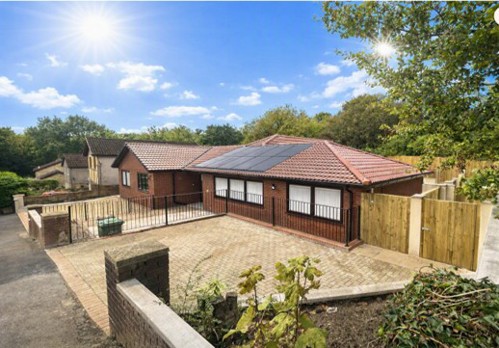
Ford Road is an innovative supported living development in Caerphilly that demonstrates how housing, health and support providers can work together to deliver independence, wellbeing and long‑term sustainability for people with complex learning disabilities. Developed through partnership between First Choice Housing Association (FCHA), Aneurin Bevan University Health Board (ABUHB), Walsingham Support, Welsh government and the Regional Partnership Board, the project responds to a critical shortage of specialist supported living provision across Gwent. Ford road provides a rights‑based, person‑centred alternative to institutional and inpatient care, enabling people to hold their own tenancy, shape their support, and remain connected to their communities.

Innovation and creativity
Ford Road’s design process placed tenants at the centre of every decision. Working closely with multidisciplinary teams, FCHA ensured that décor, fixtures, accessibility features, sensory considerations and specialist anti‑ligature fittings were chosen with direct tenant involvement. This resulted in a home that is tailored to the tenants, whilst promoting privacy and independence. The development demonstrates creative use of bespoke design to reduce restrictions and support safe independence.
Partnership and collaboration
The project exemplifies integrated working across housing, health and support providers. Partners collaborated to resolve delayed discharge, design specialist accommodation, and deliver responsive support. Partners have worked together to ensure residents remain at the centre of all decision‑making. This shared approach enabled successful transition from inpatient and institutional settings into sustainable community based homes.
Impact on tenants
Ford Road has delivered life changing outcomes. Tenant A had spent over three years in an inpatient assessment and treatment unit due to lack of suitable accommodation, while Tenant B had experienced repeated moves between institutional settings. The development has enabled both of them to move from restrictive environments to homes where they have control over their own autonomy and independence.
Both tenants now prepare meals, shop independently, attend appointments, manage household tasks and make decisions about their daily routines. Tenant A has developed confidence accessing local amenities and participates in activities across Caerphilly, Blackwood, Bargoed and Nantgarw. Tenant B has demonstrated improved self‑management, healthier lifestyle choices and increased confidence in managing their own health needs.

Health outcomes include reduced PRN usage, stable medication, improved engagement with healthcare services and increased emotional stability. Family relationships have strengthened and reviews have noted that this would not have been possible “had they remained in hospital settings or been placed outside their community” . A particularly meaningful milestone was Tenant A celebrating Christmas in their own home for the first time, proudly decorating their space, a powerful indicator of belonging and independence and something that previously he would not have been able to tolerate.
Sustainability and long‑term outcomes
Ford Road has delivered stable tenancies, reduced reliance on institutional care, improved wellbeing and increased community inclusion. The goal‑based outcome measures demonstrate clear progress towards personal goals, with Tenant A showing a trajectory of stability, independence, and meaningful engagement. The model provides long‑term sustainability through personalised support, safe environments and strong partnership oversight.
Replicability and sector learning
The development offers a replicable model for addressing delayed discharge, designing bespoke supported living environments and delivering integrated care. It shows how specialist housing can unlock independence for people with complex needs when partners commit to co‑production, shared responsibility and tenant‑centred practice.
Ford Road demonstrates what is possible when housing, health and social care work together. It has given two individuals not just a home, but independence, dignity, community connection and a future shaped by their own choices. It stands as a model of best practice in supported independent living and a powerful example of how the right home in the right place can transform lives.
Outcomes and achievements
Ford Road has delivered significant outcomes across independence, wellbeing, partnership working and long term sustainability. The development resolved over three years of delayed discharge for Tenant A and ended repeated institutional placements for Tenant B, enabling both to transition safely into their own tenancies. Through collaboration partners achieved successful discharge from inpatient and private settings into stable and sustainable tenancy arrangements.
Both tenants have developed core independent living skills, now completing shopping, cooking, household tasks, prescription collection and appointment attendance independently. Tenant A has increased confidence accessing community amenities and regularly participates in activities across Caerphilly, Blackwood and Nantgarw. Tenant B has demonstrated improved self management, healthier lifestyle choices and greater confidence in managing their own health needs.
Health and wellbeing outcomes include reduced PRN medication usage, stable medication regimes, improved engagement with healthcare services, increased emotional stability and strengthened family relationships. The development has enhanced autonomy, self advocacy and community inclusion, with tenants exercising daily choice and control. These achievements demonstrate meaningful progress towards personal goals and highlight the transformative impact of person centred supported living.
Both tenants expressed a clear aspiration to have their own home within their community, and Ford Road has enabled this aspiration to become a reality.
Shortlisted entries
Adra Housing Association - Adra Supported Independent Living
Application entry
- Project name: Adra Supported Independent Living
- Lead organisation: Adra Housing Association
Statement of support
Across 18 supported housing schemes in North Wales, Adra helps older and disabled residents live safely and independently. In 2025/26, 401 people received the service, with 89.5% satisfaction.
The service supports people aged over 55 and disabled people who need tailored help to sustain their tenancy.
Supported housing officers provide calls and home visits up to three times a week. This trusted contact identifies changing needs early and connects people with other support services and agencies.
Officers develop person-centred support plans around each individual’s priorities and strengths. Practical support and social activities build confidence, independence and stronger communities.
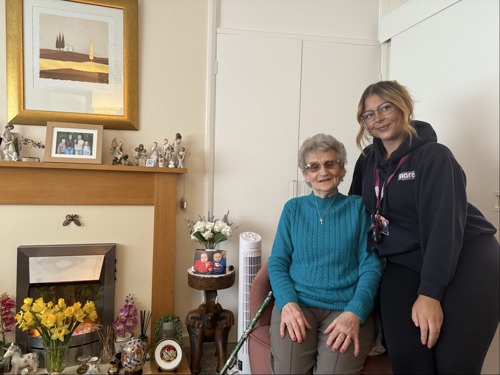
The service works with community organisations to connect residents with activities, volunteering, interest groups and events. Local people are also invited into schemes for shared activities, helping residents and neighbours meet, form friendships and reduce isolation in a familiar setting.
Partnerships with social services, Shelter Cymru, North Wales Police, North Wales Fire and Rescue Service, Galw Gofal, Age Cymru and mental health teams provide expertise in safeguarding, finances, home safety, adaptations and coordinated intervention.
Frequent local contact, personalised planning, prevention and partnership working reinforce suitable housing with the practical help people need to remain safe and independent.
Partnership impact
Shelter Cymru described an officer’s advocacy for a client receiving debt advice as “invaluable”, noting that compassion built trust and helped the case progress.
North Wales Fire and Rescue Service reported that joint home safety visits enhanced safety and reassurance.
North Wales Police cited joint visits, information sharing and community-based working as contributors to positive outcomes.
Case study one: sustaining independence
Sulwen values living independently but benefits from reassurance and practical help. Her Supported Housing Officer, Enfys, provides trusted support while encouraging her to retain control of daily life.
Sulwen said: “I’m very lucky to have the help and support of my family, but it’s lovely to have Enfys too as extra support.”
Case study two: connection and wellbeing
At Llys yr Eifl, Caernarfon, residents transformed a shared space into an award-winning community garden where friendships grew alongside the produce.
A resident said the garden gave tenants “a hobby, time outdoors and a chance to get moving”. It reduces isolation, encourages activity and creates shared pride.
By combining scale with individual attention, Adra helps people feel safe, valued and connected—and live independently for longer.
Outcomes and achievements
- 18 different supported housing schemes
- 401 clients received the service in 2025/26
- 89.5% satisfaction with the supported housing service.
Independence and confidence
- Improved quality of life, independence and confidence
- Longer independent living through tailored, practical support.
Safety and prevention
- Earlier identification of changing needs and quicker access to appropriate support
- Greater safety, security and reassurance for tenants and their families.
Connection and wellbeing
- Reduced isolation and stronger community connections
- People feeling valued, listened to and supported
- Tenant feedback includes: “It’s great—the warden is really helpful; nothing is too much for her.”
ClwydAlyn - Neuadd Maldwyn, Welshpool
Application entry
- Project name: Neuadd Maldwyn, Welshpool
- Lead organisation: ClwydAlyn
- Partner organisation: Powys County Council
Statement of support
The £11.6 million Neuadd Maldwyn scheme, owned and operated by Denbighshire-based housing association ClwydAlyn, provides purpose-designed independent living with tailored care and support for 66 older people who need it.
Developed in partnership with Anwyl Partnerships, Powys County Council, Welsh government and Powys Teaching Health Board, the scheme responds to significant demand for high-quality housing for people aged over 60 in the Welshpool area. Priority for homes was given to local residents with assessed care or support needs. ClwydAlyn provides housing management and ancillary services, while Powys County Council delivers on-site domiciliary care for residents requiring additional support.
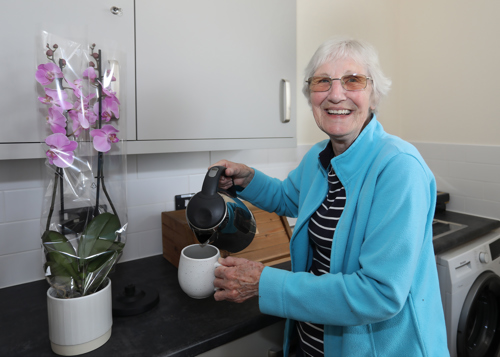
Neuadd Maldwyn offers a supportive environment that promotes independence, health and wellbeing while enabling residents to remain connected to a vibrant community. The development includes 66 modern one and two-bedroom apartments alongside a wide range of communal facilities, including a restaurant, activity room, landscaped gardens, lounges, laundry facilities, buggy store, assisted bathrooms and other shared spaces.
At the heart of the development is the sympathetic conversion of the former Neo-Georgian Grade II listed council offices, originally completed in 1931. Combined with newly constructed homes, the development has created an attractive town-centre living community that balances heritage with modern living. Residents benefit from parking, landscaped outdoor areas and easy access to local amenities, all within walking, wheeling or riding distance.
The apartments have been designed to support residents' changing needs, ensuring homes remain suitable for later life. Every home is fully accessible and includes walk-in showers, grab rails and emergency pull-cord alarms. High levels of insulation and modern technology improve energy efficiency while helping residents maintain their independence.
A key feature of Neuadd Maldwyn is its focus on wellbeing through both practical and social support. Residents are offered a nutritious two-course lunch each day in the scheme's spacious restaurant, with meals tailored to individual dietary needs. Dedicated staff help maintain a safe, secure and welcoming environment, while a maintenance team is on hand to assist with repairs and upkeep.
Communal spaces play an important role in reducing isolation and encouraging social interaction. Residents can use shared lounges and activity areas independently or take part in organised events and groups. ClwydAlyn actively encourages residents to shape and lead social activities themselves, creating a strong sense of ownership and community.
Regular activities include dominoes, quizzes, film afternoons and gardening sessions. Organised trips have also proved popular, with residents enjoying visits to local attractions including the nearby steam railway, canal barge trips and outings into Welshpool town centre.
Resident feedback demonstrates the positive impact the development has had on quality of life, independence and wellbeing.
Resident Mick Hilton praised the thoughtful design of the apartments, particularly the accessible bathrooms, commenting that "considerable thoughtful care has gone into planning these assisted living homes." He also noted that the scheme had improved his lifestyle and wellbeing beyond expectation and provided opportunities for daily social interaction.
Resident Peter Cork described moving to Neuadd Maldwyn as "the best decision I've ever made", saying it had helped him enjoy life again.
For Sharon, who had spent almost five years living in a motorhome, caravan and temporary accommodation, the scheme provides long-term security and the reassurance of finally having a permanent home.
Jenny highlighted how the development allows her to maintain her independence while benefiting from a supportive and welcoming environment, describing both the people and homely atmosphere as among its greatest strengths.
Through its combination of accessible design, high-quality care, communal facilities, sustainability measures, strong partnerships and excellent town-centre location, Neuadd Maldwyn is delivering an innovative and future-proofed model of later living that enables residents to live independently, confidently and well.
Outcomes and achievements
Neuadd Maldwyn is a purpose-built Independent Living Scheme for older people, offering a combination of an independent lifestyle, with 24-hour on-site care and support as needed, providing peace of mind for residents now and the future.
ClwydAlyn utilised extensive experience to develop the high-quality apartments, which are purpose built to provide an ideal environment for resident’s needs, offering flexible care, support and assistance to promote independence.
In the words of one Neuadd Maldwyn resident: “Since moving into my apartment, I feel alive, and I’m enjoying my life. It’s the best decision I’ve ever made.” Peter Cork – Neuadd Maldwyn resident.
Welshpool has long been identified as an area where better living options were needed for the ageing population. Neuadd Maldwyn fulfils this requirement, whilst sustainably utilising a historic building and repurposing it as a community asset.
This development demonstrates that providing outstanding independent living accommodation entails much more than offering a roof over someone’s head. When moving into Neuadd Maldwyn residents become part of a vibrant community; they retain their independence, express a choice in how they live, maintain dignity and sustain a sense of control over their lives; all with the peace of mind that help is available when needed.
Valleys to Coast - Restoring pride and connection in our communities
Application entry
- Project name: Restoring pride and connection in our communities
- Lead organisation: Valleys to Coast
Statement of support
When an external grounds maintenance contract ended in late 2025, Valleys to Coast chose not to re-tender automatically. Instead, leaders paused to ask a fundamental question: What do customers actually need?
Many customers, particularly those living with health conditions or limited mobility, spent most of their time at home, yet felt unable to access or enjoy their own gardens.
Working together with residents
Rather than making assumptions, Valleys to Coast launched a simple, two-stage consultation to shape the new service directly alongside residents:
Teams sat down for informal, everyday chats with residents to learn what would make a real difference to their daily lives. The consensus was clear: customers wanted outdoor spaces that lifted their spirits and gave them a reason to spend time together outside.
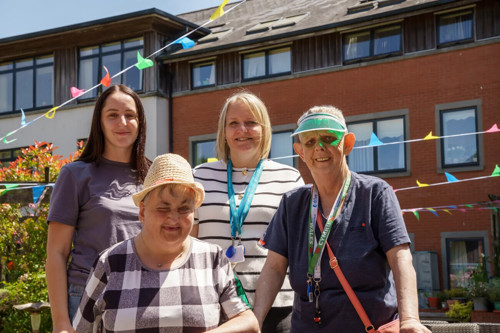
Valleys to Coast introduced residents directly to the estates team members responsible for looking after their gardens. Listening and building direct relationships laid a strong foundation of trust and shared ownership.
Because service charges fund this upkeep, ensuring value for money was essential. By removing commercial profit margins, Valleys to Coast reduced weekly service charges by an average of £1 per week for every customer, while delivering a higher-quality, more attentive service.
Small details, big impact
The estates team now tailors every visit around the safety, dignity, and mobility of residents. Colleagues focus on the essential details that matter most, tidying path edges, clearing slippery moss, and pruning intruding brambles so residents can move around safely with peace of mind.
The positive impact on resident wellbeing has been significant. Customers now look forward to the team's regular 18–20 day maintenance cycle. As one colleague reflected:
"It really hit home that our customers weren't getting to enjoy the gardens they paid for. This was never just about cutting grass; it was about helping people feel connected and combating isolation."
Valleys to Coast views this service as an evolving partnership. The team now provides free plants and compost so residents can potter outdoors at their own pace, organises friendly scheme-wide growing competitions, and maintains an open dialogue on every visit. By working together with residents, Valleys to Coast has done more than maintain green spaces; it has helped restore independence, connection, and pride in the places customers call home.
Outcomes and achievements
Engaged 178 residents across seven schemes to shape a bespoke, customer-centred in-house grounds service.
Removed commercial contractor profit margins to cut resident service charges by an average of £1 per week per customer while improving quality, transparency, and trust.
Prioritised mobility-focused maintenance, clearing moss, edging walkways, and pruning hazard-causing brambles, enabling residents with health conditions to safely enjoy the outdoors.
Transformed underutilised outdoor spaces into welcoming communal hubs that foster social interaction and serve as restorative sensory spaces.
Received heartfelt testimonials from residents who look forward to the team's regular 18–20 day visit cycle.
Built engagement into every visit, offering gardening supplies (plants and compost) and scheme competitions to support hobbies and local pride.
Hafod Housing - Ty Heulog Extra Care Scheme
Application entry
- Project name: Ty Heulog Extra Care Scheme
- Lead organisation: Hafod Housing
Statement of support
This nomination celebrates the life-changing impact of person-centred housing support and extra care in enabling residents to live with greater independence, confidence and purpose. It brings together two resident journeys which show how the right home, the right support and the right opportunities can transform wellbeing, choice and community connection.
The first resident has lived in one of the organisation’s extra care schemes for two years and has significant medical factors and support needs. When she first moved in, she was anxious in unfamiliar situations, lacked confidence meeting new people and found group settings, formal meetings and speaking in front of others particularly challenging. The team recognised that independent living meant more than providing a safe and suitable home. It meant creating an environment where she felt valued, included and able to take part in decisions affecting her life.
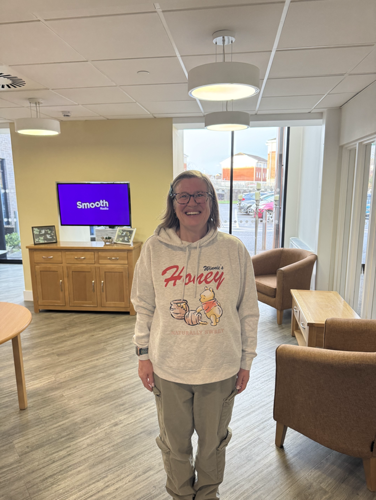
Through trusted relationships, consistent encouragement and a strengths-based approach, she began taking small but meaningful steps. She attended supported classes, along with the gym, to improve her mental health and wellbeing, built new routines and developed social connections. As her confidence grew, she became involved in wider organisational activities that would once have felt out of reach. She supported our organisation with interviews for new staff, asked candidates questions and gave thoughtful feedback that contributed to recruitment decisions.
Her involvement developed further through a resident-led funding activity. She helped bid for funding on behalf of residents at the scheme and later took on the role of a “dragon”, listening to funding pitches from other residents and helping decide whether projects should be supported. A key milestone was presenting to the organisation’s Chief Executive and an audience of people she did not know. She spoke about how much she enjoys living at the scheme, how support and the dynamics of the home, has improved her life and how she now helps other residents who may be less confident or more isolated.
The second resident’s journey shows independent living from another perspective. At 53, she was living with cerebral palsy, and completely wheelchair dependent, in a residential care home, where her care needs were met but her quality of life was limited. She was significantly younger than many people around her, felt unhappy and isolated, and lacked the independence, friendships and social opportunities that mattered to her.
The team recognised that extra care could offer a better balance of safety, support and freedom. Rather than making an immediate permanent move, the resident was offered a stay in the scheme’s respite flat. This enabled her to experience the environment, understand the support available and decide whether the transition felt right for her. The approach was careful, respectful and person-centred, allowing her to make an informed choice at her own pace.
The trial was a success. She quickly settled, loved the scheme and showed that, with the right support and adaptations, she could live more independently. The organisation supported her permanent move, and her flat has since been adapted so she can prepare her own food independently, regain practical daily living skills and feel more in control of her routine.
Together, these stories demonstrate that independent living is not a single outcome but a personal journey. For one resident, it meant building the confidence to speak up, influence services and support others. For the other, it meant moving from residential care into a home where she could make choices, build friendships, access her community and regain control of everyday life. Both journeys show the importance of positive risk-taking, listening carefully and focusing on what people can do when the right environment is created around them.
Outcomes and achievements
The outcomes for both residents have been transformational. One resident has grown in confidence, wellbeing and belonging. She now contributes to staff recruitment, helps make resident funding decisions, presents to senior leaders and supports others within the scheme, looking to develop further. Her journey shows a powerful shift from needing reassurance to becoming an active, valued voice in her community: “I feel so worthwhile and now feel I have a purpose.”
The second resident has regained independence, choice and social connection after moving from residential care into extra care. With the right support and adaptations, she now uses a scooter, gets out independently, prepares food in her own flat and has developed friendships. She describes being “much happier” because she has her own place and says, “It’s lovely to be independent.”
Together, these achievements show housing support at its best: helping people live safely while promoting dignity, confidence, inclusion and purpose. Both residents are not simply receiving support; they are shaping their own lives, taking positive risks and building stronger connections with their communities.