

Welsh Housing Awards 2026
Read all the shortlisted entries into this award category, Working in Partnership, at the Welsh Housing Awards (WHA) 2026 and find out who won the award on the night.
This award recognises partnership and collaboration across the housing spectrum.
Winning project name
Sustainable Partnerships in Action: ClwydAlyn, Isle of Anglesey County Council and Williams Homes (Bala) Delivering Low-Carbon, High-Quality MMC Housing in North Wales
Winning organisation
ClwydAlyn
Partner organisations
Isle of Anglesey County Council and Williams Homes (Bala)
Statement of support
In the face of rising housing demand, construction costs and carbon reduction targets, ClwydAlyn, Isle of Anglesey County Council and Williams Homes (Bala) developed a partnership demonstrating what can be achieved when a registered social landlord, local authority and private sector developer work together.
The partnership was built around a goal: increasing the supply of affordable homes on Anglesey while tackling fuel poverty and supporting sustainable communities. As housing need grew, all three organisations recognised the need for a solution that could accelerate delivery, reduce risk and create social value.
Building on a longstanding relationship forged through previous housing developments, the partners established a collaborative delivery model combining ClwydAlyn’s development expertise, the council’s housing ambitions and Williams Homes’ construction capability and local knowledge.
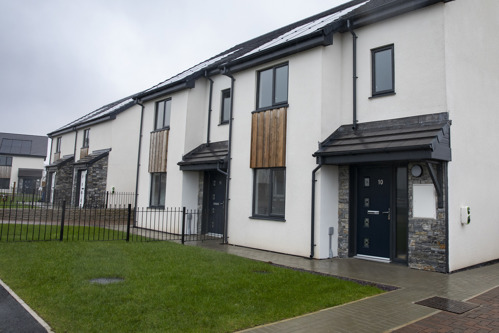
ClwydAlyn led the development process, managing design, stakeholder coordination and project delivery. The council provided strategic direction, ensuring the scheme responded directly to local housing needs and supported community objectives. Williams Homes played a pivotal role as construction partner, bringing expertise in quality housebuilding, programme management and delivery. Together, the partners maintained rigorous standards, supported by ClwydAlyn’s technical team and clerk of works function.
A challenge emerged when administrative constraints made the council’s funding mechanism unworkable. Rather than allowing progress to stall, the partnership found a solution. ClwydAlyn stepped in to cashflow the development and create a turnkey delivery model, while Williams Homes maintained momentum on-site and the council remained focused on securing housing outcomes. This approach enabled the homes to be transferred seamlessly on completion, removing barriers that could otherwise have delayed delivery.
The partnership is showcased at Pentraeth, where 23 EPC A-rated affordable homes were delivered through a mixed-tenure approach. Thirteen homes were retained by ClwydAlyn for social rent allocations through the housing register, while 10 homes were sold to the council for intermediate rent through Tai Teg. Working together from concept to completion, the partners ensured the development met a range of local housing needs while maximising community benefit.
The collaboration demonstrated how strong partnerships can navigate planning challenges. ClwydAlyn, the council and Williams Homes worked closely to deliver homes within a sensitive setting while incorporating sustainable drainage systems, public open spaces and a community orchard, ensuring the development enhanced its surroundings.
Innovation sits at the heart of the project. Through collaboration, the homes were built using modern methods of construction and local Welsh timber-frame technology. Williams Homes’ build expertise and offsite workshop inside HMP Berwyn were instrumental in driving these methods. Simultaneously, ClwydAlyn and the council ensured sustainability and community impact remained central to the vision. Crucially, the initiative delivered social value through an offender mentoring programme at HMP Berwyn, where inmates manufactured timber panels, equipping 25 individuals with industry qualifications and pathways to future employment.
Sustainability benefits have been impressive. The homes include high-performance wood-fibre insulation, air-source heat pumps and solar photovoltaic panels, creating energy-efficient homes that exceed regulatory standards. These features help reduce energy consumption, lower household costs and support health and wellbeing for residents while contributing to environmental goals.
The partnership extends beyond construction. ClwydAlyn manages shared public open spaces, sustainable drainage infrastructure and landscaping on behalf of residents, invoicing the Council annually for its agreed share. This arrangement ensures long-term asset management and maintains neighbourhood quality for future generations.
Importantly, the model is transferable. By combining ClwydAlyn’s development expertise, the council’s strategic leadership and Williams Homes’ construction capability, the partnership has created a blueprint that can support affordable housing delivery at pace. Together, the organisations have shown how partnerships can overcome financial, operational and environmental challenges to deliver sustainable homes that strengthen communities and improve lives across North Wales.
Outcomes and achievements
The partnership between ClwydAlyn, Isle of Anglesey County Council and Williams Homes (Bala) delivered a practical and scalable housing model that combines sustainable construction, financial flexibility and strategic ambition.
At Pentraeth, the partnership delivered 23 EPC A-rated affordable homes through a mixed-tenure approach, comprising 13 social-rented homes managed by ClwydAlyn and 10 intermediate-rental homes managed by the council through Tai Teg. Delivered using modern methods of construction and Welsh timber, the homes feature air-source heat pumps, solar PV and enhanced insulation, reducing energy use and tackling fuel poverty.
ClwydAlyn cashflowed the development and implemented a turnkey acquisition model. Williams Homes maintained construction progress and quality standards, while the council ensured the homes met identified housing needs. This collaborative approach enabled delivery of affordable housing without increasing development risk or requiring additional local authority delivery capacity.
The scheme generated social value through its partnership with HMP Berwyn, where the manufacture of timber wall panels helped 25 inmates gain construction-related qualifications; improving future employment prospects.
Residents are benefiting from lower household costs, improved wellbeing, greater housing security and stronger community connections. Importantly, the partnership has established a proven model that can be replicated across Wales to accelerate delivery of sustainable affordable homes.
Shortlisted entries
Hafod - Connected for change: The Hafod and Aico partnership
Application entry
- Project name: Connected for change: The Hafod and Aico partnership
- Lead organisation: Hafod
- Partner organisation: Aico
Statement of support
Hafod and Aico have developed an innovative partnership that demonstrates how housing providers and technology specialists can work together to improve customer wellbeing, strengthen digital inclusion and deliver better housing services.
Through the installation of 986 Aico HomeLINK systems across Hafod homes, the partnership has transformed the way customers engage with their homes. Funded through the Optimised Retrofit Programme, the project combines environmental monitoring technology with a customer-facing application that provides real-time information about living conditions within the home. This has enabled a shift from reactive intervention towards prevention, helping customers and colleagues identify concerns before they escalate.
The partnership is built on a shared commitment to customer engagement. Rather than simply installing technology, Hafod and Aico worked together to ensure customers understood the benefits and were supported to use the tools available to them. The Aico HomeLINK customer application acts as a personal home health check, helping customers understand factors such as temperature, humidity and indoor air quality while providing practical recommendations to improve comfort and wellbeing. Customers can access information about their home environment and take positive action to maintain healthier living conditions.
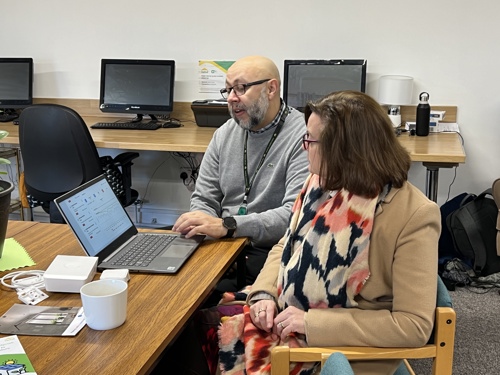
A key strength of the partnership has been its focus on digital inclusion. Aico representatives attended various resident engagement events alongside Hafod colleagues to support application downloads, answer questions and provide practical demonstrations. These sessions were designed to ensure customers of all ages and digital confidence levels could participate. Working together, Hafod, Aico and Hafod's digital inclusion team provided one-to-one support and guidance to remove barriers and build confidence. This collaborative approach ensured that technology became an enabler rather than a barrier for customers.
Throughout the year, Sue James from Aico has worked directly alongside Hafod's decarbonisation engagement officer, attending events, community sessions and home engagement visits. This visible and consistent presence has helped build trust with customers and has significantly increased awareness and uptake of the resident application. It has also enabled customers to provide direct feedback, helping both organisations continuously improve the customer experience.
The impact of the partnership extends beyond customer engagement. Data generated through the HomeLINK systems allows Hafod to proactively identify homes at risk of damp, mould and poor indoor environmental conditions. This supports earlier intervention, helping to prevent issues that can negatively affect health and wellbeing. The technology also helps identify homes that may be experiencing excessively cold conditions, enabling targeted support for customers who may be vulnerable to fuel poverty.
The partnership has also demonstrated sector leadership. Hafod showcased the technology and resident benefits to former First Minister Eluned Morgan as part of the Optimised Retrofit Programme. This provided an opportunity to demonstrate how connected technologies, customer engagement and collaborative working can improve housing outcomes across Wales.
The partnership is also fostering continuous improvement with Hafod customers being chosen to trial the BETA version of a new and improved Aico HomeLINK resident app that will allow residents to be even more proactive around improving their homes environment and taking action on any issues or defects.
By combining technology, resident empowerment and meaningful partnership working, Hafod and Aico have created a model of best practice that is improving service delivery, supporting healthier homes and strengthening communities. The partnership demonstrates how organisations can achieve greater impact when they work together around a shared purpose and a commitment to customers.
Outcomes and achievements
- 986 Aico HomeLINK systems installed across Hafod homes, creating one of the largest connected housing deployments within Welsh housing.
- Aico and Hafod delivered three customer engagement events focused on digital inclusion, customer education and application uptake.
- Customer received practical support, demonstrations and one-to-one guidance to increase confidence in using the Aico application.
- Sue James from Aico worked alongside Hafod's decarbonisation engagement officer throughout the year, strengthening customer engagement and supporting successful application adoption.
- The Aico application has enabled customers to better understand their home environment and take positive action to improve comfort, air quality and wellbeing.
- The partnership supports proactive identification of damp, mould and poor indoor environmental conditions, allowing earlier intervention and improved customer outcomes.
- Data insights have helped identify households potentially affected by fuel poverty, enabling targeted support and engagement.
- The project was showcased to First Minister Eluned Morgan through the Optimised Retrofit Programme as an example of innovation, collaboration and customer-centred service delivery.
- Aico choosing Hafods customers to trial a new version of the Aico HomeLINK customer app.
- The partnership has established a scalable model demonstrating how technology, engagement and collaboration can improve housing services and community wellbeing across Wales.
Swansea Council - Working together to increase Temporary Supported Accommodation to help prevent homelessness in Swansea – The Llys Glas Story
Application entry
- Project name: Working together to increase Temporary Supported Accommodation to help prevent homelessness in Swansea – The Llys Glas Story
- Lead organisation: Swansea Council
- Partner organisations: Codi Group and Welsh government
Statement of support
Llys Glas is an innovative temporary supported accommodation scheme created through a partnership between Swansea Council, Codi Group and Welsh government. Opened in January 2026, it has transformed Swansea’s Grade II listed former Central Police Station into 68 safe, secure en-suite rooms for people experiencing homelessness.
The partnership developed Llys Glas in response to unprecedented pressure on Swansea’s homelessness services. Demand for temporary accommodation had reached record levels, reliance on bed and breakfast accommodation was increasing and people were spending longer in emergency placements that could not provide the stability or support needed to address the causes of homelessness.
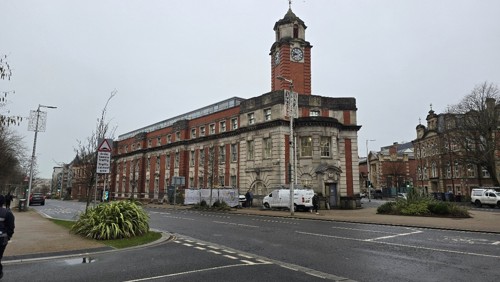
No partner could have delivered the scheme alone. Swansea Council identified local need, designed the service model and connected it to the city’s wider homelessness and housing pathways. Codi own the building and enabled the building’s refurbishment and works with the council through a long-term management arrangement. Welsh government provided essential capital funding through its Transitional Accommodation Capital Programme. Together, the partners converted an underused historic building into high-quality supported accommodation while preserving an important city-centre asset.
The partnership was built on a shared purpose, clear responsibilities and regular communication. Practical problem-solving was essential because adapting a listed building presented design, planning and operational challenges. The partners aligned funding, property expertise and frontline knowledge, enabling decisions to be made quickly without losing sight of residents’ needs. Their existing positive relationship and experience of developing temporary accommodation together provided a strong foundation for delivery.
Llys Glas offers more than a room. Each resident has an en-suite room and access to shared kitchens, communal areas and support at all hours. A person-centred, trauma-informed approach helps residents identify their goals, develop trusting relationships with staff and prepare for settled accommodation. Support includes health and wellbeing interventions, primary care access, harm-reduction services, one-to-one support, education and training opportunities, employment advice, money advice and meaningful activities.
The model has also enabled wider collaboration with public and third-sector services. On-site and outreach involvement includes substance-use and harm-reduction services, nursing support and mental health outreach. Bringing services closer to residents improves engagement, allows needs to be identified earlier and provides a more coordinated response than dispersed bed and breakfast placements.
Partnership working has improved both service quality and the homelessness pathway. Residents now have better living conditions, greater dignity and consistent access to support in a safe, staffed environment. Planned move-on support links the point of homelessness crisis to longer-term housing, helping residents build the skills, confidence and relationships needed to sustain a future home.
The scheme is already demonstrating good practice that can be replicated. Its success has given the partners confidence to progress a second city-centre temporary supported accommodation scheme. This shows that the partnership is not a one-off arrangement but a sustainable model for increasing capacity, improving standards and reducing reliance on more costly bed and breakfast accommodation.
Resident feedback captures the human impact: “I would just like to say thank you so much to every single member of staff, regardless of rank or responsibility, for their support, kindness and empathy. This is not an easy time in my life and I know it is temporary, but I will be forever grateful for the staff’s attitude, professionalism and true humanity.”
Llys Glas demonstrates what can be achieved through effective partnership working when public bodies and a housing partner combine resources, expertise and commitment around a shared goal. It provides a dignified, person-centred and sustainable response to homelessness that benefits residents, public services and the wider community.
Outcomes and achievements
Llys Glas opened in January 2026 and has delivered 68 additional rooms within Swansea’s temporary accommodation pathway. The scheme provides residents with secure en-suite accommodation, shared facilities and support at all hours in place of less suitable emergency placements.
The partnership has successfully brought a Grade II listed city-centre building back into purposeful use while creating a higher-quality response to homelessness. Residents can receive coordinated support, develop trusted relationships with staff and follow an individual plan towards settled accommodation.
The scheme has contributed to reduced reliance on bed and breakfast accommodation, and residents have already moved successfully into longer-term or more suitable homes. Its central location also improves access to health, wellbeing, harm-reduction, education, employment and financial support.
Llys Glas is strengthening service delivery through closer collaboration with health, outreach and third-sector partners. It provides a structured setting in which needs can be identified earlier and support can be delivered more consistently.
The project has also created a model for future delivery. Building on its successful implementation, Swansea Council, Codi and Welsh government are progressing a second city-centre supported accommodation development, demonstrating the partnership’s sustainability and wider potential.
Erosh - Erosh’s CIH Level 3 Housing Practice (Independent Living Pathways) and Open Access Training Programme
Application entry
- Project name: Erosh’s CIH Level 3 Housing Practice (Independent Living Pathways) and Open Access Training Programme
- Lead organisation: Erosh
Statement of support
Effective partnerships and collaboration is central to delivering high‑quality, person‑centred housing services and essential to ensuring safe, supportive, and sustainable homes for older people. Our submission demonstrates how a partnership‑led approach, aligned with our national good practice principles, has transformed outcomes for older residents living in independent living/sheltered housing, strengthened professional practice, and contributed to sector‑wide learning.
Our Level 3 CIH Housing Practice (Independent Living Pathways) qualification, developed with Kingdom Academy, is the only accredited programme with dedicated units on older people’s housing. Delivered over 10 months through online workshops/tutorials, the course uses sector‑specific case studies/scenarios, and terminology. With expert trainers, learners gain an in-depth understanding of the wider housing subjects, as well as studying alongside peers from different organisation. The course features specific units relating to housing for older people.
Erosh identified a gap in provision as there was no specialised professional training available for those working solely with older people in the housing sector, so they established relationships with a number of training providers with various expertise and developed a comprehensive open access programme to meet the needs of their members and the wider housing sector.
Open access training provides excellent value, enabling organisations to upskill staff without the financial barriers associated with traditional training. Working with a wide range of specialist trainers, erosh raises professional standards and embeds a shared vision for excellence across the sector. In-house training is also available as an option.
At the heart of our collaborations is a commitment to improving the lives of older people with emphasis on dignity, independence, and preventative support shaping the programme design, ensuring learners gain practical skills rooted in real‑world challenges. By working closely with our members, the training reflects lived experience and addresses the complexities of modern housing practice.
Our partnership model is built on co‑production, shared expertise, and continuous improvement. Co‑production ensures our members’ voices guide programme content and helps learners understand the impact of their decisions and develops empathy‑driven practices. Shared expertise comes from diverse organisations contributing specialist knowledge in safeguarding, hoarding, challenging behaviour, health and wellbeing, tenancy sustainment, loneliness, personal safety, LGBTQ+ inclusion, and risk assessment. Continuous improvement is achieved through ongoing evaluation, reflective practice, and the integration of emerging good practice from our regional networks.
The programme is further enhanced by free member good practice events covering topics such as loneliness, bereavement, heat networks, Visibly Better standards, safeguarding, mental health, and challenging behaviour.
The impact of partnerships has been significant as learners have reported increased confidence, improved problem‑solving skills, and a deeper understanding of multi‑agency collaboration. Organisations have seen measurable improvements in service delivery, including reduced tenancy breakdowns, enhanced resident satisfaction, more effective responses to complex needs; and faster more coordinated interventions that prevent homelessness and support independent living.
A standout achievement is the creation of a cross‑sector learning community. Through the training, peer mentoring, and shared resources, we have built a network of professionals committed to raising standards across the UK. This community embodies the spirit of partnership and work together to deliver innovative, compassionate, and sustainable housing solutions.
Our collaborations have contributed to national good practice, with insights shared through forums, case studies, and regional events. These contributions support wider sector learning and showcase impactful initiatives that inspire others across the housing sector.
Ultimately, our qualification/training programme demonstrate how partnership working drives meaningful change. By combining professional development with resident‑centred values, we have created a learning model that strengthens organisations, empowers staff, and improves outcomes for older people whilst reflecting our ongoing commitment to collaboration, innovation, and excellence in housing.
Outcomes and achievements
Our training partnerships have delivered clear, measurable improvements:
- 11 organisations enrolled on the Level 3 qualification - all reported a reduction in tenancy breakdowns; more confident/knowledgeable staff who were able to intervene earlier and coordinate multi‑agency responses; quicker resolutions for safeguarding referrals; strengthened communication pathways and shared protocols; and many residents highlighted improved communication and more consistent staff presence resulting in feelings of safety and support. 12 organisations have signed up for the next round.
- This year, 77 staff from across the UK attended open access training and 203 attended bitesize events. Learners reported increased confidence in managing complex needs; staff taking on additional responsibilities; progression to more senior roles; improved team cohesion; and more effective cross‑sector collaboration – all directly contributing to better outcomes for residents. Four organisations also booked specialised in-house training sessions for their teams.
Testimonials illustrate the programme’s success:
- “The staff really listen now. I feel more supported and more independent than I have in years.” (Resident)
- “This training has transformed how I work. I understand residents’ needs better and feel confident working with other agencies to get things done.” (Frontline worker)
- “The partnership has raised standards across our whole service. It’s been a game‑changer.” (Manager)
Warm Wales - Optimised Retrofit: Supporting residents beyond the technology
Application entry
- Project name: Optimised Retrofit: Supporting residents beyond the technology
- Lead organisation: Warm Wales
- Partner organisation: ClwydAlyn
Statement of support
25% of all households in Wales are estimated to be living in fuel poverty with 22% of households in social housing unable to heat their homes affordably. While retrofitted measures are helping to improve the EPC ratings of social housing stock, public awareness and understanding of new technologies to heat and power their homes remains relatively low. However, the effectiveness of these technologies is strongly influenced by how they are used by residents. Where systems are unfamiliar, digitally enabled or operate differently from traditional technologies, households may struggle to use them confidently without additional support, limiting the savings that can be achieved and, in worst case scenarios, even increasing energy bills or leading to the home being inadequately heated. Not all householders even realise their understanding is limited, believing they are using the system correctly and thinking increased bills are a feature of the new system rather than a result of the way in which they are using it, reducing the likelihood of them seeking advice. Also, while some residents would directly approach their housing association for advice and support, others would only feel comfortable opening up about their financial difficulties to an independent third party but may not know who to approach.
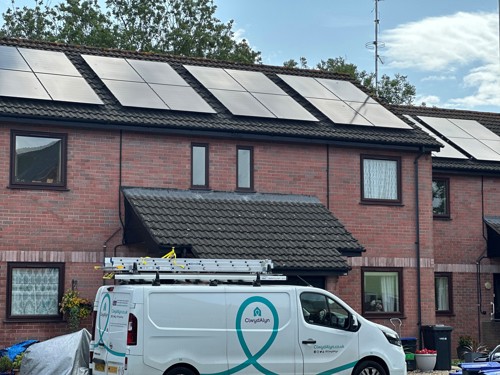
To address these challenges, following the installation of energy efficiency measures through the Optimised Retrofit Programme, Clwyd Alyn commissioned fuel poverty charity Warm Wales to survey residents on their installation experience and ensure that recipients understood how to use their new measures to maximise the benefits as well as offering support with wider issues around affording to keep their home warm.
Warm Wales contacted each resident by telephone and asked them to answer survey questions about their experience of the installation works. These survey results were submitted to Clwyd Alyn’s energy team to help them understand the impact of the work on residents. Warm Wales staff then asked residents about their understanding of how to use the measures and more general experience of keeping their home warm affordably. This opened up a conversation which allowed Warm Wales to give residents advice and support with a range of issues including usage of their new technology, benefits checks, support with accessing reduced rates on water bills, support with energy bill and tariff issues and queries, energy efficiency advice, carbon monoxide safety, registration with the Priority Services Register and emergency crisis support among other areas. Residents also raised broader housing issues and technical issues with their new systems which Warm Wales was able to flag with Clwyd Alyn to address through their usual routes.
The proactive approach by a trusted fuel poverty charity was invaluable for helping identify and address issues that householders would not have otherwise sought support for, despite the help being needed. Warm Wales’ partnership with Clwyd Alyn led to residents benefiting from a wide range of support and financial savings which will continue to benefit them in the long term beyond the period of engagement, for example through claiming benefits, being moved to lower tariffs for water and energy and having an improved understanding of how to use their new systems efficiently to reduce energy usage. In addition, the survey responses from 272 residents provided valuable feedback to Clwyd Alyn to inform future retrofit programmes.
Outcomes and achievements
Over the course of a year, Warm Wales gave advice and support to 195 Clwyd Alyn residents and surveyed a further 77 households that did not need any advice or support. Support given to households unlocked over £42,500 of financial savings over the 12 months following support, with some savings continuing beyond that period.
Although the key objective was to give householders light touch support focussed on their new measures, the proactive approach also uncovered serious and crisis needs. For example, eight people needed a fuel bank or food bank voucher. Warm Wales identified 13 householders with complex long term issues with affording their energy bills, who were then referred for in-depth support from another Warm Wales project. Five people were struggling with fuel debt. 16 of the people spoken to spent considerable time talking about their mental health and, where appropriate, were signposted to specific mental health support agencies.
Behind the numbers, the human stories highlighted the impact of the support given including quotes such as “Thank you ever so much for helping me resolve all this, I can't thank you enough” and “I don't think I could have got this far without your help. Thank you very much”