

At CIH, our leadership is dedicated to championing the housing profession and ensuring everyone has a place to call home.
This section is intended to explain:
- What good governance looks like
- How CIH is governed
- Where member volunteers fit within that structure.
Some parts within this section apply to all volunteers, while others apply only to trustees, committee members or delegated board members. Where an exception applies, this handbook makes that clear.
CIH definitions
There are a variety of different types of volunteer group within the CIH voluntary structure and it’s important to understand the differences in their remits. This section will outline the definition that CIH gives to each.
| Term | CIH definition |
| Volunteer | Volunteers donate their time, carrying out activities that aim to benefit the housing sector and the wider CIH community. There is no legal definition of a ‘volunteer’ and volunteers do not carry legal responsibility for a charity. |
| Trustee | A trustee is also a volunteer but must be properly appointed following the procedures and any restrictions in the CIH governing document. CIH trustees are the people who share ultimate responsibility for governing CIH and directing how it is managed and run. At CIH, the term ‘board member’ can also be used to describe a trustee. They have legal obligations to CIH and its beneficiaries. |
| Governing Board | A board is a group of elected or appointed trustees. The board is responsible for the governance and strategic direction of CIH and holds legal liability. |
| Committee | A committee is a sub-group of the board that has delegated responsibilities within a specific remit. They report into the board but do not have the same legal liability as the Governing Board. |
| Delegated Board | A delegated board does not have the same legal liability as the Governing Board. The remit of a delegated board is to develop plans that focus on member engagement, input to the development of the CIH education offer and work to support CIH colleagues in engaging, influencing and providing important feedback for policy responses. |
| Advisory board | An advisory board is a non-governing body that provides strategic guidance and subject matter expertise to CIH without having formal decision-making authority or legal responsibility. |
| Network | A member network is not an organised volunteer group, but a collection of individuals across the sector who champion the work of CIH. |
What does good governance look like?
|
Good governance should provide strong assurance to internal and external stakeholders that a charity is well governed. As our member volunteers, it’s essential you understand what good governance looks like and can see it reflected in the way that we operate at CIH.
|
|
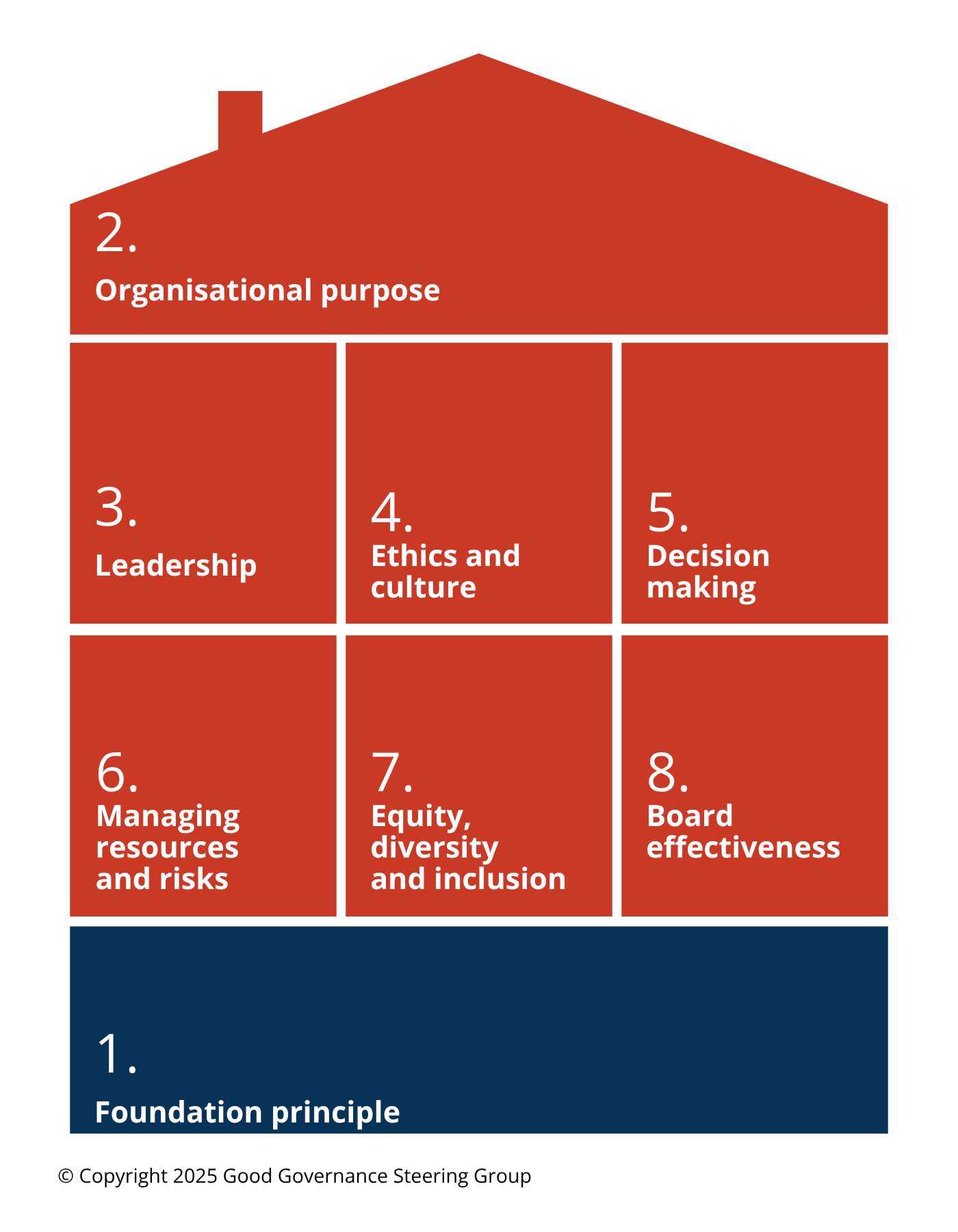
Trustees take responsibility for, and invest the necessary time and care in, understanding the charity, their responsibilities and legal duties.
The board is clear about the charity’s aims and how these benefit all or part of the public. It ensures that activity is targeted at achieving those aims both in the short and long term.
The charity is headed by an effective board that provides strategic leadership in line with the charity’s purpose and values.
The board has agreed the standards and values which shape the charity’s behaviours and culture. This includes being open about how the charity operates and responding thoughtfully to feedback.
The board makes effective decisions that best serve the charity’s purposes. Trustees take personal responsibility for carefully considering each decision and working to reach agreement.
The board takes responsibility for stewarding, developing and allocating resources. The board identifies the risks to achieving the charity’s aims and agrees how to navigate them. The board seeks assurance that risks are properly managed.
The board has a clear, agreed and effective approach to supporting equity, diversity and inclusion (EDI) throughout the organisation, including in its own practice.
The board works well together, using an appropriate balance of skills, experience, backgrounds and knowledge. It reviews its performance on a regular cycle and takes steps to improve.
The above list has been reproduced from the Charity Governance Code © Good Governance Steering Group 2025. Reproduced with permission. For a more detailed look at any of these principles, please read the Charity Governance Code 2025.
How is CIH governed?
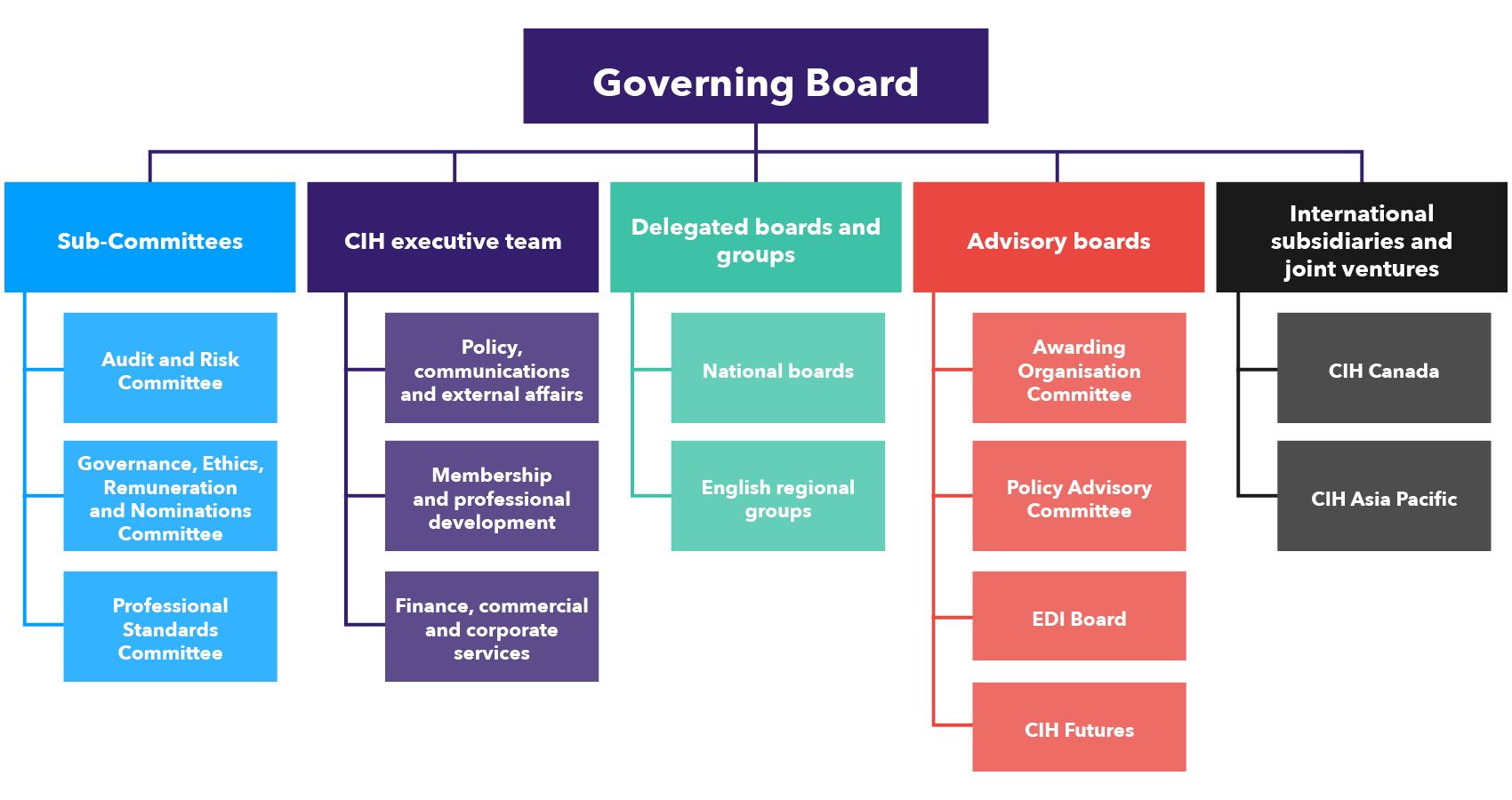
Our presidential team serve as ambassadors for our organisation, while our Governing Board and Committees collaborate with the executive team to set the strategic direction of our work.
The board meets four times a year and is charged with managing the business of CIH at a strategic level. They set and drive the direction of CIH, setting priorities, monitoring performance, managing risk and compliance, and ensuring accountability, viability and sustainability when it comes to achieving our objectives.
The Audit and Risk Committee (ARC) and Governance, Ethics, Remuneration and Nominations Committee (GERN) each meet three times a year and their roles are written into the CIH Charter and Byelaws. ARC is delegated with responsibility by the board for risk assurance, finance and compliance. GERN is delegated with responsibility by the board for legal, ethical and functional responsibilities, including recruitment to the board and the vice-presidential election. They also lead on matters for EDI.
The members of the board and committees come from across the UK, from the public and private sectors, and bring with them a wealth of unique experience and knowledge.
The CIH president and vice president are expected to be effective leaders for the profession and ambassadors for CIH. The CIH president will be an inspirational figure for CIH members and the wider housing sector and be both a challenger and champion for housing issues, leading on our international relationships and development work. They also have some responsibility for seeking to ensure that the broad governance of CIH is effective, as an ex-officio (non-voting) Governing Board member.
Each year we ask for nominations for our next CIH vice president, with the successful candidate decided by a member vote. The CIH president and vice president are appointed at our annual AGM in October, and each serves a one-year term.
Every vice president goes on to become president, and throughout their presidency, leads a campaign around a housing topic they are passionate about, often raising awareness and funds for a charitable cause.
Recent CIH president campaigns
- Julie Haydon's Rooted in Resilience campaign
- Elly Hoult's CHOOSE HOUSING campaign
- Lara Oyedele's In my Shoes campaign.
The executive team is made up of senior colleagues from across the business and is responsible for driving the CIH mission and making the strategy set by our Governing Board a reality.
How our governance structure comes together
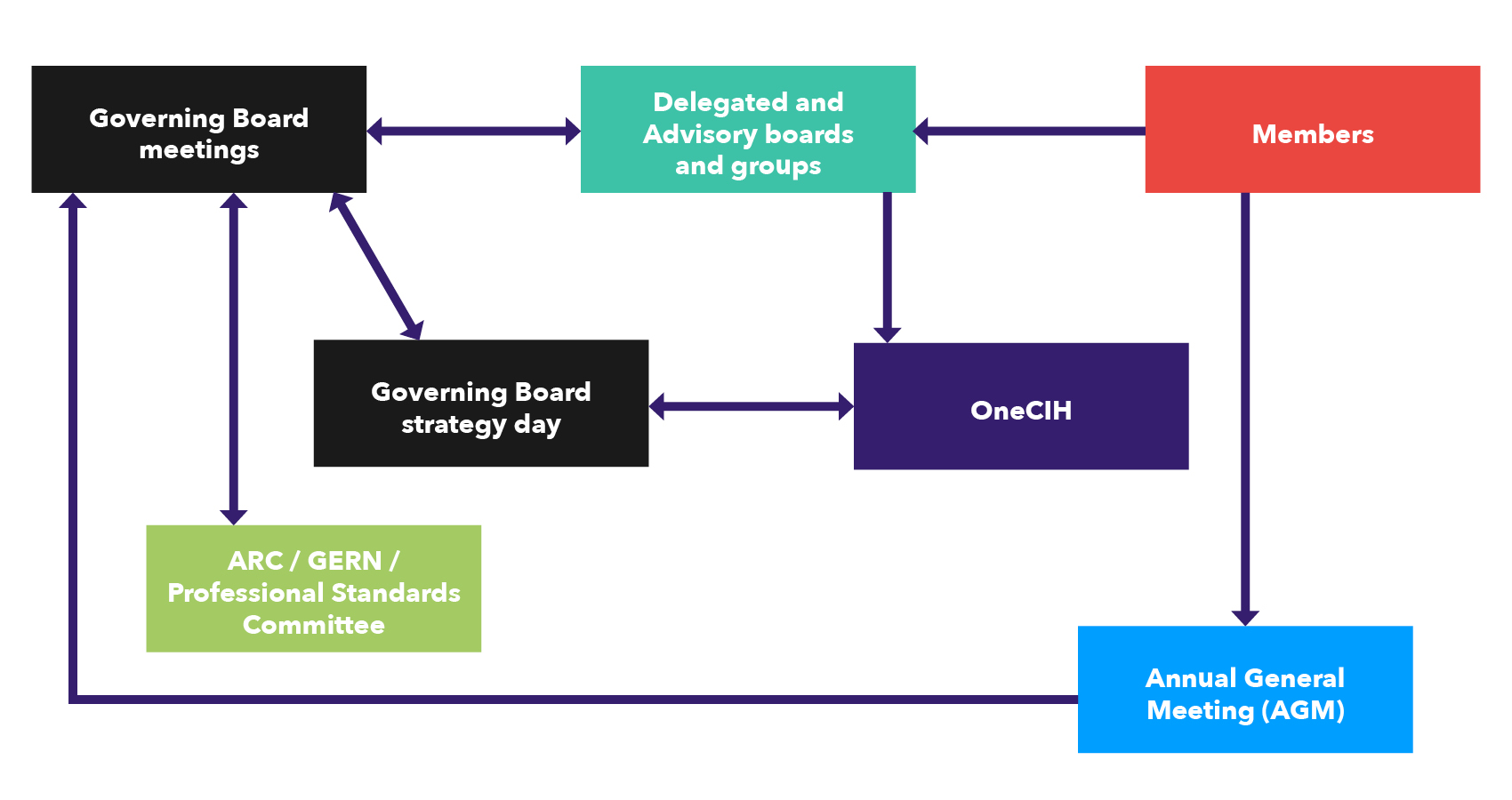
CIH’s governance structure brings together the Governing Board, committees, presidential team, executive team, member groups and wider membership. The Governing Board sets strategic direction and assurance, committees provide delegated oversight, the executive team leads delivery, and member volunteers contribute insight, challenge and evidence through OneCIH, nation boards, policy committees and other volunteer groups.
The member voice and governance
Our members dictate everything we do at CIH. As representatives of and champions for the sector, our work must be based in evidence, and that evidence sits within our membership base.
As well as the information that we gather from the sector through our regular engagement, some member volunteers can feed directly into CIH strategy at OneCIH. Our wider membership has the opportunity to approve CIH direction at the AGM.
The decision-making structure
Decision making should happen at the right level. In volunteer groups, you can make decisions within your agreed remit or Terms of Reference. Decisions with financial, legal, reputational, policy or organisational implications should be discussed with your designated CIH officer and escalated through the appropriate CIH route before commitments are made.