


Scotland Housing Awards 2026
Read all the shortlisted entries into this award category, Excellence in Accessibility and Inclusion, at the Scotland Housing Awards (SHA) 2026 and find out who won the award on the night.
As we get older the need for accessible housing to support independent living is more important than ever. This award recognises housing organisations whose new build design or retrofit projects and approaches enhance accessibility, inclusion and customers ability to live in their own home safely and as independently as possible.
This award was sponsored by Horizon Housing.
Winning project name
Ryan Place
Winning organisation
Hillcrest Homes
Partner organisation
Hillcrest Futures
Statement of support
Four people with complex support needs lost their homes overnight. Four years later, they moved into forever homes designed entirely around who they are. Between those two moments came uncertainty, displacement, a contractor collapse and challenges. Ryan Place is far more than a housing development. It is the story of a commitment to restoring stability, dignity, independence and belonging for people whose wellbeing depended on finding the right solution.

The story began in June 2021, when residents supported by Hillcrest Futures were urgently evacuated from their homes after a neighbouring chimney stack was found to be at imminent risk of collapse. For people whose wellbeing depends on routine, familiarity and trusted environments, the impact was profound. This was not simply the loss of accommodation but also the loss of the structure, security and sense of home that enabled them to live safely and confidently every day.
Hillcrest recognised that replacing what had been lost would not be enough. They had a responsibility to create something better. The ambition was to deliver homes that would not simply meet accessibility standards but would be designed around the needs and lived experiences of the people who would live there.
From the outset, residents were placed at the centre of the design process. Working with support staff and specialists, Hillcrest sought to understand the sensory, emotional and behavioural factors that shape daily life. Resident consultation informed every aspect of the development, from the layout of homes and shared spaces to opportunities for independence and social connection.
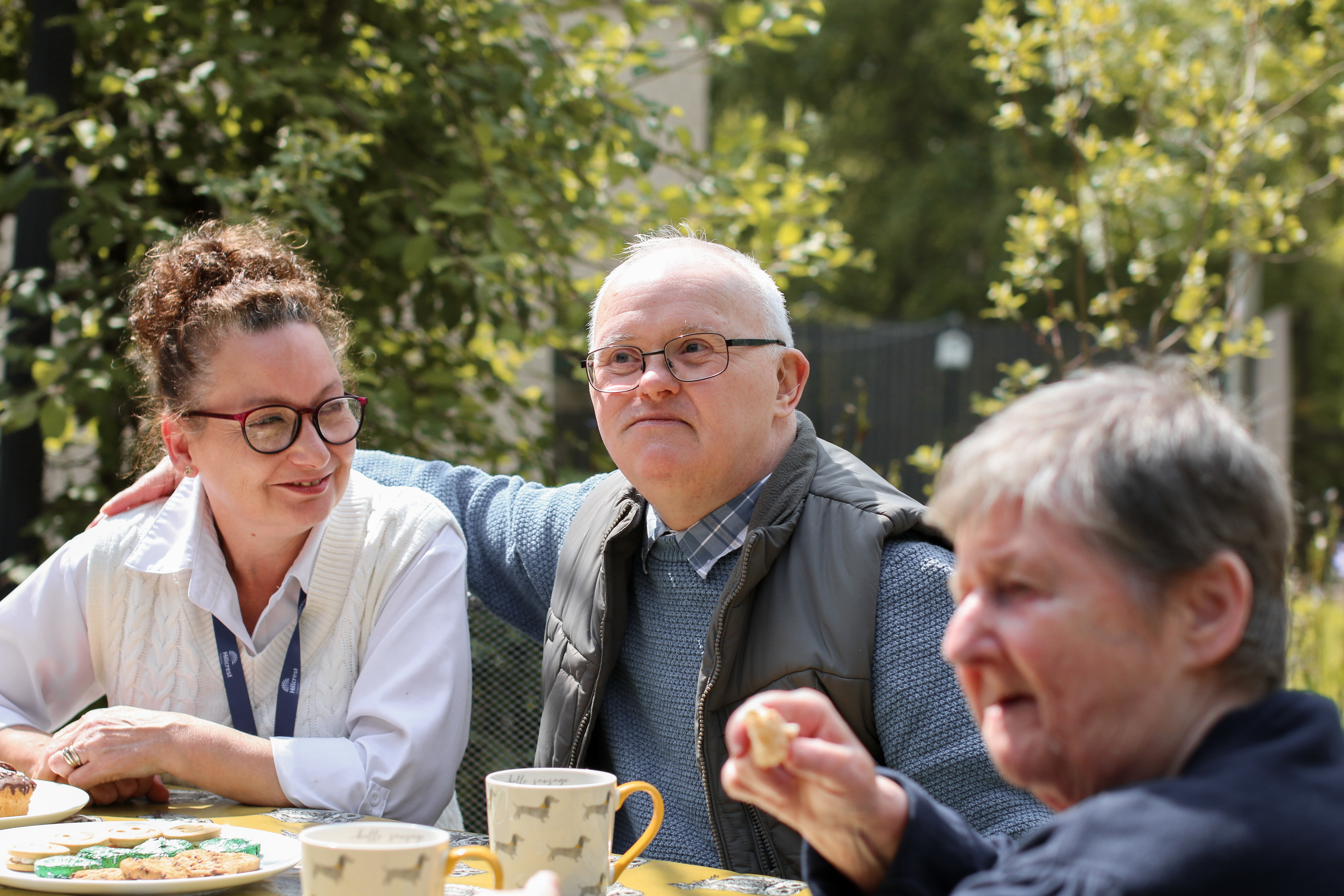
The result is nine purpose-built forever homes designed around lives, not layouts. Features include level access, adapted facilities, secure outdoor spaces and integrated accommodation for 24-hour support staff.
What makes Ryan Place different is the way it views accessibility. For the people who live here, accessibility means far more than physical access. It is about reducing anxiety, maintaining routine, supporting independence, encouraging choice and helping people thrive. The development balances privacy with opportunities for connection. Residents enjoy their own front door while remaining part of a connected community. A secure communal courtyard encourages social interaction and outdoor activity, while residents helped personalise their homes through choices including carpets and feature wall colours. These are not homes designed for residents, they are homes designed with them and around them.
Partnership working was fundamental throughout. Following the emergency evacuation, the Murraypark Hotel provided temporary accommodation, while The Furnishing Service donated furniture and household essentials. Hillcrest Homes, Hillcrest Futures and numerous partners worked together to maintain continuity of support and keep residents central to decisions.

Just as residents' forever homes were beginning to take shape, the project faced a devastating setback when the principal contractor entered liquidation. Rather than allowing the project to fail, Hillcrest Maintenance stepped into the role of lead contractor despite new-build construction sitting outside its traditional remit. Subcontractors returned despite financial losses because they believed in the importance of what was being delivered. Together, they refused to let the project fail.
Completed in 2025, Ryan Place delivered nine accessible homes, but that is only part of the story. Its real achievement is giving residents the security of knowing they are finally home, in homes designed around their needs today and for years to come. Residents who experienced the trauma of losing their homes now have confidence, independence and the security of knowing where they belong. Ryan Place demonstrates that accessibility is not simply about removing barriers; it is about creating the conditions for people to live with dignity, choice, connection and belonging. When homes are built around people, not plans, accessibility becomes truly transformational.
Outcomes and achievements
Ryan Place has delivered nine purpose-built, fully accessible forever homes for people with complex support needs. Its greatest achievement, is the security and stability it has restored to some of the residents who unexpectedly lost their homes overnight. Today, they have the certainty of knowing they live in homes designed not around assumptions, standards or layouts, but around who they are and how they want to live.
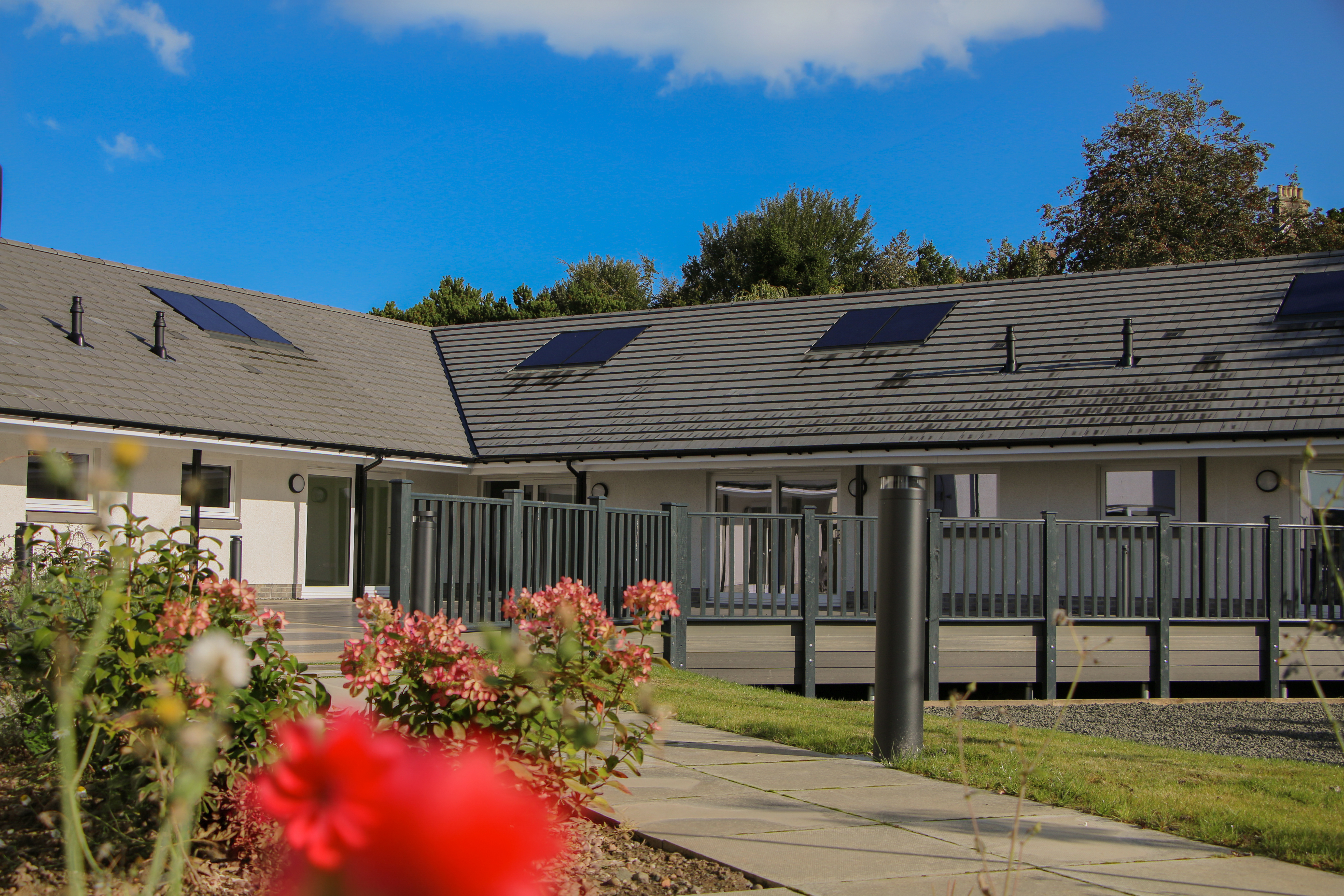
Shaped by extensive engagement with residents, their families, support staff and specialists, Ryan Place was designed to support independence, choice and everyday wellbeing. Residents benefit from personalised homes, accessible facilities, secure outdoor spaces and integrated 24-hour support, allowing greater autonomy while remaining connected to the people and relationships that matter most.
The project's completion is also a remarkable achievement in partnership working. When the original contractor entered liquidation, the future of the development was placed at risk. Hillcrest Maintenance, Hillcrest Homes, subcontractors, local businesses and community partners came together to ensure residents finally received the homes they had waited years for. The accommodation itself was built on land following the closure and demolition of the former Abbeyfield House supported accommodation which, having fallen into disrepair and no longer being fit for purpose, was demolished.
What began as an emergency evacuation has become a lasting legacy. Nine forever homes where people have regained confidence, independence and a sense of belonging. Ryan Place shows that when homes are built around people, accessibility becomes truly transformational.
Shortlisted entries
West Dunbartonshire Council - Mount Pleasant
Application entry
- Project name: Mount Pleasant
- Lead organisation: West Dunbartonshire Council
Statement of support
Scotland has an increasingly ageing demographic (currently one in five are over 65 and around 90,000 are living with dementia). Moreover, the number of those ageing without a disabling condition is declining. Housing has a responsibility to prepare for this demographic shift. West Dunbartonshire Council has sought to better prepare its housing stock in meeting accessibility and inclusiveness principles which champions ageing in place. This is evidenced in the Mount Pleasant development. The development consists of 19 units of accessible, dementia friendly, amenity housing units on the site of a former care home, which was demolished in the aftermath of a fire.
Research highlights that housing should play a key role in supporting our ageing population to live independently, and emphasises that housing should be located appropriately with links to community and surrounded by services and amenities that meet the complex and changing needs of ageing (McCall et al, 2020). This site is an ideal location for housing aimed at an ageing demographic in promoting the above principles. The design of the development included input from the elderly tenant population and officers trained in dementia awareness to refine features. It is located in a central area of the village of Old Kilpatrick within a five-minute walk of local shops, restaurants, a health centre, pharmacy, train station and bus stops. Current tenants have noted the ease of which they are able to run errands from their new homes.
The development includes three one-bedroom bungalows, two one-bedroom lower cottage flats, two two-bedroom upper cottage flats, and a 12 one and two-bedroom flats with access to a lift and private outdoor balcony space. Every unit is also net zero, with a mixture of exhaust air and air source heat pumps installed to help tackle climate change and the cost of heating bills.
All bungalows, lower cottage flats and flats are built to fully accessible and Housing for Varying Needs standards. This allows ageing in place, and inclusive living principles which aim to enable an older demographic to maintain their ability to live independently for as long as possible, despite the reality of changing needs in relation to physical needs and mental capacity.
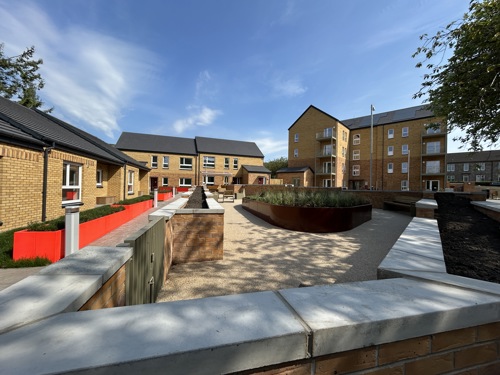
The development has been designed to dementia friendly standards and features a dementia friendly communal garden at the centre of the site which can be enjoyed communally, promoting community and tackling isolation. It has been highlighted within literature (McCall, 2020) that the psycho-social notion of home and its connectedness within the context of community is often largely overlooked within housing development. This development has put the dementia friendly landscaping at the heart of the development to promote inclusivity and accessibility. Many of the tenants have started a gardening club in the communal garden at the heart of the development. This has provided a hub to be active and socialise.
The design and accessibility of the development has been consulted on in partnership with occupational therapy, housing development and homelessness. A result of this partnership working has led to one ground floor, fully wheelchair accessible flat being identified as a hospital discharge unit. Appropriate hospital discharge units are high demand within West Dunbartonshire, and are important in avoiding unnecessary ‘bed-blocking’ within the NHS. This flat is suitable for individuals with physical mobility requirements to move in to, whilst their own home is adapted to fit their needs.
Overall, the Mount Pleasant development is an ideal location for ageing in place principles due to its town centre location, access to amenities, access to public transport, dementia-friendly design, accessibility and inclusivity design and generous space standards.
Outcomes and achievements
The project has housed 18 older households with varying needs. This development has enabled those identified to move out of housing which no longer met their needs for various reasons. We also aimed to promote downsizing to free up larger family homes to help tackle homelessness of large families within the area by offering this development as an incentive to downsize. This resulted in ten of the new tenancies downsizing from larger council properties and has reduced the waiting times for homeless families by 23%.
We have worked in partnership to deliver a fully wheelchair adapted and accessible property for hospital discharge in the remaining property. This should help to eradicate costs associated with bed blocking within NHS hospitals by around £10k annually. So far there have been four different users who have been discharged from hospital to the property whilst their homes are adapted for their needs.
The development completed earlier this year and we’ve had excellent tenant satisfaction feedback with one new tenant advising, "The lift and balcony have transformed my independence." Due to the success of this development, we are copying the principles at a similar site in Clydebank.
McTaggart Construction - Willox Park
Application entry
- Project name: Willox Park
- Lead organisation: McTaggart Construction
- Partner organisations: West Dunbartonshire Council
Statement of support
Willox Park is a new-build amenity housing development in Dumbarton, delivered by McTaggart Construction on behalf of West Dunbartonshire Council. It is the first of two phases in the wider redevelopment of the Willox Park complex, occupying the site of a former care home and bringing brownfield land back into productive use within an established sheltered housing setting. The scheme delivers 17 fully wheelchair-accessible, age-friendly homes, designed around the principles of independent living, net zero energy performance and strong community integration. All homes meet Housing for Varying Needs standards and achieve Platinum Aspect 1 under Scottish Technical Standards - an exceptional benchmark for accessible, sustainable design within an affordable housing context.
Accessibility and inclusion sit at the heart of the design. Every home has a private front door, supporting independence and a sense of ownership, alongside lift access, level thresholds, wide door openings and push-button entry. Walk-in showers and open-plan layouts maximise ease of movement, while a central landscaped courtyard and a dedicated dementia-friendly sensory garden give residents accessible outdoor space that also helps combat isolation. Recognising that several neighbouring residents live with dementia, the design incorporates colour-coded entrances and dementia-friendly carpeting to aid wayfinding and reduce disorientation, and the site team completed dementia awareness training so they could communicate confidently and respectfully with residents throughout construction.
The specification was developed with older and mobility-impaired residents' needs at its core. Ground-floor homes are fully wheelchair accessible, with open-plan layouts and walk-in showers that remain practical as residents' needs change over time. A high-performance building fabric, ground source heat pumps, photovoltaic panels and MVHR systems deliver net-zero direct emissions and strong SAP performance - directly addressing fuel poverty for residents on fixed incomes.
Consultation ran throughout the project rather than at a single stage. McTaggart facilitated drop-in sessions, doorstep conversations and regular newsletters, and attended monthly Tenants and Residents Association meetings to keep the existing community informed and involved. This engagement was especially important because the development was built within a live, occupied sheltered housing complex - tenants who would eventually move into the new homes lived on the site's perimeter throughout construction. Feedback directly shaped decisions including tree retention, reduced building height, parking arrangements and protection of green space. Consultation extended to individual homes too: 100% of units were pre-allocated to named tenants ahead of completion, so those tenants were involved directly in the design process, including choices on appliances, carpets and wall coverings for their own homes. This consultant-led approach played a significant part in shaping the development, ensuring finishes reflected the preferences of the people who would live in them.
This was West Dunbartonshire Council's first time working with McTaggart on new social housing, and their Housing Development Officer, Dawn Conner, reflected on what that experience looked like on the ground: "The site staff were exemplary in building relationships with the tenants and onsite staff, which was fundamental in the safe delivery of the project," and shared that McTaggart "offered a transparent and collaborative approach to the technical design team meetings," with the council "100% involved on all decisions." She added that the council has "already instructed McTaggart to deliver phase two of this project, and this is the best testimony."
Willox Park shows how a small-scale development, delivered sensitively within an existing community, can create meaningful social value: supporting older residents to live independently and with dignity, reducing fuel costs, enhancing biodiversity, and setting a replicable model for age-friendly, net-zero affordable housing in Scotland.
Outcomes and achievements
Willox Park has delivered 17 new, fully wheelchair-accessible, age-friendly homes on a brownfield former care home site in Dumbarton. All homes meet Housing for Varying Needs standards and achieve Platinum Aspect 1 under Scottish Technical Standards, with net-zero direct emissions supported by ground source heat pumps, photovoltaic panels and MVHR systems.
The scheme has delivered a net biodiversity gain in line with NPF4, replacing low-value grassland with wildflower planting, native trees and pollinator habitat. Construction was completed within a live, occupied sheltered housing complex with zero reportable health and safety incidents, despite the site remaining fully open throughout the build.
Beyond the homes themselves, McTaggart delivered over £10,000 of community project works through West Dunbartonshire's community wish list, alongside education engagement, apprenticeships and training opportunities for local young people, and supply chain opportunities for local businesses.
Post-completion feedback shows high resident satisfaction with build quality, comfort and reduced energy costs. Resident Billy Leyden, who cut the ribbon to officially open the site, put it simply: "It's a dream come true." West Dunbartonshire Council has since instructed McTaggart to deliver phase two of the Willox Park redevelopment - direct evidence of the trust and quality established through this first phase.
Link Group - Pawsitive Change: How Link Group and Dogs Trust Created More Inclusive Housing Through Partnership
Application entry
- Project name: Pawsitive Change: How Link Group and Dogs Trust Created More Inclusive Housing Through Partnership
- Lead organisation: Link Group
- Partner organisations: Partnership with Dogs Trust
Statement of support
Link Group's partnership with Dogs Trust demonstrates the power of collaboration to remove barriers, improve customer experience and create more inclusive housing services for tenants who may otherwise face unnecessary restrictions because they own, or need, a pet.
Pets are far more than companions. For many tenants they are family members, providing emotional support, reducing loneliness, easing anxiety and supporting daily wellbeing. Yet restrictions on pet ownership can create barriers to accessing or sustaining housing, sometimes forcing people to choose between their home and their pet. Dogs Trust evidence shows housing issues remain a significant reason for pet relinquishment.
Link Group responded by partnering with Dogs Trust to become a Pet Friendly accredited housing provider. The shared aim was to create a more inclusive approach that supports responsible pet owners while maintaining safe, sustainable communities.
The partnership combined Dogs Trust’s animal welfare expertise with Link’s experience as one of Scotland’s largest social housing providers. Housing management, property management and customer engagement colleagues worked with Dogs Trust to review policies, assess practice and identify improvements.
“Through our Pet Friendly Accreditation scheme, Dogs Trust works with social landlords to embed a pet-friendly approach across their organisation. We have been working with Link to review their policies and practices, helping remove barriers that prevent tenants from having pets and supporting more owners and pets to stay together.” — Rachael Woodley, Dogs Trust
Using the Dogs Trust Pet Friendly Housing Toolkit and Accreditation Framework, Link reviewed its approach to pet ownership. The work challenged traditional assumptions and supported a balanced, customer-focused model that recognises the positive role pets play while promoting responsible ownership.
Dogs Trust also provided specialist training and guidance for front-line colleagues, strengthening knowledge of responsible pet ownership, canine behaviour and practical support for tenants experiencing pet-related challenges. This improved confidence and consistency in decision-making.
Tenants helped shape updated guidance and procedures through consultation and engagement, ensuring changes reflected customer needs and experiences. This reinforced Link’s commitment to designing services with tenants, not simply for them, and ensured the final approach was practical, fair and accessible.
Link has now achieved Pet Friendly Accreditation and introduced updated guidance for colleagues and customers. The new approach promotes responsible ownership, creates a more supportive environment for tenants with pets and recognises the important role animals can play in companionship, emotional resilience, routine, confidence and healthier lifestyles.
The impact extends beyond policy. The partnership supports tenancy sustainment, promotes inclusion and reduces avoidable barriers to housing. It also sends a clear message that tenants should not be excluded from suitable homes because of the important role pets play in their wellbeing. It shows how a housing provider and national charity can combine expertise, resources and shared values to deliver lasting change for customers, colleagues and communities.
This is a strong example of accessibility and inclusion in practice. By removing avoidable barriers to pet ownership, Link has improved access to housing, supported tenancy sustainment and promoted fairer outcomes for tenants whose pets provide comfort, companionship, emotional stability and everyday support. The project has changed guidance, influenced culture and embedded a more inclusive approach across housing services.
Outcomes and achievements
The partnership between Link Group and Dogs Trust has delivered meaningful and lasting improvements for tenants, staff and communities.
Key achievements include:
- Successfully achieving Dogs Trust Pet Friendly Accreditation
- Developing updated pet guidance and procedures for colleagues and customers across Scotland
- Embedding a more inclusive and supportive approach to pet ownership throughout housing services
- Providing access to specialist Dogs Trust training and expertise to improve staff confidence and knowledge
- Reviewing policies and operational practices using the Dogs Trust accreditation framework
- Engaging tenants in shaping future service developments and guidance
- Strengthening support for responsible pet ownership and recognising the positive impact pets have on wellbeing, emotional support and healthy lifestyles.
The partnership has created lasting organisational change by combining housing expertise with specialist animal welfare knowledge. Together, Link Group and Dogs Trust have established a practical, inclusive model that improves services, supports tenancy sustainment, reduces avoidable barriers and delivers tangible benefits for tenants and their pets.