


Scotland Housing Awards 2026
Read all the shortlisted entries into this award category, Working in Partnership, at the Scotland Housing Awards (SHA) 2026 and find out who won the award on the night.
This award will celebrate partnership and collaboration across the housing spectrum.
This award was sponsored by Muirhouse Housing Association.
Winning project name
Craigmillar and Niddrie Bonfire Night ASB Initiative
Winning organisation
Places for People Scotland
Statement of support
In recent years, the Craigmillar and Niddrie communities in Edinburgh experienced some of the most significant bonfire-related disorder in Scotland. Antisocial behaviour (ASB), fire-setting, underage drinking and community safety concerns had a profound impact on customers, businesses, emergency services and local communities. In response, Places for People Scotland (PfPS) developed and funded a coordinated, community-led approach that tackles both immediate risks and the underlying causes of youth ASB throughout the year.

The result was a pioneering multi-agency initiative bringing together PfPS, Police Scotland, third sector organisations, schools, sports clubs and local customers to deliver innovative interventions. This collaborative model has contributed to significant reductions in disorder across Edinburgh while strengthening community resilience and creating positive opportunities for young people. At its core is a commitment to prevention, engagement and community empowerment rather than enforcement alone.
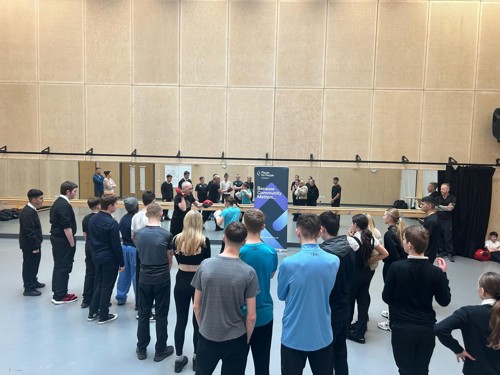
One of the initiative's most innovative elements is the Peer Mentors programme, developed in partnership with the Scottish Violence Reduction Unit and Castlebrae Community High School. The pilot employs dedicated mentors embedded within the school and wider community. Young people most at risk of disengaging from education, ASB, criminal exploitation or offending are identified through referrals from education, social work, housing providers and Police Scotland. Intensive support is provided not only to young people but also to their families and carers, creating a holistic network around those most vulnerable to becoming involved in disorder and offering an alternative path.
PfPS has also funded a range of complementary projects to provide positive activities, trusted role models and opportunities to develop new skills. These have included the Punching Up boxing programme for young people at Castlebrae Community High School. PfPS continues to work closely with Edinburgh Community Sport Hubs on initiatives such as Friday Night Lights, offering free football and rugby sessions alongside a hot meal in a safe, engaging environment that promotes personal development, wellbeing and community connection.
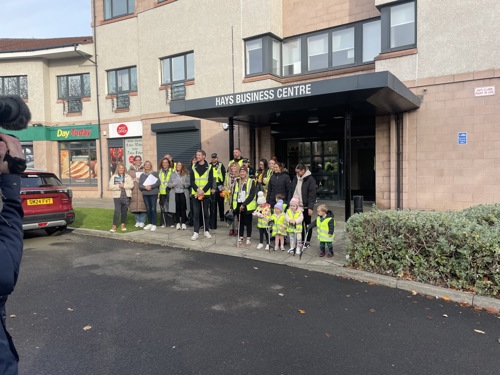
Partnership working has extended beyond youth engagement. PfPS launched the Bonfire Blitz project in Niddrie, mobilising local volunteers to remove combustible materials and reduce fire risks before Bonfire Night. This encouraged customers to take ownership of their community while creating safer environments for everyone. At the same time, the Vintage Sparklers initiative provided older PfPS customers and carers with safety advice while tackling loneliness and isolation through social activities, ensuring those most affected by previous disorder felt informed, supported and connected.
The scale and diversity of these partnerships transformed service delivery. By aligning organisations around shared outcomes, resources were coordinated more effectively, duplication was reduced and support reached communities more efficiently. PfPS, schools, community groups, local authorities, emergency services and charities each contributed specialist expertise, creating a seamless approach that no single organisation could have delivered alone.
Most importantly, the initiative has delivered meaningful results. Customers who previously experienced fear and disruption around Bonfire Night have seen a significant reduction in disorder, reflected in customer feedback: "What a difference this year has been. It is a lot quieter and I feel a lot safer". More than 2,500 young people have gained access to mentoring, sports activities, education support and positive pathways that improve future life chances. Older customers have benefited from greater support and stronger community connections. Communities once associated with annual disorder are now benefiting from sustained investment in prevention, wellbeing and community cohesion.
This initiative demonstrates the power of partnership to solve complex social challenges. By combining innovation, community insight and cross-sector collaboration, PfPS has maximised the impact of its investment and created lasting change.
Outcomes and achievements
PfPS' partnership initiative has transformed community engagement in Craigmillar and Niddrie, helping customers feel safer and giving young people positive alternatives to ASB.
A major achievement for the community was the introduction of four Firework Control Zones following extensive community consultation, enabling proactive planning before Bonfire Night. Joint operations with Police Scotland and social work teams secured high-risk properties, improved intelligence sharing and encouraged reporting from customers previously reluctant to engage.
Youth engagement is central to the initiative, supporting over 2,500 local young people. More than 150 local secondary school students attended the Edinburgh Youth Summit, hosted by PfPS and partner organisations. PfPS also provided a £3,000 grant supporting the Friday Night Lights programme, which engages over 50 young people each week through sport, mentoring and free hot meals.
The impact has been clear. Customers commented that, "It was like a normal Bonfire Night this year due to all the work happening in the community," and "It’s great to see PfPS doing these community clean ups - it makes a real difference in the community". Together, these efforts have created safer, stronger and more resilient communities and will have a lasting impact introducing young people to an alternative path to ASB.
Shortlisted entries
Perth & Kinross Council - Supporting People Living in Unsafe Clutter and Hoarding Environments: A Trauma-Informed Multi-Agency Approach to Risk Reduction, Wellbeing and Tenancy Sustainment
Application entry
- Project name: Supporting People Living in Unsafe Clutter and Hoarding Environments: A Trauma-Informed Multi-Agency Approach to Risk Reduction, Wellbeing and Tenancy Sustainment
- Lead organisation: Perth & Kinross Council
- Partner organisations: Perth & Kinross Council Housing Services – Locality Housing Teams Tenant Wellbeing and Safety Officer (TWSO) role General Practitioners / GP Sub-Committee / Primary Care Perth & Kinross Council Social Work / Adult & Child Protection NHS Tayside / Communit
Statement of support
Supporting People Living in Unsafe Clutter and Hoarding Environments – A collaborative approach
Perth & Kinross Council Housing Services has developed an innovative, trauma-informed partnership approach to supporting people living in unsafe clutter and hoarding environments. The initiative was created in response to a growing and complex challenge affecting tenancy sustainment, health and wellbeing, community safety, safeguarding and housing management. It recognises that hoarding is not simply a property issue but a multifaceted condition requiring coordinated intervention across services.

The project demonstrates excellence in partnership working by bringing together housing services, tenant wellbeing and safety officers (TWSOs), primary care, community mental health services, social work, Scottish Fire and Rescue Service, environmental health, community safety and waste services within a shared framework for assessment, intervention and risk reduction. This collaborative model has transformed a traditionally reactive response into one focused on prevention, early intervention and long-term sustainable outcomes.
At the heart of the approach is a commitment to person-centred and trauma-informed practice. Rather than focusing solely on property condition or enforcement action, the project seeks to understand the underlying causes of clutter and hoarding behaviours, including trauma, bereavement, mental ill-health, social isolation, neurodiversity and self-neglect. Interventions are built around trust, informed consent, collaborative goal setting and strengths-based support, enabling individuals to engage positively and achieve meaningful change.
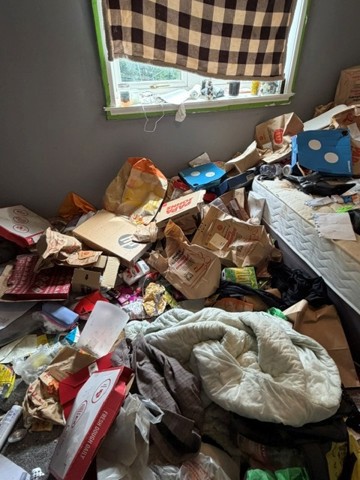
A significant innovation has been the introduction of dedicated tenant wellbeing and safety officers. These specialist roles provide intensive support to vulnerable households, coordinate multi-agency activity, undertake structured risk assessments, facilitate case conferences and ensure ongoing tenancy sustainment monitoring. This dedicated capacity has strengthened engagement with tenants who may previously have struggled to access support and has improved coordination between services.
The project has also introduced a robust Red, Amber and Green (RAG) risk assessment framework, providing a consistent evidence-based approach to prioritisation, decision-making and resource allocation. This enables partners to identify high-risk cases earlier, monitor progress over time and target support where it is most needed.
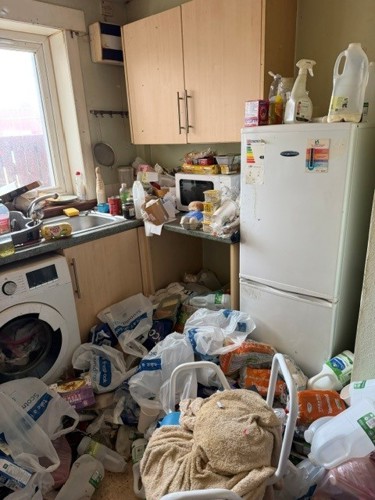
Partnership working has produced benefits well beyond housing management. Health services report improved opportunities to identify and respond to concerns relating to physical health, mental health and self-neglect. Scottish Fire and Rescue Service has benefited from earlier access to high-risk households and improved fire safety planning. Social work and safeguarding partners have reported stronger information sharing and clearer joint decision-making. Housing services have seen improvements in tenancy sustainment, consistency of practice and risk management, while communities benefit from reduced environmental and neighbourhood impacts.
The project also delivers strong public value. The service currently manages 52 active hoarding and clutter management cases. Analysis of intervention activity across 12 properties has identified expenditure of £14,772.13 associated with addressing significant clutter and hoarding risks. This evidence highlights the importance of preventative intervention and demonstrates the potential to avoid substantially higher costs linked to homelessness, temporary accommodation, property deterioration, fire incidents, emergency clearances and enforcement action.
Partners have described the approach as creating clearer accountability, more effective communication and a shared responsibility for outcomes. The project is now seen as a model of collaborative working that balances compassion with accountability while improving safety, wellbeing and tenancy sustainment.
This initiative demonstrates how housing services can lead transformational partnership working to tackle complex social challenges. It is innovative, evidence-based, scalable and transferable, providing a model capable of delivering long-term benefits for tenants, communities and public services across Scotland.
Outcomes and achievements
Perth & Kinross Council has established a comprehensive trauma-informed hoarding and clutter management pathway that is transforming support for vulnerable tenants living in unsafe environments. The service currently manages 52 active hoarding and clutter management cases, all assessed using a Red, Amber and Green (RAG) framework, providing a consistent approach to risk assessment, prioritisation and monitoring.
The initiative has embedded multi-agency working between housing services, tenant wellbeing and safety officers, health services, social work, Scottish Fire and Rescue Service, environmental health and community safety partners. Structured risk assessments, case conferences, personalised action plans and ongoing tenancy sustainment monitoring are now standard practice.
Since April 2026, intervention activity across 12 properties has identified £14,772.13 of expenditure associated with reducing significant clutter and hoarding risks. This has strengthened the evidence base for preventative investment and highlighted the wider costs associated with unmanaged cases.
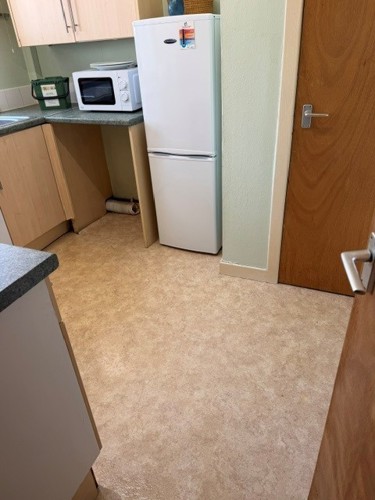
The introduction of two dedicated tenant wellbeing and safety officers has significantly increased capacity to engage vulnerable tenants, coordinate support and promote sustainable behaviour change. Early outcomes include stronger partnership relationships, improved consistency of decision-making, enhanced safeguarding arrangements, earlier intervention in high-risk cases and a robust framework for measuring tenancy sustainment, risk reduction, avoided enforcement action and long-term public value.
Bridgewater HA - FLAIR MND Pledge
Application entry
- Project name: FLAIR MND Pledge
- Lead organisation: Bridgewater HA
- Partner organisations: MND Scotland, FLAIR: Barrhead HA, Bridgewater HA, Paisely HA, ferguslie Park HA Linstone HA, Williamsburgh HA; & Care and Repair Renfrewshire, East Renfrewshire and Inverclyde
Statement of support
The FLAIR Motor Neuron Disease (MND) Pledge represents an outstanding example of partnership working delivering tangible improvements for people facing a rapidly progressing terminal illness.

The pledge was born from a simple but challenging question: are our housing systems working quickly enough for people living with MND? Through existing relationships with MND Scotland and the practical experience of delivering adaptations through Care and Repair services, members of the Federation of Local Housing Associations in Renfrewshire and East Renfrewshire (FLAIR) recognised that traditional housing processes were often not designed for people whose needs can change within weeks rather than years.
Rather than acting independently, six community-based housing associations, Bridgewater, Barrhead, Ferguslie Park, Linstone, Paisley and Williamsburgh, and Care and Repair Renfrewshire, East Renfrewshire and Inverclyde came together with MND Scotland to develop a shared response. This collaboration was significant because each organisation had its own policies, procedures and operational priorities. Achieving agreement required partners to challenge existing assumptions, review established practices and adopt a common commitment focused on the needs of people living with MND.
The resulting pledge is the first cross-association commitment of its kind in Scotland. It establishes agreed standards across all participating landlords, including fast-tracked adaptations, dedicated points of contact, prioritised access to suitable housing, improved accessibility data, enhanced staff awareness and a commitment to work proactively rather than reactively when people are diagnosed with a rapidly progressing terminal illness.
What makes this initiative particularly noteworthy is the breadth of partnership required to make it work. Housing associations worked closely with MND Scotland to understand the lived experience of people with MND and to ensure commitments reflected real-world challenges. The partnership extends beyond the immediate signatories, requiring collaboration with Care and Repair services, health and social care professionals, occupational therapists, local authorities, medical practitioners and advocacy organisations.
The pledge also required partners to look beyond organisational boundaries. Individual housing associations recognised that no single landlord could provide every solution. Instead, the FLAIR members committed to sharing information, collaborating on housing options and supporting cross-landlord solutions where these offered the best outcome for the individual. This collective approach places the needs of the resident above organisational interests.
Importantly, the partnership is not simply about producing a document. It has created a framework for practical action, enabling local RSLs to respond with greater urgency, compassion and flexibility. By formalising commitments and creating consistent approaches across multiple organisations, the pledge helps ensure that people with MND receive the support they need, at the time they need it most.
The initiative aligns strongly with the values of community-based housing associations: dignity, respect, compassion and putting people first. It demonstrates how locally focused organisations can use partnership working to tackle complex challenges that no single organisation could address alone.
Most importantly, the FLAIR MND Pledge provides a blueprint that can be replicated across Scotland. By bringing together housing providers, specialist charities and support services around a shared objective, the partnership is improving outcomes for people living with MND and other terminal illnesses and setting a new standard for collaborative housing practice.
Outcomes and achievements
Although the FLAIR MND Pledge is still in its early stages of implementation, it has already delivered meaningful outcomes and strengthened partnership working across housing, health and specialist support services.
To date, no urgent rehousing cases have arisen requiring activation of the pledge's fast-track housing allocation arrangements. However, through the partnership's proactive approach, four owner-occupiers living with MND have received accelerated support through the Care and Repair service. In each case, housing adaptations and practical solutions were progressed significantly faster than would normally be expected, helping individuals remain safe, independent and comfortable in their own homes for longer.
The partnership has also delivered wider benefits across the local housing sector. Through the expertise developed jointly with MND Scotland, advice and practical support have been provided to local Registered Social Landlords (RSLs) seeking to respond effectively to the needs of tenants living with MND. This has included guidance on adaptation solutions, navigating complex cases and identifying person-centred approaches to supporting residents with rapidly progressing conditions.
Perhaps most importantly, the pledge has established a shared commitment across six housing associations and key partners, creating stronger pathways for collaboration and ensuring that when urgent housing or adaptation needs arise, organisations are prepared to respond quickly, compassionately and consistently. The foundations are now in place for long-term impact and wider sector influence.
Eildon Housing Association - Eildon Community Partnerships
Application entry
- Project name: Eildon Community Partnerships
- Lead organisation: Eildon Housing Association
- Partner organisations: Art in Healthcare, Cyrenians FareShare/Felix, Scottish Borders Council
Statement of support
Eildon Housing’s community partnership team (CPT) works across the Scottish Borders to improve wellbeing, reduce inequality and strengthen communities.

Over the past 12 months, Eildon’s CPT has led, coordinated and developed a range of partnership projects demonstrating how housing organisations can deliver wider community impact by working with others across and beyond the housing sector. Its work has brought together partners from food redistribution, health, care, education, employability, arts and local community networks to deliver practical support shaped around local need.
As a community anchor organisation, Eildon uses its trusted relationships, local presence, assets and knowledge to connect people and organisations. The CPT turns this role into action: identifying gaps, building relationships, coordinating delivery and supporting partners, volunteers and communities to achieve shared outcomes.
Eildon’s OPAL — Older People Active Lives — project is a clear example of this approach. OPAL supports people aged 60+ to reduce loneliness, build confidence and strengthen social connections, including through targeted groups such as Pie and a Brew, developed in response to public health concerns around male social wellbeing and harder-to-reach groups. Over the past year, Eildon has expanded OPAL across the Borders by working with local groups, volunteers, Borders College, Project Search and care networks. The project creates welcoming, locally delivered spaces close to where people live, supporting prevention, independence and improved wellbeing.
Eildon’s CPT has also continued to develop the Borders Community Food Hub, working with Cyrenians FareShare/Felix and 16 local emergency food partners. Through this partnership, Eildon helps connect surplus food with people and organisations who need it most. Eildon provides coordination, infrastructure and trusted local relationships, while local partners use their community knowledge to ensure food reaches people in the places and at times that work for them. This improves service delivery across the more rural parts of the region while reducing food waste and supporting those experiencing food insecurity.

Building on this partnership, Eildon’s CPT has developed employability opportunities with Cyrenians FareShare/Felix to support people into training and work-related skills. This includes practical experience in warehousing, logistics and food distribution, alongside fully funded accredited forklift licence training. Eildon also supports participants with travel, confidence building and mentoring, helping to remove barriers and raise aspirations for jobseekers from its tenant base and wider communities.
Eildon’s partnership with Art in Healthcare has enabled it to bring high-quality artwork and creative activity into Eildon’s supported housing settings. At Poynder Apartments in Kelso, Eildon introduced 16 artworks into an extra care housing environment and supported creative workshops for residents. By bringing art into the place where people live, Eildon has removed barriers to cultural participation and created opportunities for conversation, self-expression, confidence and social connection.
These wide-ranging projects reflect Eildon’s way of working: locally led, partner-enabled and responsive to the different needs of communities across the Scottish Borders. Eildon recognises that delivering consistent quality across a rural region does not mean delivering the same service everywhere. Its CPT adapts delivery to local needs, listens to local voices and builds on the strengths of partners and volunteers.
Eildon is also strengthening best practice by improving how it evidences impact. Through its work with Social Value Lab on the Signals of Change pilot, Eildon is testing new ways to capture real-time qualitative feedback from participants, volunteers and staff. This will help Eildon understand the difference its partnerships make, improve service quality and demonstrate social value more clearly.
Through this work, Eildon’s CPT has delivered partnership projects that improve wellbeing, reduce isolation, tackle food insecurity, build skills, widen access to culture and strengthen communities. Eildon’s approach shows how housing can act as a catalyst for collaborative, place-based change.
Outcomes and achievements
Over the past 12 months, Eildon’s CPT has delivered a range of outcomes across housing, care, food, employability, and culture initiatives.
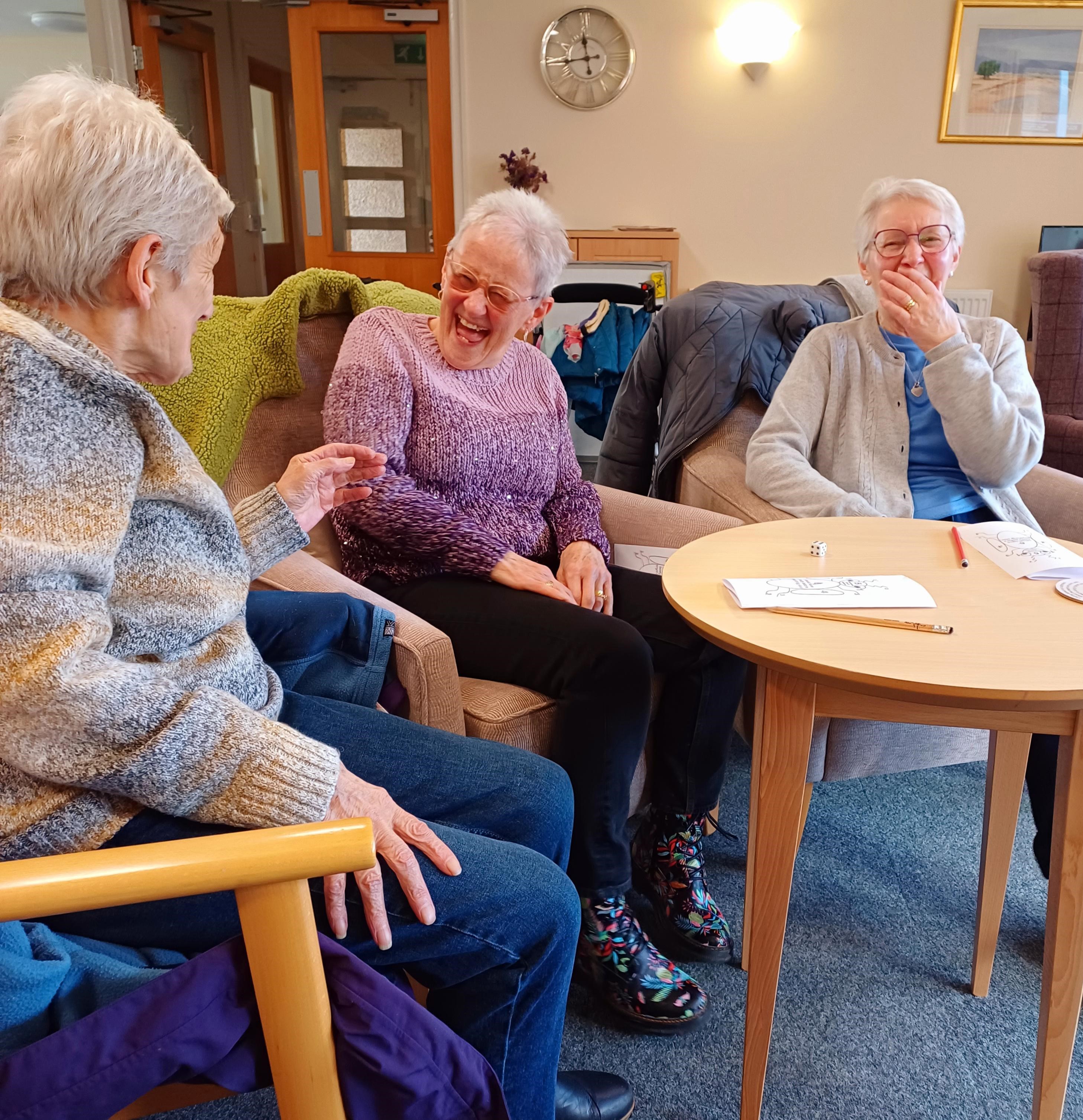
OPAL has expanded from nine active groups in December 2024 to 21 by May 2026, with attendance increasing from around 90 people to more than 200 each month. The volunteer base has grown from four volunteers and one student volunteer to nine volunteers and three student volunteers, strengthening community-led delivery and creating more opportunities for older people to reduce isolation, build confidence and stay connected.
Through the Borders Community Food Hub, Eildon has coordinated work with Cyrenians FareShare/Felix and 16 local emergency food partners, improving access to emergency food support and reducing food waste across the Borders. The project delivered 16 tonnes of food over the last 12 months, enough for 37,000 meals.
Eildon’s FareShare/Felix employability project has created new routes into training and work-related skills, including accredited forklift licence training, travel support and mentoring for jobseekers.
Through Art in Healthcare, Eildon brought 16 artworks into Poynder Apartments and delivered six creative workshops that encouraged participation, conversation and self-expression.
Together, these achievements demonstrate improved wellbeing, stronger community engagement and partnership working across the large rural area of the Borders.
Falkirk Council - Providing a Warm Welcome to New Scots in Falkirk
Application entry
- Project name: Providing a Warm Welcome to New Scots in Falkirk
- Lead organisation: Falkirk Council
Statement of support
Across the last few years, there has been an increase in New Scots arriving and settling in Falkirk. For many who arrive they must navigate barriers which makes it difficult for Falkirk to feel like their new home. This can range from practical challenges such as transport difficulties and language barriers to more complex issues such as cultural or religious differences and managing their own experiences of grief and trauma. Alongside these barriers, there has been an increase in community tensions relating to immigration. As a result, it was identified that many New Scots who settle in Falkirk will experience some level of social isolation.
In response to these circumstances, the Falkirk New Scots Partnership Forum was established to identify and develop solutions to these challenges. Formed in Spring 2025 by Falkirk Council, the forum has brought together local community groups, third-sector partners and statutory agencies throughout the Falkirk Council area who have an interest in supporting New Scots. By adopting a place-based strategy, where housing acts as the foundation for wider integration and improved wellbeing, the partnership works to improve community cohesion and transform how the Falkirk community welcomes New Scots.
Meeting quarterly, the forum provides a platform for partners to share knowledge, strengthen their understanding of the needs of New Scots, and work collaboratively to improve the support and services they provide.
The Forum's impact is further strengthened through a dedicated Knowledge Hub page, which promotes local events, training opportunities and resources, enabling partners to share learning, build best practice and stay connected between meetings.
Fundamental to the partnership’s place-based approach is working with Falkirk Council’s resettlement workers and asylum accommodation provider, Mears Group, to understand the needs of those they house and support. This expertise has provided partners with a stronger base to develop interventions which prioritise New Scots’ wellbeing and sense of belonging in Falkirk. Indeed, whilst housing is what brings many New Scots to Falkirk, it is community support, alongside the stability which housing provides, which allows New Scots to begin rebuilding their lives, achieve their aspirations and thrive.
The positive work being done by the forum to support New Scots is best demonstrated by our Community Cohesion Integration Fund projects. Since April 2025, 11 organisations have received Falkirk Council funding to deliver activities which focus upon integrating New Scots into their organisation’s activities. Across the projects a variety of different interventions have begun to be delivered. Sessions have typically focused on community building and social interaction through recreational activity, such as sports, creative arts, cultural trips, and wellbeing activities. Alongside group-based interventions, several projects also provided more tailored one-to-one guidance, such as employability pathways, skills development, and befriending services. These opportunities were delivered right across the Falkirk Council area, and organisations worked closely with Mears Group and Resettlement Workers to gain referrals to projects and to mitigate any barriers to participation.
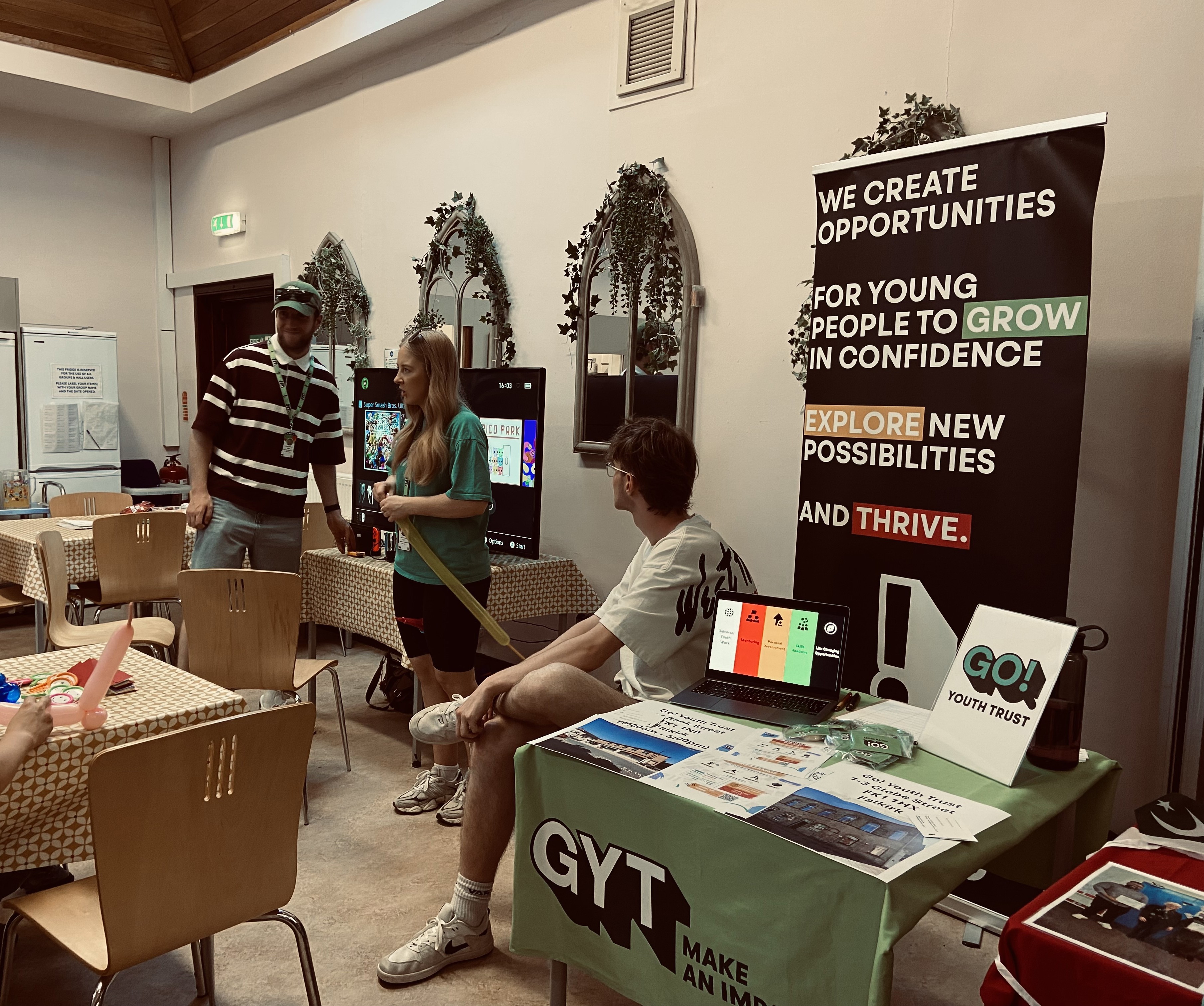
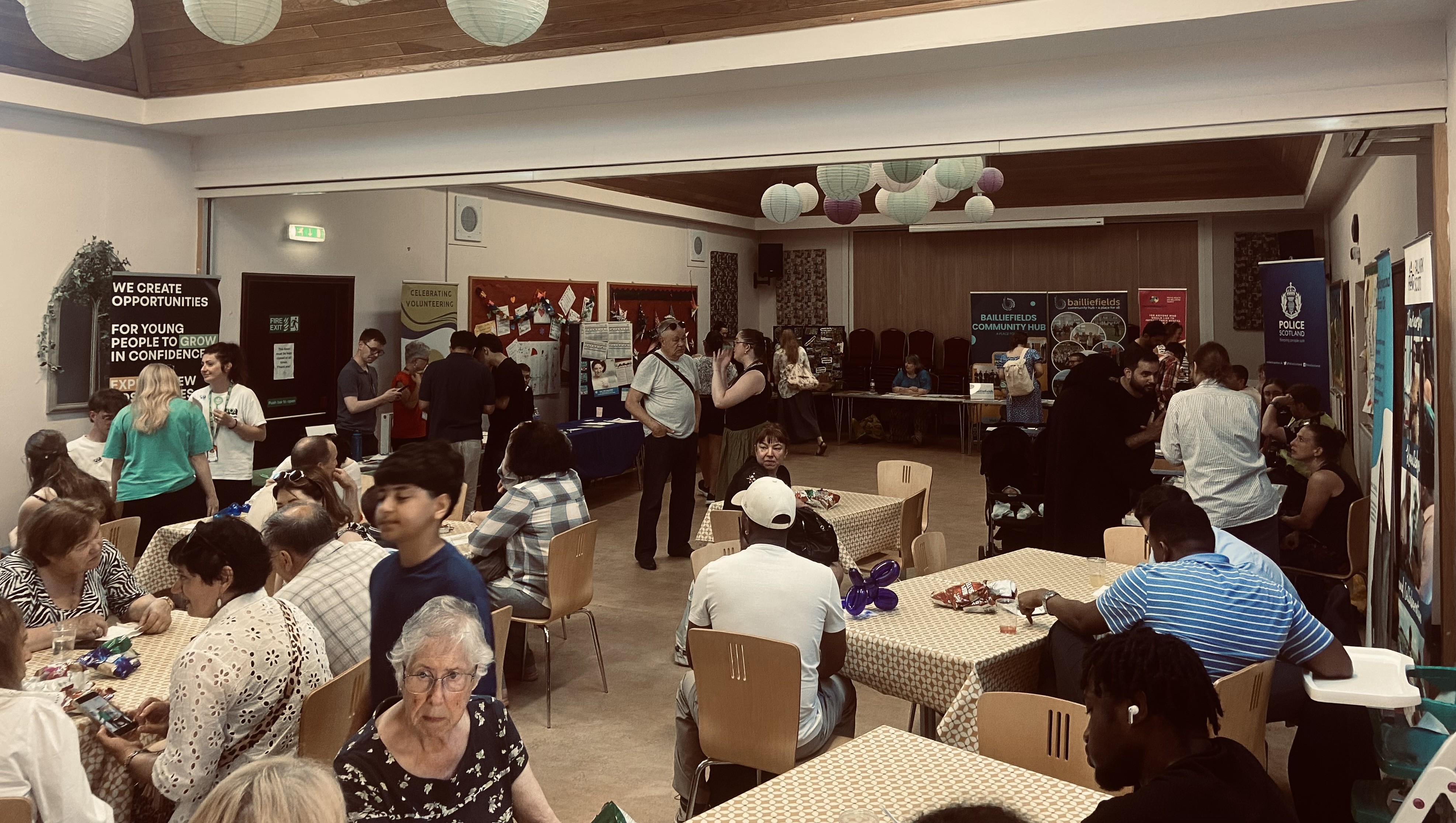
Alongside individual activities, many of the partners within the Forum have also worked together to deliver events. Most notably, Falkirk Council has helped facilitate two New Scots Fairs, which across both events saw over 80 New Scots come together and connect with local groups and/or projects.
The Falkirk New Scots Partnership Forum demonstrates that when organisations come together with a common goal, innovative and inclusive practice can be implemented to empower communities and increase one’s sense of belonging. One New Scot participant sums it up perfectly:
“Volunteering here has given me confidence, friends, and a reason to feel proud of what I can contribute. I feel part of my new community”.
Outcomes and achievements
As a result of the Falkirk New Scots Partnership Forum, 305 New Scots living in Falkirk have been supported to integrate into Falkirk’s community through the activities funded by the Community Cohesion Integration Fund.
Those participating in these activities reported reduced social isolation and increased happiness. One New Scot participant commented that, “I really like coming as I’m on my own most of the time. It’s so good to feel a part of something.” While another participant noted that, “My mother-in-law also really enjoys it, it’s the only thing she does outside the home. Her English is better now too!”
Other New Scots have progressed from participants to volunteers at these organisations, while others have found employment or begun educational pursuits, emphasising how an integrated and community-based approach can support those most vulnerable to thrive.
Significantly, there has also been evidence that there has been improved community cohesion, as members of the community have commented on the positive impact of these projects: “It’s been so very good to see the life happening in the garden and the benefit these young men have brought to the whole community.”.Another noted that the project exemplifies “true community spirit and gives me hope.”
North Lanarkshire Council - NL REACH - North Lanarkshire's Responsive, Enabling, Accessible, Community Hub
Application entry
- Project name: NL REACH - North Lanarkshire's Responsive, Enabling, Accessible, Community Hub
- Lead organisation: North Lanarkshire Council
- Partner organisations: NLC Housing, NLC Education & Families Social Work, NLC Adult Health & Social Care Partnership, NHS Lanarkshire - Health Improvement, Socialudo, NLC Addiction Recovery Teams (ART), Police Scotland - Partnerships Lanarkshire Division, Routes to Work, New Co
Statement of support
The new ‘Ask and Act’ duties proposed in the Housing (Scotland) Bill 2025, will require all public bodies to ask about a person’s housing situation at the earliest possible point in service pathways – and take action to prevent homelessness before it happens. Ask and Act aims to implement a major cultural shift, from reacting to homelessness after it happens, to working together across public and community services to stop it before it begins.
North Lanarkshire Council was selected as one of only 15 pilots across Scotland to develop, test, scale, and cost the new prevention duties in real world settings. Whilst North Lanarkshire Council already promotes quality partnership working across its services, this opportunity required bold and innovative collaborative approaches to embed prevention and early intervention in the fabric of multiple agencies working throughout the local authority areas.
Our pilot project – NL REACH – is one of the first projects to truly personify the Scottish Government’s Public Service Reform Strategy (2025), prioritising prevention, co-locating key services, improving efficiency through delivery, and becoming fiscally sustainable for the future. The NL REACH model focuses on the individual in need and removes the barriers to the services they need. NL REACH simplifies access to public services by sharing information, co-ordinating services, and advocating for the appropriate support at the time when it is most needed.
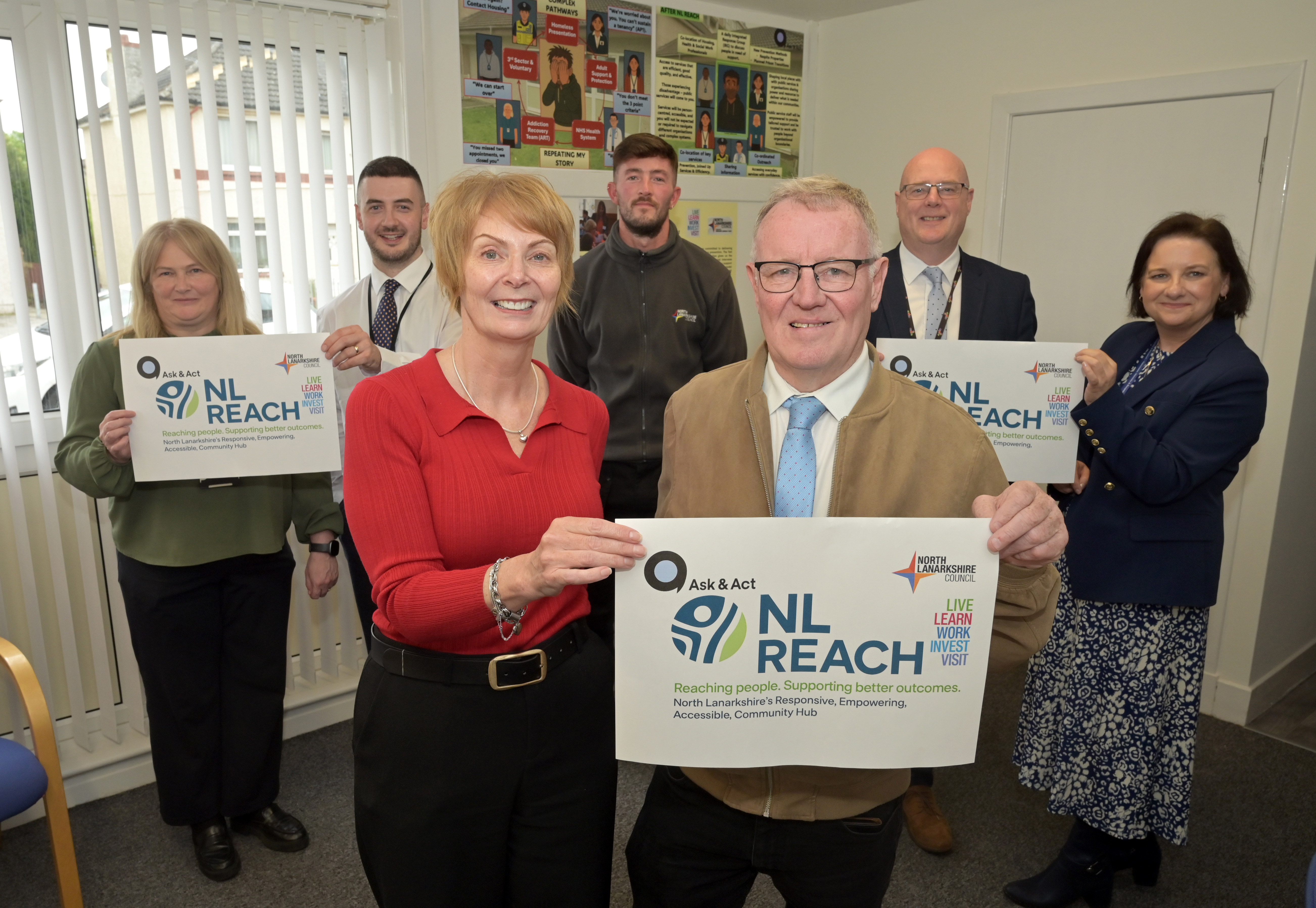
NL REACH screens individuals who are at risk of homelessness at a daily Integrated Response Group (IRG) meeting, where services co-locate, share information, and work collaboratively to provide the most appropriate and effective input to prevent homelessness whilst addressing the core issues the individual requires support with. Core services access key systems and ensure that prevention plans are achievable and effective, whilst supporting services focus on direct outreach, sustainability, advocacy, and empowerment. This combination creates a platform from which the individual can work towards long-term resilience and escape the revolving door of homelessness and crisis presentations to emergency services.
At its heart, the project is about shifting culture and practice around homelessness. Too often, individuals are asked to navigate fragmented services, competing systems, and crisis-driven responses. Our pilot seeks to turn this on its head by creating an environment where services collaborate, wrap support around people, and respond flexibly to their needs. By co-locating provision, introducing short-stay and transitional accommodation, and embedding trauma-informed practice, NL REACH provides a safer, more effective pathway that prevents homelessness before it happens.
To embed this exciting new approach to partnership working across public services in North Lanarkshire, NL REACH devised a unique partnership with Socialudo; a social enterprise that uses serious games to embed cultural change and evaluate system transformation. The Socialudo serious game Pathways Paradox offers an integrated picture and model of homelessness, demonstrating challenges and assumptions, whilst building empathy across services, to drive and expand the collective ownership of solutions. This ambitious pilot has developed a community hub model that brings housing, health, social work, third sector, and lived experience voices together under one roof, to deliver truly person-centred support.
The introduction of collaborative working practices that align our interventions also reduces the duplication of intervention and support across services. The co-location of agencies and the access to multiple information systems provides housing staff with all the critical information they need to support people appropriately and effectively. By providing context from all other agencies, staff can build meaningful relationships with service users and help them find an outcome that works, avoiding crisis, homelessness, or the cycle of repeated homelessness.
Outcomes and achievements
NL REACH has achieved significant outcomes in its quest to redefine effective partnership, working in line with the Scottish Public Service Reform Strategy (2025). When creating the NL REACH service, a consortium of partners was devised, covering all aspects of public services across North Lanarkshire. NL REACH has managed to co-ordinate all services and achieve the following outcomes:
- Multi-agency consortium devised, covering all relevant public bodies
- Data Protection Impact Assessment (DPIA) obtained and implemented – allowing core agencies to share information effectively (housing, NHS, SW, third sector)
- Terms of Reference and Consortium briefing pack completed
- Created a multi-agency Hub space for services to co-locate
- Implemented the NL REACH service with formal procedures in set phases
- Devised North Lanarkshire’s first ‘Ask and Act’ guidance for all public service partners, supporting them to implement new legislation as a collaborative group
- Created resource tenancies to trial new homelessness prevention methods with support from multiple agencies – housing, third sector, NHS, and social work
- Created a unique and effective training model in partnership with Socialudo; using the Pathways Paradox game to promote prevention, join up services, prioritise efficiency and sustainability for public services across North Lanarkshire
- Achieved truly person-centred outcomes.
South Lanarkshire Council - Harriett Gardens – Transforming homelessness support through partnership working
Application entry
- Project name: Harriett Gardens – Transforming homelessness support through partnership working
- Lead organisation: South Lanarkshire Council
- Partner organisations: Social Bite and The Salvation Army
Statement of support
Harriett Gardens is nominated for the Working in Partnership award because it demonstrates how strong, purposeful collaboration can create a new and meaningful response to homelessness that no single organisation could have delivered alone. Developed by South Lanarkshire Council in conjunction with Social Bite and with support from the Salvation Army, Harriett Gardens brings together strategic housing leadership, charitable investment, operational expertise and community commitment to improve outcomes for people experiencing homelessness.

The project was created in response to increasing homelessness pressures across South Lanarkshire, reduced availability of suitable temporary accommodation and the need for more flexible, person-centred options for people who require additional support before moving on to independent living.
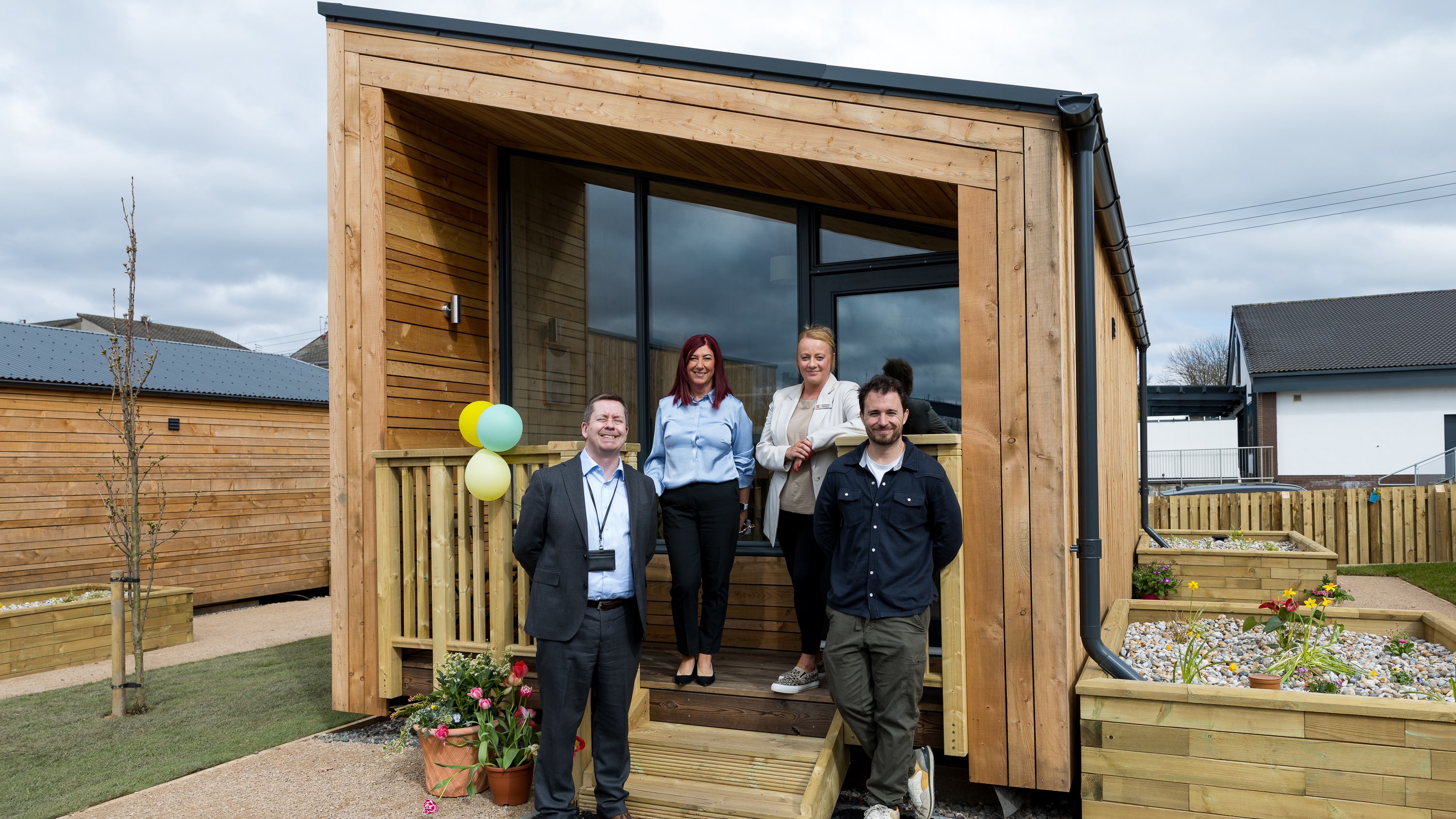
It transformed a long-term derelict site in Rutherglen into a high-quality supported accommodation village comprising 15 self-contained modular homes, peer unit and a central community hub, set within landscaped grounds designed to promote dignity, wellbeing and social connection.
The strength and expertise of the partnership has been central to the project’s success. South Lanarkshire Council provided the strategic housing role, local coordination, land, investment, planning, leadership and alignment with homelessness priorities. Social Bite brought innovation, profile, significant resources and learning from its established supported accommodation model. The Salvation Army provided extensive experience of working with people affected by homelessness and trauma.
This partnership has delivered more than new accommodation. Each resident has their own home, front door, private living space and the opportunity to build confidence in managing and maintaining a home, while support is available day and night.
The support model includes crisis intervention, tenancy skills, recovery links, employability pathways, life skills and planned move-on support. This balance of independence and support is designed to reduce repeat homelessness by giving residents time, space and practical help to rebuild stability.
Community engagement has also been a defining feature. The council established a community connections group, later known as Friends of Harriett Gardens, to support transparency, dialogue and local involvement. Residents, community representatives, third-sector organisations, Police Scotland, Social Bite and council officers worked together through open events, local discussions, site visits and regular communication. This helped address concerns constructively, build trust and ensure the project was integrated responsibly within the local community.
Harriett Gardens opened in April 2026 and quickly reached full occupancy. The launch attracted positive local and national media interest, reflecting the significance of the partnership and the wider sector interest in new approaches to supported accommodation. Early feedback has been extremely positive, including from residents who have described the accommodation as giving them a sense of home, safety and pride that they had not experienced before.
The project continues to benefit from partner input beyond opening. Social Bite has provided laptops for every tenant and has committed to continuing this support as residents move on and new residents arrive, helping to reduce digital exclusion and support access to services, learning and employment. The community hub also provides a base for wider support, activity and engagement, allowing the project to develop as a place of connection as well as accommodation.
Harriett Gardens is a strong example of partnership working because it combines shared vision, joint investment, clear governance, community engagement and specialist support into one practical model. It responds directly to homelessness pressures while setting a higher standard for temporary accommodation for the relatively small population of homeless households requiring more intensive support for a period prior to settled housing: one based on dignity, inclusion, recovery and progression. The project shows what can be achieved when housing, third sector and community partners work together with a shared focus on improving lives.
Outcomes and achievements
Harriett Gardens has already delivered meaningful achievements. The partnership project transformed a previously underutilised site into 15 high-quality, self-contained supported homes with a community hub, increasing the supply of suitable temporary accommodation for people who need additional support before moving on.
Since its launch, the project has accommodated 23 residents, demonstrating the level of need and effectiveness of the mobilisation work undertaken by the council, Social Bite and The Salvation Army. Early feedback has been positive, with residents describing the accommodation as a place where they feel safe, settled and proud to return to.
Partner contributions have strengthened outcomes, including Social Bite providing laptops to residents to reduce digital exclusion and support access to services, learning and employment. Valuable links have been established with members of the local community volunteering their time to support the project.
Four residents who engaged well with services and gained valuable skills in managing a tenancy at Harriet Gardens have successfully moved on to alternative accommodation.
The project has supported wider community benefits by building local confidence through ongoing engagement and attracting positive media and stakeholder interest. Harriett Gardens provides a practical, partnership-led model that can inform future approaches to supported accommodation and homelessness prevention.
Clackmannanshire Council's Housing - Fairer Approaches to Public Debt Working Group – Preventing Homelessness and Reducing Poverty and Inequality in Housing and Beyond
Application entry
- Project name: Fairer Approaches to Public Debt Working Group – Preventing Homelessness and Reducing Poverty and Inequality in Housing and Beyond
- Lead organisation: Clackmannanshire Council's Housing
- Partner organisations: Aberlour Children's Charity / Clackmannanshire Family Wellbeing Partnership
Statement of support
Clackmannanshire's Fairer Approaches to Public Debt Working Group was established through a collaboration between Clackmannanshire Family Wellbeing Partnership and Aberlour Children's Charity.

Bringing together a wide range of public and third-sector partners, including housing, revenues, employability services, CAB, Women's Aid, DWP and other key organisations, the group explores fairer, proportionate and preventative approaches to public debt.
Since its inception, the working group has provided a constructive space for open discussions on public debt, financial hardship and barriers to engagement. Through shared data, lived experience and professional expertise, partners have strengthened understanding of financial insecurity and economic abuse, identified opportunities for improvement and supported person-centred approaches to engagement and intervention.
Influencing policy and practice
The Working Group has directly influenced policy development and service improvement across Clackmannanshire. Learning and feedback from partners has informed the review of the council's Corporate Debt and Write-Off Policy, scrutiny of the Housing Rent Arrears Policy and associated procedures, and the development of the Housing Domestic Abuse Policy.
Discussions within the group have highlighted the importance of early engagement, clear communication and personalised support. As a result, services are reviewing processes to embed more empathetic and consistent approaches to debt recovery, including redesigning debt-related correspondence using accessible, supportive language that reduces fear, confusion and stigma, while encouraging tenants and customers to seek help earlier.
Building on this work, the partnership is exploring further preventative and early intervention approaches to reduce the risk of debt escalation, financial crisis and homelessness. By creating opportunities for earlier conversations and financial wellbeing discussions at key points in the customer journey, such as tenancy sign-ups and routine visits, partners can identify vulnerabilities and emerging risks sooner, provide timely support, and prevent issues from developing into significant debt problems.
Delivering immediate support through the Aberlour Urgent Assistance Fund
One of the most significant outcomes of the partnership has been the promotion and utilisation of the Aberlour Urgent Assistance Fund, which provides emergency financial support to households with children and young people experiencing unexpected hardship. Through direct cash payments, the fund helps prevent and alleviate crises that could negatively affect family wellbeing.
The working group has played a key role in raising awareness of the fund across Clackmannanshire, strengthening referral pathways and enabling partner organisations to sponsor applications, subsequently helping vulnerable households access timely support, reducing the risk of poverty, debt escalation and homelessness.
Following additional funding secured in early 2026, the working group collaborated with Aberlour to prioritise support for households experiencing housing-related debt.
With housing service leading this work, during the first quarter of 2026, the fund achieved significant impact:
- £97,540.37 awarded to local households
- One hundred and seven successful applications, with an average award of £878 per family
- Three hundred and thirty five individuals supported (190 children and 145 adults)
- 48% of awards used to reduce public debt, primarily council housing rent arrears.
In sponsoring applications, the housing service targeted support towards families facing, or at risk of, court action due to housing debt, as well as tenants maintaining their current rent commitments while struggling to reduce existing arrears.
This targeted intervention has delivered lasting outcomes with 82% of council tenant households receiving support remaining rent arrears-free six months later. By providing assistance at a critical stage, the fund helped alleviate financial hardship, sustain tenancies and improve long-term financial resilience.
Looking forward
By combining expertise from across the public and third sectors, the Fairer Approaches to Public Debt Working Group is helping to transform how public debt is understood and managed in Clackmannanshire. Through stronger partnership working, the group continues to influence policy, organisational culture and practice and deliver meaningful improvements for households experiencing financial hardship.
Outcomes and achievements
- Strengthened partnership working across public and third-sector organisations, creating a trusted forum for open discussion, shared learning and collaborative problem-solving
- Informed the review of Clackmannanshire Council's Corporate Debt and Write-Off Policy, development of the Housing Domestic Abuse Policy and scrutiny of the Housing Rent Arrears Policy and associated procedures
- Increased awareness and uptake of the Aberlour Urgent Assistance Fund across partner organisations through improved referral pathways and sponsorship of applications
- During the first quarter of 2026, the fund contributed to:
- £97,540.37 of financial support delivered to local households
- 107 successful applications, with an average award of £878 per household
- Assistance to 335 individuals (190 children and 145 adults, with the largest proportion of applicants being young women aged 18-25)
- Targeted and rapid support towards families facing, or at risk of, court action due to housing-related debt, helping to prevent homelessness and reduce the escalation of financial crisis.
- 48% of all awards directed towards reducing public debt, primarily council housing rent arrears, followed by food (19%), clothing (18%) and utility costs (16%)
- 82% of council households supported through the fund maintained arrears-free rent accounts six months after receiving assistance, demonstrating the lasting impact of supportive financial intervention.
Berwickshire Housing Association - Borders Housing Network Domestic Abuse Project
Application entry
- Project name: Borders Housing Network Domestic Abuse Project
- Lead organisation: Berwickshire Housing Association
- Partner organisations: Eildon Housing Association, Waverley Housing Association, Scottish Borders Housing Association
Statement of support
Borders Housing Network (BHN) is the four leading Scottish Borders Registered Social Landlords (RSLs) – Berwickshire Housing Association, Eildon Housing Association, Scottish Borders Housing Association and Waverley Housing Association. Collectively, the BHN provides more than 12,000 homes for around 23,000 residents.

Domestic abuse is everyone’s business and thanks to Scottish Government Upstream Homelessness Prevention funding, our partnership of the four RSLs, specialist domestic abuse services and Scottish Borders Council demonstrates the transformative power of partnership in communities.
Recognising that no single organisation can effectively address the complex challenges associated with domestic abuse alone, partners came together to develop a consistent, coordinated and trauma-informed approach. With research suggesting victims of domestic abuse experience an average of 34 incidents of abuse before first disclosure and 50 incidents before accessing effective help, the role of housing in addressing domestic abuse is more important than ever with the new provisions set out in the Domestic Abuse (Protection) (Scotland) Act 2021 and the Housing (Scotland) Act 2025.
Police Scotland record more than 60,000 incidents of domestic abuse every year, with recent statistics suggesting around 90% of all domestic abuse incidents occurred in a home. Ensuring housing staff are equipped to provide effective and timely support is essential. Our project acknowledged that RSL staff are not domestic abuse specialists, however they are uniquely positioned to prevent homelessness through early identification and effective response.
Through joint learning, shared expertise and collaboration, the partnership identified gaps in practice, strengthened referral pathways, aligned procedures and created a common understanding of risk, safety and support. No matter what landlord an individual approached, the objective of the project was to ensure consistent and timely support, regardless of the colleague or organisation.
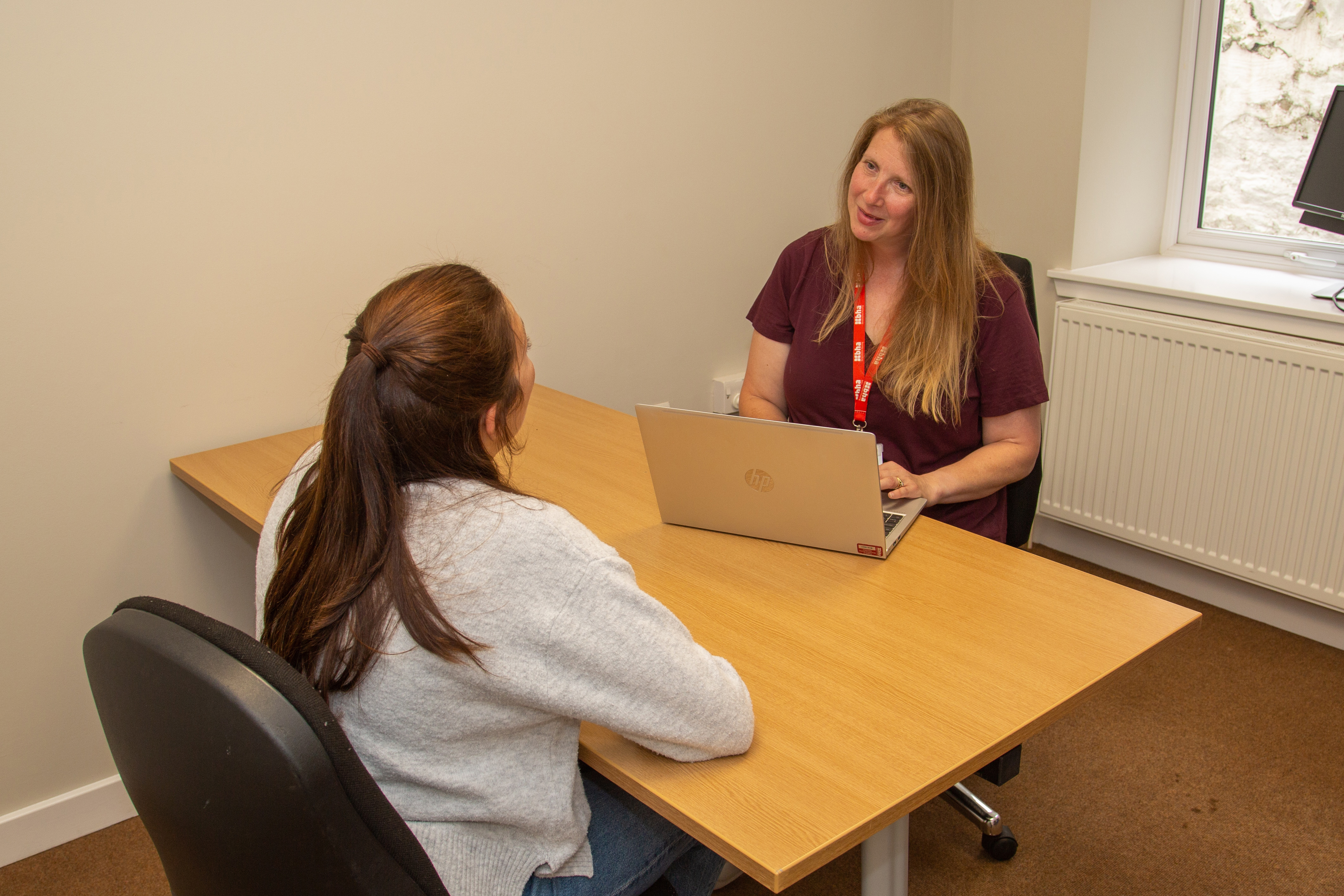
A key success of the project has been the development of stronger relationships between housing providers and specialist domestic abuse services. The introduction of clear points of contact, improved communication channels and shared risk-management approaches has enabled earlier intervention and more effective support for people experiencing abuse. The Domestic Abuse Advisory Service (DAAS) reported significant benefits from housing staff having a greater understanding of domestic abuse due to the project, resulting in more meaningful and informed joint working.
The project also fostered collaboration across organisational boundaries, allowing partners to share resources, training opportunities and best practice. Rather than duplicating services, the partnership focused on complementing specialist provision and ensuring tenants could access the right support at the right time. This collaborative approach has improved consistency across all RSLs while maintaining strong local relationships and knowledge.
By working together, partners have created a lasting framework for continuous improvement, enabling the sharing of knowledge, emerging practice and learning from across the housing and domestic abuse sectors. The result is a stronger, more confident network of professionals across organisations united by a common purpose: ensuring that individuals experiencing domestic abuse receive compassionate, trauma-informed support that prioritises safety, dignity and choice.
The impact of the project is best shared by the people who experienced it. From a colleague point of view, one housing officer said: ‘The project has been invaluable. The extensive training programme has been incredibly beneficial in improving my knowledge and connections to support customers and help them access immediate and practical support.’
One customer who accessed Cash First funding for several household items including a camera/video doorbell said: "I’ve got control back and these items that may seem small have given me the confidence to carry out tasks I couldn’t have imagined doing before. A little help for the right things for my home, and support from the housing association has made the world of difference to me."
Outcomes and achievements
This project delivered a more skilled and confident workforce. Around 85% of the BHN’s 500-strong workforce completed domestic abuse training, with more than 78% of colleagues completing trauma training. A total of 2,367 hours of training were facilitated across five courses which included all colleagues, including trades where direct labour organisations existed, and contractors where they didn’t.
Free training was accessed for domestic abuse and trauma skilled training, with specialist colleagues completing more in-depth awareness training and refreshers on the DASH RIC training with the support and expertise of SafeLives. An ‘Adopt and Adapt’ session was developed to give trades and contracting staff practical tools to recognise abuse and respond appropriately.
Around 142 tenants accessed direct support from the project and benefitted from strengthened referral pathways and multiagency partnerships, particularly into specialist domestic abuse services resulting in more coordinated responses for those at risk.
For tenants, increased visibility of person-centred options around support and practical interventions, including Cash First responses and enhanced home security measures, have contributed to the prevention of homelessness, allowing households and families to remain safely in their homes. The ultimate achievement of this project was that dignity, choice and empowerment were at the heart of every response.
Kingdom Housing - Resilience In Housing
Application entry
- Project name: Resilience In Housing
- Lead organisation: Kingdom Housing
- Partner organisations: Change Mental Health
Statement of support
Over the past 12 months (April 2025 to March 2026), Kingdom Housing Association (KHA) and Change Mental Health have delivered a trauma-informed resilience project that brings housing and mental health support together into a single pathway for tenants facing complex, interconnected challenges — poor mental health, trauma, substance use, social isolation, financial hardship and housing instability.
The people the service supports are often at the point where a tenancy is close to failing, and many have had experiences that leave them wary of asking for help at all. Rather than waiting for a crisis, the partnership combines KHA's housing expertise with Change Mental Health's specialist knowledge to reach people early, build trust and tackle the root causes of tenancy breakdown.
What makes the partnership innovative is that it removes the referral maze. A dedicated resilience outreach worker is embedded within KHA's tenancy sustainment framework, with live routes into financial inclusion, employability, mental health, social work, addiction, domestic abuse and legal services. The service acts as coordinator and connector, so tenants don't navigate multiple agencies alone or repeat their story over and over. Support plans are aligned and nothing falls through the gaps.
Just as important is the model's core learning: engagement is built, not assumed. Many tenants arrive having felt judged, dismissed or let down before, so early contact often involves missed appointments and testing of boundaries. The service is built around consistent, non-judgemental, persistent outreach that meets people where they are — at home and in their community, in person, by phone or digitally — and continues even when appointments are missed. This is a genuinely different approach from referral-and-wait, and it is what drives the service's strong engagement.
Partnership working has measurably improved both the reach and the quality of tenancy sustainment. During 2025/26 the service supported 55 tenants, delivering over 326 hours of direct one-to-one intervention, with 91% receiving weekly or fortnightly contact. This is intensive support matched to genuine complexity: across 55 tenants the service recorded 112 mental health diagnoses and 74 physical health conditions, with most people managing several overlapping pressures at once.
The results show through in the measures that matter. The partnership contributed to a 96% tenancy sustainment rate for new tenancies beyond one year, and to a reduction in rent arrears from 4.57% to 3.49%. It has also raised the capability of frontline housing staff, who report greater confidence managing complex presentations and a better understanding of mental health and trauma-related behaviours. As one neighbourhood officer put it, the service is "a necessary intervention, not an optional add-on."
The impact reaches beyond the individual tenancy. By helping people stay in their homes, improve their wellbeing and reconnect with their communities, the project reduces isolation and eases pressure on stretched public services — fewer evictions and enforcement actions, fewer crisis presentations, and less escalation into statutory intervention. One tenant, referred at the point of imminent eviction, re-engaged with housing and external services through persistent, multi-agency support and kept their home. In their words: "I don't think I'd still have my home if that support hadn't been there."
The approach is increasingly recognised as best practice. During the year the service was shortlisted for Housing Team of the Year, received a Heart of Support nomination, and was invited to share its learning at the National Homelessness Conference. The partnership has also secured Communities Mental Health & Wellbeing Fund investment to extend the model into the Fife Housing Alliance Partnership — proof that what works here can be spread across the wider sector.
Outcomes and achievements
- Fifty-five tenants supported through the Resilience Project, all facing complex, overlapping challenges.
- Over 326 hours (19,580 minutes) of specialist one-to-one support delivered, averaging 5.9 hours per tenant.
- 91% of tenants supported on a weekly or fortnightly basis — intensive, sustained contact rather than signposting.
- 93% of referrals from frontline housing teams — 55% from neighbourhood officers and 38% from the tenancy support services team — reflecting strong partnership working and early intervention.
- Contributed to a 96% tenancy sustainment rate for new tenancies beyond one year.
- Supported a reduction in rent arrears from 4.57% to 3.49%.
- One-hundred and twelve mental health diagnoses and 74 physical health conditions supported across the cohort, reflecting the depth and complexity of need.
- Multi-channel delivery — 54 tenants face-to-face, 46 by phone, 33 digitally — adapted to what each person could manage.
- Strong engagement across services: 85–90% with housing services, 60–65% with internal KHA support (including tenancy support services and Kingdom Works), and 65–70% with external services.
Secured Communities Mental Health & Wellbeing Fund investment to extend the model into the Fife Housing Alliance Partnership.
Shortlisted for Housing Team of the Year, nominated for the Heart of Support award, and invited to present at the National Homelessness Conference.
Orkney Housing Association - Housing First Orkney
Application entry
- Project name: Housing First Orkney
- Lead organisation: Orkney Housing Association
- Partner organisations: Orkney Blide Trust, Women's Aid Orkney, The Rock Trust
Statement of support
Orkney Housing Association’s Housing First Orkney programme was one of seven projects that received funding through the Upstream Homelessness Prevention pilot scheme. The Scottish Government-backed pilots supported tenancy sustainment and prevention initiatives delivered by registered social landlords and third sector partnerships. Participants identified successful early intervention activities and captured learning to inform the role of social landlords in delivering the new ‘Ask and Act’ prevention duty.

Housing First Orkney is a pioneering initiative of its kind, adopting a whole system and no wrong door approach to island homelessness. It aims to make homelessness in Orkney rare, brief, and non-recurring. The project leveraged Orkney’s unique context—rural island geography, a single local authority, one housing association, and a strong third sector—to test a truly integrated model of support.
This project sought to establish a place-based and whole system approach; addressing both the hard edges of homelessness and upstream homelessness prevention work. These conditions provided a unique opportunity to test a genuinely integrated approach to homelessness prevention and response, where pathways are simplified and services work collectively rather than in parallel.
Two Housing First projects were established:
Housing First for Youth in partnership with The Blide Trust & The Rock Trust-
This element was designed to provide intensive, voluntary, wrap-around support to a small number of young people (originally seven, later increased to nine) who were care-experienced or on the fringes of care to help them access, sustain and thrive in their own homes. The intentionally small caseload enabled a high-intensity, flexible and relationship-based approach, allowing workers to respond quickly and persistently to need. The service was targeted at young people whose needs are often not met within traditional supported accommodation or time-limited tenancy support, with the explicit aim of intervening early to prevent repeat homelessness, crisis and prolonged involvement with homelessness systems. This service did not replicate existing provision and offered a distinct, rights-based model grounded in young people’s choice, self-determination and long-term wellbeing. The Rock Trust provided support, training, and an independent peer review to The Blide Trust.
Housing First for Victims/Survivors of Domestic Abuse in partnership with Women's Aid Orkney-
This aligned project mirrored the service provided by The Blide Trust but was focused on victims/survivors of domestic abuse. Seven women and their families with multiple disadvantages such as addictions, social work involvement and mental health challenges were supported in accessing or sustaining tenancies rather than being accommodated within the Women's Aid Refuge. Domestic abuse is recognised as the second biggest driver of homelessness and high tariff survivors are attracted to Orkney as a safe and remote location which places additional demands on the mainstream services provided by Orkney Women's Aid. Practice was trauma-informed, holistic and the caseworker had the capacity to fully walk alongside the victim/survivor and their family through periods of disengagement, crisis or increased risk and was able to respond with persistence and curiosity rather than withdrawal of support.
In both projects, the Orkney context was understood in a nuanced way. Staff demonstrated awareness of the impacts of visibility, stigma and limited choice within small island communities and balanced this with flexible, creative responses and strong local relationships. This reflective, adaptive approach has provided strong foundations for ongoing effective delivery of Housing First for both client groups.
By combining housing expertise, specialist third-sector support and a shared commitment to Housing First principles, the partners have created a pioneering model for remote and island communities. The partnership has prevented homelessness, sustained tenancies, improved wellbeing and strengthened local systems, demonstrating what can be achieved when organisations move beyond traditional service boundaries to deliver truly person-centred support.
Outcomes and achievements
The efficacy and impact of both Housing First projects have been recognised by their ability to independently secure ongoing funding. A total of sixteen highly vulnerable clients were supported to thrive. All clients’ tenancies have been sustained with significant positive outcomes such as the removal of child protection markers and strengthened family relationships.
A joint fortnightly forum for these projects has been established in addition to wider partnership working forums by both organisations. Significant progress has been made towards Keeping the Promise for care leavers in Orkney and greatly improving their well-being and outcomes. The work of this project has produced exemplar work practices that the local authority’s Promise Board is seeking to mainstream. Care Champions are being identified across statutory, third and voluntary sector organisations.
Alistair MacDermid, Head of Services at The Rock Trust stated “The Blide Trust’s Housing First for Youth service in Orkney demonstrates high-quality, values-driven practice and strong alignment with the Housing First for Youth model. The service is delivering meaningful, rights-based support to care-experienced young people within a challenging but opportunity-rich system context.”
Orkney Housing Association’s partnership-based approach has established two outstanding and essential Housing First projects, the first of their kind in remote, Island-based communities.