


Welsh Housing Awards 2026
Read all the shortlisted entries into this award category, Developing High Quality Homes, at the Welsh Housing Awards (WHA) 2026 and find out who won the award on the night.
This award recognises the contribution of organisations involved in building new social and affordable homes across Wales.
Winning project name
Tŷ Darran
Winning organisation
Caerphilly County Borough Council
Partner organisations
Pentan, Willmott Dixon and Currie & Brown
Statement of support
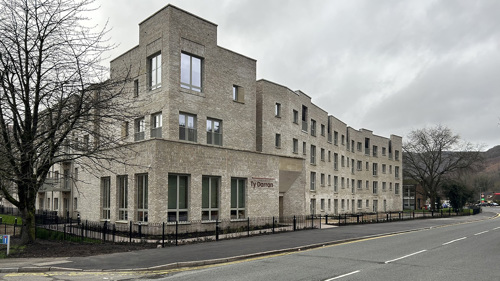
Tŷ Darran demonstrates what is possible when a defined housing need is met through innovation, partnership and a commitment to creating lasting community benefit. Delivered by Caerphilly County Borough Council and officially opened in March 2026, the scheme transformed a derelict former care home site into 45 high-quality, energy-efficient one-bedroom social homes for people aged 60 and over.
Meeting a defined housing need
Tŷ Darran was developed in direct response to an identified local need. Existing sheltered housing was outdated and no longer met residents’ expectations for accessibility, independence, safety or quality of life. The council therefore took the opportunity not simply to replace old accommodation, but to rethink what high-quality later-living housing should deliver.
The result is purpose-designed accommodation built to enhanced Welsh Development Quality Requirements, providing accessible, future-proof homes that enable residents to remain independent and age well in their community. Importantly, the development enabled existing residents to relocate together, protecting established friendship groups and support networks while meeting their changing housing needs.
Innovation in design, energy efficiency and delivery
Innovation is at the heart of Tŷ Darran, both in how the homes were designed and how they perform.
The development adopted a fabric first approach to energy efficiency, prioritising the thermal performance and airtightness of the building envelope before relying on technology to reduce energy demand. High levels of insulation, careful detailing and a well-considered building fabric help minimise heat loss, improve thermal comfort and create more energy-efficient homes. This approach is particularly important for older residents, supporting comfortable, consistent indoor environments while helping to reduce energy consumption and exposure to rising energy costs.
Alongside this technical innovation, the Council adopted a genuine co-design approach, placing residents at the centre of the development rather than consulting them once key decisions had already been made.
Future residents directly influenced apartment design, accessibility requirements, communal spaces, building features and the identity of the scheme. Individual home assessments, supported by occupational therapists, helped ensure homes responded to specific needs.
Innovation also extended beyond the physical building. Creative placemaking, developed with a local artist, embedded residents’ stories into the scheme, creating a distinctive identity and strengthening ownership and belonging.
Partnership working
Tŷ Darran demonstrates the value of bringing the right people together. The council worked collaboratively with residents, occupational therapists, contractors, local suppliers, artists and wider community stakeholders throughout the project.
Engagement included home visits, site tours, local drop-in sessions and community events, creating genuine opportunities to influence the development and build trust. This collaborative approach helped ensure the finished homes were shaped by lived experience while delivering high standards of design, accessibility and energy efficiency.
Community benefits
The benefits of Tŷ Darran extend well beyond its 45 homes. Construction generated local employment and supported Welsh supply chains, including a local steel manufacturer. Social value commitments delivered school engagement activities, community donations and improvements to a local war memorial.
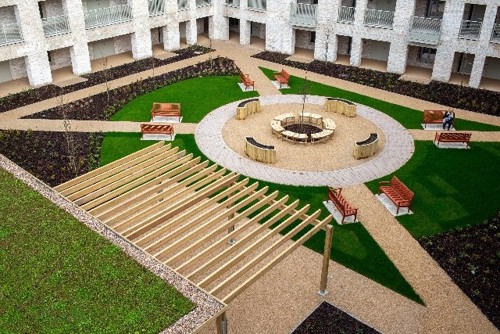
The development itself creates a platform for continued community benefit. Landscaped gardens and shared indoor and outdoor spaces encourage social interaction, wellbeing and connection, while a community gardening project funded through social value commitments will provide an ongoing opportunity for residents and the wider community to come together.
Tŷ Darran therefore delivers on every element of high-quality housing: it meets a clearly evidenced need, combines resident-led design with fabric first energy innovation, is built on strong partnership working and creates benefits that reach far beyond the homes themselves.
It is not simply 45 new homes. It is a new model for delivering social housing that puts people, performance and long-term community value at its centre.
Outcomes and achievements
Tŷ Darran has delivered 45 high-quality, energy-efficient and accessible social homes, directly addressing the identified need to replace outdated sheltered accommodation and provide residents aged 60+ with homes that support independence, safety and quality of life.
The fabric first approach has embedded energy efficiency into the homes from the outset, prioritising a high-performing building envelope to reduce heat loss, improve thermal comfort and minimise energy demand. This supports both environmental sustainability and residents’ long-term affordability and wellbeing.
The resident-led approach has produced exceptional results. 100% of residents are happy or very happy in their new home, 100% would recommend the council as a landlord, and 94% reported a positive moving experience. Residents have praised the quality and sense of community, with one describing Tŷ Darran as “like a five-star hotel”.
The scheme has also enabled residents to move together, preserving friendship and support networks while reducing disruption and anxiety.
Beyond the homes themselves, Tŷ Darran has generated wider community value through local employment, supply-chain investment, school engagement, community donations and improvements to a local war memorial. Its community gardening project will provide a lasting legacy for wellbeing and social connection.
Tŷ Darran shows that high-quality social housing can meet need, reduce energy demand, improve lives and strengthen communities, all through one integrated approach.
Shortlisted entries
Hafod - Llys yr Odyn
Application entry
- Project name: Llys yr Odyn
- Lead organisation: Hafod
- Partner organisations: JG Hale Group, Cardiff Council and Welsh government
Statement of support
Llys yr Odyn is a landmark affordable housing development in Grangetown, Cardiff, delivered by Hafod in partnership with Cardiff Council, Welsh government and JG Hale Group Ltd.
When Hafod, a housing, support and care provider, acquired the former Track 2000 site in November 2019 for £2.57 million, it inherited a strategically important but long-neglected brownfield site occupying one of Cardiff's principal gateways into the city centre.
The development provides 74 high-quality, energy-efficient homes for social rent, creating much-needed affordable housing while breathing new life into a neglected site with significant industrial heritage.

The land had once housed a bottle works before becoming a furniture recycling centre, but for many years it represented an underused gap in the cityscape.
Llys yr Odyn, which translates as Kiln Court, a name which pays tribute to the site's industrial heritage, boasts stunning architecture that reflects Cardiff's historic warehouse buildings through carefully considered brick detailing, arched openings and robust contemporary design.
The development also enjoys incredible views across the city skyline, including the iconic Principality Stadium, further enhancing its unique setting. Rather than erasing the past, the development celebrates it, creating a distinctive sense of place that feels rooted in its community.
With almost 10,000 households currently waiting for affordable housing in Cardiff, every social rented home that housing providers like Hafod can create, matters. Llys yr Odyn delivers 74 of them, including a significant proportion of one-bedroom apartments that directly respond to growing demand for housing for single people and smaller households.
What sets the project apart is the partnership's willingness to adapt to changing community needs. Originally approved as a mixed-tenure development, the scheme was changed to deliver 100% social rented homes, maximising public value and directly supporting Cardiff's response to rising housing demand and homelessness.
At a time when housing pressures continue to grow across Cardiff, the decision by Hafod, Cardiff Council and Welsh government to revisit the original plans for the site and convert the development from a mixed-tenure scheme to 100% social rent was both bold and impactful. Rather than simply delivering what had already been approved, the partnership recognised changing local needs and chose to maximise the public benefit of the development. This commitment resulted in 74 much-needed social rented homes that directly support people and families in housing need.
Delivering a five-storey residential development on a constrained city-centre site required exceptional partnership working. Hafod, Cardiff Council, Welsh government, JG Hale Group Ltd and the wider project team worked collaboratively throughout the development process to overcome significant engineering, construction and logistical challenges. Their shared commitment ensured the successful delivery of a complex scheme that achieves both quality and value.
Innovation and sustainability have been central to the project's success. Modern Methods of Construction, including a panelised timber frame system, helped reduce waste, improve build quality and lower embodied carbon. The homes incorporate photovoltaic panels, all-electric heating systems, mechanical ventilation with heat recovery and high-performance building fabric, helping residents reduce energy costs while supporting wider decarbonisation ambitions.
The project's impact extends beyond the homes themselves. Social value was embedded throughout delivery, generating apprenticeship and trainee opportunities, employability support and educational engagement within the local community. Significant investment was also made to support Grow Well, a community gardening and social prescribing initiative that promotes health, wellbeing and social connection, creating an enduring community asset for both existing residents and those moving into Llys yr Odyn.
Importantly, the scheme reflects a whole-organisation commitment from Hafod, drawing on expertise from development, housing, asset management and customer services teams to create a positive customer experience before, during and after.
Outcomes and achievements
Llys yr Odyn has delivered lasting outcomes through the regeneration of a brownfield site into 74 high-quality homes for social rent, following the decision to revise the original mixed-tenure proposal during the construction phase and deliver 100% social rented homes.
The development will provide secure, affordable homes for around 200 residents while supporting Cardiff's homelessness prevention ambitions.
The use of Modern Methods of Construction and low-carbon technologies, including a timber frame structure, photovoltaic panels, all-electric heating and mechanical ventilation with heat recovery, has delivered environmental benefits.
Social value has been embedded throughout, generating 655 apprenticeship and trainee weeks and employability support opportunities. Investment in Grow Well, a local community gardening and social prescribing project, has strengthened a wellbeing resource that promotes inclusion and social connection.
Colleagues across Hafod have been involved throughout the development process, including Neighbourhood Coach Lisa, who said; "It's been great to be involved throughout the entire journey of this development. We've had regular opportunities to visit the site and provide feedback, which has helped shape some important decisions, including improvements to the car parking arrangements. Getting to know the homes before handover means we're much better prepared to support customers when they move in.”
Lovell Partnerships - Augustus Grange
Application entry
- Project name: Augustus Grange
- Lead organisation: Lovell Partnerships
- Partner organisations: Codi Group, Pembrokeshire County Council, Welsh government
Statement of support
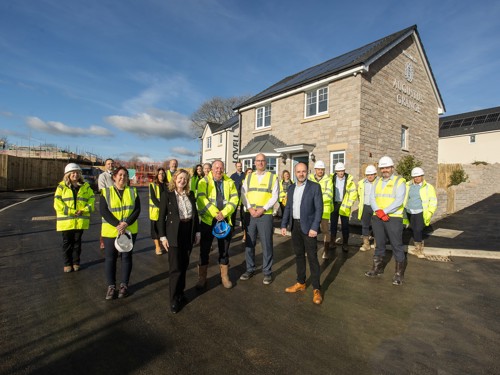
Augustus Grange is a transformational £29 million mixed-tenure development in Haverfordwest, delivered through a successful partnership between Lovell, Codi Group, Pembrokeshire County Council and Welsh government. Comprising 115 high-quality homes, including 79 affordable properties, the development is addressing one of Pembrokeshire's most pressing challenges: providing affordable, sustainable homes for local people while creating a vibrant new community.
Importantly, Augustus Grange represents the first phase of a wider vision for the area. Following Welsh Government's acquisition of the previously stalled site in 2023, the development has unlocked a significant housing opportunity, creating momentum for a potential larger community that could ultimately deliver an additional 600 homes and supporting infrastructure for future generations.
Meeting a defined housing need
Augustus Grange has been specifically designed to address local housing demand and expand access to affordable home ownership and rented housing within Pembrokeshire. Of the 115 homes being delivered, 79 (69%) are affordable, comprising 42 homes for social rent and 37 shared ownership properties. This tenure mix provides opportunities for local families, first-time buyers and those unable to access the open market, directly supporting housing priorities identified by local and national stakeholders.
The scheme focuses not only on housing supply but also on affordability in the long term. Every home achieves a minimum EPC B rating, while all social rented homes achieve EPC A through the use of air source heat pumps and photovoltaic panels. This ensures residents benefit from lower energy consumption and reduced household bills, helping to tackle fuel poverty while supporting Wales' sustainability ambitions.
Innovative design and construction
Innovation has been embedded throughout the design and delivery of Augustus Grange. Working collaboratively with Codi, Lovell utilised timber frame construction on all social rented homes, accelerating the build programme and enabling affordable homes to be handed over earlier whilst maintaining exceptional quality standards.
Sustainability has been a defining feature of the development. Despite receiving planning consent before Sustainable Drainage Approval Body requirements were introduced, the project voluntarily incorporated sustainable drainage measures including permeable paving and attenuation systems to enhance long-term water management. Combined with low-carbon heating technology and photovoltaic panels installed across the development, these measures ensure homes are fit for the future and affordable to run.
Partnership working
The success of Augustus Grange has been built on exceptional partnership working. The scheme is the result of Lovell, Codi, Pembrokeshire County Council and Welsh government working together to unlock a previously stalled site and transform it into a thriving new neighbourhood.
Claire Tristham, Director of Development at Codi Group, highlighted the importance of this collaboration:
"This development is the result of partners working together to secure the site from private ownership. Support from the land and funding divisions at Welsh government and Pembrokeshire Council has ensured that housing is secured at this location for the coming years."
The effectiveness of this partnership was demonstrated through the pace of delivery, with partners visiting the first completed homes just seven months after contracts were signed.
The project has received strong endorsement from stakeholders. Former Cabinet Secretary for Housing and Local Government Jayne Bryant stated:
"Delivering more homes is a key priority for this government and it's fantastic that we're able to support Lovell and Codi’s vision for the Augustus Grange development."
Councillor Michelle Bateman, Cabinet Member for Housing at Pembrokeshire County Council, added:
"It is fantastic to see a mix of open market, affordable and social rent homes being developed in our county town."
Community benefits
Augustus Grange has generated significant social value throughout construction. Through engagement with Pembrokeshire College, Lovell delivered employability and careers activities for 35 students, helping raise awareness of opportunities within the construction industry and supporting future skills development.
The development has also created direct employment opportunities. Apprentice carpenter Marley O'Kell progressed from working on site while studying at college to securing full-time employment with Lovell, demonstrating the project's lasting impact beyond the homes themselves.
Augustus Grange is more than a housing development. It is creating a sustainable, inclusive and connected community while demonstrating how partnership-led delivery can successfully address housing need, create opportunities and unlock future growth across Pembrokeshire.
Outcomes and achievements
Augustus Grange has transformed a previously stalled site into a thriving new neighbourhood, unlocking the first phase of a wider vision for housing growth in Haverfordwest. Through an exemplary partnership between Lovell, Codi, Pembrokeshire County Council and Welsh government, the scheme is delivering 115 high-quality mixed-tenure homes, including 79 affordable properties comprising 42 social rented homes and 37 shared ownership homes. With 69% of homes classed as affordable, the development is making a significant contribution towards addressing local housing need.
The development is setting new standards for sustainable living. Every home achieves a minimum EPC B rating, whilst all social rented properties achieve EPC A through the use of air source heat pumps and photovoltaic panels, helping residents reduce energy costs and supporting Wales' net zero ambitions. Sustainable drainage solutions were voluntarily incorporated ahead of legislative requirements, further strengthening the long-term environmental resilience of the development.
Strong partnership working has enabled delivery at pace, with the first homes available for occupation just seven months after contracts were signed. Beyond housing delivery, Augustus Grange is creating lasting social value through educational engagement, skills development and employment opportunities, including careers activities with 35 Pembrokeshire College students and apprenticeship pathways leading directly to full-time employment.
As the first phase of a potential 600-home community, Augustus Grange is already demonstrating how collaborative, sustainable housing delivery can create lasting economic, social and environmental benefits for Pembrokeshire.