


Welsh Housing Awards 2026
Read all the shortlisted entries into this award category, Excellence in Championing Equality and Diversity, at the Welsh Housing Awards (WHA) 2026 and find out who won the award on the night.
This award recognises organisations leading on promoting equality and diversity within their businesses.
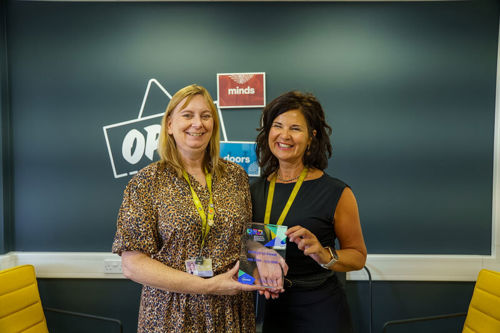
Winning project name
Opening Door's Project
Winning organisation
Bron Afon
Statement of support
As a Community Manager, Jo identified a recurring and concerning pattern across housing services. A significant number of customers were being categorised as "non-engaging" because they did not respond to traditional methods of contact, declined access for statutory gas servicing and home inspections, avoided discussions around rent, or disengaged from support services. These cases were often viewed as difficult or uncooperative, with an underlying assumption that all reasonable attempts at engagement had been exhausted.
Rather than accepting this position, Jo challenged the narrative and sought to understand the root causes behind customer disengagement. Through a comprehensive review of 50 cases identified via complaints, service reviews and case audits, a very different picture emerged. The review revealed that traditional service delivery approaches were not always effective or inclusive. In many cases, changes in behaviour had gone unnoticed, communication methods were not meeting customer needs, and services lacked the flexibility required to support individuals facing complex personal challenges.
Several consistent themes emerged, including poor mental health, trauma, addiction and neurodiversity. Recognising that meaningful inclusion begins with understanding lived experiences, Jo established the Opening Doors Project, an ambitious programme designed to improve accessibility, engagement and equality of opportunity across housing services. The project was intentionally structured to address one theme at a time, ensuring each area received focused attention and sustainable change. Neurodiversity was selected as the initial priority due to its significant impact on customers' ability to communicate, access services and sustain engagement.
The Opening Doors to Neurodiversity initiative was built on a simple but powerful principle: services should adapt to meet the needs of customers, rather than expecting customers to adapt to services. A multi-disciplinary project team was established to identify desired outcomes and develop a series of targeted workstreams focusing on staff development, communication, pre-tenancy support and environmental design. This approach ensured that inclusion was embedded into everyday service delivery rather than treated as a standalone initiative.
A key priority was increasing organisational understanding of neurodiversity. Specialist training opportunities were secured, and role-specific learning was developed to help colleagues apply their knowledge directly to customer interactions and decision-making. Alongside this, communication methods were reviewed to ensure information was clearer, more accessible and easier to understand for individuals with different communication needs. The project also examined opportunities to strengthen support at the start of tenancies and explored how physical environments could be adapted to reduce barriers and create more welcoming and inclusive spaces.
The project moved from design into delivery during 2026 and quickly gained momentum. In February, the initiative was formally launched through the Opening Doors to Neurodiversity event, delivered by leading neurodiversity advocate Dean Beadle. This was followed by the Autism Reality Experience in March, an immersive learning opportunity that enabled colleagues and Board members to experience simulated sensory challenges and gain a deeper appreciation of the barriers faced by autistic individuals.
The impact was significant. By April 2026, 122 colleagues and board members had completed the Autism Reality Experience, with an exceptional 84% feedback response rate. Participants consistently described the experience as powerful, insightful and transformative, resulting in increased understanding, empathy and confidence when working with neurodiverse customers.
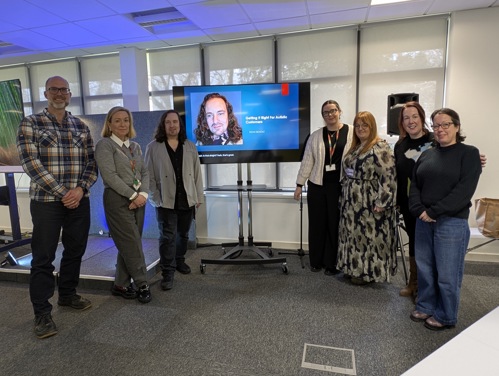
The initiative continued to expand through specialist learning sessions delivered by organisations including Tai Pawb and HopeGB. These sessions engaged colleagues from community housing, independent living, safeguarding, homes, engagement and support services, alongside senior leaders, heads of service and directors. This organisation-wide approach ensured that equality, diversity and inclusion were embedded at every level, from frontline delivery through to strategic leadership and governance.
By challenging assumptions, championing inclusive practice and driving meaningful organisational change, Jo has demonstrated exceptional leadership in advancing equality, diversity and inclusion. Opening Doors to Neurodiversity is far more than a programme of work. It represents a fundamental cultural shift in how services are designed and delivered, ensuring that customers are understood, supported and given equitable access to services. Through this work, Jo has helped create a more inclusive organisation where individual needs are recognised, barriers are reduced and no customer is disadvantaged because their differences have not been understood.
Outcomes and achievements
The Opening Doors to Neurodiversity project has delivered meaningful and measurable improvements in how Bron Afon understands, engages with and supports customers and colleagues. Through a programme of training, awareness events, communication improvements, environmental adaptations and partnership working, the project has embedded a more inclusive and person-centred approach across the organisation.
To date, over 100 colleagues and leaders have completed specialist neurodiversity training delivered by Hope GB, Tai Pawb, Dean Beadle and the Autism Reality Experience. Feedback has been overwhelmingly positive, with participants reporting increased understanding, confidence and empathy, alongside tangible changes in behaviour. Colleagues are now adapting communication styles, allowing additional processing time, avoiding assumptions and tailoring support to individual needs.
This learning is already translating into improved customer experiences. Practical changes include providing photographs of colleagues before home visits, offering clearer explanations of appointments, and using more structured, accessible written communications. These adjustments have helped customers better understand expectations, engage more effectively with services and build stronger relationships with staff.
Customer feedback demonstrates the impact of these changes. Neurodiversity-related Rant & Rave feedback improved significantly, moving from a mixed scoring profile in April-June 2025 to 100% five-star feedback during the same period in 2026. Customers reported feeling listened to, understood, reassured and supported, with colleagues making information easier to understand and processes less daunting.
Beyond individual outcomes, the project has strengthened organisational assurance, informed service improvement planning and created a foundation for future regulatory self-assessment. Through collaboration with external partners and sector organisations, Bron Afon is also sharing learning more widely, helping to drive positive change beyond the organisation and reinforcing its commitment to equality, diversity and inclusion.
Shortlisted entries
JG Hale Group Ltd - A community of many voice at Bute Street
Application entry
- Project name: A community of many voice at Bute Street
- Lead organisation: JG Hale Group Ltd
- Partner organisation: Cardiff Council
Statement of support
Hales’ Bute Street development for Cardiff Council, comprises of the construction of 45nr apartments for Over 55’s, built across a six-storey block, with a community space to the ground floor, and underground carpark.
Butetown is renowned for being a close-knit, multicultural, vibrant community; blending an array of cultures and ethnicities, with South Wales Islamic Centre situated just next door to site. Hale Social Value Manager, Dionne, therefore prioritised encompassing the many voices and thoughts of the local community surrounding the project; into the planning of all social value activities' maximising the socio-economic legacy associated with project.
All Social Value Funding was ringfenced for the immediate Butetown vicinity; maximising local investment into the foundational circular economy, with a key focus on stakeholders who often miss out on engagement or funding opportunities. Every decision regarding social value, was made with the community at its’ heart; to complement the area’s existing placemaking. Engagement centred around community need, rather than assumed impact, including:
- Local arts and culture; celebrating the diverse culture of Butetown.
- Targeted Recruitment and Training for multicultural groups, and those the furthest removed from employment.
- Homelessness (with a particular focus on food poverty).
- Inclusive health and wellbeing (particularly for the local BAME community).
When complete, residents from the existing Nelson House (adjoining the development), will be decanted into the new development. Dionne has undertaken extensive community consultations with local area counsellors, along with the Nelson House Residents; to inspire the design of the build. The resident have even designed a mural for the building’s frontage, through a collaboration with Tanio Arts Cymru.
To enhance placemaking, Dionne worked with underrepresented individuals and groups within the area, including:
- Employability opportunities for ethnic minority groups: EYST, and Welsh Refugee Council
- Reducing local crime: VAWDASV (Violence Against Women, Domestic Abuse and Sexual Violence)
- Supporting the city wide food partnership: Butetown Community Centre Food Pantry, EYST Young Person Cooking Programme (BAME charity), Butetown Community Centre foodbank.
- Community health and wellbeing initiatives: St Patricks Primary (2B Enterprising collaboration), Fantastic Gymnastics (Muslim gymnastics group / collaborative project with Tanio Cymru).
- Support for older, vulnerable, and disabled members of the community: Salvation Army (Bus Project), Butetown Pavillion (Welcome Warm Space), Cardiff Prison Service, Youth Offenders, Bute Town Community Centre, Bute Town Pavillion, and Tredegarville Primary (Shape My Street Project).
- Initiatives to target homelessness: Huggard Critical Intervention Hub, Cardiff Youth Service, and The Wallich.
Testimonials: Liz Akker, Senior Policy Officer, SAFE Partnership:
“Thanks to generous sponsorship from Hale Construction and South Wales Police, SAFE were able to provide 160 free spaces for practitioners working with children and families, along with Women’s Aid, Plan International, and the Welsh Government, for our Time to Change Conference. The event focused upon how we can work together to preventing gender based violence against women and girls.
The event took place at the beautiful Temple of Peace, an Art Deco building in the centre of Cathays with catering provided by a team from Oasis, a local charity supporting asylum seekers and refugees.”
Survey responses from pupils participating in the Shape My Street, Shape My Future Project:
- All 22 pupils reported that they had learned something about construction.
- “My favourite part was when we made some of the special places that we need in our town because it was fun and interesting.”
- "I liked making decisions around what we are putting into the houses in our town”.
Outcomes and achievements
- 21 apprenticeship opportunities, spanning 875 weeks (from nearby Cardiff and Vale College).
- Funding support for The Wallich’s pilot study in Butetown for weekly drop-in support and referrals for homeless individuals.
- Collaborating with Tanio Cyrmu; allowing the residents of Nelson House (decanting into the completed Bute Street scheme), to create a mural for the project, encapsulating their vibrant community.
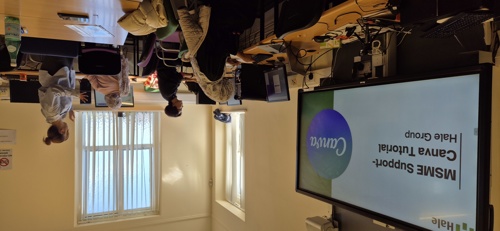
- Canva Workshops for ethnic minority women, supporting candidates identified from the councils Small and New Business advisor.
- Halal food donations, as typical donations were not Halal, so inaccessible for a large proportion of service users (of Muslim Faith).
- 50 hours volunteered for college/ school visits, a standout project being “Shape my Street”, Block Play sessions with St Patricks Primary and 2B Enterprising.
- £28,000 of social value reinvestment directly into the Butetown community.
- 60 hours invested into employability (job fairs, site visits from Into Work Service, People Plus, Kings Trust and ITEC), along with mock interviews.
- £1,200 was allocated to EYST’s pilot cooking project for young Muslims; allowing them to learn to cook nutritious Halal meals from cupboard stables and food parcels.
- 13 hours of expert support were provided to local BAME MSME’s, via Canva workshops supporting eight women (each second language English).
Codi Group - Belonging Without Fear - Creating Safer, More Inclusive Communities
Application entry
- Project name: Belonging Without Fear - Creating Safer, More Inclusive Communities
- Lead organisation: Codi Group
Statement of support
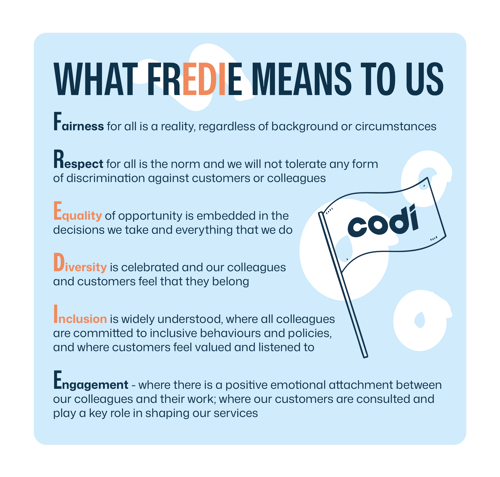
FREDIE (Fairness, Respect, Equality, Diversity, Inclusion and Engagement) is Codi's overarching framework for creating a culture where everyone can thrive. Going beyond traditional equality and diversity, it provides a set of principles that shape our decisions, services and behaviours, ensuring fairness, belonging and inclusion are embedded across everything we do.
The Codi ‘FREDIE Steering Group’ is proud to submit this nomination for its leadership in developing and delivering a comprehensive Hate Crime Action Plan, culminating in the achievement and renewal of the Hate Crime Trustmark.
This work exemplifies how equality and diversity can move beyond policy and intention to create meaningful, lasting change for colleagues, customers and communities.
The project began with a recognition that, while Codi had previously secured the Trustmark, organisational change and evolving community needs required a renewed and more ambitious approach. Rather than treating the Trustmark as a compliance exercise, the FREDIE Steering Group used it as an opportunity to review how hate crime was identified, reported, responded to and prevented across the organisation. The group brought together colleagues from multiple disciplines, alongside external expertise from Victim Support, to undertake a comprehensive review of existing arrangements and develop an enhanced action plan.
The review highlighted a number of areas for improvement, including reporting processes, awareness and training, and opportunities to better support victims and challenge perpetrators. In response, the Steering Group developed a programme of actions designed to embed a culture of zero tolerance towards hate crime and discrimination.
What makes this initiative stand out is the way it connects equality, diversity and inclusion directly to the lived experiences of customers and communities. Housing providers have a unique role in creating places where people feel safe, valued and respected. By tackling hate crime proactively, Codi has strengthened its ability to support people who may be targeted because of their race, religion, disability, sexual orientation, gender identity or other protected characteristics. The project has reinforced the message that everyone deserves to feel safe in their home and community and that hate has no place within the organisation or the communities it serves.
The FREDIE Steering Group also demonstrated genuine leadership by ensuring the work extended beyond specialist teams. It championed mandatory blended learning approach, including the development of an eLearning module and toolbox talk, alongside communications and awareness-raising activity that equipped colleagues across the organisation with the confidence and knowledge to recognise, report and respond to hate-related incidents. This helped embed responsibility for inclusion and community safety across the organisation rather than within a single service area.
Importantly, the project has influenced wider organisational practice. It prompted a review of how hate incidents are identified, monitored and escalated, strengthened cross-functional collaboration, and created clearer pathways for victims to access support. The renewed Trustmark provides independent recognition of this commitment and demonstrates that Codi is taking tangible action to create safer and more inclusive communities.
The project has also demonstrated sector leadership by treating hate crime as both a community safety and equality issue. Through partnership with Victim Support, renewal of hate crime awareness across frontline services, Codi has shown how housing providers can move beyond compliance and take meaningful action to create inclusive communities. The resulting framework offers a practical model that can be replicated across the sector to improve support for victims and challenge discrimination at its source.
Through this project, the FREDIE Steering Group has translated organisational values into action. The result is safer communities and a stronger culture of inclusion, demonstrating how housing organisations can champion equality, diversity and inclusion in ways that create lasting impact for both people and places.
Outcomes and achievements
The FREDIE Steering Group successfully led a review of Codi’s Hate Crime Action Plan, resulting in the achievement and renewal of the Hate Crime Trustmark and a significantly strengthened organisational response to hate crime.
The project established a more consistent approach to preventing, identifying and responding to hate crime across the organisation. Key achievements included the introduction of a dedicated Hate Crime Policy, mandatory learning, awareness resources and clearer reporting pathways, helping colleagues recognise, challenge and respond to hate-related incidents. Since launch, mandatory hate crime training has achieved 77% compliance, demonstrating strong organisational engagement and commitment to building awareness and capability.
The refreshed action plan received positive feedback from Victim Support, which recognised it as comprehensive and aligned to the requirements of the Hate Crime Charter, providing independent validation of Codi's approach. The initiative has improved awareness of hate crime and its impact on people with protected characteristics, strengthened support and signposting for victims, and reinforced a culture of zero tolerance towards discrimination and hate.
By embedding equality and inclusion into community safety, learning and organisational culture, the project has delivered sustainable change and demonstrated how housing organisations can create environments where people feel safe, valued and able to belong.
Valleys to Coast - Building inclusion that lasts
Application entry
- Project name: Building inclusion that lasts
- Lead organisation: Valleys to Coast
Statement of support
While individual teams at Valleys to Coast delivered good equality, diversity, and inclusion work, these efforts were not always joined up or strategically driven. Inclusion risked becoming fragmented or seen as a minor extra, rather than a core part of building a high-performing workplace. Valleys to Coast set out to change this for good. The goal was to build a workplace where diverse talent thrives, where every colleague feels seen and supported, and where inclusion directly improves life for customers.
To create lasting cultural change, Valleys to Coast moved from good intentions to structured, accountable action. The organisation launched an equality, diversity, and inclusion roadmap using a visual "Mosaic" theme at its 20th anniversary conference. This helped every colleague see how their daily actions contribute to a bigger picture of inclusion.
Inclusion was built directly into everyday operations. Valleys to Coast added equality statements to all policies and made Equality Impact Assessments mandatory right at the start of every project. To maintain strategic oversight, the organisation set up a Colleague and Culture Board, established equality, diversity, and inclusion as a core strategic priority in its corporate plan, and appointed a Director of People and Culture alongside an Organisational Development Manager. Progress is tracked through regular board reporting and clear performance measures.
Valleys to Coast also rethought how it attracts, develops, and supports talent. The team asks job candidates about their support needs before interviews, provides interview support boxes with fidget tools and accessible materials, and partners with local colleges to widen career pathways.
Practical barriers have been tackled directly. Valleys to Coast provides properly fitted workwear and facilities for women in trade roles, offers free sanitary products, and runs a "Men Need Bins" campaign. The organisation uses "About Me" profiles to celebrate workforce diversity, produces subtitled videos, and ensures offices feature accessible signage and hearing loops.
Support is always close at hand. Valleys to Coast developed several internal groups where colleagues can get support whenever they need it. These include an Equality, Diversity and Inclusion Forum, a Menopause Café, and a Welsh language support group called Clwb Cwtch, alongside peer-led groups for men's mental health, adoption, and family support. These networks are backed by neurodiversity training and British Sign Language sessions. Valleys to Coast is proud to have achieved Tai Pawb's Quality in Equality and Diversity (QED) award, which recognises its commitment to embedding equality across the entire organisation.
Through the overarching "I'm In" Customer Engagement Strategy, Valleys to Coast launched the Equal Voice Group—a specialist forum designed to bring together a diverse cross-section of the community. This group brings lived experience directly into staff training, involves customers on recruitment panels, guides accessible office designs at Wyndham House, and helps co-design behavioural standards for tradespeople working in homes.
The impact of this work is clear. Inclusion shapes how Valleys to Coast designs services, supports staff, and makes decisions every day. Colleagues feel safe to bring their whole selves to work. One team member shared, "I felt supported before I even walked into the interview," while another noted, "It’s the first place I’ve worked where I don’t feel like I have to hide who I am."
Valleys to Coast has built a sustainable model for change by listening to real experiences and putting people first every single day.
Outcomes and achievements
Valleys to Coast transformed equality, diversity, and inclusion from a standalone goal into a core strategic priority across its workplace and communities.
Key outcomes include:
- Achieved Tai Pawb’s Quality in Equality and Diversity (QED) award. Formed a Colleague and Culture Board, appointed dedicated leadership, and built equality measures directly into project planning and executive reporting.
- Introduced interview support boxes, tailored trade workwear for women, accessible signage, hearing loops, free sanitary products, and the "Men Need Bins" campaign.
- Established supportive internal spaces including an Equality, Diversity and Inclusion Forum, Menopause Café, and Clwb Cwtch (a Welsh language group), backed by neurodiversity, British Sign Language, and peer-led mental health sessions.
- Launched the Equal Voice Group under the "I'm In" strategy to bring customer lived experience into staff training, interview panels, accessible office design, and contractor codes of conduct.
- Created an environment where underrepresented groups feel genuinely supported. Staff and customers report feeling valued, supported, and comfortable bringing their true selves to work.