


Welsh Housing Awards 2026
Read all the shortlisted entries into this award category, Housing Team of the Year, at the Welsh Housing Awards (WHA) 2026 and find out who won the award on the night.
This award recognises teams who have delivered an outstanding contribution to their organisation and for the housing sector. It is designed to recognise achievement of something special, as part of developing new services, dealing with difficult situations or delivering the best services.
This award was sponsored by Blake Morgan.
Winner
The Trivallis RAAC team
Organisation
Trivallis
Statement of support
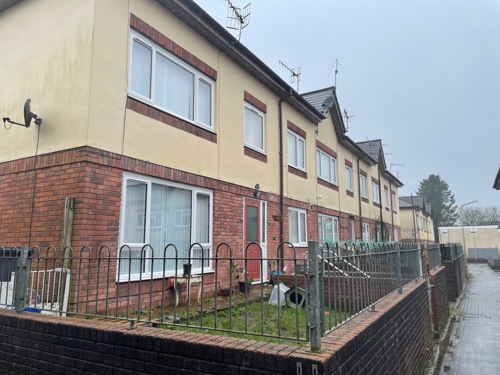
When Reinforced Autoclaved Aerated Concrete (RAAC) was identified in 60 occupied Trivallis homes on the Gower Estate in Hirwaun, the organisation faced one of the most complex housing challenges in its history.
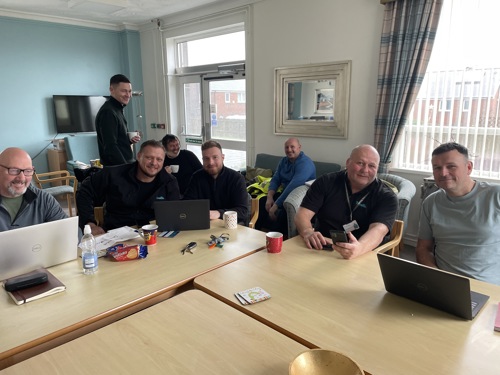
The RAAC Project Team brought together colleagues from asset management, neighbourhoods, lettings, voids, customer services, communications, technical services and safeguarding, alongside contractors, structural engineers, removal companies and local authority partners. Together, they developed and delivered a coordinated response to an exceptional situation.
Following detailed surveys in March 2024, deteriorating RAAC panels were identified within roof spaces across the estate. Structural assessments confirmed there was a risk of sudden failure if no action was taken. With occupied homes, limited available properties for temporary moves and a number of vulnerable residents requiring tailored support, the team had to act quickly while ensuring every tenant remained at the centre of decision making.
A project team was established immediately. A live risk register was created, inspection regimes were introduced and homes were categorised according to risk. Neighbourhood and technical colleagues maintained a visible presence on the estate, carrying out regular inspections and providing reassurance to tenants throughout the programme.
Recognising that this was as much a tenancy and customer challenge as a technical one, the team adopted a highly personalised approach. Every affected household was assessed individually. Colleagues worked closely with tenants to understand health needs, accessibility requirements, family circumstances, financial concerns and personal anxieties linked to leaving or remaining in their homes during the works.
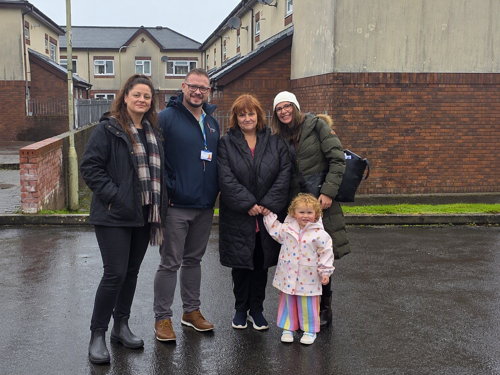
Communication became one of the team's greatest strengths. Residents received regular updates, opportunities to ask questions and direct access to staff. Open days were held on the estate so tenants could speak directly with experts and better understand both the risks and proposed solutions.
The team's collaborative approach was equally important in identifying an innovative solution. There was no established blueprint for addressing RAAC at this scale in occupied social housing. Working closely with structural engineers, they developed a permanent timber safety deck system that could be installed beneath the RAAC panels. This solution removed the risk of collapse while minimising disruption for tenants and protecting roof structures, electrical installations, insulation and internal decorations.
The team also demonstrated exceptional efficiency by combining multiple improvement programmes into a single intervention wherever possible. Alongside the RAAC works, they coordinated ventilation improvements, asbestos removal, housing health and safety works, adaptations and kitchen improvements. This reduced disruption for tenants and delivered greater value for the organisation.
Throughout the programme, teams worked seamlessly across traditional service boundaries. Complex cases were managed collectively, decisions were made quickly and barriers were removed through strong partnership working. What could easily have become a fragmented technical programme became a genuinely joined up, tenant focused response.
The project challenged established ways of working and strengthened relationships across the organisation. It created new approaches to communication, decant management, vulnerability assessments and cross service case management that will continue to shape future projects.
Most importantly, the team never lost sight of the people behind the properties. They understood that success would not be measured solely by completing works, but by how tenants were supported through a period of uncertainty and disruption.
By the end of the programme in May 2026, all 60 homes had been made safe through a permanent solution. The team delivered a complex and unprecedented building safety programme while maintaining trust, supporting vulnerable residents and keeping the community together.
Outcomes and achievements
The RAAC team delivered a safe, permanent solution for all 60 affected homes on the Gower Estate, removing the risk of structural failure and ensuring residents could continue living in safe, secure homes.
The team successfully managed a complex building safety issue in occupied properties with no established model to follow. Through close collaboration between departments, Trivallis balanced regulatory requirements with a strong focus on tenant wellbeing and support.
A key achievement was the development and installation of an innovative timber safety deck system, providing a permanent solution while minimising disruption for residents. The team also maximised value by coordinating additional improvement works alongside the RAAC programme.
The programme has strengthened organisational capability, creating new approaches to tenant communication, vulnerability assessment, decant management and cross-team working. These lessons will continue to inform future investment and building safety programmes.
Most importantly, tenants received tailored support, regular communication and practical assistance based on their individual circumstances. This helped maintain trust and confidence during a period of significant uncertainty. The project maintained community stability and demonstrated that people can remain at the heart of housing services, even during the most challenging circumstances.
Shortlisted entries
WCBC Local Lettings/Private Rented Sector team - Wrexham County Borough Council
Application entry
- Team name: WCBC Local Lettings/Private Rented Sector team
- Organisation: Wrexham County Borough Council
Statement of support
I wish to officially recognise the excellent frontline work delivered by WCBC Local Lettings/Private Rented Sector team. Navigating the housing sector presents immense challenges, yet WCBC LL/PRS team consistently aim for person-centred, multi-faceted solutions for the clients that they work with daily.
In April 2025, The LL/PRS team consisted of two full time member of staff, since that date the manager of that team has recruited three staff members. The team work with private landlords across Wrexham County Borough, to successfully bring their properties into the social housing sector, providing safe and affordable homes for the people of Wrexham to make their home. The team also provides private landlords assurance that their properties will be let to residents, who are most in need and will take pride and care of their property.
From the dedicated management of the housing register to working with allocations and housing options securing properties where there is demand for property, their presence is vital. Their strategic work to work with private landlords to ensure properties meet high living standards directly protects independent living for some of our most vulnerable residents. They deserve immense credit for keeping Wrexham's communities safe, supported, and moving forward.
Below are some of the testimonies the team has received;
Welsh Government testimony:
“Wrexham is an excellent example of how the Welsh Government’s Leasing Scheme Wales is not only providing housing, but stability and the opportunity for families to stay together. This is exactly what we hoped to achieve when we launched the programme.
We know that empty homes are a wasted resource in our communities and this scheme is a fantastic way of increasing the number of affordable homes, and I look forward to seeing even more property owners and landlords signing up soon”.
Contract holder testimony:
“I am writing this letter to show my appreciation for all the support I've received from your team.
I can’t express how grateful I am for all your help you have given me, I am absolutely over the moon with my new home and the area in which I am living in. I wouldn’t be where I am today without all of your support”
Landlord testimony:
I think the scheme works very well as long as there is a focal point such as yourself to liaise professionally with the owners of the properties.
The information you provide is clear and concise with little ambiguity which makes the process very easy from my viewpoint.
The initial report you provide is also very useful as I am then able to get quotes from builders etc for your final approval.
What is special about this team
This team are highly dedicated and passionate group of individuals, who have come together to make a fantastic team. Despite having limited Housing knowledge, they have learned their craft together and supported each other through the teams journey, whilst delivering some remarkable results and delivering homes for the residents of Wrexham.
Closing statement
Over the past 12 months the team has brought 19 properties into use, that would have potentially remained empty. The local lettings team are having a significant impact on reducing the number of people on the housing register and reducing the number of homeless clients.
Outcomes and achievements
During the past 12 months the team has;
- Brought 19 new properties into the local lettings service, in the leasing scheme Wales scheme. 14 two/three bed properties, four one bed properties and one four bed property.
- Wrexham were also the first local authority to bring on and HMO via the Leasing Scheme Wales Scheme.
- Since 2022 the team has housed the following into leasing scheme Wales properties:
- 162 contract holders, of which 44 of the households have children.
- Signed up 55 properties on a five-year lease, five for 10 years, two for 15 years and five for 20 years.
- Out of the 67 properties the agency has taken on since LSW began, 59 made use of the Optimised Retrofit (ORP) funding. This is to optimise the energy performance rating (EPC) of a property.
Complaints Team - Valleys to Coast Group
Application entry
- Team name: Complaints Team
- Organisation: Valleys to Coast Group
Statement of support
Three years ago, handling complaints at Valleys to Coast felt like climbing an impossible mountain. We faced heavy backlogs, open cases stretching past 100 days, and disjointed processes. In September 2023, we introduced a dedicated Complaints Business Partner (BP) role within the customer service team. Jo Pickup, moving from our customer service hub with a wealth of experience, stepped up to drive this transformation.
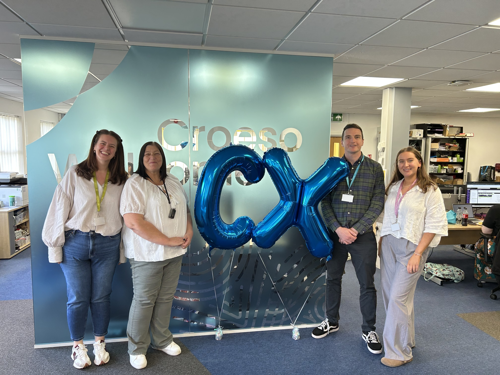
Over the past three years, Jo’s consistency, approachability, and relentless focus have transformed our complaint culture. Rather than creating an isolated complaints department, Jo built a strong network across the organisation, empowering team leaders and managers to take genuine ownership of customer concerns. To ensure complete governance, we also established a dedicated Complaints Champion on our Board who works closely with Jo and the team, feeding insight and progress directly back to board level.
This model relies on collaborative strength where volumes are highest. In our repairs service, Llanw, complaint handlers Sophie Gannon and Jon Price faced the steepest hill. Together, Jo, Sophie, Jon, and our wider group handlers form a united team that turned our feedback loop into a badge of pride, proving that exceptional customer service and teamwork go hand-in-hand.
Initially, Jo focused on stabilisation by equipping handlers with training and tools to resolve issues in line with policy, tackling our oldest cases, and embedding quality checks. As open volumes dropped, Jo rolled out refreshed procedures, customer satisfaction surveys, and a new recording system requiring extensive re-training. Jo’s continuous focus on root-cause analysis ensured departments fixed systemic issues rather than recurring symptoms.
Nowhere is the customer impact clearer than through Jon and Sophie in Llanw. Managing complex repair disputes, they act as the empathetic voice of Valleys to Coast. When customers feel overwhelmed, Jon and Sophie step in with patience, clear communication, and total accountability. Customers regularly share that Jon "made them feel heard" and kept every promise, while Sophie actively cuts through contractor red tape to resolve repairs.
While progress built steadily year-on-year, 2026 marks the culmination of this journey. The daily grit shown by Jo, Sophie, Jon, and our cross-group handlers delivered two major milestones: an exceptionally positive Housing Ombudsman annual report and a "Substantial Assurance" Internal Audit rating—the highest tier of regulatory confidence. Our Ombudsman figures demonstrate total transparency; while total referrals rose slightly from 38 to 43 (reflecting our commitment to signposting customers to their rights), our performance improved across every single metric.
Building on this success, for the new financial year we are launching the Complaints Escalation Forum to target long-standing cases (>60 days) where complex cross-service issues block resolution. Bringing key operational decision-makers—including the heads of housing, assets, compliance, sustainability, and commercial—to the table monthly, this cross-functional team gives complaint handlers a direct platform to present challenging cases. With a strict four-case agenda, documented resolution paths, and seven-day action targets (escalating directly to directors if unresolved), the forum breaks down operational silos to ensure customers are no longer left waiting.
This team deserves recognition for both Excellence in Customer Service and Team of the Year because they proved complaints aren't a burden to hide, but a vital engine for service improvement. Jo provided the vision and drive; Sophie, Jon, and our group handlers provided the daily frontline dedication; and our leadership and Board backed them with cross-departmental accountability. Together, they turned legacy systemic issues into a high-performing, empathetic, and truly customer-centric service.
Outcomes and achievements
Substantial assurance audit: Achieved the highest regulatory confidence rating in our May 2026 Internal Audit for compliments and complaints, with 100% of sampled cases showing evidence of deep, robust investigations.
100% ombudsman compliance: Improved response timescale compliance with the Housing Ombudsman from 32% (2024/25) to a perfect 100% (2025/26).
Drastic intervention reduction: Reduced the Housing Ombudsman intervention rate from 22% (eight cases) to 7% (three cases), with formal recommendations dropping from 19 to nine.
Massive backlog clearance: Reduced total active complaints from 235 down to 55, cutting long-term cases (>6 months) from 61 down to just two.
Faster turnaround times: Cut the average age of active cases from 104 days down to 31 days.
Board and customer alignment: Appointed a Board Complaints Champion to feed frontline learning directly to board level, and redesigned procedures to mandate direct customer calls and written updates at key stages.
Complaints Escalation Forum introduced: Established a monthly multi-departmental forum featuring seven key heads of service/managers to resolve complex >60-day cases, assigning dedicated action owners with strict seven-day completion targets and director escalation pathways.
Homes and Communities Team - Hafod Housing Association
Application entry
- Team name: Homes and Communities Team
- Organisation: Hafod Housing Association
Statement of support
The team has successfully navigated a significant service transformation while continuing to deliver exceptional outcomes for communities. Customer voice shaped the change: Hafod needed to be more visible locally and communicate better. So, homes and communities moved to generic, tenure-neutral, place-based regional teams, with patch sizes reduced to 250. This has strengthened local ownership, relationships, and accountability.
Hafod introduced a community investment and partnerships team, providing specialist tenancy sustainment support for complex income and ASB, alongside a digital inclusion team focused on reducing digital exclusion, further supported by our engagement team ensuring our customer voice is at the heart of everything we do and driving forward our social value offer; and our specialist service charge and home ownership team further developing our tenure neutral approach.
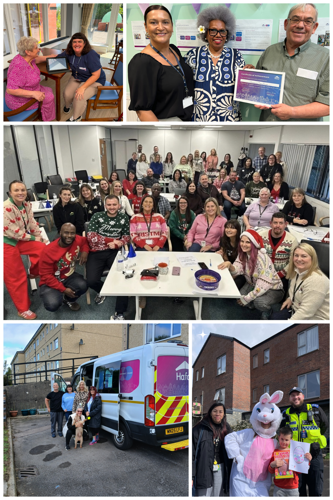
These changes have created a more visible, responsive and joined-up service. Community drop-ins, walkabouts, estate inspections and DAVE (our engagement van) have increased engagement, while joint working with surveyors and introducing regional caretakers have strengthened estate management, improved communication and enabled issues to be identified and resolved more quickly.
At the heart of the team's relational approach is building trust alongside a commitment to helping people thrive, not simply sustain their tenancy. The team supports customers facing financial hardship, poor health, social isolation, domestic abuse, digital exclusion and anti-social behaviour, providing practical support, coaching and encouragement that empowers people to make lasting positive changes.
Customers are treated as individuals, with support tailored to their needs and circumstances. Through close partnership working with support agencies, employability services, police, health, local authorities, RSLs and community organisations, teams help customers access the right support at the right time. This includes benefits advice, food poverty interventions, employability referrals, adaptations for customers with disabilities, community activities and specialist tenancy sustainment support. Further enhanced by our campaigns such as “back to school” and “Christmas kindness”, designed to assist those struggling with their finances during these periods.
A customer described the team's support as “343 thousand stars”, praising their “lightning-fast communication, support and closure during a difficult situation.”
The team has worked proactively to strengthen communities through community events, environmental projects, funding bids, engagement activities and neighbourhood improvements, they have helped tackle isolation, improve community pride and encourage customers to play an active role in their local area. Their visible presence within neighbourhoods has increased trust, strengthened relationships and created safer, more resilient communities.
“Neighbours have to work together to make a community. I’ve lived here for 25 years and met people today for the first time. Something as simple as sorting out the rubbish is bringing people together.” Customer feedback at a litter pick/skip day.
The team have utilised social value funding to improve community spaces, estate improvements, community events and support for local groups and tenants (50 community projects supported/£20k funding).
What distinguishes this team is its combination of compassion, persistence and partnership working. Whether helping a customer through a personal crisis, supporting someone to improve their home, resolving community issues or creating opportunities for customers to connect with one another, the team consistently puts people first. The result is a service that not only improves organisational performance but delivers meaningful, lasting change for customers and communities.
“I’m part of a group of supportive, knowledgeable colleagues who consistently go above and beyond, not just for our tenants, but for each other. What stands out most is the genuine sense of trust and teamwork we’ve developed... this supportive environment has made it possible for us to tackle complex cases, share expertise openly, and celebrate each other’s successes. Being part of such an awesome team makes me proud every day!”
Outcomes and achievements
- Maximised income for customers by over £450,000, whilst reducing arrears.
- 1,500 in-person visits in one quarter.
- Visited 320 communities/400 customer interactions via DAVE.
- Improved partnership working and joint interventions addressing anti-social behaviour resulted in arrests, reductions in complaints and safer neighbourhoods.
- Heard nearly 8,000 customer voices through panels, surveys, scrutiny, service feedback and everyday conversations - helping shape what we do, how we do it, and how decisions are made:
- Influenced repair services, rent information and digital communications.
- Stronger customer involvement in scrutiny, tenders and social value activity.
- Lived experience shaping training, recruitment and reporting – right up to board level.
- Supported 115 children via Back-to-School campaign.
- Distributed 160 toys and £10k+ of financial support via Christmas Kindness campaign - assisting 295 people. “Thank you for the gifts and the food voucher, I was so surprised and didn’t think I’ll get anything like this from a housing association. Really thankful as I can now get some nice food for Christmas”
- Supported 97 households: gifted 137 devices/data products and 41 sim cards / 50+ tailored digital sessions, helping customers feel safer, less anxious and better connected.
- Invested £20k of social value funding - supporting 50 community projects / positively impacting over 4,000 people.